Introduction
In today’s digital age, cybersecurity is not just a technical issue; it’s a critical concern that can make or break an organization. As threats evolve at an alarming pace, businesses find themselves navigating a complex landscape where operations can be disrupted and sensitive data compromised. The NIST Incident Response Playbook emerges as a vital tool, offering a structured framework that guides organizations through these turbulent waters. But how can organizations adapt this playbook to meet their specific needs and ensure a robust response strategy?
This guide will delve into four essential steps for implementing the NIST Incident Response Playbook, empowering organizations to bolster their cybersecurity posture and enhance their incident management capabilities. By understanding the unique challenges they face, organizations can leverage this playbook to not only respond to incidents but also to proactively mitigate risks, ensuring a safer operational environment.
Understand the NIST Incident Response Framework
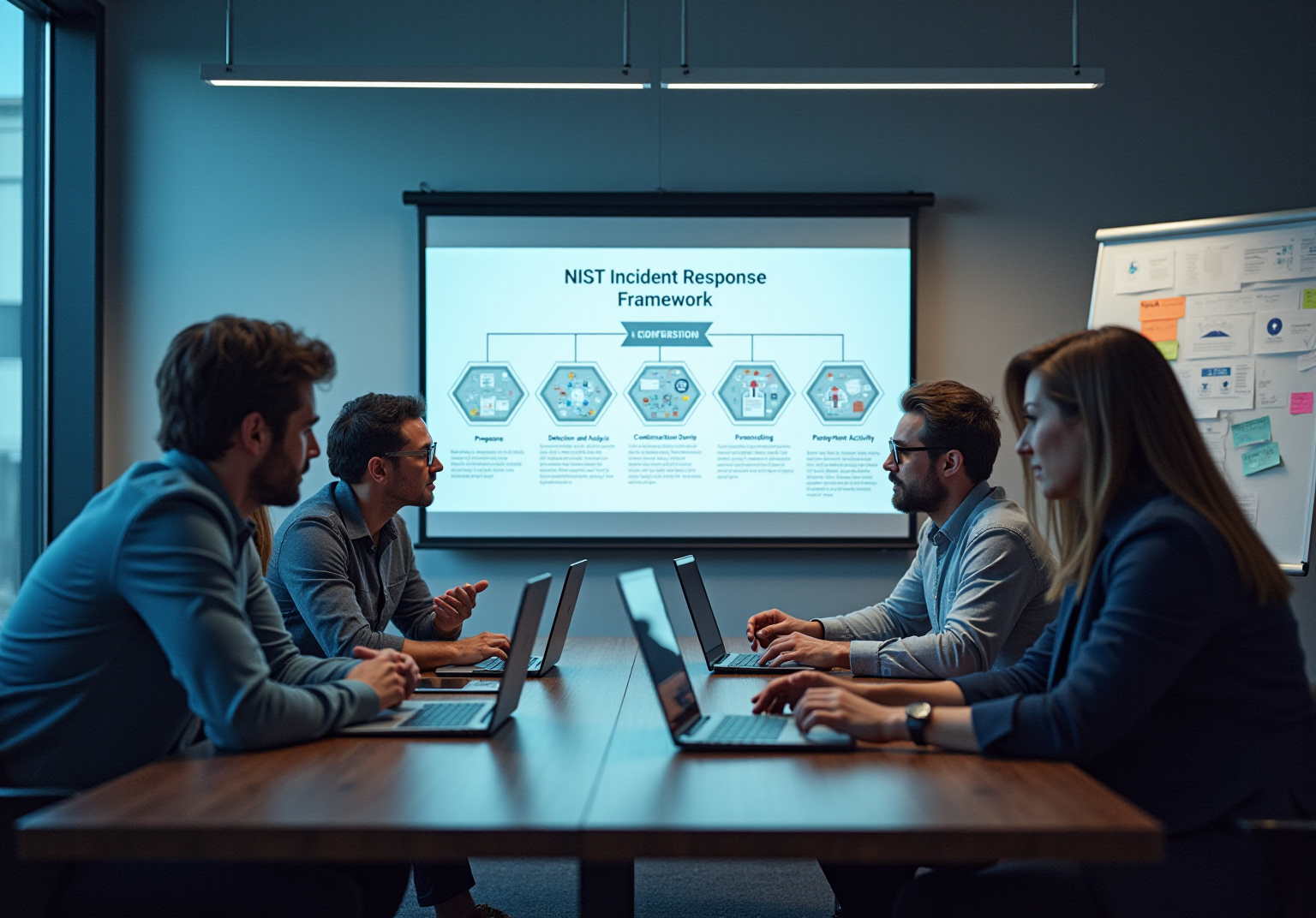
The Cybersecurity Response Framework is essential for effectively managing cybersecurity events, consisting of four critical stages:
- Preparation
- Detection and Analysis
- Containment
- Eradication and Recovery
- Post-Event Activity
Understanding these stages is vital for organizations to respond efficiently to incidents and mitigate damage, particularly in regulated sectors where compliance with standards, including the NIST incident response playbook and CMMC, as well as NIST 800-171, is crucial.
Preparation is the cornerstone of this framework. It involves establishing a crisis management team, developing policies, and training staff to ensure adherence to stringent cybersecurity standards necessary for protecting Controlled Unclassified Information (CUI) and Federal Contract Information (FCI). In fact, by 2026, around 75% of organizations are projected to adopt this framework, recognizing its significance in bolstering their cybersecurity posture and maintaining eligibility for lucrative government contracts.
By implementing this framework, organizations can ensure a systematic approach to cybersecurity events, aligning their measures with industry standards and regulatory requirements. Faster detection and containment can significantly reduce losses from service interruptions and data breaches, underscoring the framework's relevance in today's threat landscape.
Real-world applications demonstrate the framework's effectiveness in enhancing cybersecurity practices across various sectors. Federal entities have successfully utilized it to develop robust emergency management plans that comply with regulatory standards. Moreover, Cyber Solutions' Compliance as a Service (CaaS) offerings can assist businesses in preparing for audits and maintaining compliance, thereby strengthening their crisis management capabilities.

Explore the Phases of Incident Response
The NIST Incident Response Framework is a structured approach that consists of four critical phases designed to enhance an organization's ability to manage cybersecurity incidents effectively:
- Preparation: Establishing a robust response team is paramount. This phase involves developing comprehensive policies, conducting regular training, and ensuring that necessary tools and resources are readily available. Organizations should engage in continuous testing of their security posture against real attack scenarios to identify vulnerabilities. Significantly, only 14% of respondents actively utilize observability tools and react to events, highlighting the necessity for enhanced monitoring capabilities. Cyber Solutions offers round-the-clock network surveillance to identify anomalies and possible vulnerabilities, ensuring organizations are ready for any situation.
- Detection and Analysis: Effective event detection relies on robust monitoring systems and alert mechanisms. Organizations must be vigilant in identifying potential occurrences and analyzing their nature and scope. Data indicates that organizations using observability tools have enhanced their threat detection rates, with some reaching near-zero Mean Time to Detection (MTTD) for known threats. Cyber Solutions' instant alerts and real-time insights facilitate swift action to prevent downtime or breaches, significantly enhancing detection capabilities.
- Containment, Eradication, and Recovery: This phase is essential for reducing the effects of an occurrence. Swift action is required to contain the threat, eradicate it from the environment, and restore normal operations. For example, during a recent ransomware attack, Cyber Solutions assembled a specialized crisis management team within 24 hours, allowing real-time evaluations and reducing further dissemination of the threat. Technicians operated continuously to manage the ransomware, eliminate harmful files, and strengthen system protections, showcasing the efficiency of their strategies for handling emergencies.
- Post-Incident Activity: Following the resolution of an event, companies should perform a comprehensive evaluation to derive lessons learned. This involves recording the occurrence, evaluating the effectiveness of the reaction, and making necessary modifications to enhance future occurrence management strategies. The revised guidance issued in April 2025 highlights the significance of ongoing enhancement, promoting the adoption of playbooks to standardize procedures and guarantee uniformity throughout the entity. Cyber Solutions' approach to post-incident activities includes training staff on recognizing suspicious emails and maintaining proper cybersecurity hygiene, further enhancing overall resilience.
By comprehending and executing these stages, entities can create an all-encompassing reaction strategy that not only tackles urgent dangers but also improves overall cybersecurity robustness.

Customize and Implement the Playbook for Your Organization
To effectively implement the nist incident response playbook, organizations must prioritize cybersecurity, particularly in the healthcare sector where the stakes are high. Here are essential steps to enhance your incident response capabilities:
- Evaluate Institutional Needs: Start by assessing your entity's specific risks, regulatory obligations, and current crisis management capabilities. This assessment will guide the customization of the nist incident response playbook to fit your unique context, ensuring that tailored remediation strategies are in place to address compliance gaps, including adherence to HIPAA standards.
- Define Roles and Responsibilities: Clearly outline the roles of team members involved in responding to incidents. Studies show that organizations with specified roles experience better coordination and quicker recovery times during events. Ensure every team member understands their responsibilities to enhance overall effectiveness.
- Develop Event Scenarios: Create realistic situations that reflect potential occurrences your organization may face. This preparation helps the team practice and respond effectively to real-world situations, reinforcing their readiness. The importance of immediate action and specialized expertise cannot be overstated, as demonstrated in case studies where rapid deployment led to enhanced security measures and minimized damage.
- Establish Reaction Protocols: Formulate comprehensive protocols for each stage of the incident management process. These procedures should be straightforward and accessible to all team members, enabling prompt action when events arise. Documentation, including security policies and procedures, is crucial for demonstrating compliance during audits.
- Conduct Training and Drills: Regularly educate your emergency management team on the nist incident response playbook and conduct exercises to assess the efficiency of your procedures. Ongoing training is vital; organizations that engage in regular exercises report faster recovery times and reduced revenue loss after incidents. Improved detection and recovery processes assist in restoring normal business operations more quickly, minimizing financial impact.
- Assess and Revise: Continuously assess and revise the playbook based on insights gained from incidents and changes in the threat landscape. This ongoing refinement ensures that your response remains effective and aligned with current best practices. Notably, the latest guidance from the National Institute of Standards and Technology, Incident Management Recommendations and Considerations for Cybersecurity Risk Management, published in April 2025, offers valuable insights for enhancing your incident management strategy.
By following these steps, organizations can significantly improve their response capabilities, ensuring a proactive approach to managing cybersecurity threats and compliance with HIPAA standards.

To effectively implement the NIST incident response playbook, it’s crucial to equip your organization with the right tools and resources. Cybersecurity is a pressing concern, especially in healthcare, where the stakes are high. Here are essential tools that can significantly enhance your incident response capabilities:
- Security Information and Event Management (SIEM): These tools monitor and analyze security events in real-time, providing insights into potential threats.
- Endpoint Detection and Response (EDR): EDR solutions offer advanced threat detection, enabling organizations to respond swiftly to endpoint threats.
- Event Response Platforms: Centralized platforms facilitate effective handling of incidents, promoting communication and collaboration among team members.
- Forensic Tools: Invest in forensic tools to analyze incidents post-event, gaining insights into how they occurred and strategies to prevent future occurrences.
- Training Materials: Utilize training programs to keep your crisis management team updated on the latest threats and response techniques.
- Templates and Playbooks: Leverage templates and the NIST incident response playbook aligned with the NIST framework to streamline your event management planning process.
By integrating these tools into your cybersecurity strategy, you can ensure a swift and effective response to incidents, ultimately safeguarding your organization against evolving threats.

Conclusion
Implementing the NIST Incident Response Playbook is not just a necessary step; it’s a strategic imperative for organizations looking to bolster their cybersecurity defenses. In a landscape where cyber threats are increasingly sophisticated, understanding and applying this structured framework allows businesses to manage incidents effectively. This preparation ensures they are not only responsive but also compliant with essential regulations. The playbook serves as a vital guide for immediate action while fostering a culture of continuous improvement in cybersecurity practices.
The significance of the NIST Incident Response Framework cannot be overstated. It encompasses five critical stages:
- Preparation
- Detection and Analysis
- Containment
- Eradication and Recovery
- Post-Incident Activity
Each phase is integral to crafting a comprehensive response strategy, enabling organizations to swiftly tackle threats and mitigate potential damage. Consider the necessity for ongoing training, the deployment of advanced monitoring tools, and the clarity of roles within response teams - these insights highlight the framework's effectiveness in real-world applications.
Ultimately, adopting the NIST Incident Response Playbook transcends mere compliance; it represents a strategic investment in an organization’s resilience against cyber threats. By prioritizing cybersecurity and customizing the playbook to meet specific needs, organizations can safeguard sensitive information and enhance their overall operational integrity. Taking proactive measures today will pave the way for a more secure future, underscoring the critical importance of robust incident response capabilities in today’s digital landscape.
Frequently Asked Questions
What is the NIST Incident Response Framework?
The NIST Incident Response Framework is a structured approach for managing cybersecurity events, consisting of four critical stages: Preparation, Detection and Analysis, Containment, Eradication and Recovery, and Post-Event Activity.
Why is preparation important in the NIST Incident Response Framework?
Preparation is essential as it involves establishing a crisis management team, developing policies, and training staff to adhere to cybersecurity standards, which are crucial for protecting Controlled Unclassified Information (CUI) and Federal Contract Information (FCI).
What are the projected trends regarding the adoption of the NIST framework?
By 2026, it is projected that around 75% of organizations will adopt the NIST Incident Response Framework, recognizing its importance in improving cybersecurity posture and maintaining eligibility for government contracts.
How does the framework help organizations during cybersecurity incidents?
The framework provides a systematic approach to managing cybersecurity events, which helps organizations align their response measures with industry standards and regulatory requirements, ultimately reducing losses from service interruptions and data breaches.
Can you provide examples of real-world applications of the NIST framework?
Federal entities have successfully used the NIST framework to develop robust emergency management plans that comply with regulatory standards, enhancing cybersecurity practices across various sectors.
What services does Cyber Solutions offer related to the NIST framework?
Cyber Solutions offers Compliance as a Service (CaaS) to assist businesses in preparing for audits and maintaining compliance, thereby strengthening their crisis management capabilities.
List of Sources
- Understand the NIST Incident Response Framework
- drata.com (https://drata.com/learn/nist/incident-response-guide)
- csrc.nist.gov (https://csrc.nist.gov/Projects/incident-response/news)
- linkedin.com (https://linkedin.com/pulse/nist-csf-20-incident-response-guide-released-kayne-mcgladrey-ff8jc)
- securityboulevard.com (https://securityboulevard.com/2026/01/nist-launches-updated-incident-response-guide-2)
- NIST Releases Updated Incident Response Guidance Under Its Cybersecurity Framework (https://morganlewis.com/blogs/sourcingatmorganlewis/2025/06/nist-releases-updated-incident-response-guidance-under-its-cybersecurity-framework)
- Explore the Phases of Incident Response
- securityboulevard.com (https://securityboulevard.com/2026/01/nist-launches-updated-incident-response-guide-2)
- securityweek.com (https://securityweek.com/category/incident-response)
- thehackernews.com (https://thehackernews.com/search/label/Incident response)
- hornetsecurity.com (https://hornetsecurity.com/en/blog/cybersecurity-incidents)
- NIST Releases Updated Incident Response Guidance Under Its Cybersecurity Framework (https://morganlewis.com/blogs/sourcingatmorganlewis/2025/06/nist-releases-updated-incident-response-guidance-under-its-cybersecurity-framework)
- Customize and Implement the Playbook for Your Organization
- linkedin.com (https://linkedin.com/pulse/nist-csf-20-incident-response-guide-released-kayne-mcgladrey-ff8jc)
- securityboulevard.com (https://securityboulevard.com/2026/01/nist-launches-updated-incident-response-guide-2)
- NIST Releases Updated Incident Response Guidance Under Its Cybersecurity Framework (https://morganlewis.com/blogs/sourcingatmorganlewis/2025/06/nist-releases-updated-incident-response-guidance-under-its-cybersecurity-framework)
- frsecure.com (https://frsecure.com/blog/incident-response-statistics-how-do-you-compare)
- Identify Tools and Resources for Effective Implementation
- cybertriage.com (https://cybertriage.com/blog/best-incident-response-tools-2026)
- thehackernews.com (https://thehackernews.com/search/label/Incident response)
- ilert.com (https://ilert.com/blog/top-5-incident-response-platforms-for-2026)
- eccu.edu (https://eccu.edu/blog/top-cybersecurity-tools)
- vmray.com (https://vmray.com/best-incident-response-tools-comprehensive-guide-2026)