4 Best Practices for Choosing Information Security Services Companies

4 Best Practices for Choosing Information Security Services Companies

Introduction

In an era where cyber threats loom large, the healthcare sector faces unprecedented challenges in safeguarding sensitive data. Organizations must navigate the complex terrain of information security services with precision and foresight. The stakes are particularly high in sectors like healthcare and finance, where protecting sensitive data is not just a regulatory requirement but a critical component of operational integrity.

To navigate these challenges, organizations must:

  1. Identify their unique security needs
  2. Evaluate provider expertise

Choosing the right partner can mean the difference between security and vulnerability.

Define Organizational Security Needs and Objectives

In an era where cyber threats loom large, the healthcare sector faces unique challenges that demand immediate attention and action. To effectively choose information security services companies, organizations must first articulate their specific security needs and objectives. It all starts with a thorough risk assessment that pinpoints vulnerabilities, potential threats, and compliance requirements specific to the industry. For instance, healthcare organizations prioritize the protection of patient data in accordance with HIPAA regulations, while financial institutions focus on safeguarding sensitive financial information. By clearly defining these needs, businesses can develop a targeted protection strategy that aligns with their operational goals and regulatory obligations.

Involving key stakeholders ensures diverse perspectives are considered, resulting in a more robust and comprehensive protection strategy. Frequent risk evaluations are crucial, as they help organizations adapt to evolving threats and maintain compliance with stringent regulations. This collaborative approach not only enhances security but also fosters a culture of awareness across the organization.
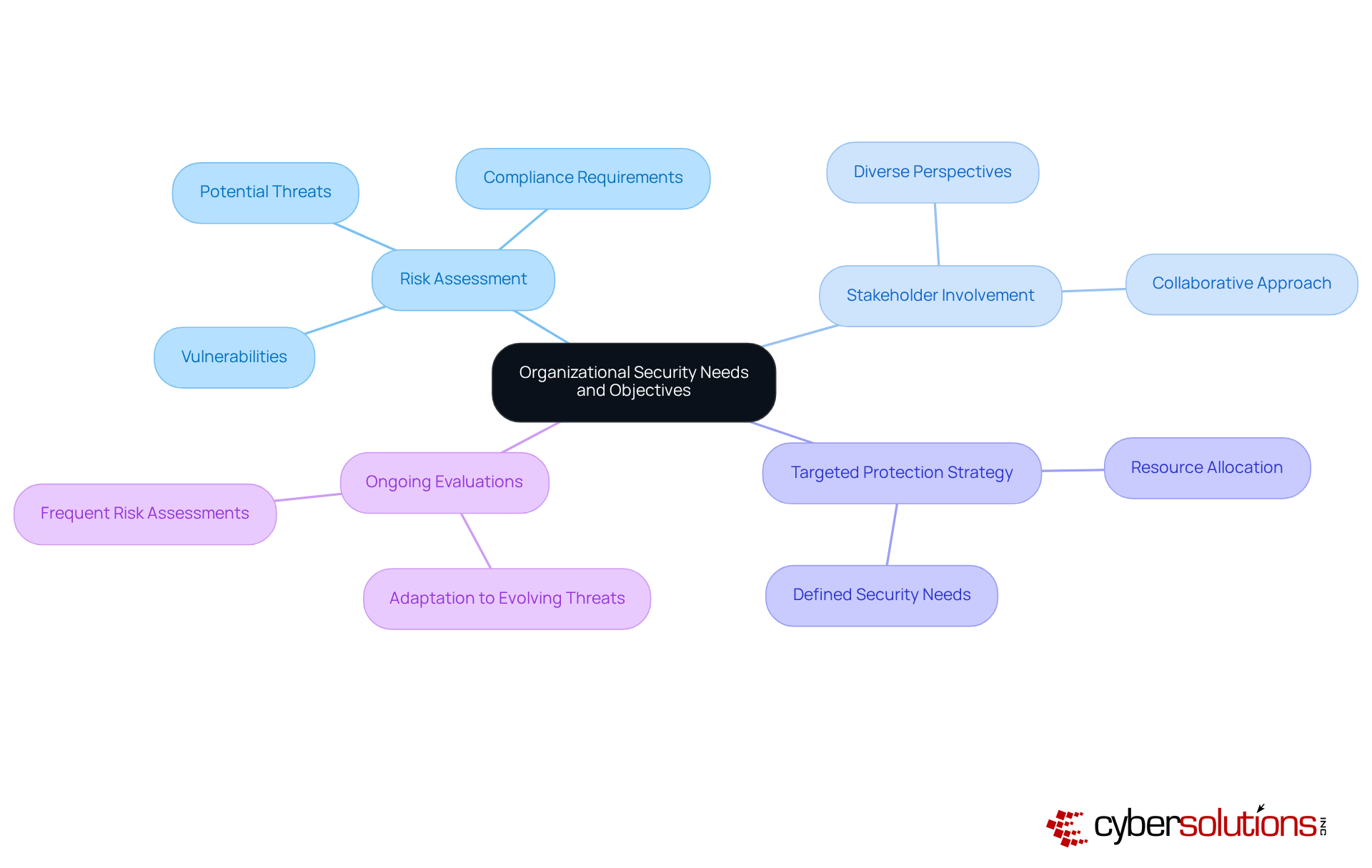
Start at the center with the main focus on security needs. Follow the branches to explore different aspects like risk assessment and stakeholder involvement, and see how they all connect to create a comprehensive security strategy.

Assess Provider Expertise and Industry Experience

In an era where healthcare organizations face unprecedented cybersecurity threats, the stakes have never been higher. When assessing potential information security services companies, it’s crucial to evaluate their expertise and experience within your specific industry. Look for suppliers who have worked with entities like yours; they’ll be more familiar with the unique challenges and regulatory requirements you face. For instance, a professional with extensive experience in the healthcare sector will grasp the intricacies of HIPAA compliance and patient data protection.

Consider a ransomware attack on a healthcare organization: it highlights the urgent need for rapid incident response and effective cybersecurity training. The organization’s network was compromised, affecting approximately 4,500 endpoints and putting patient data and operational continuity at risk. This situation underscores the importance of having a partner, specifically information security services companies, capable of swift remediation efforts, such as the immediate mobilization of an incident response team that can assess threats and begin remediation promptly.

Additionally, verify their certifications, like CISSP or CISM, which indicate a commitment to industry best practices. It’s also essential to evaluate the MSSP's compliance service offerings to ensure they meet current and future regulatory compliance needs. Engaging with references or case studies can provide valuable insights into the provider's capabilities and reliability, especially in managing incidents like ransomware attacks.

Furthermore, confirm that the MSSP stays updated on new threats, regulations, and innovations in cybersecurity tooling and technologies. This adaptability is vital for effective risk management. Taking this thorough approach not only helps you manage risks but also ensures you’re working with information security services companies that truly understand the cybersecurity landscape in your industry. Choosing the right MSSP can be the difference between a secure future and a catastrophic breach that jeopardizes everything you’ve worked for.
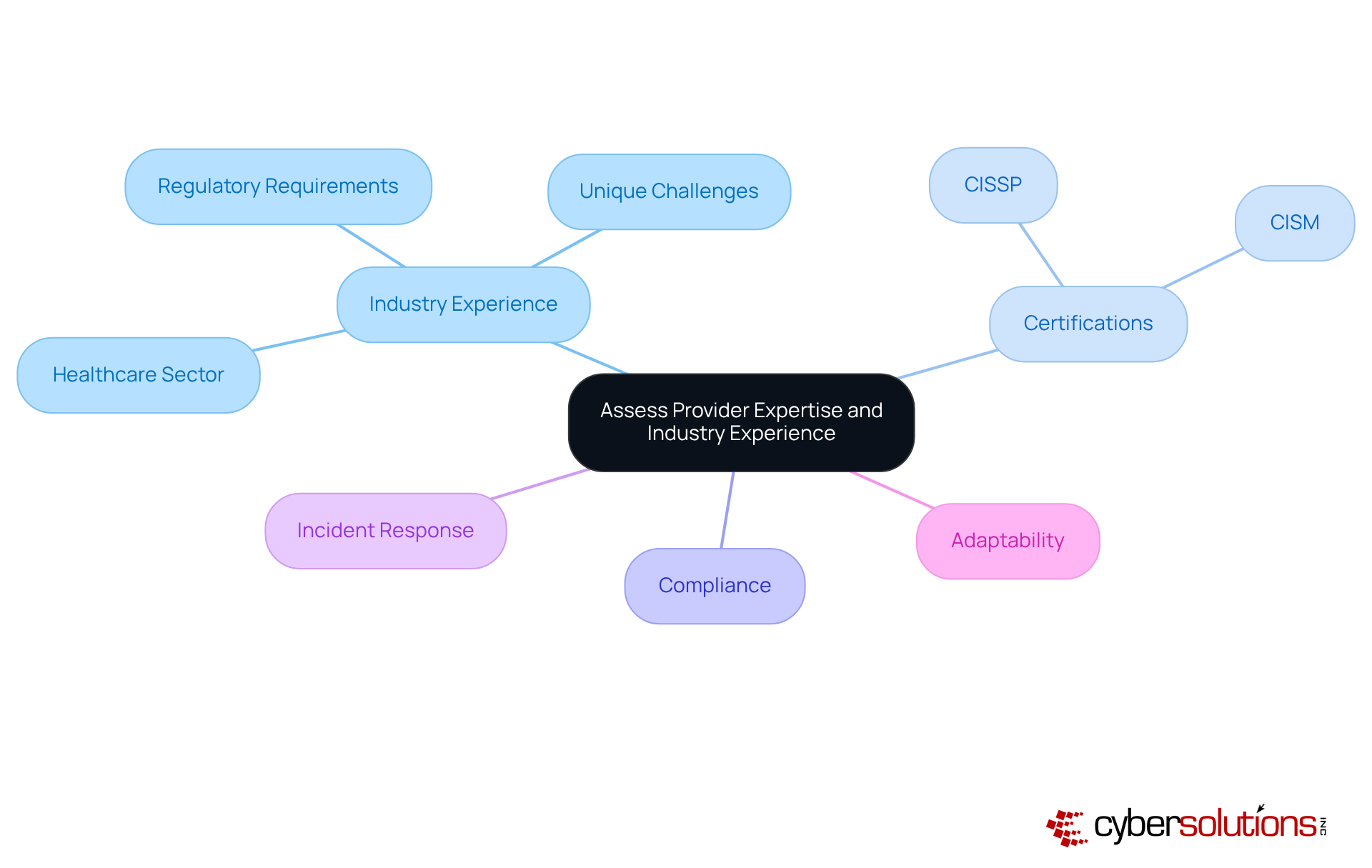
Start at the center with the main focus on assessing provider expertise. Follow the branches to explore different aspects like industry experience and certifications, which are crucial for ensuring the right fit for your cybersecurity needs.

Evaluate Comprehensive Service Offerings

In an era where cyber threats loom larger than ever, healthcare organizations must prioritize robust cybersecurity measures to safeguard sensitive patient data. A comprehensive assessment of potential information security services companies is crucial for organizations seeking to improve their cybersecurity stance. Providers should offer a complete suite of services, including:

  1. Threat detection
  2. Incident response
  3. Compliance management
  4. Ongoing monitoring
  5. Data backup solutions
  6. Endpoint protection

This comprehensive strategy guarantees that every facet of cybersecurity is fortified, from proactive prevention to effective remediation. For instance, managed detection and response (MDR) services are vital as they proactively identify and mitigate threats before they escalate into significant incidents. Cybersecurity experts assert that effective threat detection and incident response are essential to sustaining a strong protection framework.

Furthermore, organizations ought to evaluate if the supplier can tailor their services to fulfill particular requirements, as adaptability is crucial in effectively tackling changing safety challenges. Companies such as FIMBank have effectively improved their defensive stance by adopting MDR services, gaining from round-the-clock monitoring and swift incident response capabilities. These cases underscore the critical importance of choosing a vendor that not only meets your operational needs but also adeptly navigates the complexities of the cybersecurity landscape. Choosing the right cybersecurity partner from information security services companies could mean the difference between a secure future and a costly breach that jeopardizes patient trust and organizational integrity.
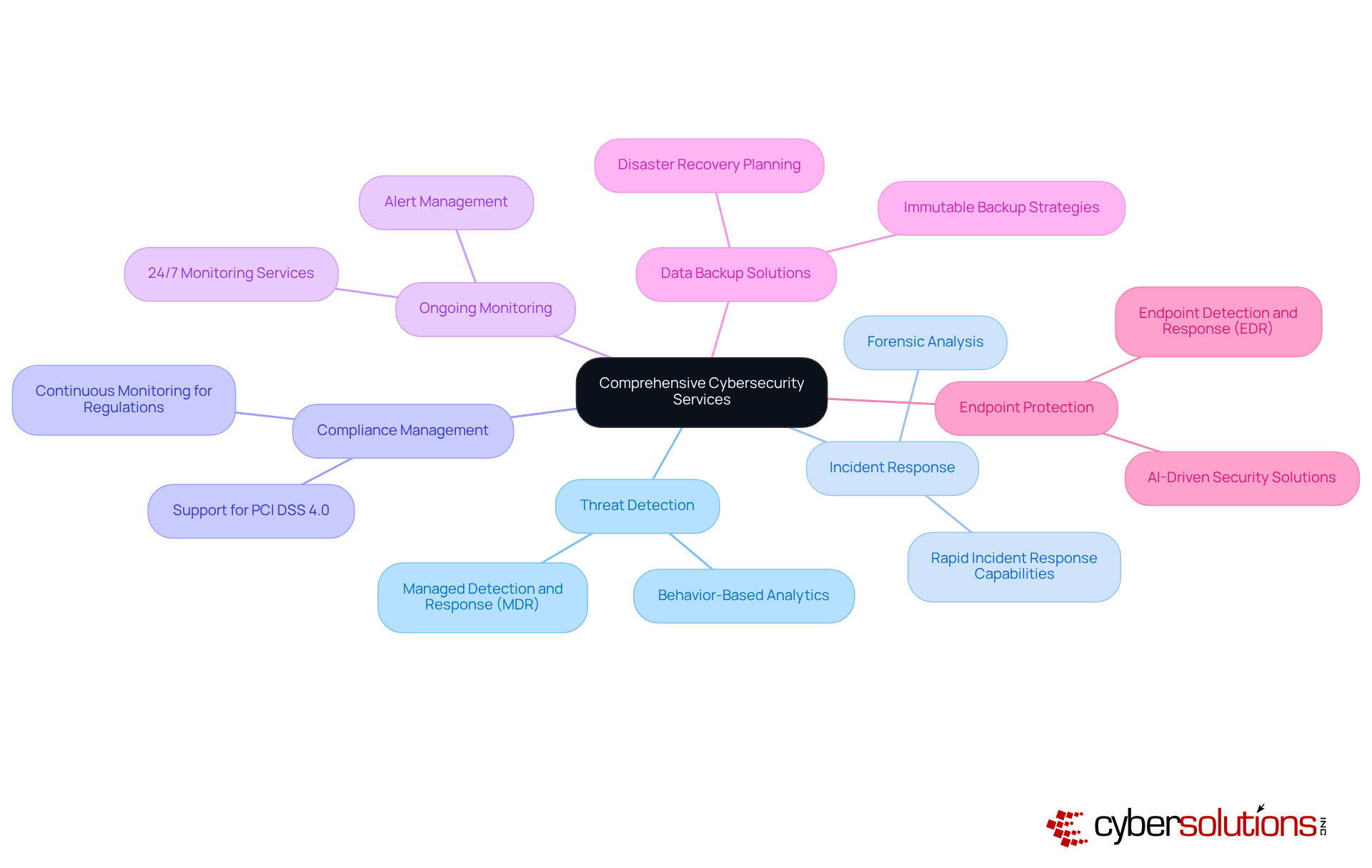
This mindmap starts with the main theme of cybersecurity services at the center. Each branch represents a specific service that contributes to a strong cybersecurity strategy. Follow the branches to see how each service plays a role in protecting sensitive patient data.

Consider Compliance and Regulatory Expertise

In an era where regulatory compliance is paramount, the choice of information security services companies can make or break an organization’s success. In industries like healthcare, finance, and government, where stringent regulations dictate data protection and privacy practices, selecting vendors with strong adherence to these regulations is essential. Organizations must evaluate potential suppliers for their knowledge of critical regulations such as GDPR, HIPAA, and PCI-DSS, as well as their ability to assist in meeting these requirements efficiently.

Assessing a vendor's experience with audits and evaluations is vital; it reveals their operational capabilities and commitment to compliance. For instance, 58% of organizations performed four or more audits in 2025, underscoring the increasing focus on regulatory management. A provider with a proven track record in managing regulatory challenges becomes an invaluable partner for information security services companies, helping to mitigate potential legal and financial risks while ensuring adherence to standards.

Industry leaders emphasize that upholding regulations is not merely a checkbox exercise; it requires ongoing diligence and strategic alignment with business objectives. As organizations increasingly adopt purpose-built technology for compliance management, those that prioritize transparency and accountability in their compliance efforts will not only meet regulatory demands but also gain a competitive edge in their industry.
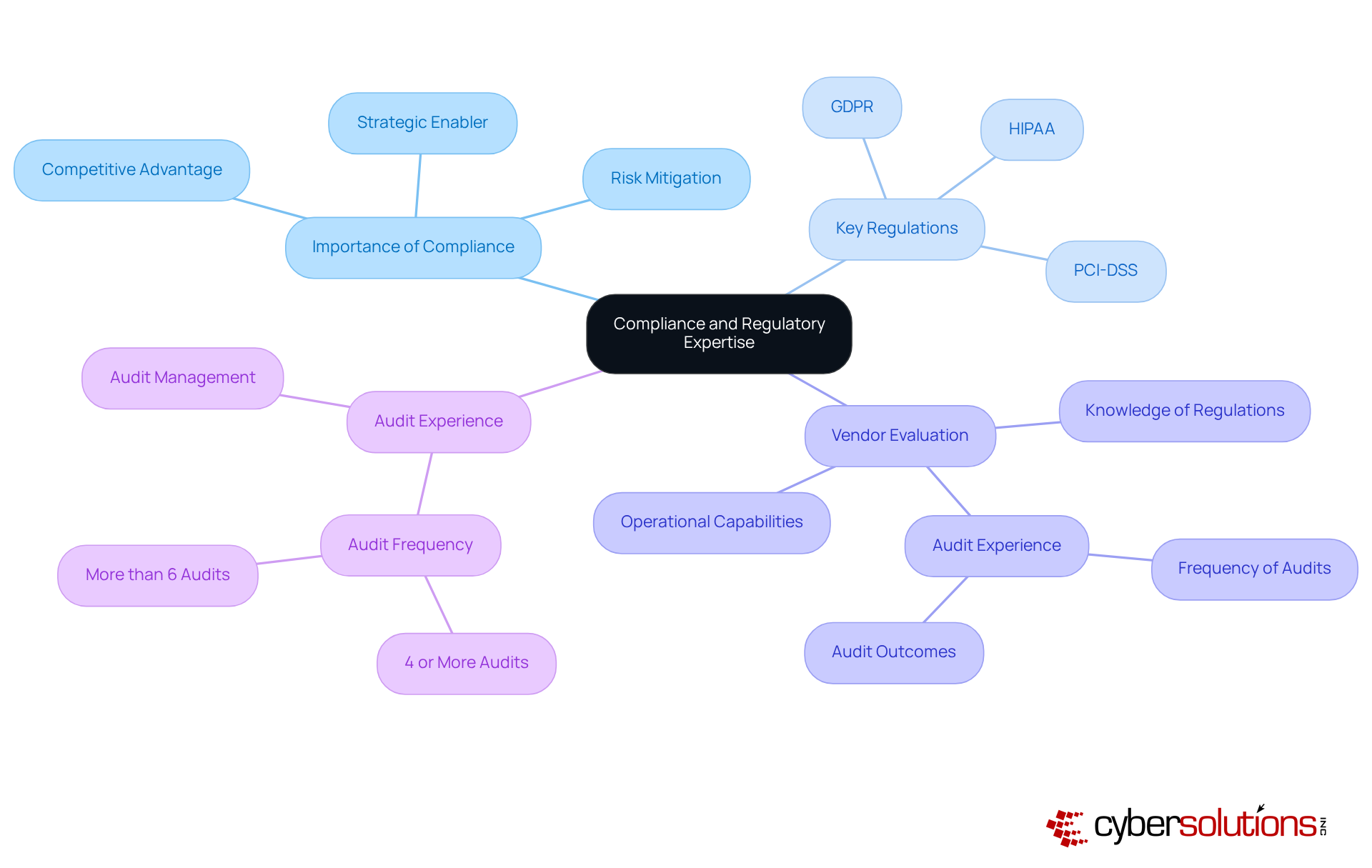
This mindmap starts with the central theme of compliance expertise and branches out to show related topics. Each branch represents a key area of focus, helping you understand how compliance impacts vendor selection and organizational success.

Conclusion

In an era where cyber threats are increasingly sophisticated, selecting the right information security services company is more than just a choice - it's a necessity. This decision can significantly impact an organization's ability to safeguard sensitive data and maintain compliance with industry regulations. By clearly defining organizational security needs and objectives, businesses can create a targeted strategy that addresses their unique vulnerabilities and aligns with their operational goals. This foundational step sets the stage for a comprehensive approach to cybersecurity, ensuring that the chosen partner is well-equipped to meet specific challenges.

Key considerations include:

  • Evaluating the expertise and industry experience of potential providers
  • Assessing their service offerings
  • Ensuring they possess the necessary compliance and regulatory knowledge

Engaging with vendors who have a proven track record in your specific sector can lead to more effective incident responses and better alignment with regulatory standards. A thorough evaluation process, including a review of certifications and case studies, enhances the likelihood of selecting a partner capable of navigating the complexities of the cybersecurity landscape.

As the digital landscape evolves, the right partner will not only safeguard your data but also empower your organization to thrive amidst uncertainty. Organizations that prioritize these best practices not only protect their assets but also foster a culture of security awareness and compliance. As cyber threats continue to evolve, investing in a knowledgeable and adaptable partner will be crucial in maintaining trust with stakeholders and ensuring long-term success in an increasingly digital world.

Frequently Asked Questions

Why is it important for healthcare organizations to define their security needs and objectives?

It is crucial for healthcare organizations to define their security needs and objectives to effectively protect patient data, comply with HIPAA regulations, and develop a targeted protection strategy that aligns with their operational goals.

What is the first step in choosing information security services companies?

The first step is to conduct a thorough risk assessment that identifies vulnerabilities, potential threats, and compliance requirements specific to the healthcare industry.

How do stakeholder involvement and diverse perspectives contribute to security strategies?

Involving key stakeholders ensures that diverse perspectives are considered, resulting in a more robust and comprehensive protection strategy.

Why are frequent risk evaluations important for organizations?

Frequent risk evaluations are important because they help organizations adapt to evolving threats and maintain compliance with stringent regulations.

What role does a culture of awareness play in organizational security?

A culture of awareness fosters vigilance among employees, enhancing overall security and ensuring that everyone is engaged in protecting the organization's assets.

List of Sources

  1. Define Organizational Security Needs and Objectives
    • How a Cybersecurity Risk Assessment Helps You Take Control of Business Security (https://centricconsulting.com/blog/how-a-cybersecurity-risk-assessment-helps-business-security_cyber)
    • Top Cybersecurity Statistics: Facts, Stats and Breaches for 2025 (https://fortinet.com/resources/cyberglossary/cybersecurity-statistics)
    • Cybersecurity Risk Assessment: Why It Matters And How To Do It Right | BlackFog (https://blackfog.com/cybersecurity-risk-assessment-why-it-matters)
    • Why Cybersecurity Risk Assessments Are Crucial for Business | Dynamic Edge (https://dynedge.com/cybersecurity-risk-assessments-business)
    • Security Priorities 2026: Organizations Shift Toward Resilience and Identity as Cyber Risk Accelerates, Says Info-Tech Research Group (https://finance.yahoo.com/news/security-priorities-2026-organizations-shift-170800128.html)
  2. Assess Provider Expertise and Industry Experience
    • Managed Cybersecurity Service Providers Evaluation (https://cynomi.com/blog/how-to-evaluate-managed-cybersecurity-service-providers)
    • 41 Cybersecurity Quotes to Protect Your Digital Life (https://acecloudhosting.com/blog/cybersecurity-quotes)
    • Cybersecurity in Health Care: Protecting Patients from Attacks (https://aspr.hhs.gov/cyber/Pages/default.aspx)
    • qa.com | Top 10 Must Have Cyber Security Certifications in 2026 (https://qa.com/en-us/browse/certifications/cyber-security-certifications/best-cyber-security-certifications)
    • 8 Popular Cybersecurity Certifications in 2026 (https://coursera.org/articles/popular-cybersecurity-certifications)
  3. Evaluate Comprehensive Service Offerings
    • Managed Detection and Response (MDR) Explained (https://sisainfosec.com/blogs/managed-detection-and-response-mdr)
    • Managed Detection and Response (MDR) Market Report 2026-2031, by Security Type, Geo, Tech (https://marketsandmarkets.com/Market-Reports/managed-detection-and-response-market-168039027.html)
    • Top 7 Managed Detection and Response (MDR) Benefits (https://sentinelone.com/cybersecurity-101/services/mdr-benefits)
    • Cybersecurity Awareness Month Quotes and Commentary from Industry Experts in 2025 (https://solutionsreview.com/cybersecurity-awareness-month-quotes-and-commentary-from-industry-experts-in-2025)
    • What Is MDR? Managed Detection and Response | Microsoft Security (https://microsoft.com/en-us/security/business/security-101/what-is-mdr-managed-detection-response)
  4. Consider Compliance and Regulatory Expertise
    • 130+ Compliance Statistics & Trends to Know for 2026 (https://secureframe.com/blog/compliance-statistics)
    • How 2026 Will Reshape Data Privacy and Cybersecurity (https://founderslegal.com/how-2026-will-reshape-data-privacy-and-cybersecurity)
    • MetroWest Daily News: Local News, Politics & Sports in Framingham, MA (https://metrowestdailynews.com/press-release/story/485576/psynth-achieves-hipaa-pipeda-and-gdpr-compliance-independently-verified-across-all-three-frameworks)
    • Faster Security And Compliance Comes With Hidden Risks (https://forbes.com/sites/emilsayegh/2026/04/06/faster-security-and-compliance-comes-with-hidden-risk)
    • 101 Compliance Statistics for 2026 (https://spacelift.io/blog/compliance-statistics)
Recent Posts
Explain the Importance of Data Backup for Business Resilience
4 Best Practices for Choosing Information Security Services Companies
What Does It Mean to Be in Compliance? Key Insights for Leaders
Boost Operational Efficiency with Managed IT Services Mobile
4 Best Practices for Effective Cyber Security Evaluation
Understand Adware and Spyware: Protect Your Business Today
IT Policy for Company: Key Components and Industry Challenges
Best Practices for Choosing Your EDR Provider Effectively
Optimize Your Disaster Recovery Plan for Time and Cost Efficiency
What to Do If You Get Phished: Essential Strategies for Leaders
Master CMMC Processes: Essential Best Practices for Compliance Success
4 Best Practices for Advanced Threat Analysis in Cybersecurity
What Is Anti-Phishing Software and Why It Matters for Your Business
4 Steps to Master the Vulnerability Scanning Process for Security
What Expense Should You Expect When Buying a New Firewall?
Master the FTC Safeguards Rule for Your Risk Assessment Template
Master NIST 800-171 Compliance Audit in 6 Essential Steps
Master Managed Services Projects: Key Strategies for C-Suite Leaders
Master FTC MFA Requirements: A Step-by-Step Guide for Leaders
Enhance Password Compliance with These 4 Essential Strategies
10 Key Factors Influencing Network Firewall Pricing for Executives
4 Best Practices for Effective Firewall Testing and Security
Master the CMMC Assessment Guide Level 2 for Effective Compliance
Why Local IT Services Providers Are Key to Business Success
10 Key Benefits of Partnering with IT MSPs for Your Business
Why Healthcare CFOs Should Choose an Outsourced IT Provider
4 Best Practices for CFOs in AI Data Security Compliance
What Is Defense in Depth? Understanding Its Importance for Healthcare CFOs
Essential Corporate Data Backup Practices for Healthcare CFOs
10 Benefits of Outsourced IT Management for Healthcare CFOs
Master Restricting Access: Best Practices for CFOs on OAuth Management
Master Living Off the Land: A CFO's Guide to Sustainability
Master Digital Security Controls for Healthcare CFOs
10 Essential IT Services for Healthcare CFOs to Enhance Security
Master Critical Security Controls for Healthcare CFOs
Best Practices for Managed Cyber Security in Healthcare CFOs
What MSPs Stand For and Why They Matter for Healthcare CFOs
Choosing the Right Managed Cybersecurity Services Provider for CFOs
What Is CMMC Compliance and Why It Matters for Healthcare CFOs
How to Reduce the Risk of Cyber Attack: 4 Essential Steps for CFOs
What Compliance Means: Key Concepts for Healthcare CFOs
5 Best Practices for Achieving CMMC 1.0 Compliance Success
Understanding Cybersecurity as a Service for Healthcare CFOs
Why MSPs in Technology Are Essential for Healthcare CFOs
10 Benefits of Data Security as a Service for Healthcare CFOs
Evaluate 4 Leading Disaster Recovery Software Vendors for Your Business
What IT Services Can Be Outsourced for Business Success?
Enhance Cyber Resilience with Effective External Vulnerability Scanning
Cyber Security Outsourcing Companies vs. In-House Solutions: Key Insights
4 Steps to Optimize Business IT Support for Healthcare CFOs
Understanding Managed Service Provider Costs: Key Factors and Models
Why Fully Managed Services Are Essential for Cybersecurity Success
Understanding the Average Cost of Cybersecurity Services for Leaders
Master Managing Firewalls: Essential Steps for C-Suite Leaders
Master HIPAA Compliant Firewall Requirements for Your Organization
How to Manage Company Laptops: A Step-by-Step Guide for Leaders
6 Best Practices for a Successful Managed Services Strategy
4 Best Practices for Choosing Your NIST Compliance Tool
10 Essential CMMC 2.0 Controls List for Compliance Success
Best Practices for Effective Data Backup Support in Your Organization
4 Essential Cybersecurity Compliance Solutions for C-Suite Leaders
Master Data Backup and Recovery: Best Practices for C-Suite Leaders
Master Two-Factor Authentication for Business: Best Practices Unveiled
Best Practices for Backing Up Your Data Effectively
Enhance Security with Best Practices for Secure Web Browsing
Master 365 Services: Best Practices for Compliance and Efficiency
4 Strong Password Guidelines for C-Suite Leaders to Enhance Security
Essential Backup Information for Compliance and Security Strategies
Business IT Providers vs. In-House IT: Key Comparison for Leaders
Compare Top Two Factor Authentication Service Providers for Your Business
Master HIPAA Compliant Infrastructure: Key Steps for Executives
What LOTL Stands for in Cybersecurity and Its Implications
4 Best Practices for Your Cyber Attack Incident Response Plan
4 Best Practices for Effective Information Technology Spending
Understanding Cyber Security Exercises: Importance and Benefits
5 Best Practices for Optimizing Your Hybrid Work Setting
Understanding Office 365 Meaning: Key Features and Implications
What Office 365 Means for Cyber Solutions Inc.: A Case Study on Transformation
Master Defence in Depth Cyber Security: 5 Steps for C-Suite Leaders
Boost Security Awareness Among Employees with Proven Best Practices
Implement the NIST Incident Response Playbook in 4 Simple Steps
What is a Managed IT Support Service Provider and Why It Matters
Why Data Backup is Important for Business Resilience and Growth
Best Practices for Effective Managed IT Security Solutions
4 Best Practices for Backup & Disaster Recovery Services Success
Best Practices for AI and Machine Learning in Cyber Security
Why USB Malware Threats Matter for C-Suite Leaders Today
What Are Vulnerability Scanners and Why They Matter for Your Business
Create a Disaster Recovery Plan Template for Your Small Business
Master USB Malware: Detect, Prevent, and Educate Your Team
Implementing a Cloud First Approach: A Step-by-Step Guide for Leaders
Compare MS Office or Office 365: Features, Pricing, and Security
Master Dark Web Security Monitoring: Key Practices for C-Suite Leaders
Master CMMC 2.0 Compliance Requirements in 5 Actionable Steps
Master IT Security Assessments: Key Practices for C-Suite Leaders
Why Companies Should Restrict Internet Access: Key Security and Compliance Reasons
10 Essential CMMC Controls List for Compliance Success
Master KPIs for IT: Drive Success with Effective Strategies
9 Essential CMMC Level 3 Controls for C-Suite Leaders
10 Essential CMMC 2.0 Controls for Cybersecurity Success