Introduction
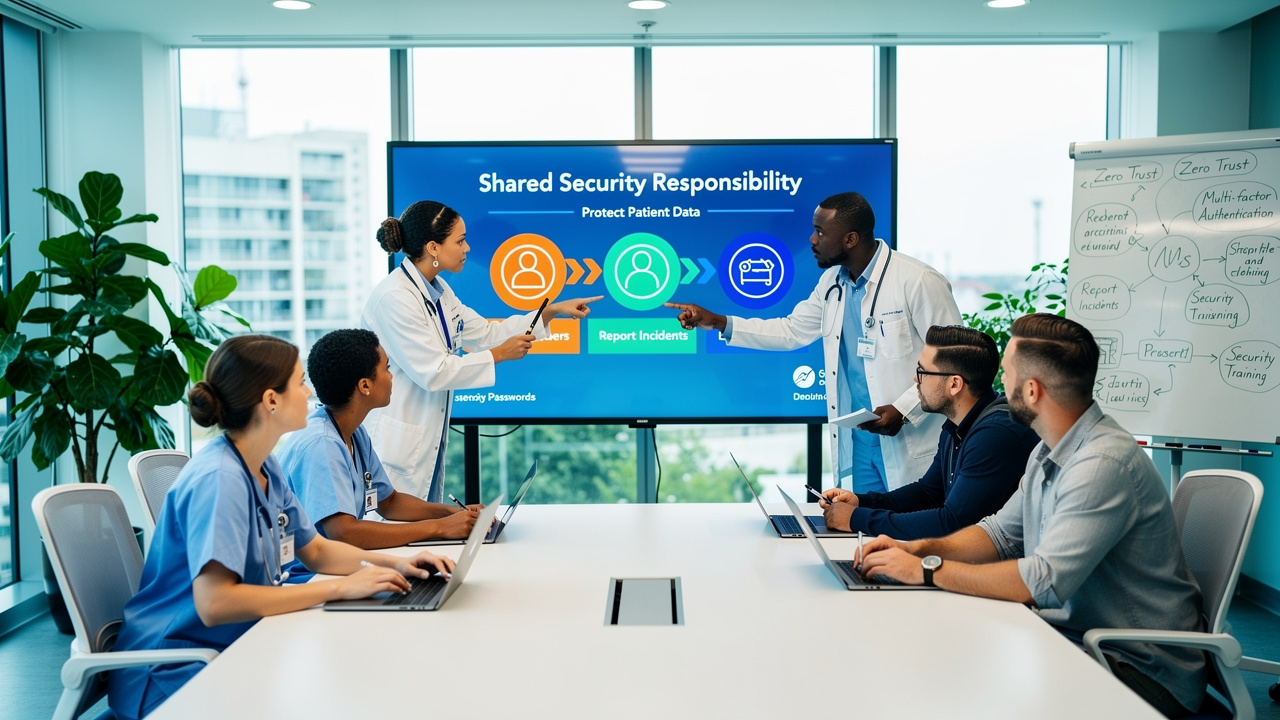
In today's healthcare landscape, the stakes of cybersecurity have never been higher, as cyber threats evolve and target sensitive patient information. The responsibility for safeguarding this information has shifted from a singular IT function to a collective organizational duty. By fostering a culture of shared security responsibility, organizations can significantly enhance their cybersecurity posture while ensuring that every employee plays an active role in protecting valuable assets.
But what steps can organizations take to ensure that security is a priority for everyone involved?
Establish a Culture of Shared Security Responsibility
In an era where cyber threats loom larger than ever, the healthcare sector must prioritize cybersecurity, as security is everyone's responsibility among all employees, not just the IT department. Creating a culture of shared safety responsibility starts with a strong commitment from leadership. Here are key strategies to cultivate this culture:
- Leadership Buy-In: Executives and managers should actively support safety initiatives, demonstrating their commitment through both actions and policies. This top-down approach enhances visibility and accountability within the organization.
- Open Communication: Create a setting where staff feel comfortable addressing safety issues without fear of consequences. Frequent updates on incidents and lessons learned promote transparency and shared awareness.
- Recognition Programs: Implement initiatives that acknowledge and reward employees who exemplify strong protective practices. Such acknowledgment fosters a culture of accountability and inspires others to prioritize safety in their daily activities.
- Integration into Daily Operations: Make discussions about safety a routine part of meetings and workflows. By integrating protection into daily operations, it becomes a fundamental element of the organizational culture.
- Proactive Network Hardening: Close potential attack vectors by updating protection configurations and optimizing endpoint defenses. Provide immediate training for staff on recognizing suspicious emails and maintaining proper cybersecurity hygiene. Entities that have implemented these measures have experienced substantial enhancements in their protection stance, including a marked decrease in successful phishing attacks.
Healthcare organizations can enhance their cybersecurity posture and safeguard the trust of their patients and stakeholders by fostering a culture where security is everyone's responsibility.

Define Roles and Responsibilities for Security
In an era where cybersecurity threats loom large, defining roles and responsibilities is not just important; it's essential for safeguarding healthcare organizations. Here’s how to implement this:
- Role Identification: Identify key protective roles within the organization, such as Chief Information Protection Officer (CISO), Analysts, Incident Response Teams, and Compliance Managers. Each role should have a clear job description outlining specific responsibilities, ensuring accountability and effectiveness in the management of safety.
- Cross-Department Cooperation: Encourage teamwork among departments to ensure that responsibilities related to protection are understood throughout the organization. For instance, IT should work closely with HR to securely manage employee onboarding and offboarding processes, while finance should ensure appropriate budget allocations for cybersecurity initiatives.
- Consistent Development: Establish continuous learning sessions that elucidate each role's duties and their contributions to the organization's safety goals. This training should be updated regularly to reflect changes in protection policies, emerging threats, and compliance requirements, ensuring that all personnel are equipped to respond effectively.
- Documentation: Maintain a centralized document that outlines all roles and responsibilities related to protective measures, including a Cybersecurity Program Roles and Responsibilities matrix. This document should be easily accessible to all employees and reviewed and updated yearly to reflect any changes in personnel or organizational structure, emphasizing the significance of safety as a collective responsibility.
- Frequent Risk Evaluations: Carry out frequent risk evaluations in accordance with compliance requirements to proactively handle safety responsibilities. This practice assists in recognizing possible weaknesses and guarantees that protective measures are efficient and current.
Ultimately, a well-defined structure not only fortifies safety measures but also cultivates a culture of accountability and resilience across the organization.

Implement Training and Awareness Programs
In an era where cyber threats are evolving at an unprecedented pace, training and awareness programs are not just beneficial; they are essential for safeguarding healthcare organizations. Here are key steps to implement effective programs:
- Customized Development: Create programs specific to various roles within the organization. For example, technical personnel may require extensive education on advanced security tools, while non-technical staff should focus on recognizing phishing attempts and understanding social engineering strategies. With generative AI on the rise, it's crucial to prepare for how attackers might use personalized phishing emails and deepfake videos. At Cyber Solutions, staff received prompt instruction on identifying suspicious emails and upholding proper cybersecurity practices, which is essential in today’s threat landscape.
- Regular Updates: Given the rapid evolution of security threats, instruction must be frequently updated to incorporate the latest risks and best practices. Conduct quarterly refreshers or annual workshops to keep staff informed and alert. Organizations that implement effective training report 60-80% decreases in staff falling victim to attacks.
- Interactive Learning: Engage staff through interactive methods such as simulations, workshops, and gamified learning experiences. These methods not only help employees remember what they learn but also make it easier for them to apply security practices in real situations. Additionally, executive sponsorship is crucial for the success of these programs, as leadership commitment drives cultural change and enhances participation.
- Evaluation and Response: Create assessments to gauge the effectiveness of educational programs and gather participant feedback. This information is essential for continuously improving instructional content and delivery techniques, ensuring they meet the changing requirements of the entity.
By investing in customized training and awareness initiatives, companies empower employees to act as the primary line of defense against cyber threats, highlighting that security is everyone's responsibility and significantly enhancing overall safety. By prioritizing training, organizations not only fortify their defenses but also empower their workforce to be vigilant guardians against cyber threats.

Regularly Assess and Update Security Practices
In an era where cyber threats are increasingly sophisticated, the healthcare sector must prioritize robust cybersecurity measures because security is everyone's responsibility to safeguard sensitive patient data. To maintain a strong protective stance, organizations must regularly evaluate and refresh their safety practices. Here’s how to do it effectively:
- Conduct Regular Audits: Schedule assessments at least annually to evaluate the effectiveness of current protective measures. These audits should include both technical controls and organizational policies, ensuring a thorough review of protective practices.
- Vulnerability Assessments: Implement vulnerability assessments regularly to identify potential weaknesses in systems and applications. Utilizing automated tools can streamline this process, providing thorough coverage and enhancing detection capabilities.
- Incident Response Drills: Carry out incident response exercises to evaluate the entity’s readiness for possible safety incidents. Involving all relevant stakeholders in these drills allows for a realistic assessment of response capabilities and highlights areas for improvement.
- Stay Informed: Keep up to date with the latest protection trends, threats, and regulatory changes. Engaging with industry newsletters, attending conferences, and participating in professional groups can provide valuable insights and updates.
Only through proactive and continuous evaluation can organizations fortify their defenses against the ever-evolving landscape of cyber threats.

Conclusion
In an era where cyber threats loom large, fostering a culture of shared security responsibility is not just important; it's critical for healthcare organizations. Security isn't just an IT issue; it requires everyone’s commitment to protect valuable data and maintain trust with patients and stakeholders.
Key strategies for fostering this culture include:
- Securing leadership buy-in
- Promoting open communication
- Implementing recognition programs
- Integrating security discussions into daily operations
Furthermore, defining clear roles and responsibilities, providing tailored training, and regularly assessing security practices are critical components that enhance organizational resilience against cyber threats. By empowering employees through education and accountability, organizations can significantly reduce the risk of security breaches.
Ultimately, everyone shares the responsibility for security. Cultivating an environment where each individual understands their role in protecting the organization is paramount. By embracing these strategies, organizations can not only protect their data but also empower their workforce to be vigilant defenders against cyber threats.
Frequently Asked Questions
Why is cybersecurity important in the healthcare sector?
Cybersecurity is crucial in the healthcare sector due to the increasing prevalence of cyber threats. It is essential for protecting sensitive patient information and maintaining trust among patients and stakeholders.
What is meant by a culture of shared security responsibility?
A culture of shared security responsibility means that all employees, not just the IT department, are accountable for cybersecurity. It emphasizes that everyone in the organization plays a role in maintaining safety and security.
What role does leadership play in establishing a culture of shared security responsibility?
Leadership plays a vital role by actively supporting safety initiatives and demonstrating commitment through actions and policies. This top-down approach enhances visibility and accountability within the organization.
How can open communication contribute to cybersecurity in healthcare organizations?
Open communication fosters an environment where staff feel comfortable discussing safety issues without fear of repercussions. It encourages transparency and shared awareness, which are essential for addressing cybersecurity challenges effectively.
What are recognition programs, and how do they help in promoting cybersecurity?
Recognition programs acknowledge and reward employees who demonstrate strong protective practices. Such initiatives foster a culture of accountability and inspire others to prioritize safety in their daily activities.
How can organizations integrate cybersecurity discussions into daily operations?
Organizations can make discussions about safety a routine part of meetings and workflows, ensuring that cybersecurity becomes a fundamental element of the organizational culture.
What is proactive network hardening, and why is it important?
Proactive network hardening involves closing potential attack vectors by updating protection configurations and optimizing endpoint defenses. It is important for enhancing the organization's cybersecurity posture and preventing successful cyber attacks.
What training should be provided to staff regarding cybersecurity?
Staff should receive immediate training on recognizing suspicious emails and maintaining proper cybersecurity hygiene to better protect the organization from cyber threats.
What benefits have organizations experienced after implementing these cybersecurity measures?
Organizations that have implemented these measures have reported substantial enhancements in their protection stance, including a marked decrease in successful phishing attacks.
List of Sources
- Establish a Culture of Shared Security Responsibility
- techclass.com (https://techclass.com/resources/learning-and-development-articles/cybersecurity-culture-starts-at-the-top-why-leadership-needs-awareness-training)
- securitymagazine.com (https://securitymagazine.com/articles/99573-embracing-a-company-culture-of-cybersecurity-starts-at-the-top)
- hankamer.baylor.edu (https://hankamer.baylor.edu/news/story/2024/leadership-culture-cornerstone-effective-cybersecurity)
- avatier.com (https://avatier.com/blog/measuring-security-culture-kpis)
- uhy-us.com (https://uhy-us.com/insights/news/2025/may/building-a-strong-cybersecurity-culture)
- Define Roles and Responsibilities for Security
- vistrada.com (https://vistrada.com/resources/insights/cybersecurity-roles-and-responsibilities)
- tufin.com (https://tufin.com/blog/understanding-cyber-security-team-roles-and-responsibilities)
- sophos.com (https://sophos.com/en-us/cybersecurity-explained/cyber-security-jobs-and-rolls)
- hooksecurity.co (https://hooksecurity.co/blog/cross-functional-collaboration-boosts-security)
- Implement Training and Awareness Programs
- uscsinstitute.org (https://uscsinstitute.org/cybersecurity-insights/resources/cybersecurity-awareness-training-for-employees-in-2026)
- righthandtechnologygroup.com (https://righthandtechnologygroup.com/blog/cybersecurity/cybersecurity-awareness-training)
- tech.msu.edu (https://tech.msu.edu/news/2026/03/new-cybersecurity-awareness-training-for-2026)
- Best Practices for Security Awareness Training in 2026 (https://adaptivesecurity.com/blog/security-awareness-training-best-practices-2026)
- riskaware.io (https://riskaware.io/cybersecurity-training-for-employees)
- Regularly Assess and Update Security Practices
- sentinelone.com (https://sentinelone.com/cybersecurity-101/cybersecurity/information-security-risk-assessment)
- fticonsulting.com (https://fticonsulting.com/insights/articles/california-consumer-privacy-act-cybersecurity-audits-foundational-requirement)
- swktech.com (https://swktech.com/how-ccpa-audit-rule-affects-smb-2026)
- researchgate.net (https://researchgate.net/publication/392928060_The_Role_of_Regular_Security_Assessments_in_Maintaining_Information_Assurance_Across_IT_Infrastructure)
- The Critical Role of Regular Cybersecurity Assessments in Risk… (https://visualedgeit.com/blog/the-critical-role-of-regular-cybersecurity-assessments-in-risk-management)