
4 Steps to Master the Vulnerability Scanning Process for Security

4 Steps to Master the Vulnerability Scanning Process for Security

Introduction

In today's healthcare landscape, the stakes of cybersecurity have never been higher, with threats evolving at an alarming rate. The vulnerability scanning process stands out as a vital defense mechanism for organizations, particularly in healthcare. This proactive approach not only identifies potential weaknesses but also enhances compliance with industry regulations, safeguarding sensitive data.

As vulnerabilities multiply, how can organizations tackle the complexities of vulnerability management to fortify their defenses? Mastering vulnerability management is not just a best practice; it's a critical necessity for safeguarding patient data and maintaining trust in healthcare systems.

Define Vulnerability Scanning and Its Importance

In an era where cyber threats are escalating, the vulnerability scanning process has become a critical line of defense for healthcare organizations. This proactive approach is crucial for spotting weaknesses that cybercriminals could exploit. By providing a comprehensive view of a company's security posture, risk assessments enable prompt remediation of potential threats, significantly reducing the likelihood of data breaches.

Recent trends indicate a rise in security disclosures, with projections suggesting that close to 59,000 Common Vulnerabilities and Exposures (CVEs) could be published in 2026. With the increasing number of vulnerabilities, how can organizations ensure they are protected? Implementing regular threat assessments as part of their cybersecurity strategy is essential. The vulnerability scanning process not only enhances security but also facilitates compliance with industry regulations, thereby mitigating legal and financial repercussions associated with data breaches.

For example, entities in the healthcare field have reported a staggering 168% rise in security attacks, emphasizing the critical need for strong examination practices to safeguard sensitive patient information. How can ongoing security assessments help these entities manage compliance obligations like HIPAA more effectively? By employing these assessments, organizations can ensure their defenses are aligned with emerging threats.

Expert opinions stress that security scanning is not just a technical requirement but a strategic necessity. It enables entities to prioritize their security measures efficiently, concentrating on high-severity weaknesses that present the greatest danger. Organizations risk not only their data but also their reputation and financial stability without a robust vulnerability scanning process. As the threat environment evolves, the ability to swiftly recognize and address vulnerabilities will be essential for maintaining compliance and enhancing overall cybersecurity resilience.
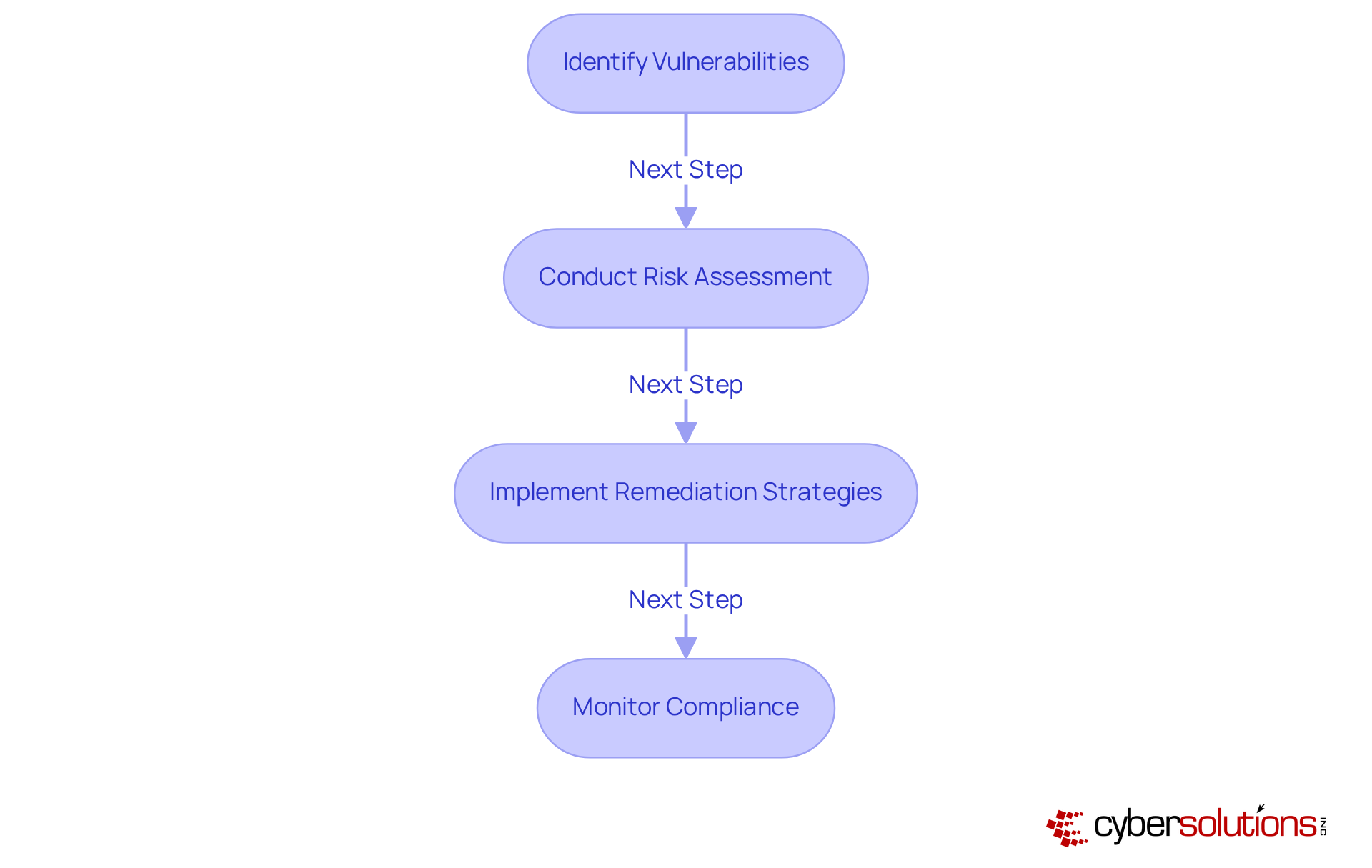
This flowchart illustrates the steps involved in vulnerability scanning. Start at the top with identifying vulnerabilities, then follow the arrows to see how each step leads to the next, ultimately helping organizations enhance their cybersecurity and compliance.

Outline the Steps in the Vulnerability Scanning Process

In an era where cyber threats loom larger than ever, the healthcare sector stands at a critical juncture, facing unprecedented challenges in safeguarding sensitive information. The vulnerability scanning process is crucial for recognizing and reducing security threats within a company. It typically involves several key steps:

  1. Asset Discovery: This initial phase focuses on identifying all devices, applications, and systems within the network that need examination. A thorough inventory guarantees that no essential assets are missed, enabling organizations to efficiently prioritize weaknesses.
  2. Scanning Configuration: In this step, the scanning tool is set up with specific parameters, including the scope of the scan and the categories of weaknesses to be assessed. Proper setup is essential for the vulnerability scanning process to achieve precise outcomes and efficient risk management.
  3. Conducting the Scan: The scan is performed using automated tools intended to detect weaknesses across the network. This phase may include both authenticated and unauthenticated scans, providing a thorough overview of potential weaknesses.
  4. Reviewing Scan Results: After the scan, the output is examined to identify weaknesses, assess their severity, and evaluate their potential impact on the organization. This analysis helps organizations make informed decisions about how to effectively tackle the vulnerabilities identified during the vulnerability scanning process.
  5. Reporting Findings: Finally, the findings are documented in a clear and actionable report. This report details recognized weaknesses, categorizes their risk levels, and offers suggested remediation steps, facilitating effective communication and action planning.

Organizations are urged to implement best practices during the vulnerability scanning process, including the incorporation of threat intelligence feeds to enhance weakness detection and prioritization. Regular security assessments, including the vulnerability scanning process, not only aid in sustaining a robust protective stance but also guarantee adherence to industry standards, ultimately protecting essential information and operational integrity.

In 2025, a record 48,185 CVEs were published, highlighting the necessity of performing regular security scans. The typical mean duration to address high and critical issues was 54.81 days, emphasizing the need for effective resolution strategies. Additionally, the CISA Known Exploited Vulnerabilities catalog grew to 1,484 entries, underscoring the importance of addressing known threats promptly. As Dima Potekhin, CTO and Co-Founder of CyCognito, suggests, integrating real-time threat intelligence feeds with your security scanner can significantly enhance detection capabilities. Organizations must also navigate challenges such as legacy systems blocking patches and high rates of false positives, which complicate the remediation process. Without a proactive approach to risk management, organizations risk not only their data but also their reputation and operational viability in an increasingly hostile digital landscape.
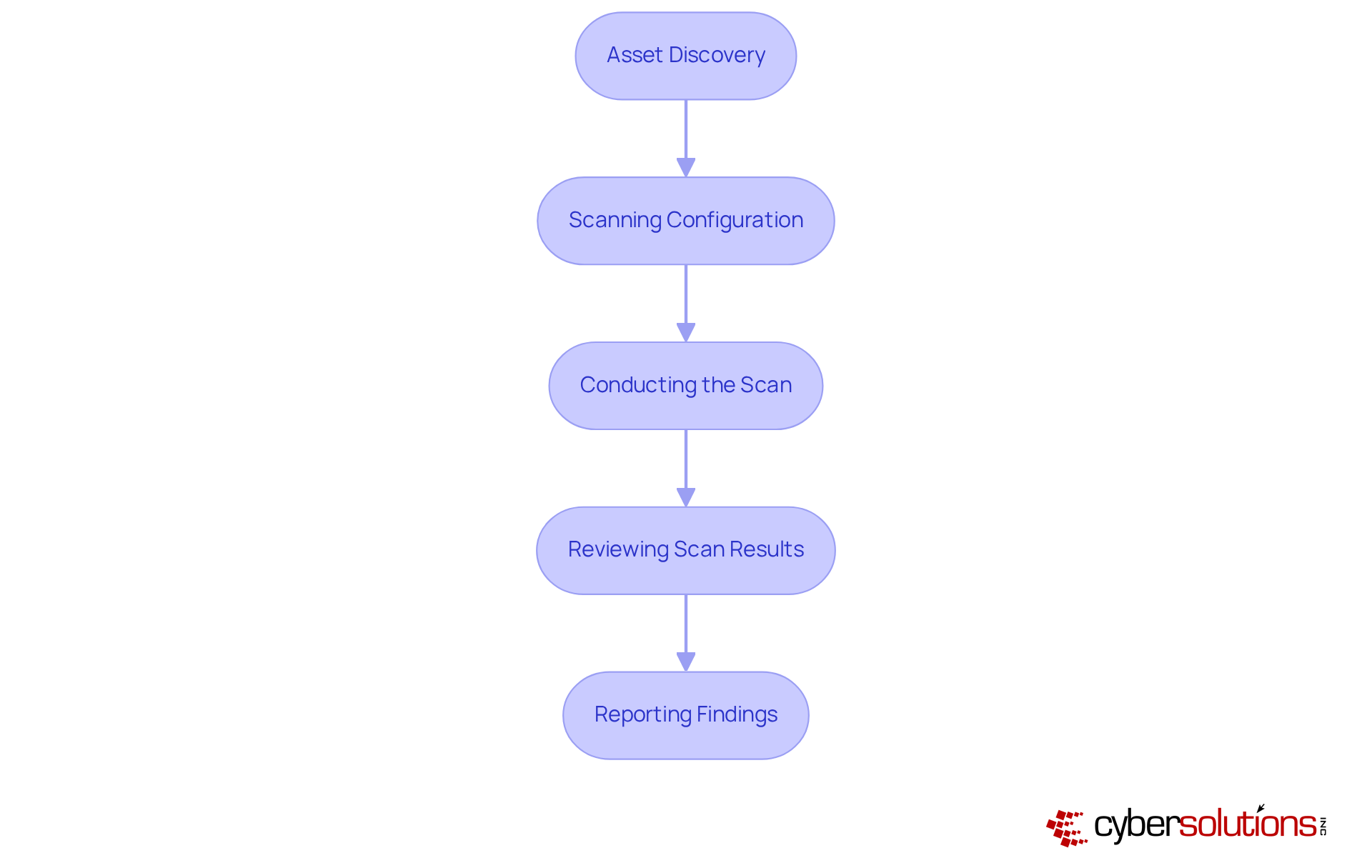
Each box represents a step in the vulnerability scanning process. Follow the arrows to see how each step leads to the next, helping you understand the entire process from identifying assets to reporting findings.

Implement Best Practices for Effective Vulnerability Scanning

In an era where cyber threats loom larger than ever, healthcare organizations must prioritize cybersecurity to safeguard sensitive patient data and maintain trust. To ensure effective vulnerability scanning, organizations should adhere to the following best practices:

  1. Regular Assessment Schedule: Establishing a routine assessment timetable is crucial. By doing so, organizations can swiftly identify and address vulnerabilities, ensuring they stay one step ahead of potential threats.
  2. Comprehensive Asset Inventory: Keeping an up-to-date inventory of all assets is essential. This ensures that every component is included in the vulnerability scanning process, leaving no room for oversight.
  3. Prioritize Weaknesses: Adopting a risk-oriented strategy to rank weaknesses is vital. Focus on high-risk vulnerabilities first to mitigate the most significant threats to your organization.
  4. Incorporate with Correction Procedures: Integrating the results from the vulnerability scanning process into your correction procedures is essential for prompt remediation. This proactive approach can significantly reduce potential risks.
  5. Continuous Improvement: Regularly reviewing and updating your assessment tools and methodologies is crucial. This adaptability ensures your organization remains resilient against evolving threats and vulnerabilities.

By adopting these best practices, organizations can not only protect their assets but also enhance their overall security posture in an increasingly hostile digital landscape.
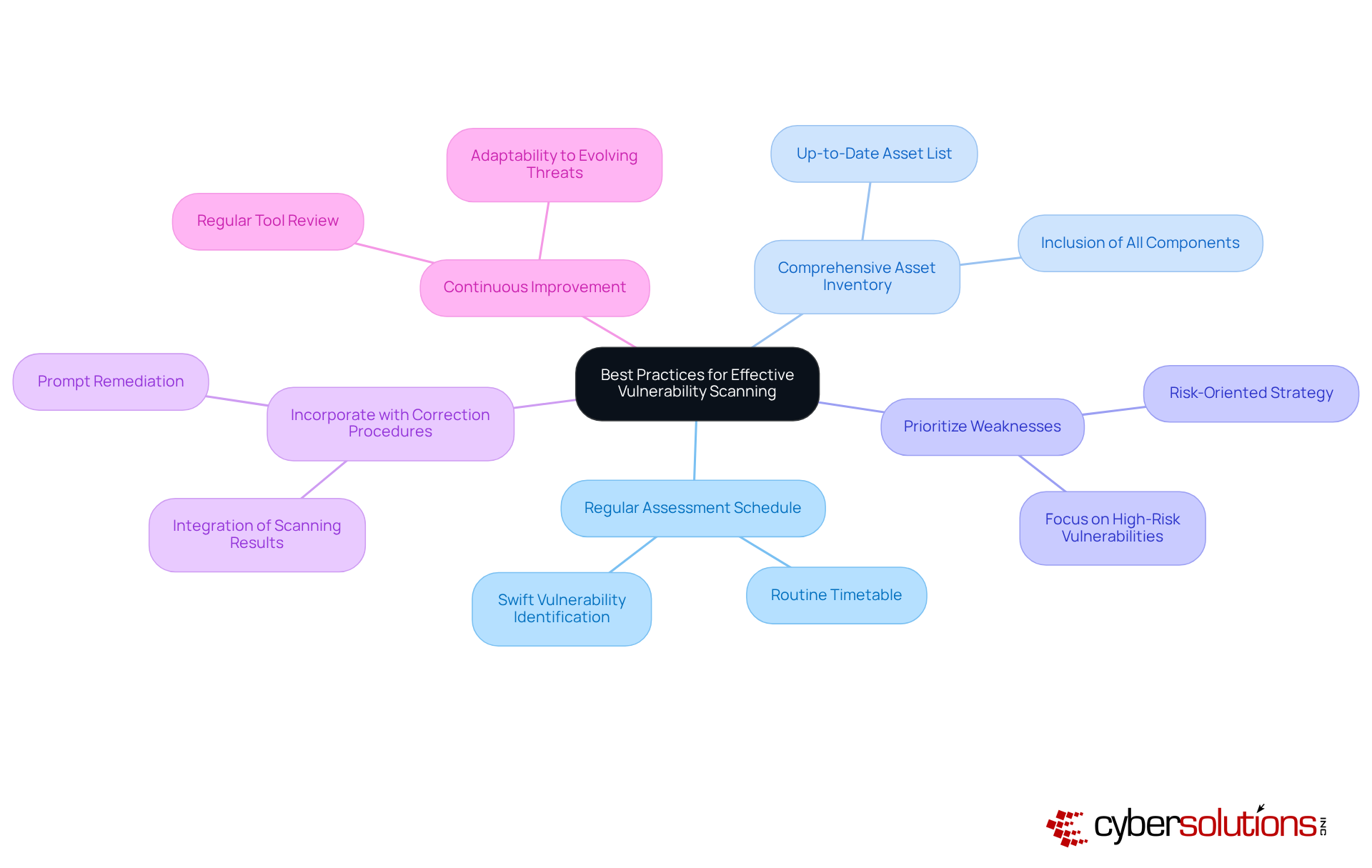
The central node represents the overall goal of effective vulnerability scanning. Each branch highlights a specific best practice that contributes to achieving this goal. Follow the branches to understand how each practice supports the organization's cybersecurity efforts.

Analyze Scanning Results and Plan Remediation

In an era where healthcare data breaches are on the rise, understanding cybersecurity vulnerabilities is not just important - it's imperative for safeguarding patient information and organizational integrity. After completing a vulnerability scan, the next essential step is to analyze the results and formulate a remediation strategy:

  1. Review Security Reports: Scrutinize the detailed reports generated by the scanning tool, paying close attention to the severity and potential impact of each identified risk. This initial review is crucial for understanding the landscape of risks.
  2. Risk Evaluation: Perform a comprehensive risk evaluation to assess the potential outcomes of each weakness being exploited. Given that almost half of initial access attacks stem from human errors, prioritizing corrective actions on high-risk weaknesses is essential.
  3. Develop a Correction Strategy: Create a structured correction plan that outlines how each weakness will be addressed. This plan should include timelines, responsible parties, and the resources needed for effective resolution. Organizations that fail to address weaknesses swiftly are more often targeted by cyber attackers, making this step essential.
  4. Implement Corrective Measures: Execute the corrective plan by applying patches, reconfiguring systems, or implementing additional security controls as necessary. With the average duration to address weaknesses reaching 270 days, prompt measures are crucial to reduce risks. Continuous, automated correction workflows are vital to keep pace with modern threats and minimize exposure windows.
  5. Validate Remediation: After executing remediation measures, perform follow-up scans to confirm that weaknesses have been effectively resolved and that no new issues have arisen. Continuous validation is essential in the vulnerability scanning process, since critical vulnerabilities can remain exposed for extended periods if not properly managed.

By proactively addressing vulnerabilities, organizations not only protect their data but also fortify their reputation in an increasingly scrutinized industry.
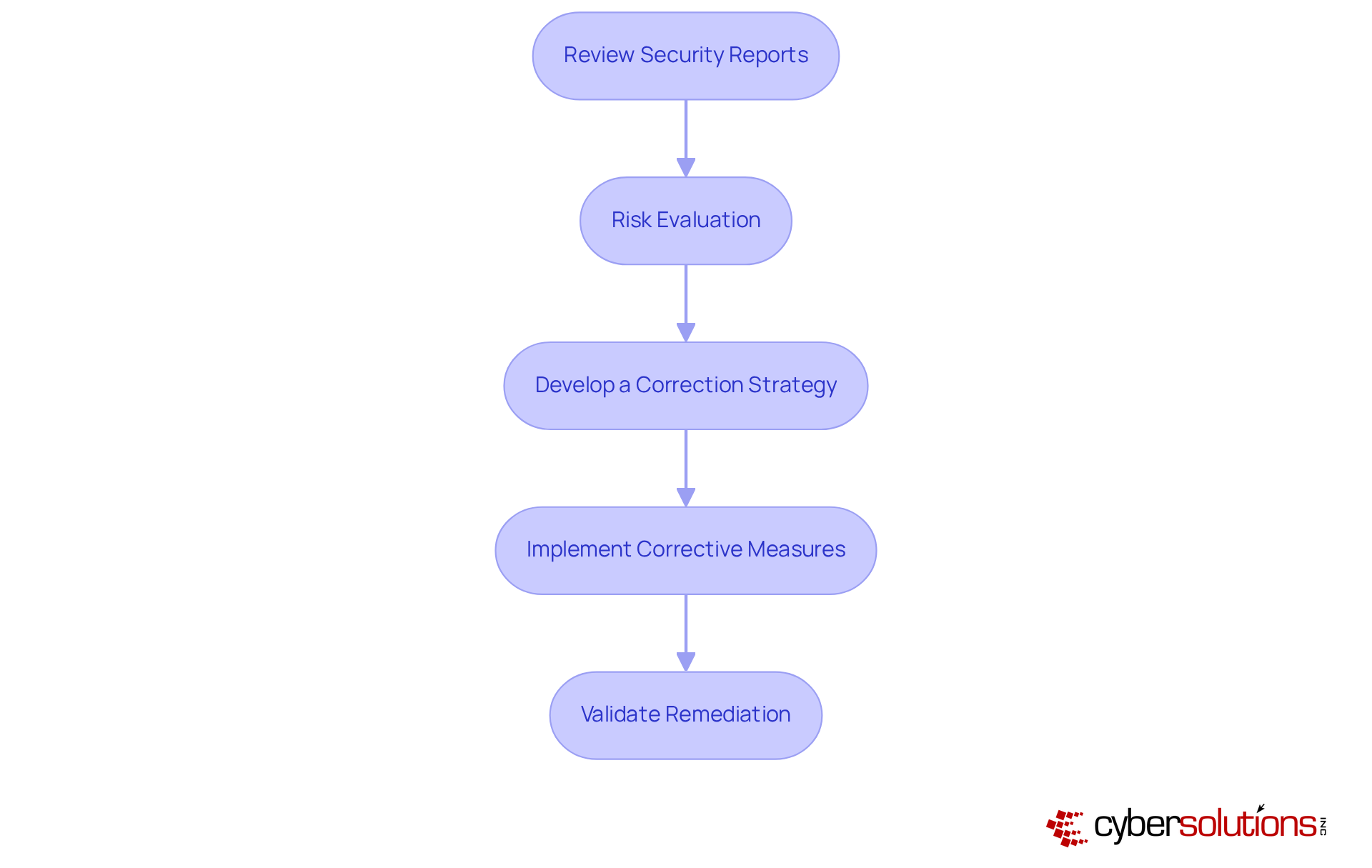
This flowchart outlines the steps to analyze scanning results and plan remediation. Start at the top with reviewing security reports, then follow the arrows down through each step to see how to effectively address vulnerabilities.

Conclusion

In an era where cyber threats loom larger than ever, the vulnerability scanning process is crucial for healthcare organizations. By systematically identifying and addressing potential weaknesses, organizations can significantly strengthen their defenses against the growing threat of cyber attacks. This proactive approach is vital for safeguarding sensitive information and meeting regulatory standards, which ultimately protects your organization’s reputation and operational integrity.

Throughout this article, we’ve outlined key steps in mastering the vulnerability scanning process:

  1. Asset discovery
  2. Configuring scans
  3. Conducting thorough assessments
  4. Reviewing results
  5. Implementing best practices for ongoing improvement

Regular assessments and prioritizing high-risk vulnerabilities are critical strategies for organizations aiming to stay ahead of potential threats. Moreover, integrating real-time threat intelligence and continuous validation processes is essential for maintaining a robust security posture.

With cyber threats evolving at an alarming rate, adopting a comprehensive and proactive vulnerability scanning strategy is not just important; it’s imperative. Organizations are encouraged to embrace these best practices, ensuring their cybersecurity measures are not only reactive but also anticipatory. By committing to regular vulnerability assessments and remediation planning, organizations can enhance their resilience in an increasingly hostile digital landscape, ultimately protecting their most valuable assets: data and trust. Only through a commitment to proactive vulnerability management can organizations truly safeguard their data and maintain the trust of those they serve.

Frequently Asked Questions

What is vulnerability scanning?

Vulnerability scanning is a proactive process used to identify weaknesses in a company's security posture that cybercriminals could exploit. It provides a comprehensive view of security risks and facilitates prompt remediation of potential threats.

Why is vulnerability scanning important for healthcare organizations?

Vulnerability scanning is crucial for healthcare organizations as it helps them spot weaknesses that could lead to data breaches, enhances security, and ensures compliance with industry regulations, thereby mitigating legal and financial repercussions.

What recent trends have been observed in security disclosures?

Recent trends indicate a significant rise in security disclosures, with projections suggesting that close to 59,000 Common Vulnerabilities and Exposures (CVEs) could be published in 2026.

How can organizations protect themselves from increasing vulnerabilities?

Organizations can protect themselves by implementing regular threat assessments as part of their cybersecurity strategy, which helps to identify and address vulnerabilities effectively.

How have security attacks in the healthcare field changed recently?

Entities in the healthcare field have reported a staggering 168% rise in security attacks, highlighting the urgent need for strong examination practices to safeguard sensitive patient information.

How do ongoing security assessments help organizations manage compliance obligations like HIPAA?

Ongoing security assessments help organizations align their defenses with emerging threats, ensuring they meet compliance obligations such as HIPAA more effectively.

What do experts say about the necessity of security scanning?

Experts emphasize that security scanning is not just a technical requirement but a strategic necessity that allows entities to prioritize security measures and focus on high-severity weaknesses.

What are the risks of not having a robust vulnerability scanning process?

Without a robust vulnerability scanning process, organizations risk compromising their data, damaging their reputation, and threatening their financial stability.

List of Sources

  1. Define Vulnerability Scanning and Its Importance
    • 46 Vulnerability Statistics 2026: Key Trends in Discovery, Exploitation, and Risk (https://securityboulevard.com/2026/03/46-vulnerability-statistics-2026-key-trends-in-discovery-exploitation-and-risk)
    • Vulnerability Statistics 2026: Key Trends & Data | Indusface (https://indusface.com/blog/key-vulnerability-statistics)
    • Key Cybersecurity Statistics and Emerging Trends for 2026 (https://cdnetworks.com/blog/cloud-security/cybersecurity-statistics-and-trends-2026)
    • Vulnerability Forecast 2026. Threats, Trends and Real-World Risks - Patrowl (https://patrowl.io/en/blog/vulnerability-forecast-2026-what-organizations-can-expect)
    • 10 Cyber Security Trends For 2026 (https://sentinelone.com/cybersecurity-101/cybersecurity/cyber-security-trends)
  2. Outline the Steps in the Vulnerability Scanning Process
    • Vulnerability Statistics 2026: Key Trends & Data | Indusface (https://indusface.com/blog/key-vulnerability-statistics)
    • Vendor Scanning Process Flow & How to Automate (The 2026 Guide) (https://getastra.com/blog/security-audit/vulnerability-scanning-process)
    • What the 2026 Vulnerability Statistics Report Tells Us About the State of Security (https://edgescan.com/what-the-2026-vulnerability-statistics-report-tells-us-about-the-state-of-security)
    • 6 Steps of the Vulnerability Scanning Process | CyCognito (https://cycognito.com/learn/vulnerability-assessment/vulnerability-scanning-process)
    • Vulnerability Management Process: Step-by-Step Guide for 2026 (https://qualysec.com/vulnerability-management-process)
  3. Implement Best Practices for Effective Vulnerability Scanning
    • 8 Reasons to Conduct Regular Vulnerability Scans (https://levelblue.com/blogs/levelblue-blog/8-reasons-to-conduct-regular-vulnerability-scans)
    • Threat and Vulnerability Management in 2026 (https://recordedfuture.com/blog/threat-and-vulnerability-management)
    • Navigating the Future: Key IT Vulnerability Management Trends (https://thehackernews.com/2025/02/navigating-future-key-it-vulnerability.html)
    • The 2026 Security Testing Playbook: What to Test, How Often, and How to Act - FusionTek (https://fusiontek.com/the-2026-security-testing-playbook)
    • The Importance of Vulnerability Scanning for Cybersecurity: A Comprehensive Guide | Databank (https://databank.com/resources/blogs/the-importance-of-vulnerability-scanning-for-cybersecurity-a-comprehensive-guide)
  4. Analyze Scanning Results and Plan Remediation
    • All Covered Targets MSSP Execution Gap with Managed Vulnerability Remediation Service (https://msspalert.com/news/all-covered-targets-mssp-execution-gap-with-managed-vulnerability-remediation-service)
    • Analysis of 216M Security Findings Shows a 4x Increase In Critical Risk (2026 Report) (https://thehackernews.com/2026/04/analysis-of-216m-security-findings.html)
    • The Remediation Gap is now a Remediation crisis: why vendors are failing and what needs to change (https://vicarius.io/articles/the-remediation-gap-is-now-a-remediation-crisis-why-vendors-are-failing-and-what-needs-to-change)
    • CISA mulls new three-day remediation deadline for critical flaws (https://csoonline.com/article/4167422/cisa-mulls-new-three-day-remediation-deadline-for-critical-flaws.html)
    • All Covered Launches Vulnerability Remediation Service to Close the Gap Between Managed IT and Managed Security (https://finance.yahoo.com/news/covered-launches-vulnerability-remediation-close-140000403.html)
Recent Posts
What Is Anti-Phishing Software and Why It Matters for Your Business
4 Steps to Master the Vulnerability Scanning Process for Security
What Expense Should You Expect When Buying a New Firewall?
Master the FTC Safeguards Rule for Your Risk Assessment Template
Master NIST 800-171 Compliance Audit in 6 Essential Steps
Master Managed Services Projects: Key Strategies for C-Suite Leaders
Master FTC MFA Requirements: A Step-by-Step Guide for Leaders
Enhance Password Compliance with These 4 Essential Strategies
10 Key Factors Influencing Network Firewall Pricing for Executives
4 Best Practices for Effective Firewall Testing and Security
Master the CMMC Assessment Guide Level 2 for Effective Compliance
Why Local IT Services Providers Are Key to Business Success
10 Key Benefits of Partnering with IT MSPs for Your Business
Why Healthcare CFOs Should Choose an Outsourced IT Provider
4 Best Practices for CFOs in AI Data Security Compliance
What Is Defense in Depth? Understanding Its Importance for Healthcare CFOs
Essential Corporate Data Backup Practices for Healthcare CFOs
10 Benefits of Outsourced IT Management for Healthcare CFOs
Master Restricting Access: Best Practices for CFOs on OAuth Management
Master Living Off the Land: A CFO's Guide to Sustainability
Master Digital Security Controls for Healthcare CFOs
10 Essential IT Services for Healthcare CFOs to Enhance Security
Master Critical Security Controls for Healthcare CFOs
Best Practices for Managed Cyber Security in Healthcare CFOs
What MSPs Stand For and Why They Matter for Healthcare CFOs
Choosing the Right Managed Cybersecurity Services Provider for CFOs
What Is CMMC Compliance and Why It Matters for Healthcare CFOs
How to Reduce the Risk of Cyber Attack: 4 Essential Steps for CFOs
What Compliance Means: Key Concepts for Healthcare CFOs
5 Best Practices for Achieving CMMC 1.0 Compliance Success
Understanding Cybersecurity as a Service for Healthcare CFOs
Why MSPs in Technology Are Essential for Healthcare CFOs
10 Benefits of Data Security as a Service for Healthcare CFOs
Evaluate 4 Leading Disaster Recovery Software Vendors for Your Business
What IT Services Can Be Outsourced for Business Success?
Enhance Cyber Resilience with Effective External Vulnerability Scanning
Cyber Security Outsourcing Companies vs. In-House Solutions: Key Insights
4 Steps to Optimize Business IT Support for Healthcare CFOs
Understanding Managed Service Provider Costs: Key Factors and Models
Why Fully Managed Services Are Essential for Cybersecurity Success
Understanding the Average Cost of Cybersecurity Services for Leaders
Master Managing Firewalls: Essential Steps for C-Suite Leaders
Master HIPAA Compliant Firewall Requirements for Your Organization
How to Manage Company Laptops: A Step-by-Step Guide for Leaders
6 Best Practices for a Successful Managed Services Strategy
4 Best Practices for Choosing Your NIST Compliance Tool
10 Essential CMMC 2.0 Controls List for Compliance Success
Best Practices for Effective Data Backup Support in Your Organization
4 Essential Cybersecurity Compliance Solutions for C-Suite Leaders
Master Data Backup and Recovery: Best Practices for C-Suite Leaders
Master Two-Factor Authentication for Business: Best Practices Unveiled
Best Practices for Backing Up Your Data Effectively
Enhance Security with Best Practices for Secure Web Browsing
Master 365 Services: Best Practices for Compliance and Efficiency
4 Strong Password Guidelines for C-Suite Leaders to Enhance Security
Essential Backup Information for Compliance and Security Strategies
Business IT Providers vs. In-House IT: Key Comparison for Leaders
Compare Top Two Factor Authentication Service Providers for Your Business
Master HIPAA Compliant Infrastructure: Key Steps for Executives
What LOTL Stands for in Cybersecurity and Its Implications
4 Best Practices for Your Cyber Attack Incident Response Plan
4 Best Practices for Effective Information Technology Spending
Understanding Cyber Security Exercises: Importance and Benefits
5 Best Practices for Optimizing Your Hybrid Work Setting
Understanding Office 365 Meaning: Key Features and Implications
What Office 365 Means for Cyber Solutions Inc.: A Case Study on Transformation
Master Defence in Depth Cyber Security: 5 Steps for C-Suite Leaders
Boost Security Awareness Among Employees with Proven Best Practices
Implement the NIST Incident Response Playbook in 4 Simple Steps
What is a Managed IT Support Service Provider and Why It Matters
Why Data Backup is Important for Business Resilience and Growth
Best Practices for Effective Managed IT Security Solutions
4 Best Practices for Backup & Disaster Recovery Services Success
Best Practices for AI and Machine Learning in Cyber Security
Why USB Malware Threats Matter for C-Suite Leaders Today
What Are Vulnerability Scanners and Why They Matter for Your Business
Create a Disaster Recovery Plan Template for Your Small Business
Master USB Malware: Detect, Prevent, and Educate Your Team
Implementing a Cloud First Approach: A Step-by-Step Guide for Leaders
Compare MS Office or Office 365: Features, Pricing, and Security
Master Dark Web Security Monitoring: Key Practices for C-Suite Leaders
Master CMMC 2.0 Compliance Requirements in 5 Actionable Steps
Master IT Security Assessments: Key Practices for C-Suite Leaders
Why Companies Should Restrict Internet Access: Key Security and Compliance Reasons
10 Essential CMMC Controls List for Compliance Success
Master KPIs for IT: Drive Success with Effective Strategies
9 Essential CMMC Level 3 Controls for C-Suite Leaders
10 Essential CMMC 2.0 Controls for Cybersecurity Success
What Is a Virtual CIO? Understanding Its Role and Benefits for Leaders
Understanding IT Managed Services Contracts: Key Insights for C-Suite Leaders
4 Best Practices to Prevent Attacks on Firewall Security
10 Managed Services Provider Best Practices for C-Suite Leaders
Master Proactive Information Management for Enhanced Security and Efficiency
Enhance Organizational Security: Align Strategies and Manage Risks
Understanding IT Support Cost Per Hour: Key Factors for C-Suite Leaders
Master Cyber Drilling: Best Practices for C-Suite Leaders
Understanding All-Inclusive IT Support: Key Benefits for Leaders
Why All-Inclusive IT Support is Essential for Cybersecurity Success
4 Best Practices for Securing Network Printers Effectively
Understanding TOAD Phishing: A Comparison with Traditional Methods