
Understanding Cybersecurity as a Service for Healthcare CFOs

Understanding Cybersecurity as a Service for Healthcare CFOs

Introduction

In an era where healthcare organizations face an increasing barrage of sophisticated cyber threats, the significance of robust cybersecurity measures is paramount.

Cybersecurity as a Service (CSaaS) emerges as a transformative solution, offering healthcare CFOs a strategic advantage by delivering comprehensive, cloud-based security without the burden of substantial in-house investments.

However, as the landscape of digital threats continues to evolve, how can CFOs ensure they are selecting the right CSaaS provider to protect sensitive patient data while optimizing their budgets?

This article explores the critical elements of CSaaS, contrasting it with traditional models and highlighting its unique benefits for healthcare organizations.

Define Cybersecurity as a Service (CSaaS)

In today's digital landscape, cybersecurity is not just an option; it is a necessity, especially for healthcare organizations facing an ever-evolving array of threats. Cybersecurity as a Service provides a cloud-based model that delivers comprehensive cybersecurity solutions, eliminating the need for extensive in-house infrastructure. This service encompasses a wide range of offerings, including:

  1. Threat detection
  2. Incident response

All structured within a subscription-based framework. For healthcare entities, Cybersecurity as a Service facilitates the integration of technology and expert insights, ensuring adaptability and growth in their cybersecurity initiatives.

With the analysis of networks to identify anomalies and potential vulnerabilities, Cybersecurity as a Service offers immediate alerts and notifications. This capability enables prompt measures to prevent downtime or breaches, allowing CFOs to focus on strategic planning and resource allocation. By utilizing Cybersecurity as a Service to outsource these critical functions, organizations can safeguard themselves against evolving threats while maintaining compliance with industry regulations. Notably, this service can also assist in reducing ongoing security expenses, making it a budget-friendly option.

According to the SANS Institute, 54% of participants reported that Managed Detection and Response was successful in identifying and controlling cyber-attacks. This statistic underscores the efficacy of Cybersecurity as a Service in enhancing security posture. Real-world applications, such as Cyber Solutions' network monitoring services, further illustrate how this model provides continuous oversight and immediate notifications, demonstrating practical use in the healthcare sector.

The implementation of Cybersecurity as a Service not only strengthens security posture but also promotes more efficient resource utilization. Ultimately, this contributes to operational efficiency and cost-effectiveness, making it a strategic choice for healthcare organizations looking to navigate the complexities of cybersecurity.
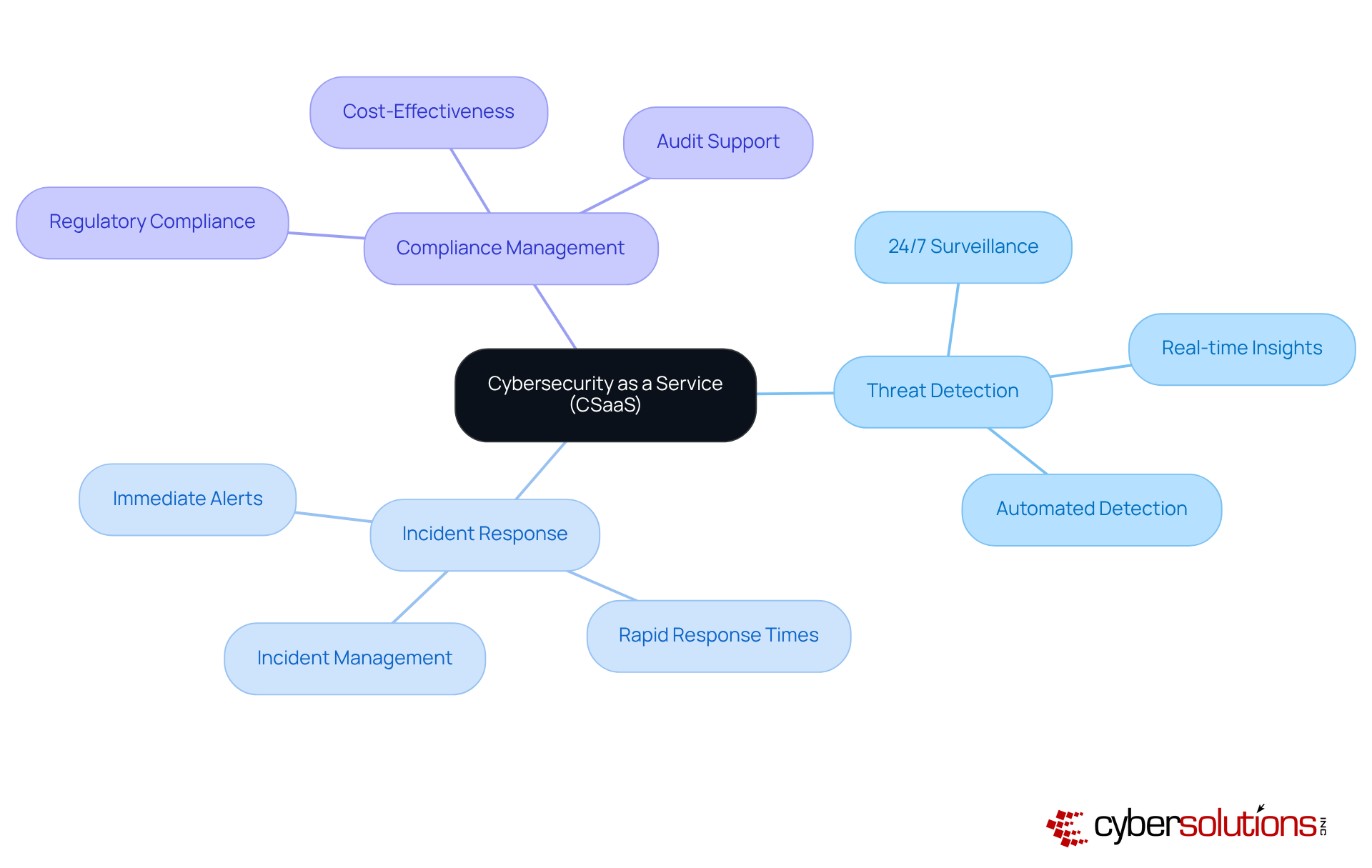
The central node represents CSaaS, with branches showing its key components and benefits. Each branch connects to further details, illustrating how CSaaS supports healthcare organizations in managing cybersecurity threats.

Compare CSaaS with Traditional Cybersecurity Models

In the rapidly evolving landscape of healthcare, the importance of cybersecurity cannot be overstated. As healthcare organizations face unique challenges that demand a robust response, comparing traditional cybersecurity models with Cybersecurity as a Service (CSaaS) reveals several key differences that can significantly impact a medical institution's security posture.

  • Traditional cybersecurity often necessitates substantial upfront investments in hardware, software, and personnel. In contrast, CSaaS operates on a subscription model, allowing medical institutions to forecast expenses and distribute budgets more efficiently. This shift can result in considerable savings, as companies avoid the high initial capital expenditures associated with traditional models.
  • Scalability: Cloud Security as a Service solutions are inherently adaptable, allowing healthcare entities to modify their security strategies in response to changing requirements and threats. This flexibility is crucial in a sector where the landscape of cyber threats is constantly shifting. Traditional models may struggle to adapt quickly, potentially leaving entities vulnerable during critical times.
  • Access to expertise: With CSaaS, companies can access a team of cybersecurity professionals without needing to employ full-time personnel. This is particularly advantageous for CFOs in the medical field, who often encounter difficulties in attracting and retaining specialized talent. By utilizing CSaaS, entities can tap into a wealth of knowledge and experience that enhances their security stance. Furthermore, Cyber Solutions provides services, including fractional or virtual CISO services that deliver strategic guidance and regulatory expertise tailored for the medical sector.
  • Compliance support: CSaaS providers often incorporate compliance measures within their services, ensuring that healthcare entities meet legal obligations such as HIPAA and GDPR. This integrated approach reduces the operational complexity associated with maintaining compliance, which can be a significant strain in conventional models that demand additional resources. Cyber Solutions' comprehensive offerings integrate robust cybersecurity measures, ensuring organizations align with administrative, physical, and technical safeguards while emphasizing proactive risk management to protect patient health information.
  • Proactive Monitoring: Cloud Security as a Service typically includes continuous monitoring and threat detection, facilitating quicker responses to incidents. In contrast, traditional models may rely on reactive measures, which can lead to increased risk exposure. The ability to respond quickly is critical in a medical setting where prompt reactions can mitigate the effects of cyber incidents. Cyber Solutions provides monitoring of networks to detect anomalies and potential vulnerabilities, ensuring that suspicious activities are addressed before they escalate into threats.

In summary, while conventional cybersecurity models have their merits, they cannot match the adaptability, economy, and comprehensive strategy that CSaaS provides, aligning effectively with the financial and operational objectives of medical facilities. As the industry progresses, the adoption of CSaaS is becoming increasingly essential for maintaining robust cybersecurity defenses.
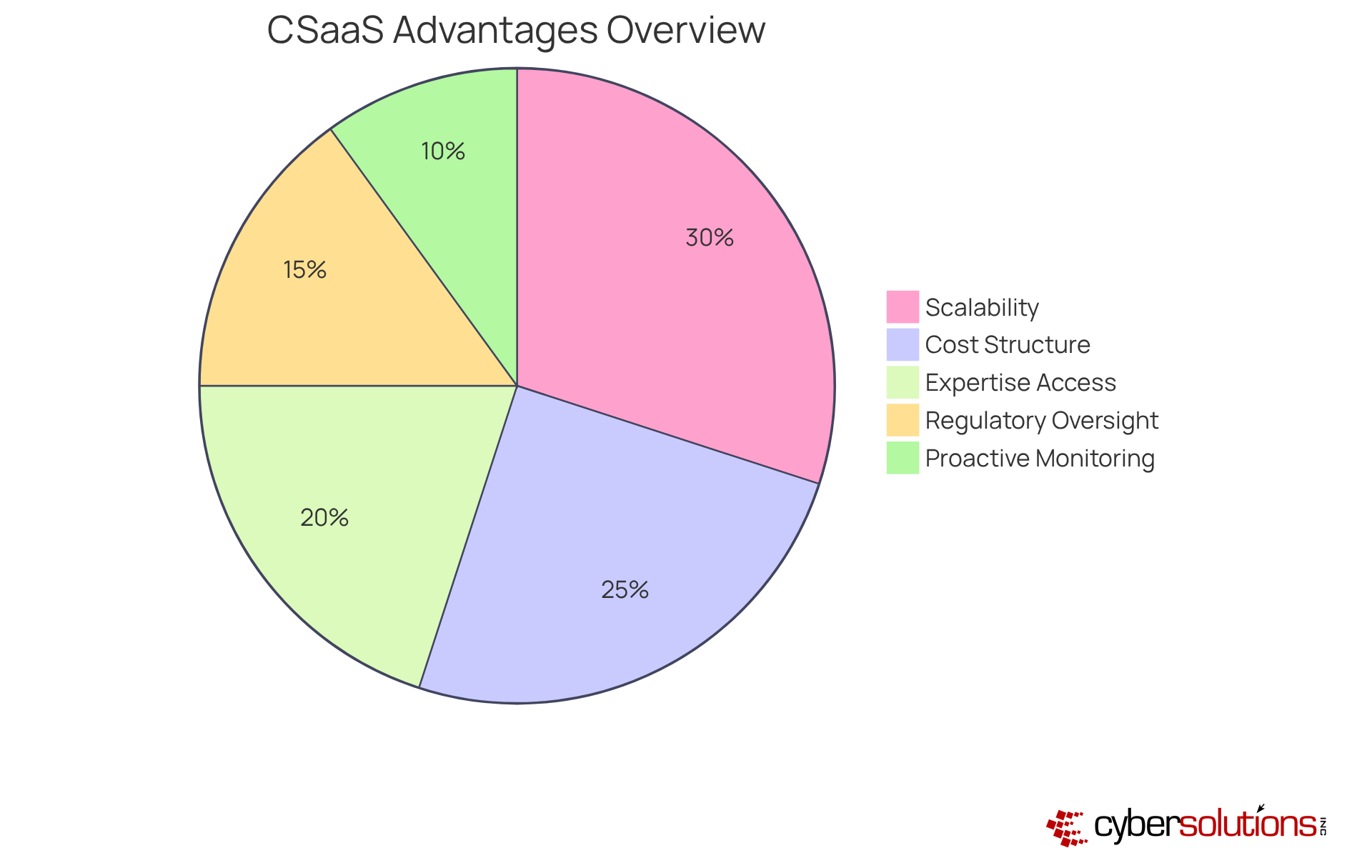
Each segment of the pie chart represents a key area of comparison between traditional cybersecurity and CSaaS. A larger segment indicates a greater advantage of CSaaS in that area. For example, if 'Scalability' is the largest segment, it shows that this is a major benefit of CSaaS over traditional models.

Benefits of CSaaS for Healthcare Organizations

In today's healthcare landscape, adopting cybersecurity as a service is essential for organizations striving to enhance their security posture. For CFOs, the challenges of safeguarding sensitive data while managing budgets can be daunting. However, CSaaS presents a strategic solution that effectively addresses these concerns.

  • Cost Management: By leveraging a subscription-based model, CFOs in the medical sector can effectively manage budgets, eliminating the need for substantial capital investments typically associated with traditional cybersecurity solutions. This approach allows for predictable monthly expenses, facilitating better financial planning.
  • Advanced Security: CSaaS providers employ advanced technologies and approaches, ensuring that medical institutions are protected against new threats and vulnerabilities. Statistics show that entities utilizing CSaaS experience a notable enhancement in their overall security stance, greatly lowering the risk of data breaches.
  • Resource Allocation: With cybersecurity handled externally, medical entities can allocate their resources and attention to their primary mission—providing quality patient care—rather than dealing with complex IT challenges. This shift not only enhances operational efficiency but also improves patient outcomes.
  • Regulatory Compliance: Numerous Cloud Software as a Service solutions come equipped with integrated adherence features, easing the navigation of intricate regulations like HIPAA. This guarantees that medical entities remain compliant without overloading their internal resources, thus lowering the chance of expensive penalties.
  • Rapid Response: CSaaS providers deliver ongoing monitoring and prompt response capabilities, which are essential in reducing the effects of possible breaches. This proactive strategy allows medical institutions to recover swiftly from incidents, protecting sensitive patient information and preserving trust.

In summary, CSaaS not only strengthens security measures but also integrates effortlessly with the financial and operational goals of medical organizations. For CFOs looking to improve both security and efficiency, CSaaS emerges as a compelling and strategic option.
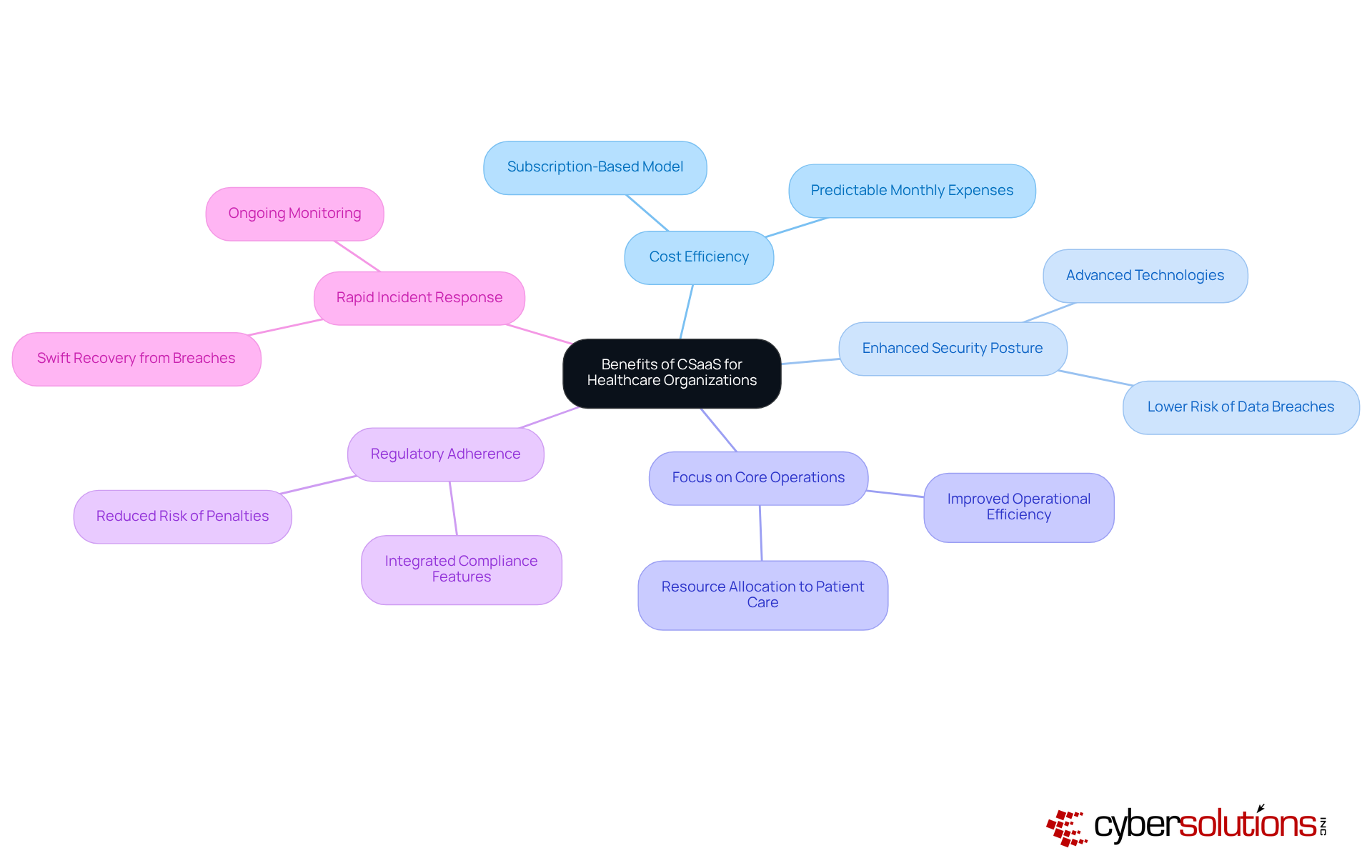
Start at the center with CSaaS benefits, then follow the branches to explore each specific advantage. Each branch represents a key benefit, and the sub-branches provide supporting details that illustrate why these benefits are important for healthcare organizations.

Key Considerations When Choosing a CSaaS Provider

In today's healthcare landscape, the significance of robust cybersecurity cannot be overstated. As threats evolve, organizations encounter unique challenges that require a strategic approach in choosing a CSaaS provider. Prioritizing the following key factors will empower CFOs to make informed decisions that enhance their organization's security posture.

  1. Reputation and Experience: It is essential to choose providers with a proven track record in the healthcare sector. Their familiarity with industry-specific challenges and regulations, such as HIPAA compliance, is crucial for effective risk management.
  2. Service Offerings: Ensure the provider delivers a solution tailored to your enterprise's cybersecurity needs. This should encompass threat detection, incident response capabilities, compliance management, and consulting services, which offers end-to-end solutions for cybersecurity, including continuous monitoring and proactive risk assessments to safeguard sensitive patient data.
  3. Scalability: Opt for a provider capable of scaling their services in line with your organization's growth and the evolving threat landscape. This adaptability is vital for maintaining a long-term partnership that can effectively respond to emerging threats.
  4. Cost Structure: Evaluate the pricing model to ensure it aligns with your budget while providing clear value. Transparency in costs is vital to avoid unexpected expenses, especially considering that the average cost of a data breach in healthcare reached $4.74 million in 2024. CSaaS can be particularly economical, offering access to enterprise-level regulatory expertise without the high expense of internal personnel.
  5. Support: Assess the level of customer support offered, including availability and responsiveness. Effective support can significantly enhance your organization’s ability to respond to incidents swiftly, minimizing potential disruptions. A provider that offers continuous monitoring and proactive risk assessments can help maintain compliance and readiness for audits.

By carefully weighing these factors, CFOs can select a provider of cybersecurity as a service that not only strengthens their cybersecurity posture but also aligns with their financial and operational objectives.
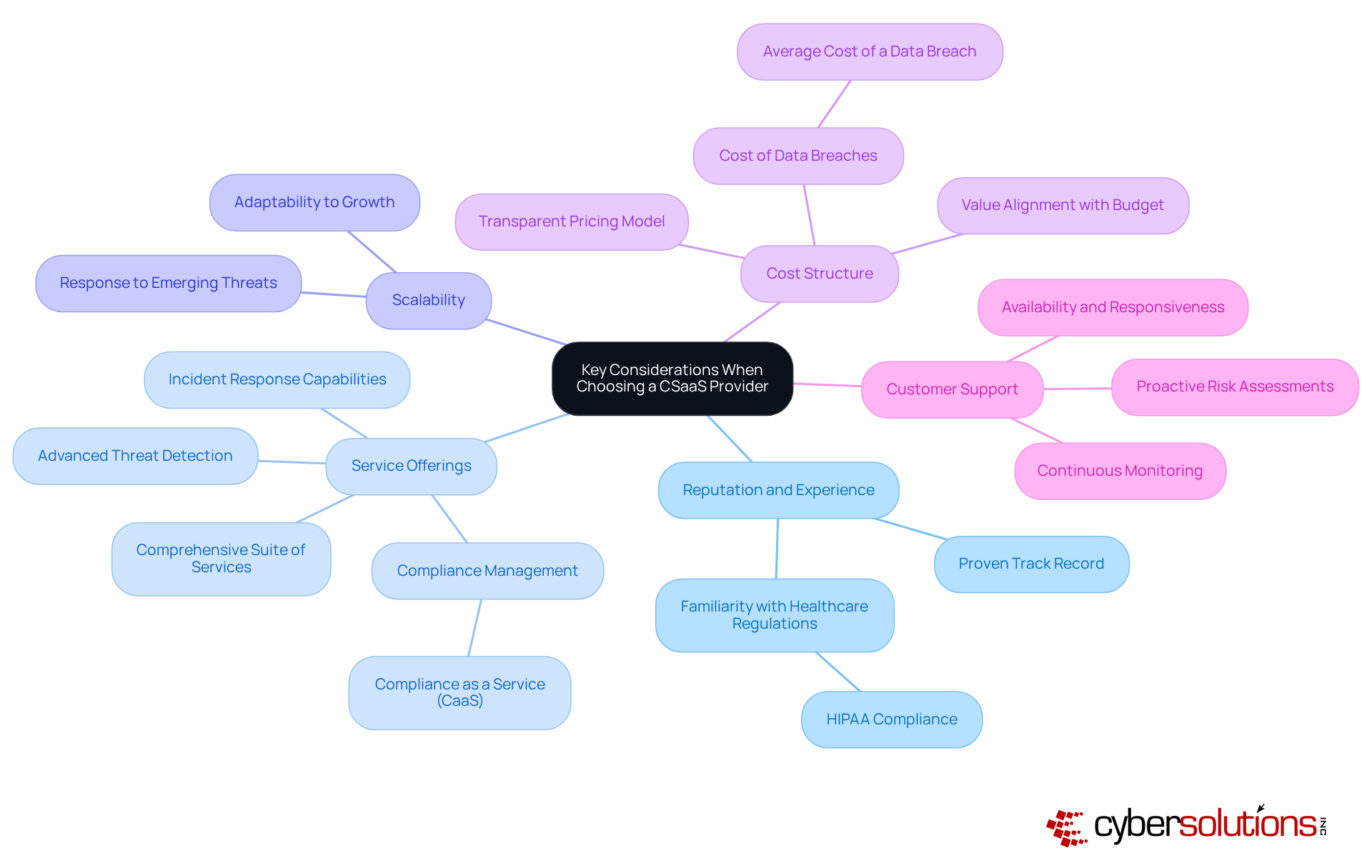
The central node represents the main topic. Each branch leads to a key consideration, and sub-branches provide further details — this way, you can easily see how each aspect is connected to the overall decision-making process.

Conclusion

Cybersecurity as a Service (CSaaS) stands as a critical strategy for healthcare organizations, especially for CFOs who are navigating the complexities of data protection and regulatory compliance. This model enables healthcare entities to harness advanced cybersecurity solutions while sidestepping the burdensome costs and challenges associated with traditional in-house systems. Such a transition not only bolsters security but also aligns financial planning with operational efficiency, allowing healthcare providers to concentrate on delivering quality care while safeguarding sensitive information.

The discussion highlights key benefits of CSaaS, including:

  • Cost efficiency
  • Enhanced security posture
  • Regulatory adherence
  • Rapid incident response capabilities

By comparing it with traditional cybersecurity models, the adaptability and scalability of CSaaS emerge as significant advantages, making it a strategic choice for organizations confronting an increasingly sophisticated threat landscape. Moreover, the selection of a reputable provider with appropriate service offerings is paramount, as it directly influences the effectiveness of the cybersecurity strategy.

In an era where cyber threats continuously evolve, adopting cybersecurity as a service is not merely a prudent choice but an essential one for healthcare organizations. By prioritizing CSaaS, CFOs can ensure that their institutions are compliant, secure, and positioned to thrive within a challenging environment. The time to act is now; investing in CSaaS can cultivate a more resilient healthcare system that prioritizes patient safety and data integrity.

Frequently Asked Questions

What is Cybersecurity as a Service (CSaaS)?

Cybersecurity as a Service (CSaaS) is a cloud-based model that provides comprehensive cybersecurity solutions, including threat detection, incident response, and compliance management, without the need for extensive in-house infrastructure.

Why is CSaaS important for healthcare organizations?

CSaaS is crucial for healthcare organizations as it helps them address the evolving array of cyber threats while ensuring compliance with industry regulations. It allows for the integration of advanced protection technologies and expert insights.

What are the key features of CSaaS?

Key features of CSaaS include 24/7 network surveillance, immediate alerts, real-time insights, and a subscription-based framework that helps organizations manage their cybersecurity needs effectively.

How does CSaaS help organizations focus on strategic planning?

By outsourcing critical cybersecurity functions to CSaaS providers, organizations can prevent downtime or breaches, allowing CFOs and management to concentrate on strategic financial planning and resource allocation.

What are the cost benefits of using CSaaS?

CSaaS can help reduce ongoing security expenses, making it a budget-friendly option for organizations while still providing robust cybersecurity measures.

How effective is Managed Detection and Response (MDR) in identifying cyber threats?

According to the SANS Institute, 54% of participants reported that Managed Detection and Response (MDR) was successful in identifying and controlling cyber-attacks, highlighting the effectiveness of cloud security services.

Can you provide an example of CSaaS in action?

An example of CSaaS in action is Cyber Solutions' network monitoring services, which offer continuous oversight and immediate notifications, demonstrating practical use in the healthcare sector.

What overall benefits does CSaaS provide for healthcare organizations?

CSaaS strengthens security posture, promotes efficient resource utilization, improves operational efficiency, and enhances cost-effectiveness, making it a strategic choice for healthcare organizations navigating cybersecurity complexities.

List of Sources

  1. Define Cybersecurity as a Service (CSaaS)
    • Managed Detection and Response (MDR) in 20 Cyber Security Statistics (https://insights.integrity360.com/managed-detection-and-response-mdr-in-20-cyber-security-statistics)
    • heimdalsecurity.com (https://heimdalsecurity.com/blog/cybersecurity-as-a-service-csaas)
    • abighealth.com (https://abighealth.com/abig-health-insights/revolutionizing-healthcare-top-saas-trends-to-watch-in-2024-2025)
    • Key Cyber Security Statistics for 2026 (https://sentinelone.com/cybersecurity-101/cybersecurity/cyber-security-statistics)
    • deloitte.com (https://deloitte.com/us/en/insights/industry/health-care/life-sciences-and-health-care-industry-outlooks/2025-us-health-care-executive-outlook.html)
  2. Compare CSaaS with Traditional Cybersecurity Models
    • solutionsreview.com (https://solutionsreview.com/security-information-event-management/cybersecurity-awareness-month-quotes-from-industry-experts)
    • mark43.com (https://mark43.com/press/solutions-review-cybersecurity-awareness-month-quotes-from-industry-experts-in-2024)
  3. Benefits of CSaaS for Healthcare Organizations
    • PBM Software Case Study (https://syscreations.com/case_studies/pharmacy-benefit-management-software)
    • solutionsreview.com (https://solutionsreview.com/security-information-event-management/cybersecurity-awareness-month-quotes-from-industry-experts)
    • 9 Must-Read Quotes on Security from Healthcare CISOs - Healthcare IT Leaders (https://healthcareitleaders.com/blog/9-must-read-quotes-on-security-from-healthcare-cisos)
  4. Key Considerations When Choosing a CSaaS Provider
    • dynamisch.co (https://dynamisch.co/blogs/cyber-security-as-a-service-the-future-ready-shield-for-2025-and-beyond)
    • heimdalsecurity.com (https://heimdalsecurity.com/blog/cybersecurity-as-a-service-csaas)
    • ipspecialist.net (https://ipspecialist.net/cybersecurity-as-a-service-csaas)
    • Healthcare Cybersecurity Statistics 2024 (https://ispartnersllc.com/blog/healthcare-cybersecurity-statistics)
    • 2024 Cybersecurity Statistics: The Ultimate List Of Stats, Data & Trends | PurpleSec (https://purplesec.us/resources/cybersecurity-statistics)
Recent Posts
Master the CMMC Assessment Guide Level 2 for Effective Compliance
Why Local IT Services Providers Are Key to Business Success
10 Key Benefits of Partnering with IT MSPs for Your Business
Why Healthcare CFOs Should Choose an Outsourced IT Provider
4 Best Practices for CFOs in AI Data Security Compliance
What Is Defense in Depth? Understanding Its Importance for Healthcare CFOs
Essential Corporate Data Backup Practices for Healthcare CFOs
10 Benefits of Outsourced IT Management for Healthcare CFOs
Master Restricting Access: Best Practices for CFOs on OAuth Management
Master Living Off the Land: A CFO's Guide to Sustainability
Master Digital Security Controls for Healthcare CFOs
10 Essential IT Services for Healthcare CFOs to Enhance Security
Master Critical Security Controls for Healthcare CFOs
Best Practices for Managed Cyber Security in Healthcare CFOs
What MSPs Stand For and Why They Matter for Healthcare CFOs
Choosing the Right Managed Cybersecurity Services Provider for CFOs
What Is CMMC Compliance and Why It Matters for Healthcare CFOs
How to Reduce the Risk of Cyber Attack: 4 Essential Steps for CFOs
What Compliance Means: Key Concepts for Healthcare CFOs
5 Best Practices for Achieving CMMC 1.0 Compliance Success
Understanding Cybersecurity as a Service for Healthcare CFOs
Why MSPs in Technology Are Essential for Healthcare CFOs
10 Benefits of Data Security as a Service for Healthcare CFOs
Evaluate 4 Leading Disaster Recovery Software Vendors for Your Business
What IT Services Can Be Outsourced for Business Success?
Enhance Cyber Resilience with Effective External Vulnerability Scanning
Cyber Security Outsourcing Companies vs. In-House Solutions: Key Insights
4 Steps to Optimize Business IT Support for Healthcare CFOs
Understanding Managed Service Provider Costs: Key Factors and Models
Why Fully Managed Services Are Essential for Cybersecurity Success
Understanding the Average Cost of Cybersecurity Services for Leaders
Master Managing Firewalls: Essential Steps for C-Suite Leaders
Master HIPAA Compliant Firewall Requirements for Your Organization
How to Manage Company Laptops: A Step-by-Step Guide for Leaders
6 Best Practices for a Successful Managed Services Strategy
4 Best Practices for Choosing Your NIST Compliance Tool
10 Essential CMMC 2.0 Controls List for Compliance Success
Best Practices for Effective Data Backup Support in Your Organization
4 Essential Cybersecurity Compliance Solutions for C-Suite Leaders
Master Data Backup and Recovery: Best Practices for C-Suite Leaders
Master Two-Factor Authentication for Business: Best Practices Unveiled
Best Practices for Backing Up Your Data Effectively
Enhance Security with Best Practices for Secure Web Browsing
Master 365 Services: Best Practices for Compliance and Efficiency
4 Strong Password Guidelines for C-Suite Leaders to Enhance Security
Essential Backup Information for Compliance and Security Strategies
Business IT Providers vs. In-House IT: Key Comparison for Leaders
Compare Top Two Factor Authentication Service Providers for Your Business
Master HIPAA Compliant Infrastructure: Key Steps for Executives
What LOTL Stands for in Cybersecurity and Its Implications
4 Best Practices for Your Cyber Attack Incident Response Plan
4 Best Practices for Effective Information Technology Spending
Understanding Cyber Security Exercises: Importance and Benefits
5 Best Practices for Optimizing Your Hybrid Work Setting
Understanding Office 365 Meaning: Key Features and Implications
What Office 365 Means for Cyber Solutions Inc.: A Case Study on Transformation
Master Defence in Depth Cyber Security: 5 Steps for C-Suite Leaders
Boost Security Awareness Among Employees with Proven Best Practices
Implement the NIST Incident Response Playbook in 4 Simple Steps
What is a Managed IT Support Service Provider and Why It Matters
Why Data Backup is Important for Business Resilience and Growth
Best Practices for Effective Managed IT Security Solutions
4 Best Practices for Backup & Disaster Recovery Services Success
Best Practices for AI and Machine Learning in Cyber Security
Why USB Malware Threats Matter for C-Suite Leaders Today
What Are Vulnerability Scanners and Why They Matter for Your Business
Create a Disaster Recovery Plan Template for Your Small Business
Master USB Malware: Detect, Prevent, and Educate Your Team
Implementing a Cloud First Approach: A Step-by-Step Guide for Leaders
Compare MS Office or Office 365: Features, Pricing, and Security
Master Dark Web Security Monitoring: Key Practices for C-Suite Leaders
Master CMMC 2.0 Compliance Requirements in 5 Actionable Steps
Master IT Security Assessments: Key Practices for C-Suite Leaders
Why Companies Should Restrict Internet Access: Key Security and Compliance Reasons
10 Essential CMMC Controls List for Compliance Success
Master KPIs for IT: Drive Success with Effective Strategies
9 Essential CMMC Level 3 Controls for C-Suite Leaders
10 Essential CMMC 2.0 Controls for Cybersecurity Success
What Is a Virtual CIO? Understanding Its Role and Benefits for Leaders
Understanding IT Managed Services Contracts: Key Insights for C-Suite Leaders
4 Best Practices to Prevent Attacks on Firewall Security
10 Managed Services Provider Best Practices for C-Suite Leaders
Master Proactive Information Management for Enhanced Security and Efficiency
Enhance Organizational Security: Align Strategies and Manage Risks
Understanding IT Support Cost Per Hour: Key Factors for C-Suite Leaders
Master Cyber Drilling: Best Practices for C-Suite Leaders
Understanding All-Inclusive IT Support: Key Benefits for Leaders
Why All-Inclusive IT Support is Essential for Cybersecurity Success
4 Best Practices for Securing Network Printers Effectively
Understanding TOAD Phishing: A Comparison with Traditional Methods
3 Essential Practices for Printer Network Security in Your Organization
Secure Network Printer: Best Practices for C-Suite Leaders
Enhance Network Printer Security with Proven Best Practices
4 Best Practices for Effective Local IT Solutions Implementation
10 Best Practices for Effective Configuration Management
Understanding Configuration Management Best Practices for Leaders
Understanding Flash Drives and Viruses: Risks and Security Measures
Maximize ROI with Best Practices for Managed Cloud Platforms
10 CMMC Consultants to Ensure Your Compliance Success
4 Best Practices for Developing an Effective Computer Policy