Master the FTC Safeguards Rule for Your Risk Assessment Template

Master the FTC Safeguards Rule for Your Risk Assessment Template

Introduction

In an era where data breaches are rampant, cybersecurity has emerged as a critical priority for organizations, especially in the financial sector. As the FTC Safeguards Rule establishes a framework for protecting sensitive information, organizations must recognize that understanding and implementing these requirements is vital for maintaining client trust and avoiding severe penalties.

Organizations often struggle to align their existing frameworks with the FTC Safeguards Rule, leading to potential compliance gaps. What are the best practices for navigating this complex landscape? To navigate this complex landscape, organizations must adopt best practices that not only ensure compliance but also fortify their defenses against evolving cyber threats. Without a robust strategy for compliance and resilience, organizations risk not just penalties, but their very reputation in the marketplace.

Understand the FTC Safeguards Rule and Its Importance

In an era where data breaches can cripple organizations, the FTC Safeguards Rule emerges as a critical mandate for financial institutions handling sensitive information. This regulation is designed to prevent data breaches and unauthorized access, which can lead to crippling financial penalties - potentially reaching up to $46,517 per violation per day - and significant reputational harm. By 2026, grasping and following the Safeguards Rule will be essential for organizations that want to keep client trust and stand out in a competitive market. Compliance safeguards client information and is a key part of a comprehensive management strategy.

Organizations should regularly evaluate threats to client data using the FTC Safeguards Rule risk assessment template to stay ahead of potential risks and create a documented incident response strategy to manage security occurrences. Implementing multi-factor authentication for accessing customer data is a critical compliance measure. Additionally, leveraging Compliance As A Service (CaaS) solutions can simplify the compliance process, providing businesses with the necessary expertise and ongoing monitoring to ensure adherence to the FTC Safeguards Rule risk assessment template.

As businesses navigate the complexities of data protection, the Safeguards Rule stands out as a pivotal framework that enhances operational integrity and fosters consumer confidence. Ultimately, embracing the Safeguards Rule is not just about compliance; it's about securing a competitive edge in a data-driven world.
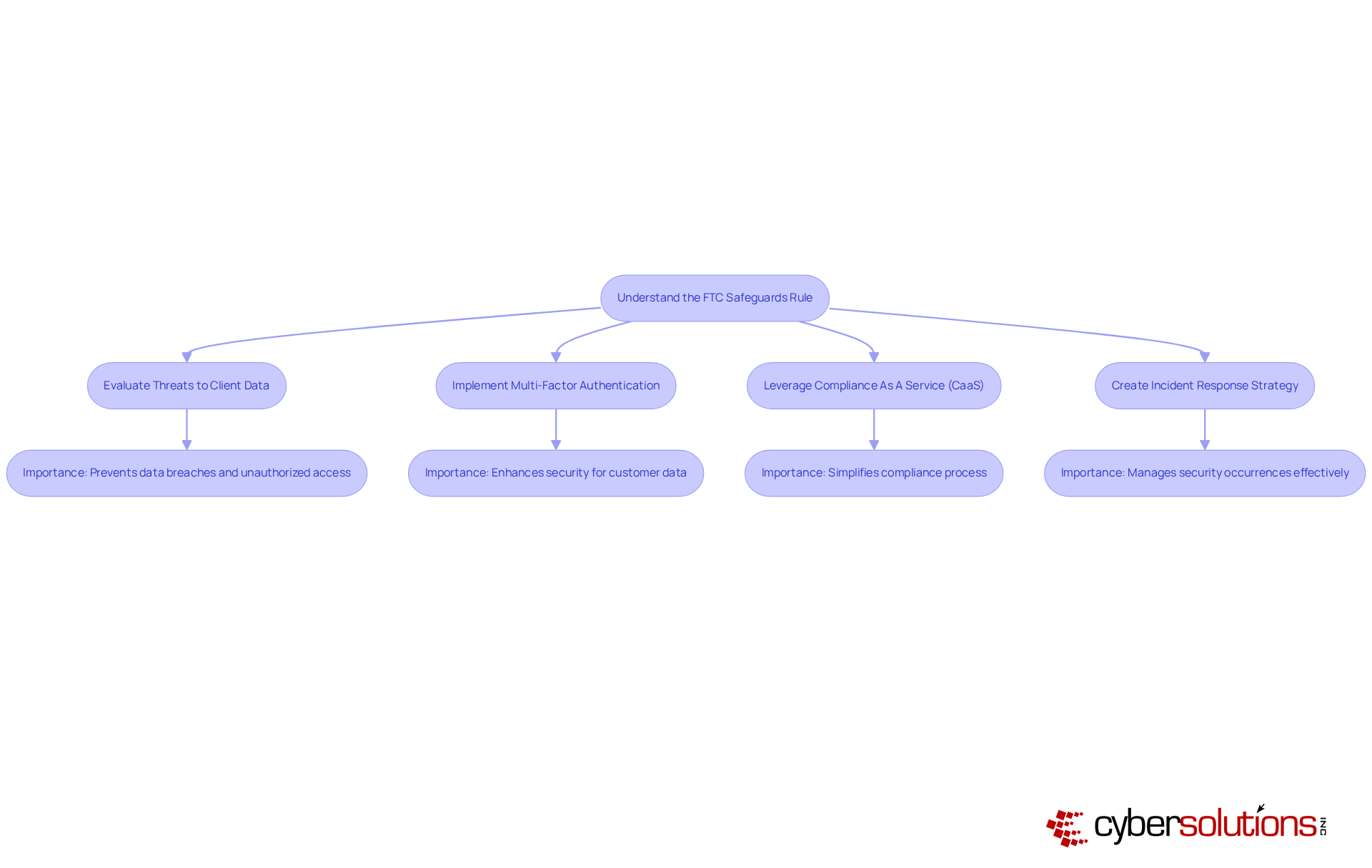
This flowchart guides you through the essential steps for complying with the FTC Safeguards Rule. Start at the top with understanding the rule, then follow the arrows to see what actions you need to take to protect client data and maintain compliance.

Identify Key Compliance Requirements for Risk Assessment

In an era where cybersecurity threats loom large, healthcare organizations must prioritize compliance with the FTC Safeguards Rule to protect sensitive patient data.

To comply with the FTC Safeguards Rule, organizations must establish several critical requirements for their risk assessment templates:

  1. Designating a Qualified Individual: Appointing a Qualified Individual to oversee your security program is not just essential; it's a critical step in safeguarding your organization. This person should possess relevant expertise to effectively manage compliance efforts.
  2. Conducting a thorough written threat assessment is crucial; it not only identifies potential dangers to customer information but also evaluates how well your current safeguards hold up against these threats, following the FTC Safeguards Rule risk assessment template. This evaluation should be recorded and encompass criteria for assessing dangers and threats.
  3. Establishing Protections: Based on your vulnerability assessment, it's imperative to implement robust measures that effectively mitigate identified threats. This includes ensuring that customer information is encrypted both in transit and at rest.
  4. Periodic Reassessments: Regularly reviewing and updating your threat assessment is vital to stay ahead of emerging dangers and adapt to the ever-changing business landscape. This ongoing assessment aids in preserving the effectiveness of the protective measures in place.

By addressing these requirements, organizations not only comply with regulations but also fortify their defenses against the ever-evolving landscape of cyber threats.
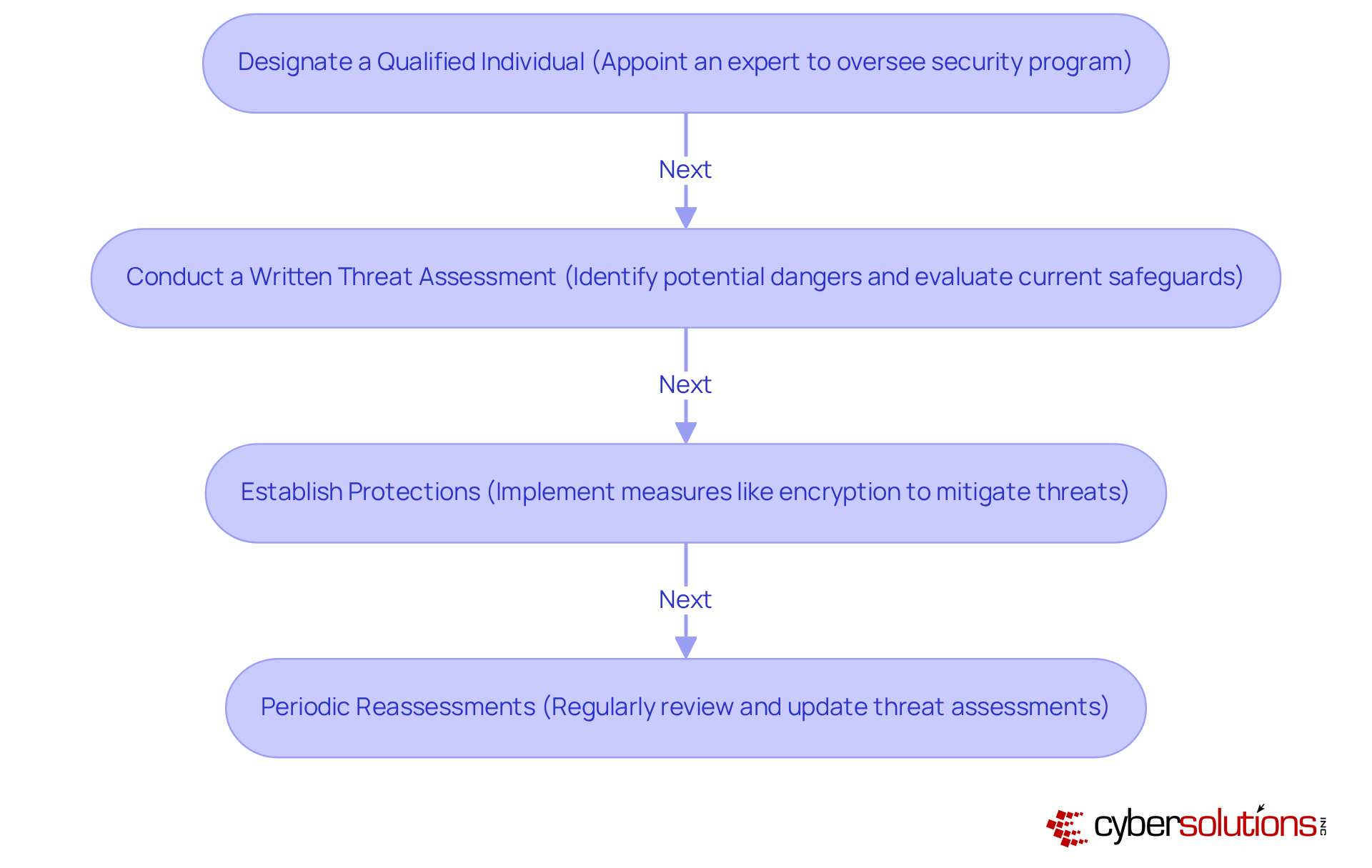
Each box represents a critical step in the compliance process. Follow the arrows to understand the sequence of actions needed to meet the FTC Safeguards Rule and enhance cybersecurity measures.

Develop a Comprehensive Information Security Program

In an era where healthcare data breaches are on the rise, the need for robust cybersecurity measures has never been more critical. A comprehensive information security program must include several essential components to effectively safeguard customer information:

  1. Risk Management Framework: Establish a comprehensive framework that identifies, assesses, and mitigates risks associated with customer information. This framework should align with the FTC Safeguards Rule risk assessment template to ensure that all potential vulnerabilities are addressed.
  2. Policies and Procedures: Create clear and concise guidelines and protocols that define protective practices, outline employee responsibilities, and establish incident response procedures. These documents form the foundation of an organizational safety culture.
  3. Training and Awareness: Implement ongoing training programs to educate employees about risk factors and best practices. Consistent training fosters a culture of awareness, enabling staff to identify and respond to potential threats effectively.
  4. Monitoring and Testing: Continuously observe protective measures and conduct regular assessments to evaluate their effectiveness. This proactive approach helps identify weaknesses and ensures compliance with the evolving requirements outlined in the FTC Safeguards Rule risk assessment template.
  5. Incident Response Plan: Develop a detailed incident response plan that outlines specific steps to take in the event of a data breach. This plan should include communication strategies, roles and responsibilities, and recovery procedures to minimize impact.

By integrating these components, organizations can develop a resilient information security program that utilizes the FTC Safeguards Rule risk assessment template to ensure compliance and effectively protect customer information. Without a proactive approach to cybersecurity, healthcare organizations risk not only their reputation but also the trust of their patients.
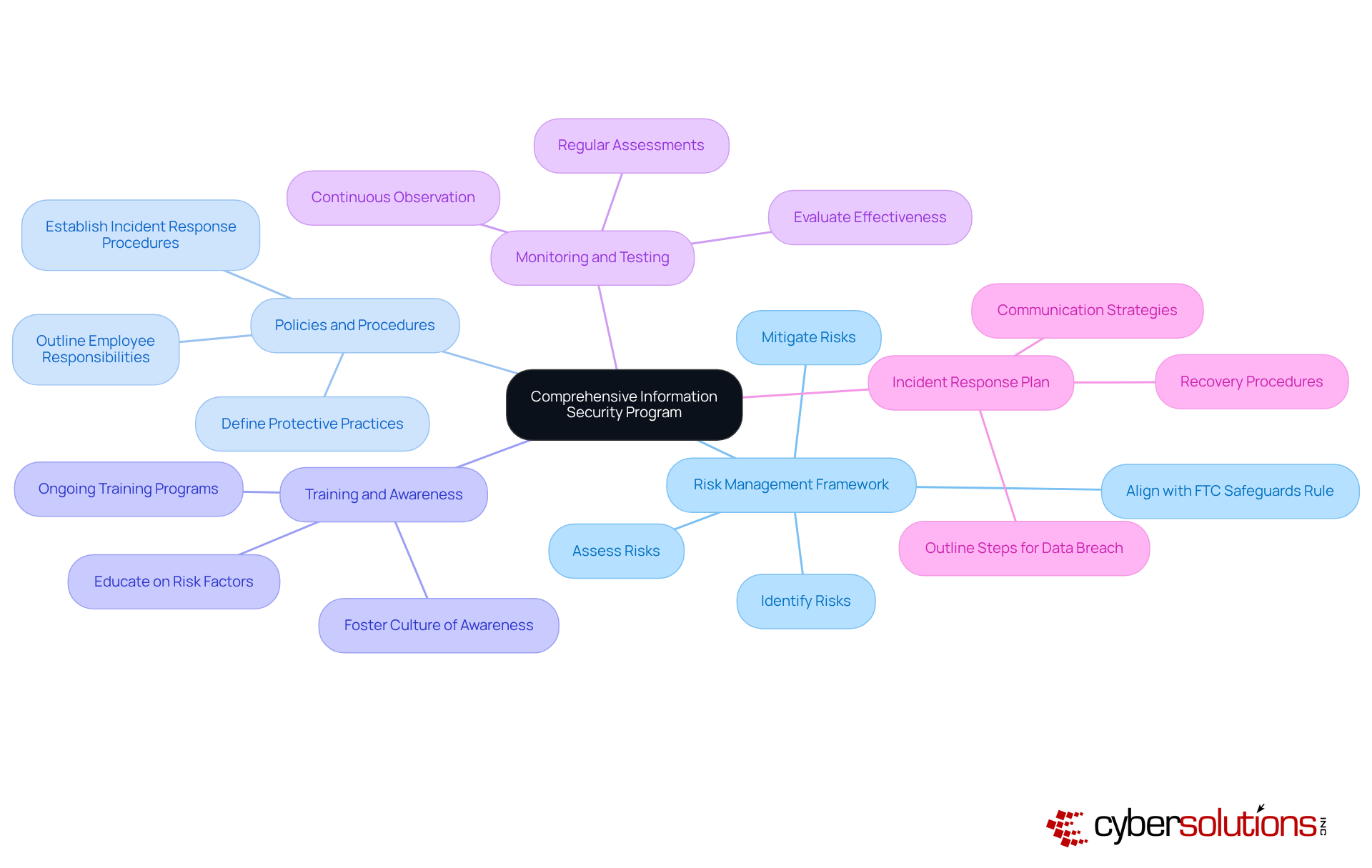
This mindmap starts with the main idea at the center and branches out to show the key components of an information security program. Each branch represents a crucial area, and the sub-branches provide more details about what needs to be done in each area. Follow the branches to understand how each part contributes to protecting customer information.

Incorporate Breach Notification Protocols into Your Template

In an era where data breaches can jeopardize not just finances but also reputations, having robust breach notification protocols is non-negotiable for healthcare organizations. Organizations should incorporate the following key elements:

  1. Notification Timeline: Establish a clear timeline for notifying affected individuals and regulatory bodies after a breach. Financial institutions must inform the FTC within 30 days if the breach involves unauthorized acquisition of unprotected data affecting 500 or more individuals.
  2. Communication Plan: Create a thorough communication strategy that outlines how to inform stakeholders, including clients and employees, about the breach. Effective communication is essential for preserving stakeholder confidence and ensuring that individuals comprehend the possible dangers linked to the compromised data.
  3. Investigation Procedures: Define procedures for investigating the breach, including identifying the cause and assessing the impact. This should entail a comprehensive risk assessment to evaluate potential risks and threats to client data, utilizing the FTC safeguards rule risk assessment template.
  4. Remediation Steps: Outline specific steps to remediate the breach and prevent future incidents. This includes implementing necessary safeguards, such as updating security policies and conducting regular monitoring and testing of security measures to ensure their effectiveness. Tailored remediation strategies should be developed to address compliance gaps, including process improvements and technology upgrades.
  5. Documentation: Maintain thorough documentation of the breach and the response actions taken. This documentation should include all communications, investigation findings, and remediation efforts, as well as compliance with state and federal notification laws. Preparing detailed documentation is essential for demonstrating compliance during audits and should be maintained for at least seven years as a best practice.

By prioritizing these protocols, organizations not only comply with regulations but also build a resilient framework that safeguards their most valuable asset: trust.
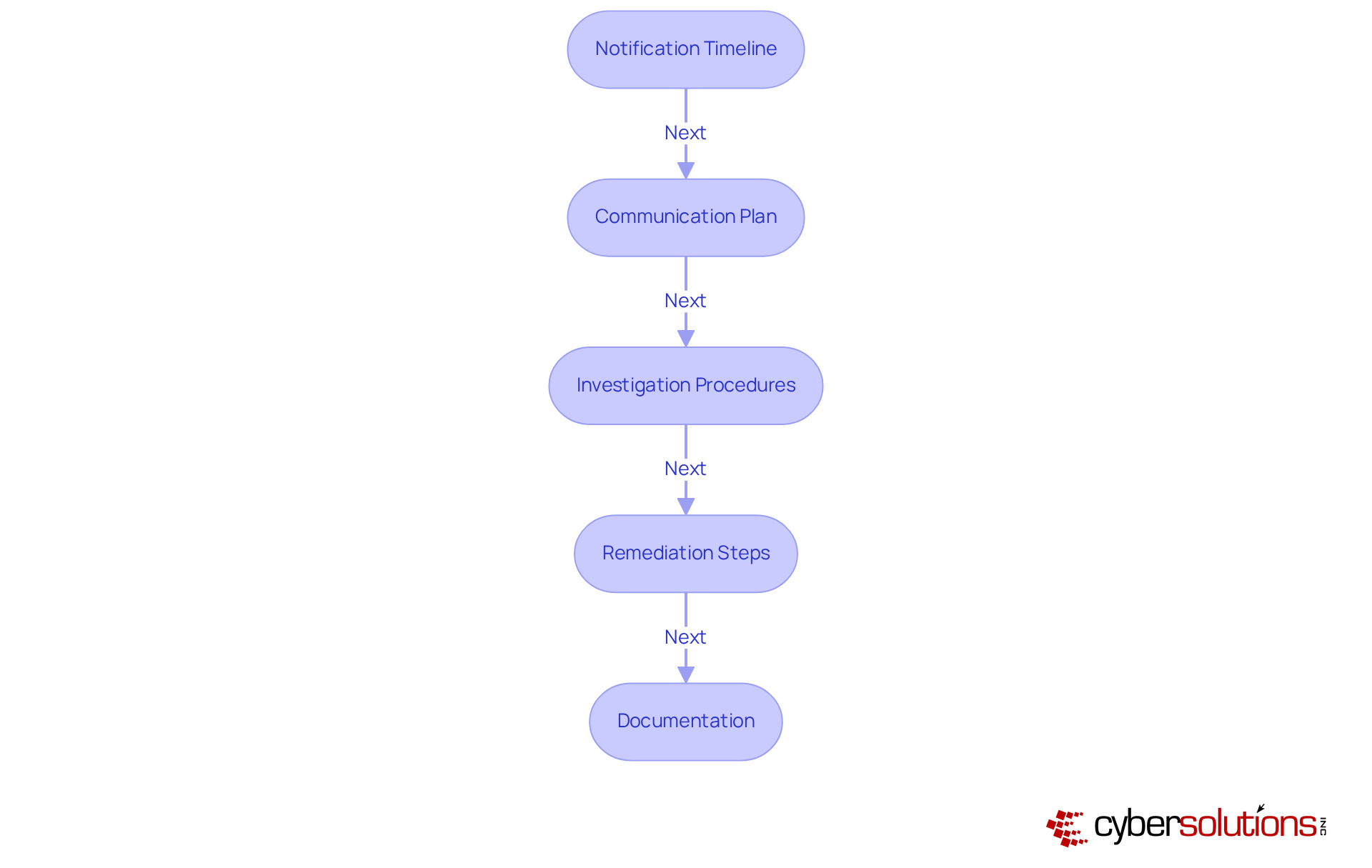
This flowchart outlines the essential steps for breach notification protocols. Each box represents a critical component, and the arrows show how these steps connect to create a comprehensive response plan.

Conclusion

In an era where data breaches can cripple organizations, understanding the FTC Safeguards Rule is not just important - it's essential for survival in the healthcare and financial sectors. This regulation safeguards client data and is vital for building trust and integrity in a fiercely competitive market. Adhering to the Safeguards Rule not only mitigates data breach risks but also positions businesses for a competitive edge in the market.

Key components of compliance include:

  1. Appointing a Qualified Individual
  2. Conducting thorough threat assessments
  3. Establishing robust protections
  4. Maintaining an ongoing review process

Additionally, developing a comprehensive information security program that encompasses policies, training, monitoring, and incident response plans ensures that organizations are well-equipped to handle potential threats. Incorporating effective breach notification protocols further strengthens an organization’s resilience and commitment to safeguarding client trust.

In today's data-driven landscape, embracing the FTC Safeguards Rule is more than just compliance - it's a strategic necessity for success. Organizations must prioritize these best practices to not only avoid costly penalties but also foster a culture of security and trust. By embracing these practices, organizations can transform compliance into a strategic advantage, ensuring they thrive in a data-centric world.

Frequently Asked Questions

What is the FTC Safeguards Rule?

The FTC Safeguards Rule is a regulation designed to prevent data breaches and unauthorized access to sensitive information handled by financial institutions.

Why is the FTC Safeguards Rule important?

It is important because it helps protect client information, prevents data breaches that can lead to significant financial penalties (up to $46,517 per violation per day), and mitigates reputational harm for organizations.

What are the potential consequences of not complying with the FTC Safeguards Rule?

Non-compliance can result in hefty financial penalties and damage to an organization’s reputation, which can undermine client trust.

What should organizations do to comply with the FTC Safeguards Rule?

Organizations should regularly evaluate threats to client data, use the FTC Safeguards Rule risk assessment template, create a documented incident response strategy, and implement multi-factor authentication for accessing customer data.

How can Compliance As A Service (CaaS) solutions help organizations?

CaaS solutions can simplify the compliance process by providing businesses with the necessary expertise and ongoing monitoring to ensure adherence to the FTC Safeguards Rule.

What is the significance of the year 2026 in relation to the FTC Safeguards Rule?

By 2026, understanding and following the Safeguards Rule will be essential for organizations that aim to maintain client trust and remain competitive in the market.

How does the FTC Safeguards Rule contribute to operational integrity and consumer confidence?

The Safeguards Rule enhances operational integrity by establishing a framework for data protection, which fosters consumer confidence in organizations' ability to safeguard their sensitive information.

List of Sources

  1. Understand the FTC Safeguards Rule and Its Importance
    • Everything to Know About the Updated FTC Safeguards Rule (https://hyperproof.io/resource/updated-ftc-safeguards-rule-2023)
    • FTC Safeguards Rule: What Your Business Needs to Know (https://ftc.gov/business-guidance/resources/ftc-safeguards-rule-what-your-business-needs-know)
    • FTC Safeguards Rule 2026: Avoid Costly Compliance Mistakes (https://alphacis.com/ftc-safeguards-rule-2026-avoid-costly-compliance-mistakes)
    • How to Comply with The FTC Safeguards Rule (5 Strategies) | UpGuard (https://upguard.com/blog/complying-with-the-ftc-safeguards-rule)
    • FTC safeguards rule explained: Accountant's guide to creating a data security plan | OnPay (https://onpay.com/ledger/ftc-safeguards-rule-explained)
  2. Identify Key Compliance Requirements for Risk Assessment
    • Everything to Know About the Updated FTC Safeguards Rule (https://hyperproof.io/resource/updated-ftc-safeguards-rule-2023)
    • FTC Safeguards Rule: What Your Business Needs to Know (https://ftc.gov/business-guidance/resources/ftc-safeguards-rule-what-your-business-needs-know)
    • How to Comply with The FTC Safeguards Rule (5 Strategies) | UpGuard (https://upguard.com/blog/complying-with-the-ftc-safeguards-rule)
  3. Develop a Comprehensive Information Security Program
    • FTC Provides Guidance on Updated Safeguards Rule (https://ftc.gov/news-events/news/press-releases/2025/06/ftc-provides-guidance-updated-safeguards-rule)
    • FTC Safeguards Rule - Cynomi (https://cynomi.com/frameworks/ftc-safeguards-rule)
    • Everything to Know About the Updated FTC Safeguards Rule (https://hyperproof.io/resource/updated-ftc-safeguards-rule-2023)
    • FTC Safeguards Rule: What Your Business Needs to Know (https://ftc.gov/business-guidance/resources/ftc-safeguards-rule-what-your-business-needs-know)
    • New FTC Guidance Clarifies Safeguards Rule Obligations (https://compliancescorecard.com/2025/06/new-ftc-guidance-clarifies-safeguards-rule-obligations)
  4. Incorporate Breach Notification Protocols into Your Template
    • FTC Safeguards Rule: What Your Business Needs to Know (https://ftc.gov/business-guidance/resources/ftc-safeguards-rule-what-your-business-needs-know)
    • FTC safeguards rule explained: Accountant's guide to creating a data security plan | OnPay (https://onpay.com/ledger/ftc-safeguards-rule-explained)
    • GLBA Data Breach Notification Requirements: Complete Guide [2026] (https://saltycloud.com/blog/glba-data-breach-notification)
    • Navigating the FTC's Updated Data Breach Reporting Requirements - RadarFirst (https://radarfirst.com/webinar/navigating-the-ftcs-updated-data-breach-reporting-requirements)
    • Data Breach Response: A Guide for Business (https://ftc.gov/business-guidance/resources/data-breach-response-guide-business)
Recent Posts
What Expense Should You Expect When Buying a New Firewall?
Master the FTC Safeguards Rule for Your Risk Assessment Template
Master NIST 800-171 Compliance Audit in 6 Essential Steps
Master Managed Services Projects: Key Strategies for C-Suite Leaders
Master FTC MFA Requirements: A Step-by-Step Guide for Leaders
Enhance Password Compliance with These 4 Essential Strategies
10 Key Factors Influencing Network Firewall Pricing for Executives
4 Best Practices for Effective Firewall Testing and Security
Master the CMMC Assessment Guide Level 2 for Effective Compliance
Why Local IT Services Providers Are Key to Business Success
10 Key Benefits of Partnering with IT MSPs for Your Business
Why Healthcare CFOs Should Choose an Outsourced IT Provider
4 Best Practices for CFOs in AI Data Security Compliance
What Is Defense in Depth? Understanding Its Importance for Healthcare CFOs
Essential Corporate Data Backup Practices for Healthcare CFOs
10 Benefits of Outsourced IT Management for Healthcare CFOs
Master Restricting Access: Best Practices for CFOs on OAuth Management
Master Living Off the Land: A CFO's Guide to Sustainability
Master Digital Security Controls for Healthcare CFOs
10 Essential IT Services for Healthcare CFOs to Enhance Security
Master Critical Security Controls for Healthcare CFOs
Best Practices for Managed Cyber Security in Healthcare CFOs
What MSPs Stand For and Why They Matter for Healthcare CFOs
Choosing the Right Managed Cybersecurity Services Provider for CFOs
What Is CMMC Compliance and Why It Matters for Healthcare CFOs
How to Reduce the Risk of Cyber Attack: 4 Essential Steps for CFOs
What Compliance Means: Key Concepts for Healthcare CFOs
5 Best Practices for Achieving CMMC 1.0 Compliance Success
Understanding Cybersecurity as a Service for Healthcare CFOs
Why MSPs in Technology Are Essential for Healthcare CFOs
10 Benefits of Data Security as a Service for Healthcare CFOs
Evaluate 4 Leading Disaster Recovery Software Vendors for Your Business
What IT Services Can Be Outsourced for Business Success?
Enhance Cyber Resilience with Effective External Vulnerability Scanning
Cyber Security Outsourcing Companies vs. In-House Solutions: Key Insights
4 Steps to Optimize Business IT Support for Healthcare CFOs
Understanding Managed Service Provider Costs: Key Factors and Models
Why Fully Managed Services Are Essential for Cybersecurity Success
Understanding the Average Cost of Cybersecurity Services for Leaders
Master Managing Firewalls: Essential Steps for C-Suite Leaders
Master HIPAA Compliant Firewall Requirements for Your Organization
How to Manage Company Laptops: A Step-by-Step Guide for Leaders
6 Best Practices for a Successful Managed Services Strategy
4 Best Practices for Choosing Your NIST Compliance Tool
10 Essential CMMC 2.0 Controls List for Compliance Success
Best Practices for Effective Data Backup Support in Your Organization
4 Essential Cybersecurity Compliance Solutions for C-Suite Leaders
Master Data Backup and Recovery: Best Practices for C-Suite Leaders
Master Two-Factor Authentication for Business: Best Practices Unveiled
Best Practices for Backing Up Your Data Effectively
Enhance Security with Best Practices for Secure Web Browsing
Master 365 Services: Best Practices for Compliance and Efficiency
4 Strong Password Guidelines for C-Suite Leaders to Enhance Security
Essential Backup Information for Compliance and Security Strategies
Business IT Providers vs. In-House IT: Key Comparison for Leaders
Compare Top Two Factor Authentication Service Providers for Your Business
Master HIPAA Compliant Infrastructure: Key Steps for Executives
What LOTL Stands for in Cybersecurity and Its Implications
4 Best Practices for Your Cyber Attack Incident Response Plan
4 Best Practices for Effective Information Technology Spending
Understanding Cyber Security Exercises: Importance and Benefits
5 Best Practices for Optimizing Your Hybrid Work Setting
Understanding Office 365 Meaning: Key Features and Implications
What Office 365 Means for Cyber Solutions Inc.: A Case Study on Transformation
Master Defence in Depth Cyber Security: 5 Steps for C-Suite Leaders
Boost Security Awareness Among Employees with Proven Best Practices
Implement the NIST Incident Response Playbook in 4 Simple Steps
What is a Managed IT Support Service Provider and Why It Matters
Why Data Backup is Important for Business Resilience and Growth
Best Practices for Effective Managed IT Security Solutions
4 Best Practices for Backup & Disaster Recovery Services Success
Best Practices for AI and Machine Learning in Cyber Security
Why USB Malware Threats Matter for C-Suite Leaders Today
What Are Vulnerability Scanners and Why They Matter for Your Business
Create a Disaster Recovery Plan Template for Your Small Business
Master USB Malware: Detect, Prevent, and Educate Your Team
Implementing a Cloud First Approach: A Step-by-Step Guide for Leaders
Compare MS Office or Office 365: Features, Pricing, and Security
Master Dark Web Security Monitoring: Key Practices for C-Suite Leaders
Master CMMC 2.0 Compliance Requirements in 5 Actionable Steps
Master IT Security Assessments: Key Practices for C-Suite Leaders
Why Companies Should Restrict Internet Access: Key Security and Compliance Reasons
10 Essential CMMC Controls List for Compliance Success
Master KPIs for IT: Drive Success with Effective Strategies
9 Essential CMMC Level 3 Controls for C-Suite Leaders
10 Essential CMMC 2.0 Controls for Cybersecurity Success
What Is a Virtual CIO? Understanding Its Role and Benefits for Leaders
Understanding IT Managed Services Contracts: Key Insights for C-Suite Leaders
4 Best Practices to Prevent Attacks on Firewall Security
10 Managed Services Provider Best Practices for C-Suite Leaders
Master Proactive Information Management for Enhanced Security and Efficiency
Enhance Organizational Security: Align Strategies and Manage Risks
Understanding IT Support Cost Per Hour: Key Factors for C-Suite Leaders
Master Cyber Drilling: Best Practices for C-Suite Leaders
Understanding All-Inclusive IT Support: Key Benefits for Leaders
Why All-Inclusive IT Support is Essential for Cybersecurity Success
4 Best Practices for Securing Network Printers Effectively
Understanding TOAD Phishing: A Comparison with Traditional Methods
3 Essential Practices for Printer Network Security in Your Organization
Secure Network Printer: Best Practices for C-Suite Leaders