

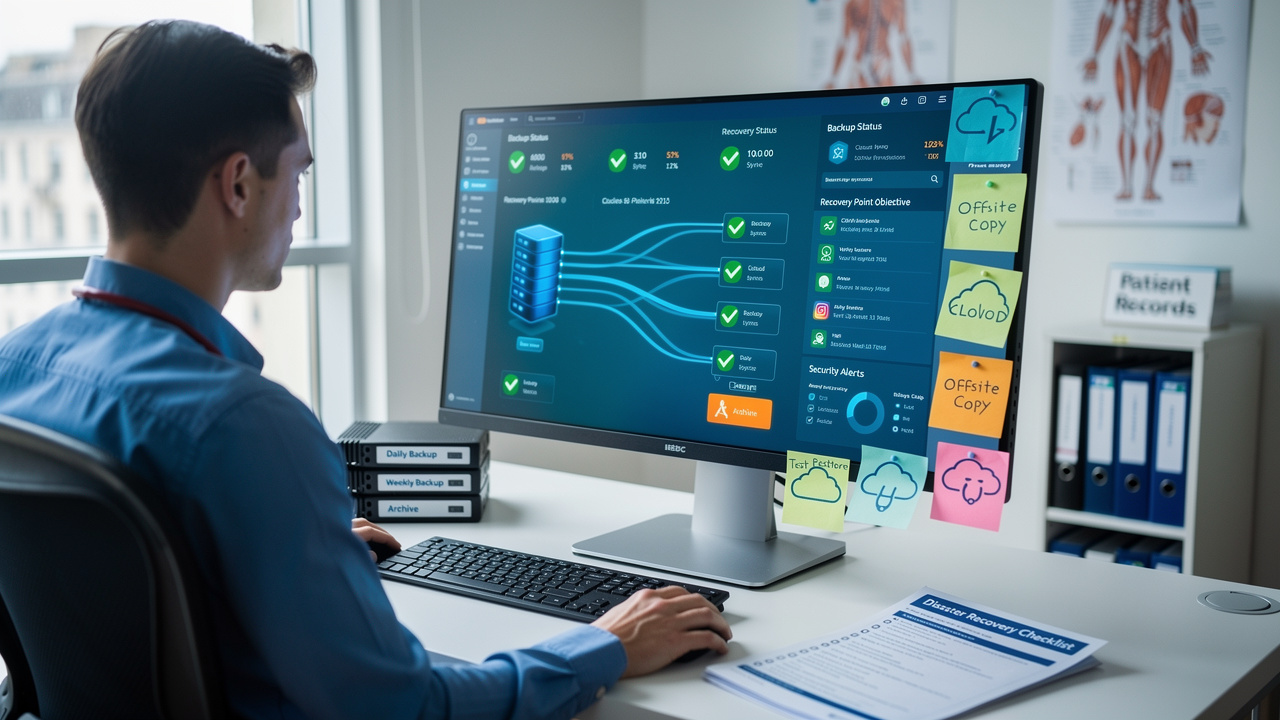
In an era where cyberattacks are escalating, the security of healthcare data has never been more paramount. Crafting an effective IT backup and disaster recovery plan not only safeguards vital information but also ensures organizational resilience against unexpected disruptions.
So, what steps can organizations take to strengthen their defenses and make recovery smoother? This article will outline ten key components that can shift a reactive strategy into a strong, proactive approach, enabling organizations to tackle disaster recovery with assurance.
In an era where cyber threats loom larger than ever, the integrity of healthcare data is paramount. An effective IT backup and disaster recovery plan is essential for safeguarding critical information across all platforms, including servers, workstations, and cloud applications. Adopting the 3-2-1 backup strategy - maintaining three copies of data, utilizing two different media types, and storing one backup off-site - can significantly bolster data security. In 2026, 72% of organizations are recognizing the value of this approach, reflecting a growing awareness of its necessity in the face of rising cyber threats.
It's vital to regularly audit your backup processes to confirm that your data is recoverable and your systems are running smoothly. For instance, as noted by Dawn-Marie Vaughan from DXC Technology, "In 2026, ransomware has fundamentally re-indexed the value of a backup," highlighting the critical nature of effective backup strategies. Companies that have implemented this strategy report enhanced resilience against ransomware attacks, demonstrating the effectiveness of a well-structured backup plan.
Optimal strategies for 2026 involve:
This proactive strategy not only reduces risks but also aligns with compliance requirements, making it a fundamental element of any comprehensive IT backup and disaster recovery plan. Without a proactive backup strategy, organizations risk not just data loss, but their very operational continuity in the face of evolving cyber threats.

In an era where every second counts, the ability to swiftly recover critical systems is paramount for healthcare organizations facing cybersecurity threats. Recovery Time Objectives (RTOs) are essential metrics that define the maximum acceptable downtime for these systems, directly impacting business continuity.
To effectively manage downtime, organizations need to categorize their systems based on how critical they are to business operations. For instance:
By 2026, organizations are expected to invest more in automated restoration processes, cutting RTOs from hours to mere minutes. Regularly reviewing and adjusting RTOs in response to evolving business needs and technological advancements is vital. This proactive strategy not only boosts resilience but also ensures that essential functions keep running smoothly, even when disruptions occur.

In an era where cyber threats loom large, the effectiveness of disaster response plans in healthcare organizations is more critical than ever. Regular testing through simulations and tabletop exercises is essential for identifying weaknesses and enhancing overall effectiveness. Organizations should conduct these tests at least annually, with quarterly evaluations recommended for mission-critical systems. Significant changes to IT infrastructure, such as new server deployments or major application updates, should trigger immediate testing to validate recovery procedures.
Involving diverse groups in simulations, along with data-driven insights, ensures comprehensive coverage of potential scenarios and enhances preparedness. For example, tabletop exercises can assist teams in practicing their response to various emergency situations, fostering better coordination and communication during real events. Real-world instances show that organizations participating in regular testing experience quicker restoration times and decreased financial losses, emphasizing the significance of these practices.
Revising the emergency response strategy based on test results and changing business procedures is essential. Failing to adapt can result in prolonged downtimes and significant financial repercussions. This ensures that the restoration strategy remains effective and aligned with organizational goals, ultimately minimizing downtime and safeguarding operational integrity. By embracing a proactive strategy for emergency testing, organizations can develop resilience and trust in their capacity to react to disruptions. Organizations that prioritize proactive testing not only enhance their resilience but also secure their operational future against unforeseen disruptions.

In the face of escalating cyber threats, an effective incident response strategy is not just beneficial; it's essential for safeguarding healthcare organizations from potential disasters. This strategy should clearly outline the steps for identification, containment, eradication, and recovery, ensuring that every member understands their specific roles and responsibilities. Communication protocols and escalation procedures must be established to facilitate swift action.
Regular training and drills are vital. In fact, organizations that conduct incident response testing at least twice a year can cut breach costs by an average of $1.49 million. With breaches taking an average of 258 days to identify and manage, organizations face a daunting challenge in their cybersecurity efforts. Continuous training guarantees that members are well-prepared to respond effectively when incidents arise. Participating in realistic attack simulations not only develops muscle memory but also reveals gaps in preparedness, enabling groups to enhance their performance under pressure. This highlights the necessity for ongoing training to ensure readiness and resilience against cyber threats.
A recent case illustrates this perfectly: Cyber Solutions swiftly deployed an incident response team to a healthcare provider grappling with a ransomware attack. Their presence within 24 hours helped contain the threat, and a layered strategy-including endpoint isolation, malware removal, and user training-enabled a quicker and more thorough restoration. By adopting these proactive measures, organizations can not only mitigate risks but also cultivate a culture of cybersecurity resilience that empowers their operations.

In an era where data breaches can cripple healthcare organizations, the need for robust disaster management solutions has never been more critical. Cloud solutions provide adaptable and scalable choices for disaster management, enabling businesses to swiftly reinstate data and applications without requiring extensive on-site infrastructure. By leveraging cloud-based backups, organizations can significantly reduce restoration times and costs while ensuring off-site data protection.
For organizations managing Controlled Unclassified Information (CUI) and Federal Contract Information (FCI), meeting stringent cybersecurity standards is not just important; it’s essential for survival. By doing so, they not only protect sensitive federal data but also maintain eligibility for lucrative government contracts by adhering to mandatory compliance requirements. Organizations should evaluate different cloud providers to ensure they meet these compliance and security requirements. Choosing the right cloud provider is not just a matter of preference; it’s a strategic decision that can safeguard your organization’s future in a competitive landscape.

In the face of increasing cybersecurity threats, defining clear roles within disaster response teams is not just important; it's essential for effective recovery. Every team member should have specific tasks and expectations, ensuring thorough coverage of all restoration aspects. This clarity streamlines operations and boosts accountability - both vital during high-pressure situations. Regular surprise assessments and exercises can really help teams feel prepared and confident, allowing them to adjust to personnel changes and advancing technologies. Organizations that adopt organized group dynamics report enhanced restoration outcomes, as role clarity significantly influences the overall efficiency of crisis management efforts.
A well-organized contingency response group, comprising varied expertise from multiple departments, can utilize different viewpoints to tackle challenges more effectively. Without an IT backup and disaster recovery plan, organizations face the risk of chaos when crises hit. Significantly, 22% of organizations lack a formal IT backup and disaster recovery plan for emergencies, emphasizing the essential need for specified roles. Furthermore, executive management participation in the IT backup and disaster recovery plan is crucial for oversight and approval of restoration strategies. Such failures can result in devastating losses and extended recovery periods, making organized group dynamics crucial.
The four pillars of disaster management - Preparedness, Response, Recovery, and Mitigation - should guide the group's efforts to ensure a comprehensive approach to disaster management. This incident underscores the critical importance of immediate action, specialized expertise, and a structured response plan when dealing with ransomware. Acting quickly is crucial to minimizing damage, and having an incident response team physically present within a day can help contain threats effectively. A layered strategy - including endpoint isolation, malware removal, and user training - enables a quicker and more thorough restoration, ultimately enhancing cybersecurity measures.

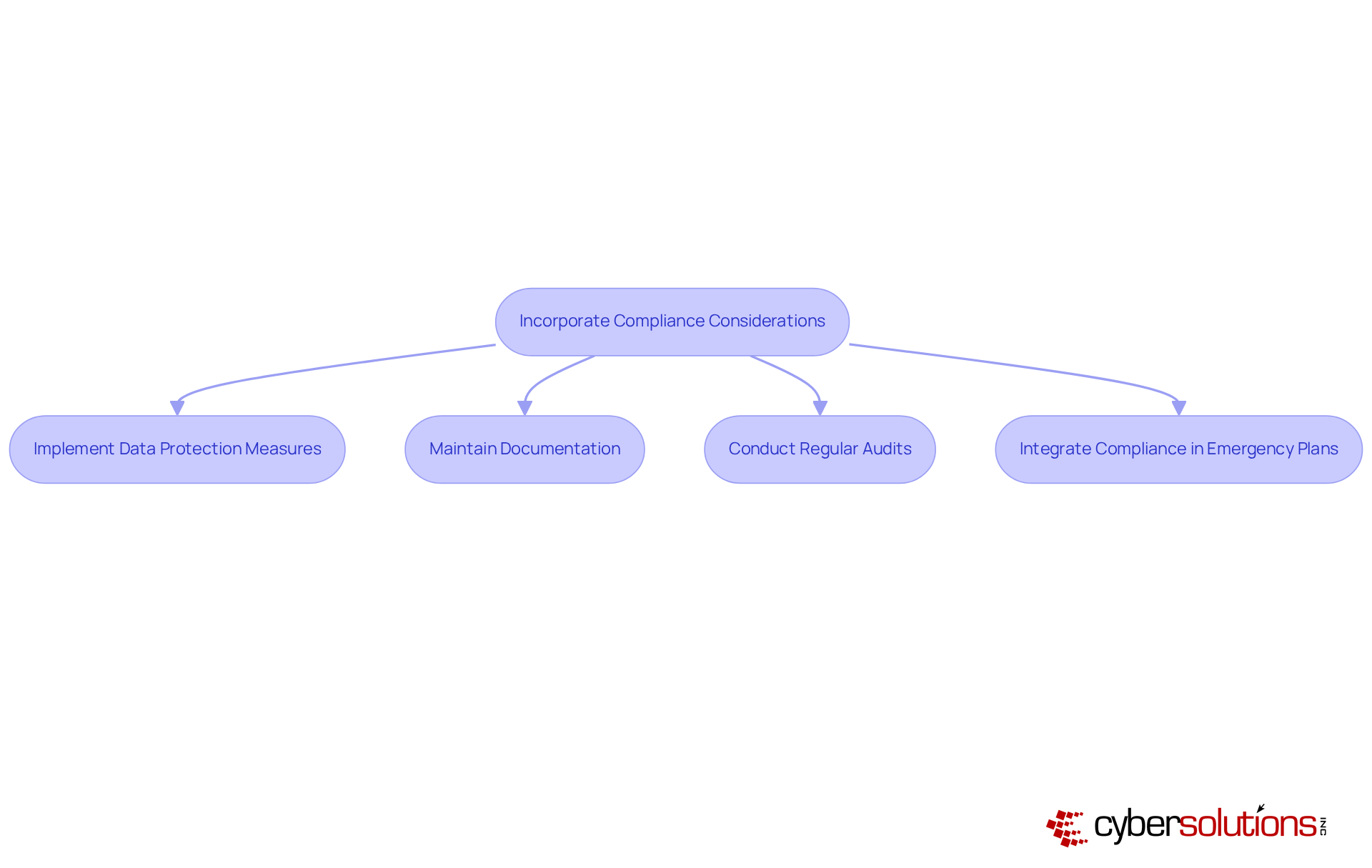
In an era where data breaches are rampant, the stakes for healthcare organizations have never been higher. To ensure the efficiency of emergency response plans, entities must align their strategies with regulatory mandates such as HIPAA, GDPR, and PCI-DSS. But how can organizations ensure they meet these stringent requirements?
By implementing robust data protection measures, maintaining comprehensive documentation, and conducting regular audits to verify compliance. Every component of the emergency management plan should include compliance factors, particularly in the IT backup and disaster recovery plan, as well as in data backup approaches and incident response procedures.
This integration not only safeguards sensitive information but also positions organizations to demonstrate due diligence during audits. Ultimately, a proactive approach to compliance not only protects sensitive data but also fortifies the organization's reputation in the eyes of stakeholders.
In the face of increasing cybersecurity threats, a robust communication strategy is not just beneficial; it's essential for effective disaster management in healthcare organizations. This plan should prioritize the identification of key stakeholders, ensuring that all relevant parties are engaged and informed.
Establishing clear communication pathways is vital; it ensures that everyone stays informed and can collaborate effectively. Furthermore, determining the frequency of updates is crucial; regular communication helps maintain transparency and keeps management and external stakeholders informed of progress and any changes in strategy.
By ensuring that all group members comprehend their roles and responsibilities, organizations can enhance their restoration efforts and minimize disruptions. In the context of a ransomware attack, having an incident response team ready to communicate and act quickly is critical. The presence of specialized knowledge within a day helped contain the threat and facilitated a quicker resolution.
This highlights the significance of incorporating effective communication strategies into the emergency response plan. Alongside a layered approach that includes endpoint isolation, malware removal, and user training, these strategies enhance overall cybersecurity and operational continuity.

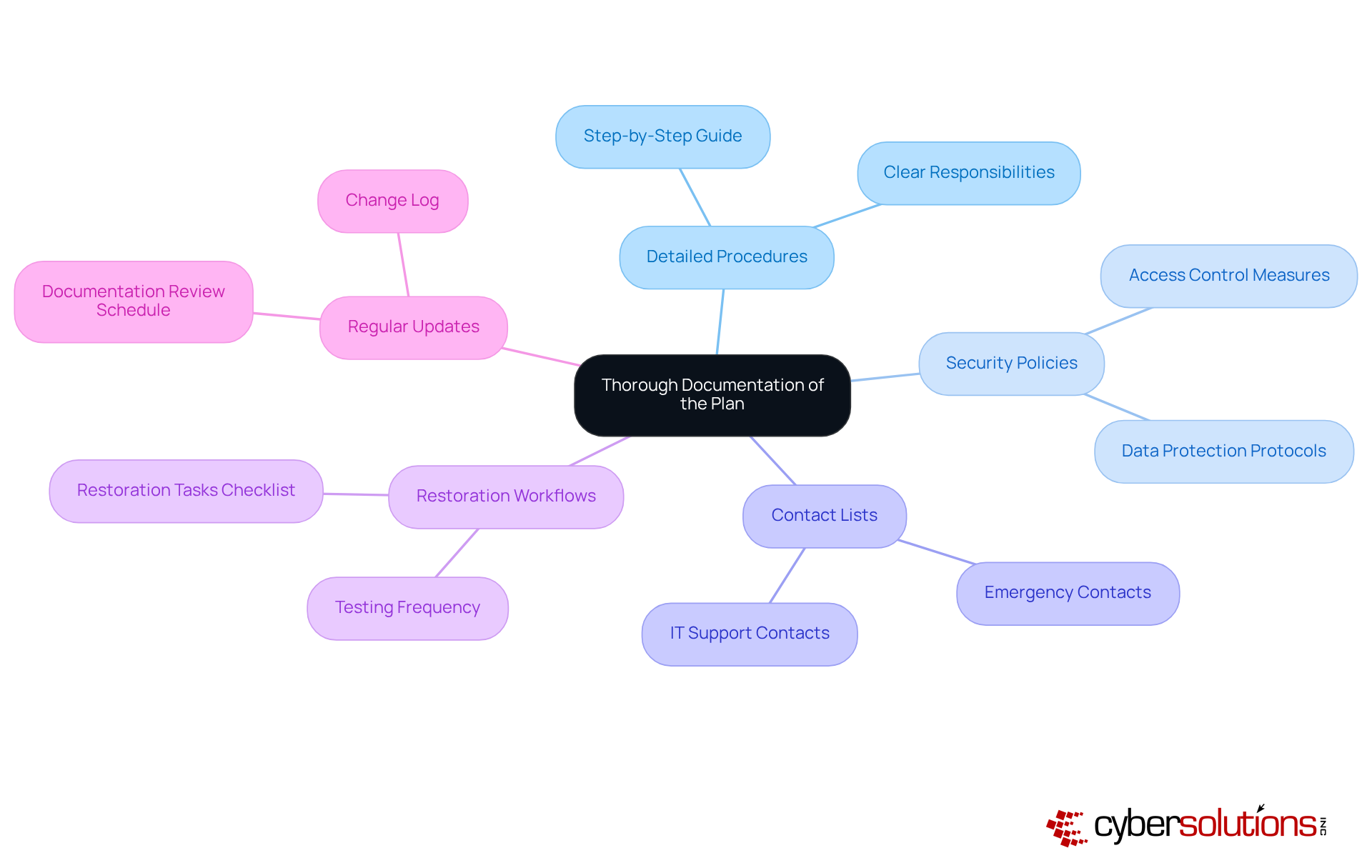
In the realm of healthcare, the stakes of cybersecurity are higher than ever, making a backup and disaster recovery plan not just important, but essential. This documentation must include detailed procedures, security policies, contact lists, and restoration workflows, ensuring that all team members can easily access the information when needed. For instance, incorporating a step-by-step guide for data restoration and a checklist for restoration tasks can enhance clarity. As Hinton Davis observes, "Document restoration is a critical component of a business continuity plan because content drives the operations that keep organizations moving forward."
To ensure efficient emergency restoration, organizations must frequently validate and test their IT backup and disaster recovery plan. This practice highlights the importance of keeping documentation up to date. Regular updates are crucial to reflect changes in technology, personnel, or business processes, thereby maintaining the plan's relevance and ensuring compliance during audits, such as the CMMC assessment.
Good documentation clearly defines who does what and lays out the steps needed to execute the IT backup and disaster recovery plan to get operations back on track. Organizations that prioritize thorough documentation can significantly improve their restoration process effectiveness, minimizing downtime and operational disruptions during crises. It is also crucial to acknowledge the difference between backups and emergency restoration; while backups safeguard data, emergency restoration ensures that business operations persist during outages. Frequent evaluation of contingency plans is crucial to ensure that restoration strategies align with set goals and to detect possible deficiencies, thus aiding adherence to HIPAA and other regulatory standards. Ultimately, organizations that invest in comprehensive documentation will not only enhance their operational resilience but also safeguard their compliance with critical regulations like HIPAA.
In an era where ransomware attacks threaten healthcare organizations, the need for a robust IT backup and disaster recovery plan has never been more critical. Ongoing enhancement of the IT backup and disaster recovery plan is essential for maintaining its effectiveness. Organizations must regularly review and update their IT backup and disaster recovery plan based on insights gained from tests, actual incidents, and evolving business operations.
A recent case with a healthcare provider highlights the urgent need for immediate action. Specialized expertise is crucial when responding to ransomware attacks. By deploying an incident response group within 24 hours, the provider managed to contain the threat and recover 4,500 endpoints ahead of schedule. Establishing clear metrics, such as recovery time objectives (RTOs) and recovery point objectives (RPOs), allows entities to quantitatively assess the effectiveness of their IT backup and disaster recovery plan.
Incorporating feedback from team members and stakeholders enhances the IT backup and disaster recovery plan, ensuring it addresses real-world challenges and adapts to changing circumstances. Taking these proactive steps not only reduces risks but also strengthens the organization's IT backup and disaster recovery plan, making it more resilient. Regular testing and feedback are essential for developing an effective IT backup and disaster recovery plan, which leads to quicker recovery and fewer losses, ultimately enhancing customer trust.
To effectively implement these strategies, C-Suite leaders should prioritize regular training and simulations within the IT backup and disaster recovery plan, ensuring that all team members are familiar with their roles in the recovery process. The layered approach demonstrated in the case study, which included endpoint isolation, malware removal, and user training, exemplifies how organizations can enhance their cybersecurity posture while integrating the IT backup and disaster recovery plan to prepare for future incidents. Furthermore, the collaborative effort with the healthcare provider has fostered a strong, ongoing partnership, reinforcing the importance of implementing the IT backup and disaster recovery plan in response to cybersecurity challenges. By prioritizing these strategies, organizations not only safeguard their operations but also build a foundation of trust with their patients and stakeholders.

In an era where cyber threats loom larger than ever, the integrity of healthcare organizations hangs in the balance, making robust IT backup and disaster recovery plans essential. An effective IT backup and disaster recovery plan is not merely a safety net; it is a vital framework for safeguarding organizational integrity in the face of escalating cyber threats. The components outlined in this article highlight the necessity of a comprehensive strategy that encompasses:
Every component is crucial for enabling organizations to bounce back quickly from disruptions, ensuring they maintain operational continuity and protect their data security.
Key insights from this discussion emphasize the importance of proactive measures, such as:
By categorizing systems based on their criticality and establishing clear roles within response teams, organizations can enhance their preparedness and resilience. Furthermore, integrating compliance requirements into every aspect of the disaster recovery plan not only protects sensitive information but also strengthens the organization’s reputation and operational reliability.
Given the rapidly changing cyber threat landscape, organizations must prioritize developing and continuously improving their IT backup and disaster recovery plans to stay ahead of potential risks. Embracing these best practices not only mitigates risks but also fosters a culture of resilience that empowers teams to respond effectively to incidents. By prioritizing these strategies, organizations not only safeguard their operations but also position themselves as trustworthy stewards of sensitive information in a precarious digital landscape.
What is a comprehensive data backup strategy?
A comprehensive data backup strategy is an essential IT backup and disaster recovery plan that safeguards critical information across all platforms, including servers, workstations, and cloud applications. It often involves the 3-2-1 backup strategy, which entails maintaining three copies of data, utilizing two different media types, and storing one backup off-site.
Why is the 3-2-1 backup strategy important?
The 3-2-1 backup strategy is important because it significantly bolsters data security, especially in light of rising cyber threats. By 2026, 72% of organizations recognize its value, reflecting a growing awareness of the necessity for effective backup strategies to protect against data loss.
What are the optimal strategies for data backup in 2026?
Optimal strategies for data backup in 2026 include automating backup schedules, ensuring encryption of all backup data, and performing regular restoration tests to validate the integrity and accessibility of backups.
What are Recovery Time Objectives (RTOs)?
Recovery Time Objectives (RTOs) are metrics that define the maximum acceptable downtime for critical systems in healthcare organizations. They are essential for managing business continuity and are categorized based on the criticality of the systems.
How can organizations manage their RTOs effectively?
Organizations can manage their RTOs effectively by categorizing systems based on their importance, investing in automated restoration processes to reduce RTOs from hours to minutes, and regularly reviewing and adjusting RTOs in response to evolving business needs and technological advancements.
Why is regular testing of disaster response plans necessary?
Regular testing of disaster response plans is necessary to identify weaknesses and enhance overall effectiveness in responding to cyber threats. Organizations should conduct tests at least annually, with quarterly evaluations for mission-critical systems, to ensure preparedness.
What should organizations do after significant changes to their IT infrastructure?
After significant changes to their IT infrastructure, such as new server deployments or major application updates, organizations should immediately test their recovery procedures to validate their effectiveness.
How does involving diverse groups in simulations benefit organizations?
Involving diverse groups in simulations ensures comprehensive coverage of potential scenarios and enhances preparedness. It fosters better coordination and communication during real events, leading to quicker restoration times and decreased financial losses.
What happens if organizations fail to adapt their emergency response strategy?
If organizations fail to adapt their emergency response strategy based on test results and changing business procedures, they risk prolonged downtimes and significant financial repercussions, compromising operational integrity.
What is the overall benefit of embracing a proactive strategy for emergency testing?
Embracing a proactive strategy for emergency testing enhances organizational resilience and builds trust in their capacity to react to disruptions, ultimately safeguarding their operational future against unforeseen challenges.
Managed IT Service Provider | Cyber Security | Incident Response | Compliance As A Service | Hosted Phone Service | Managed Security Service Provider | AI As A Service