


In an era of relentless regulatory changes, mastering compliance is essential for organizations striving for excellence. Compliance is more than just ticking boxes; it's about building trust and integrity with stakeholders. With regulations constantly shifting, leaders often find themselves overwhelmed by the complexities of compliance. A pressing question arises: how can organizations not only meet compliance requirements but also leverage them to enhance operational resilience and reputation?
Navigating the maze of compliance can feel overwhelming for many leaders. However, those who embrace compliance as a strategic advantage can transform challenges into opportunities. Exploring the nuances of compliance reveals not just the challenges but also the strategic opportunities that come with a proactive approach to governance and risk management.
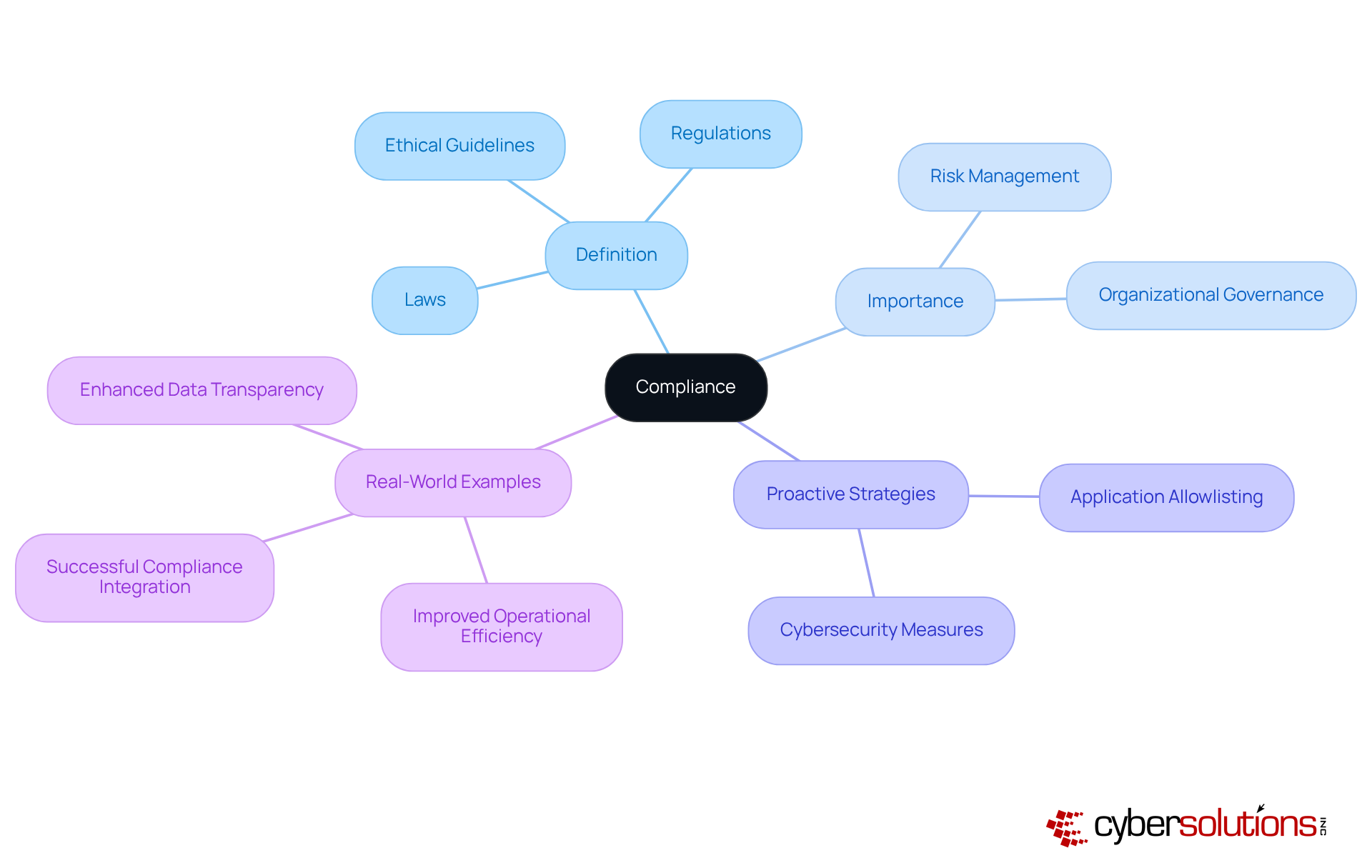
In an era where compliance is more than just a checkbox, organizations face mounting pressure to navigate a complex regulatory landscape. What does it mean to be in compliance? It means following laws, regulations, and ethical guidelines that govern a company's operations. It requires a proactive approach to risk management and organizational governance, ensuring that actions align with legal and ethical expectations. This fosters a culture of accountability within the organization.
As we look toward 2026, organizations must adapt to a rapidly evolving landscape of adherence, where new regulations demand greater transparency and accountability. How prepared is your organization for these evolving compliance demands? Leaders need to grasp regulations to navigate these challenges effectively, as it impacts operational resilience and stakeholder trust. Proactive adherence strategies, including robust cybersecurity measures like application allowlisting, not only mitigate risks but also position businesses as trusted partners in their respective industries.
Application allowlisting is a key component of these strategies, as it prevents unauthorized or malicious applications from executing on systems. Features such as centralized management and continuous monitoring of application activity enhance security by ensuring that only approved software runs on the network. This proactive measure is essential for adherence to regulations like HIPAA, PCI-DSS, and GDPR.
Real-world examples demonstrate the significance of following regulations. Firms that have effectively incorporated regulations into their operations report improved operational efficiency and diminished risks linked to regulatory breaches. For instance, entities that emphasize data transparency and allocate resources to strong regulatory frameworks, including attaining CMMC Level 3 certification, are better prepared to manage the challenges of changing regulations, ultimately protecting their reputation and financial stability.
Ultimately, an organization's resilience and reputation in the eyes of stakeholders will be defined by its ability to understand what does it mean to be in compliance with demands.
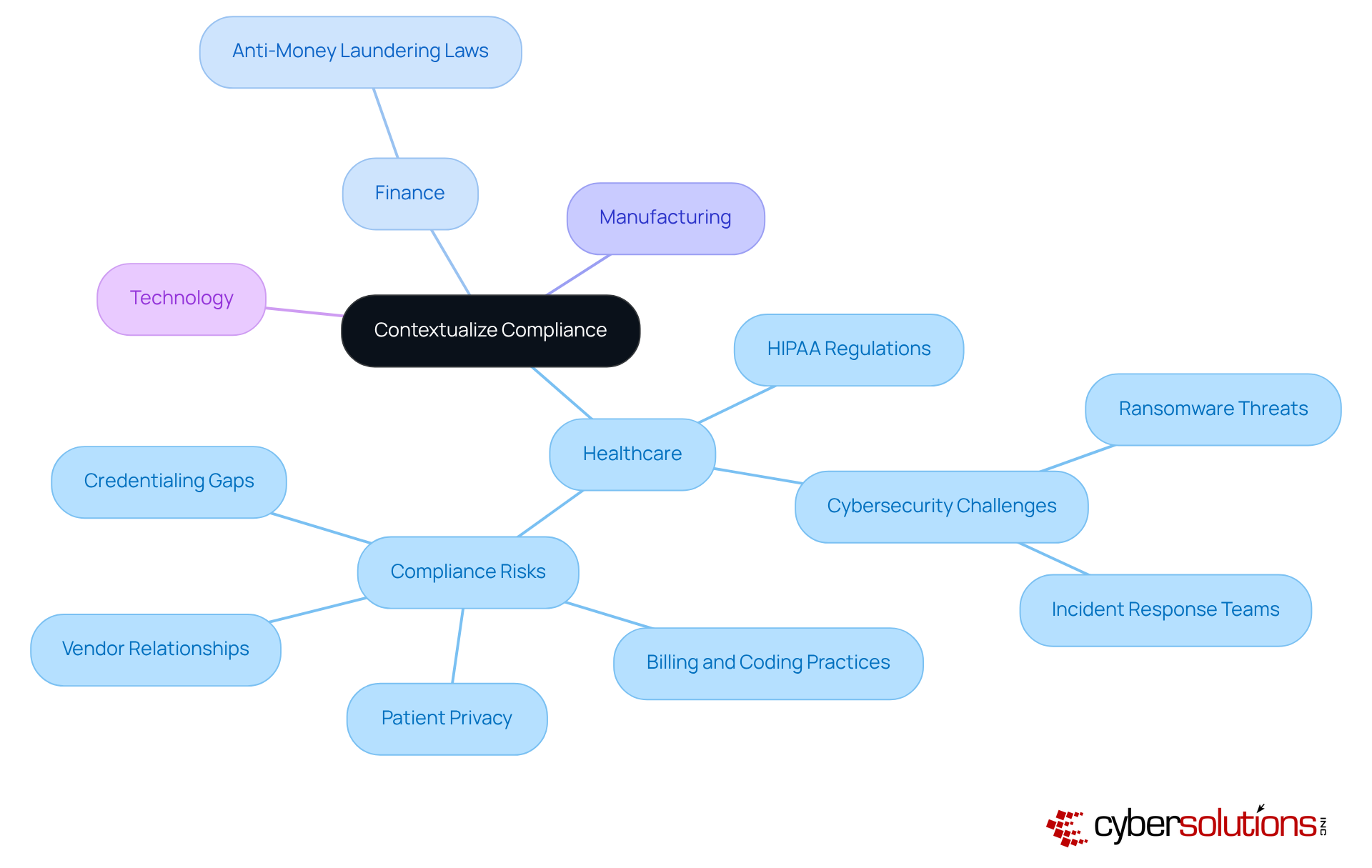
In an era where cyber threats loom large, the healthcare sector stands at a critical juncture, facing unprecedented challenges in safeguarding sensitive patient data. In diverse sectors such as healthcare, finance, manufacturing, and technology, understanding what it means to be in compliance is essential as each navigates distinct regulatory frameworks that shape their operations. In healthcare, adherence to HIPAA regulations is crucial for protecting patient information, while financial institutions must contend with stringent anti-money laundering laws to prevent illicit activities. The recent ransomware assault on a healthcare provider underscores the urgent need for effective incident response and proactive security measures, especially in light of evolving regulatory challenges. With around 4,500 endpoints at risk, the rapid formation of a specialized incident response team was vital to restore systems and ensure continuity of care, highlighting the intersection of cybersecurity and regulatory standards.
Adhering to regulations raises the question of what it means to be in compliance, as it is not just about avoiding penalties; it builds trust with stakeholders, enhances operational efficiency, and mitigates risks like hefty fines and reputational harm. Leaders must understand these complexities to develop effective strategies that align with their industry's specific demands, ensuring not only legal compliance but also understanding what it means to be in compliance while fostering a culture of accountability and resilience. Additionally, keeping track of adherence across various roles and locations is vital for proactive management, allowing organizations to quickly adapt to regulatory changes and maintain their commitment to standards. Implementing measures such as application allowlisting can further bolster cybersecurity, preventing unauthorized software from executing and ensuring compliance with data protection protocols.
In an era where regulatory compliance is paramount, it is essential to understand what does it mean to be in compliance, as regulatory adherence has transformed significantly over the years, evolving from ancient trade rules to modern compliance frameworks. In the 20th century, the structure of regulations began to take shape, particularly after major corporate scandals like Enron and Worldcom, which highlighted the urgent need for oversight and accountability in corporate practices.
A pivotal moment in this evolution was the introduction of the Federal Sentencing Guidelines for Organizations in 1991. This marked a significant shift, emphasizing the need for adherence programs to prevent misconduct. Organizations with strong compliance programs can reduce their risk of penalties by up to 50%, showcasing the importance of internal controls and ethical behavior.
The historical trajectory of regulatory standards underscores the necessity for organizations to prioritize transparency and accountability. As they navigate increasingly complex regulatory environments, the lessons learned from past scandals continue to shape the development of robust governance frameworks. Without a strong governance framework, organizations risk not only compliance failures but also the trust of their stakeholders, which can be irreparably damaged.

In an era where cybersecurity threats loom large, the stakes for healthcare organizations have never been higher. Key characteristics of effective regulatory standards include:
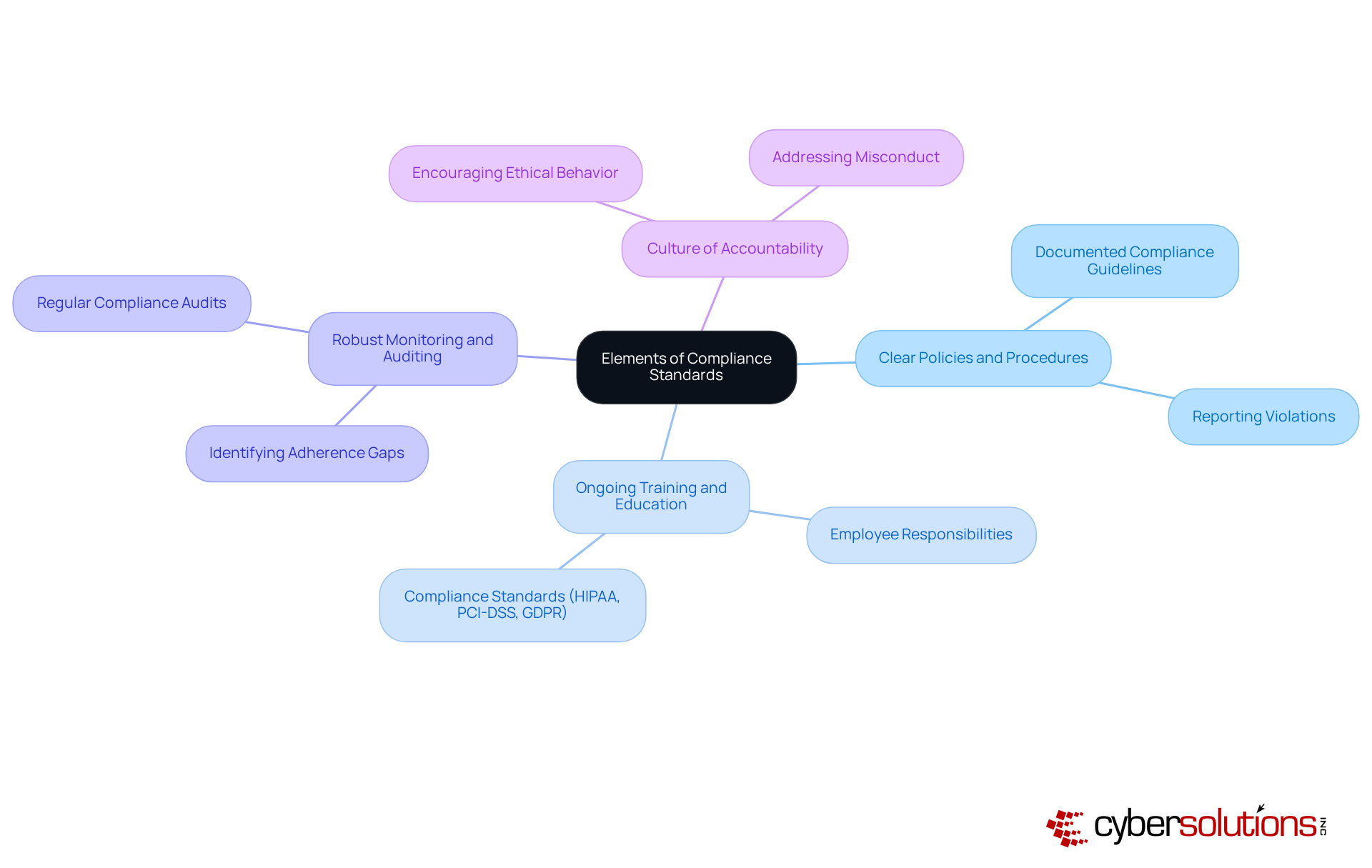
It's crucial for organizations to establish clear, documented policies that outline what it means to be in compliance and how to report any violations. Regular training ensures that employees understand their responsibilities and what it means to be in compliance with critical standards like HIPAA, PCI-DSS, and GDPR in their roles. Monitoring and auditing procedures are essential for identifying potential adherence gaps, while promoting a culture of accountability encourages employees to prioritize ethical behavior, especially as 62% of employees believe misconduct is sometimes ignored for top performers.
Furthermore, board and management supervision is essential for showing dedication to regulations and should be incorporated into the regulatory structure. However, navigating the maze of regulatory standards can be overwhelming for healthcare organizations, making it difficult to understand what it means to be in compliance and potentially leading to compliance failures.
Cyber Solutions enhances this framework through its Compliance as a Service (CaaS), making it easier for organizations to navigate complex legal requirements and stay aligned with standards like CMMC and NIST. By embracing a comprehensive compliance framework, organizations not only safeguard their operations but also foster a culture of integrity that resonates throughout their workforce.
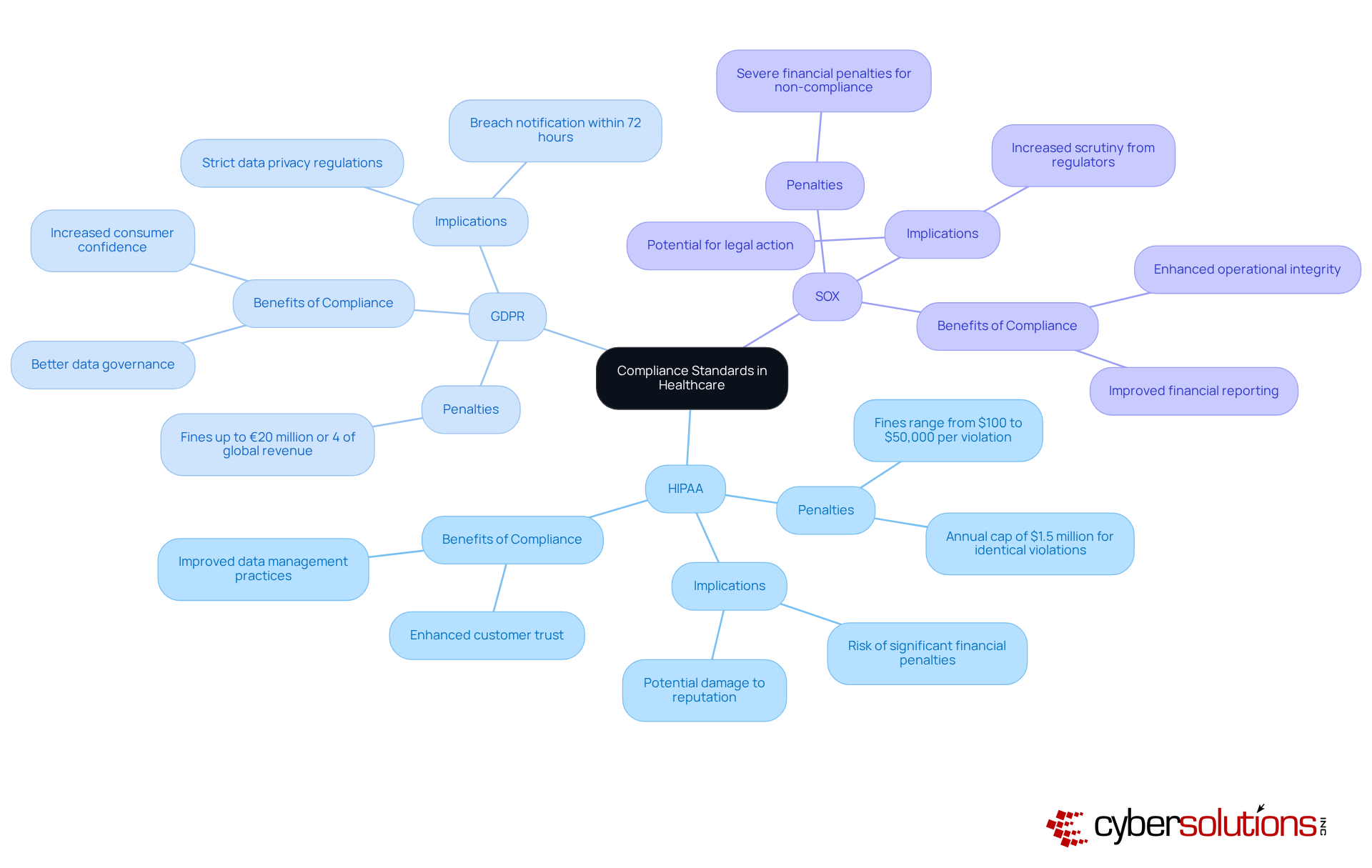
In an era where cybersecurity threats loom large, the stakes for healthcare organizations have never been higher. Compliance standards such as the Health Insurance Portability and Accountability Act (HIPAA), the General Data Protection Regulation (GDPR), and the Sarbanes-Oxley Act (SOX) are critical in navigating this landscape. HIPAA mandates that healthcare entities implement robust measures to protect patient information, while GDPR enforces strict data privacy regulations for companies operating within the European Union.
For healthcare organizations, understanding what it means to be in compliance while navigating the complexities of compliance can be daunting, especially with evolving regulations and the threat of penalties looming large. Non-compliance can lead to significant repercussions. In 2026, the cost of non-compliance is projected to escalate, with penalties for GDPR violations potentially reaching up to €20 million or 4% of a company's global annual revenue, whichever is higher. Similarly, HIPAA violations can incur fines ranging from $100 to $50,000 per incident, capped at $1.5 million annually for identical violations.
Have you considered how these regulations impact not just your bottom line but your reputation as well? Legal experts highlight that the implications of these regulations extend beyond financial penalties; they can severely damage a company's reputation and operational integrity. For instance, companies that have successfully implemented GDPR adherence measures have reported enhanced customer trust and improved data management practices.
To avoid these pitfalls, organizations must prioritize understanding what it means to be in compliance as a strategic imperative rather than a mere obligation. By prioritizing compliance, organizations not only mitigate risks but also position themselves as trustworthy stewards of patient data in a competitive landscape.
In an era where cybersecurity threats loom large, understanding compliance is not just a necessity; it's a strategic advantage for organizations navigating complex regulations. Compliance transcends mere adherence to laws; it embodies a commitment to accountability and proactive risk management. As organizations prepare for the compliance challenges of the future, they must recognize that being in compliance fosters trust with stakeholders and enhances operational resilience.
The article elucidates key aspects of compliance, highlighting its importance across various industries, from healthcare to finance. It emphasizes the need for clear policies, ongoing training, and robust monitoring mechanisms to create a culture of accountability. Real-world examples illustrate how organizations that prioritize compliance not only mitigate risks but also enhance their reputations and operational efficiencies. Organizations often struggle to keep pace with evolving regulations, risking non-compliance and its consequences. The historical evolution of compliance standards underscores the necessity for organizations to remain vigilant and adaptable in the face of changing regulations.
Ultimately, compliance is not just about avoiding penalties; it is about building a sustainable framework that supports ethical behavior and operational integrity. By neglecting compliance, organizations can face reputational damage and loss of stakeholder confidence. Leaders must embrace compliance as a strategic imperative, recognizing that a strong commitment to adherence not only protects their organizations but also positions them as trustworthy partners in their respective industries. By embracing compliance as a strategic imperative, organizations not only safeguard their operations but also cultivate a reputation that attracts and retains stakeholders in an increasingly competitive landscape.
What does compliance mean for organizations?
Compliance means following laws, regulations, and ethical guidelines that govern a company's operations, requiring a proactive approach to risk management and organizational governance.
Why is compliance important in today's regulatory landscape?
Compliance is crucial as it fosters a culture of accountability, enhances operational resilience, and builds stakeholder trust, especially in a rapidly evolving environment with new regulations demanding greater transparency.
What strategies can organizations implement to ensure compliance?
Organizations can adopt proactive adherence strategies, such as robust cybersecurity measures like application allowlisting, to mitigate risks and position themselves as trusted partners in their industries.
What is application allowlisting and why is it significant for compliance?
Application allowlisting is a security measure that prevents unauthorized or malicious applications from executing on systems, which is essential for adhering to regulations like HIPAA, PCI-DSS, and GDPR.
Can you provide examples of how compliance impacts operational efficiency?
Firms that effectively incorporate regulations into their operations report improved operational efficiency and reduced risks associated with regulatory breaches, enhancing their reputation and financial stability.
How does compliance vary across different industries?
Different industries face distinct regulatory frameworks; for example, healthcare must adhere to HIPAA regulations for patient data protection, while financial institutions must comply with anti-money laundering laws.
What recent events highlight the importance of compliance in the healthcare sector?
The ransomware attack on a healthcare provider emphasizes the need for effective incident response and proactive security measures to safeguard sensitive patient data and comply with evolving regulatory challenges.
How can organizations maintain their commitment to compliance?
Organizations can keep track of adherence across various roles and locations, allowing them to quickly adapt to regulatory changes and ensure ongoing compliance with standards.
Managed IT Service Provider | Cyber Security | Incident Response | Compliance As A Service | Hosted Phone Service | Managed Security Service Provider | AI As A Service