Introduction
In a world where cyber threats loom larger every day, healthcare executives must rise to the challenge of safeguarding sensitive information. Effectively reducing cybersecurity risks isn't just a technical necessity; it's a strategic imperative that can shape an organization's future. As cyber threats evolve rapidly, how can executives guarantee their organizations remain not just protected, but resilient against potential breaches? This article outlines five essential steps that empower leaders to navigate the complexities of cybersecurity risk management, fortifying their organizations against emerging threats.
Understand Cybersecurity Risk Management
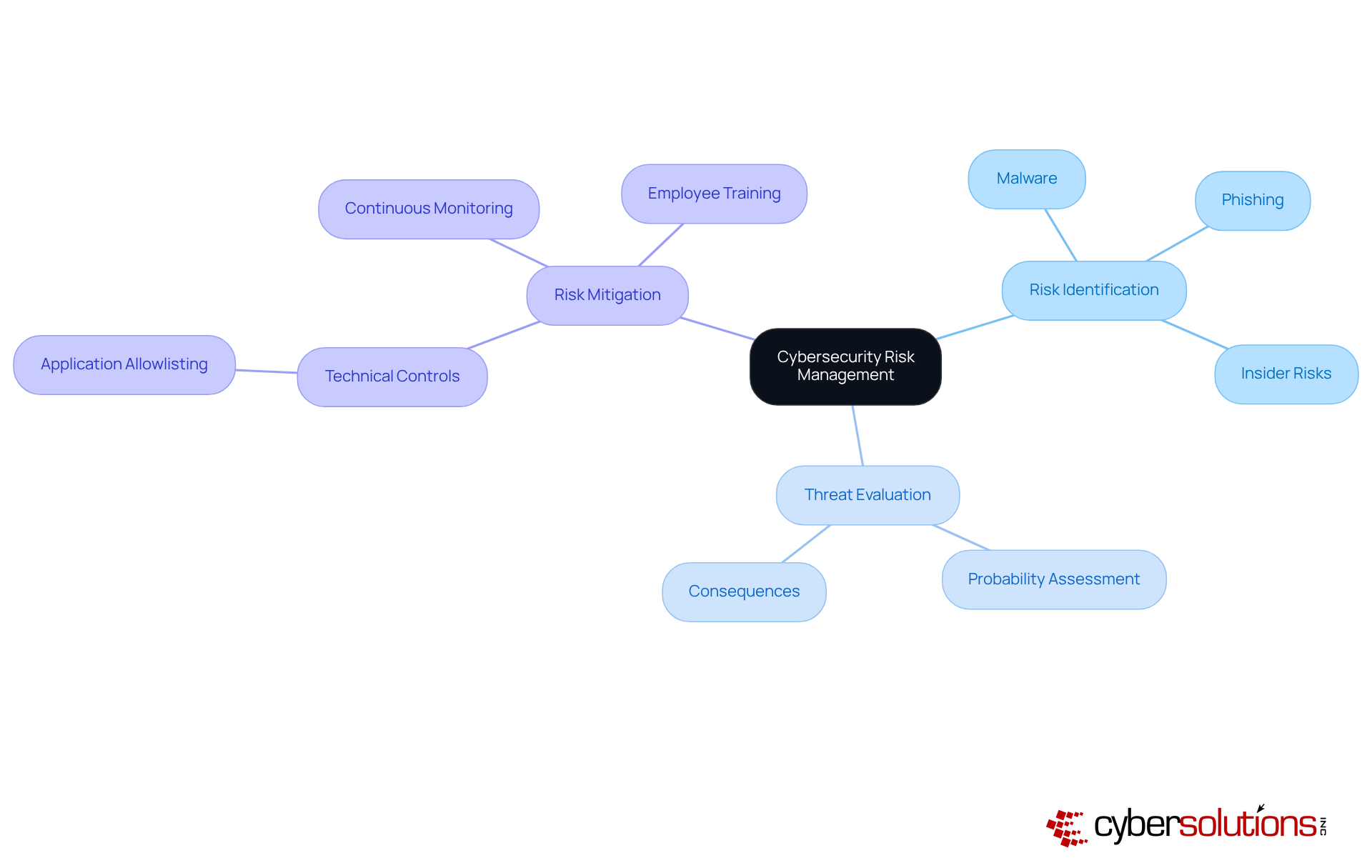
In an era where cyber threats loom larger than ever, the healthcare sector must prioritize cybersecurity as a cornerstone of its business strategy. Cybersecurity threat management is essential; it’s about identifying, assessing, and understanding how to reduce cyber security risks to your organization’s information systems. Key components include:
- Risk Identification: Recognizing potential threats such as malware, phishing, and insider risks is crucial, as these can significantly impact business operations.
- Threat Evaluation: Executives must assess the probability and potential consequences of these identified threats. Understanding how they could disrupt operations and influence the bottom line is vital. Notably, 38% of boards express concern about losing customers due to cyber incidents, underscoring the direct business consequences of inadequate threat management. Furthermore, 86% of boards address cyber threat management at the board level, highlighting its significance as a business priority.
- Risk Mitigation: Implementing effective strategies on how to reduce cyber security risks is essential. This includes deploying technical controls such as application allowlisting, which proactively prevents unauthorized software from executing, thereby reducing vulnerabilities and minimizing the attack surface. Continuous monitoring of application activity is also crucial to detect and block unauthorized software attempts. Application allowlisting not only helps in blocking malware and ransomware but also ensures compliance with regulatory standards like HIPAA, PCI-DSS, and GDPR. Regular employee training and promoting a culture of security awareness are also key. Organizations that prioritize digital security not only safeguard their assets but also boost customer trust and resilience, positioning themselves competitively in the market. As Adam Fletcher, CISO of Blackstone, aptly states, "Cybersecurity isn’t about avoiding danger - it’s about managing it intelligently."
By understanding these elements, leaders can recognize the importance of investing in strong protection measures that safeguard their entity’s assets and reputation. Without robust cybersecurity measures, organizations risk not only their assets but also their very reputation in an increasingly digital world. Moreover, employing structures such as the CIA triad can assist in conveying security requirements efficiently, while cooperation between CISOs and General Counsels is crucial for thorough management of vulnerabilities.
Identify Your Organization's Cybersecurity Risks
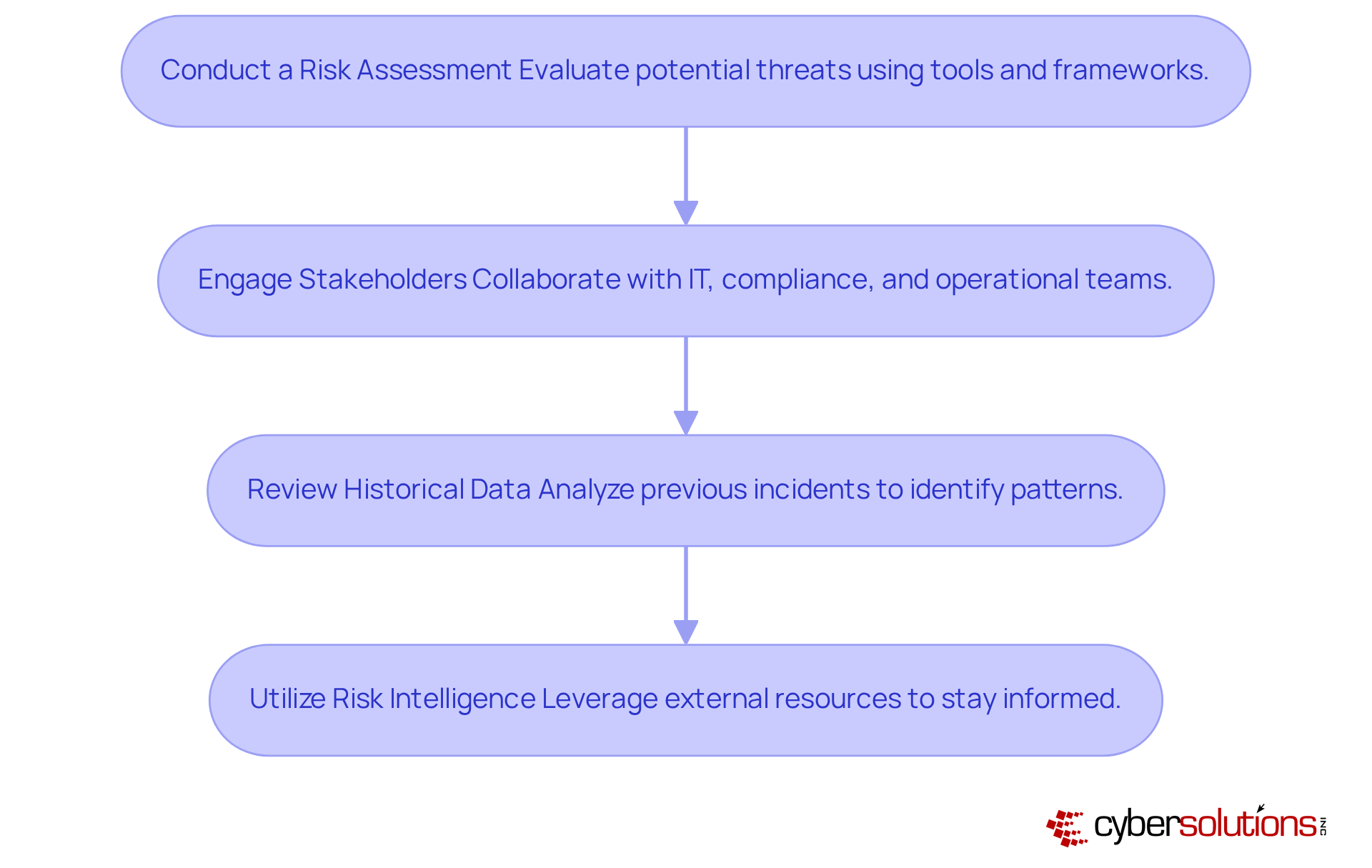
In an era where cyber threats are evolving rapidly, healthcare executives must confront the unique challenges that jeopardize their organizations' security. To tackle cybersecurity challenges effectively, executives need to first grasp the specific dangers their organizations face. This can be achieved through the following steps:
- Conduct a Risk Assessment: Utilize established tools and frameworks to evaluate potential threats. Consider factors such as data sensitivity, regulatory requirements, and industry-specific challenges. In 2026, entities are progressively embracing zero trust architecture and active monitoring as components of their assessment strategies.
- Engage Stakeholders: Collaborate with IT, compliance, and operational teams to gather insights on vulnerabilities and past incidents. This collaboration is crucial, as 60% of CISOs report rising third-party incidents due to limited visibility across vendors. Limited visibility across vendors can lead to increased risks, making it essential for executives to engage stakeholders effectively.
- Review Historical Data: Analyze previous security incidents and breaches to identify patterns and recurring vulnerabilities. With the average cost of a data breach projected to reach $4.88 million, understanding past incidents can drive executives to prioritize cybersecurity investments and strategies.
- Utilize Risk Intelligence: Leverage external resources and risk intelligence reports to stay informed about emerging dangers relevant to your industry. In 2025, there was an 89% increase in attacks by AI-enabled adversaries, highlighting the need for continuous monitoring and adaptation.
By systematically identifying vulnerabilities, executives can gain a comprehensive understanding of their organization's cybersecurity landscape, empowering them to take proactive measures that mitigate potential threats.
Assess and Prioritize Cybersecurity Risks
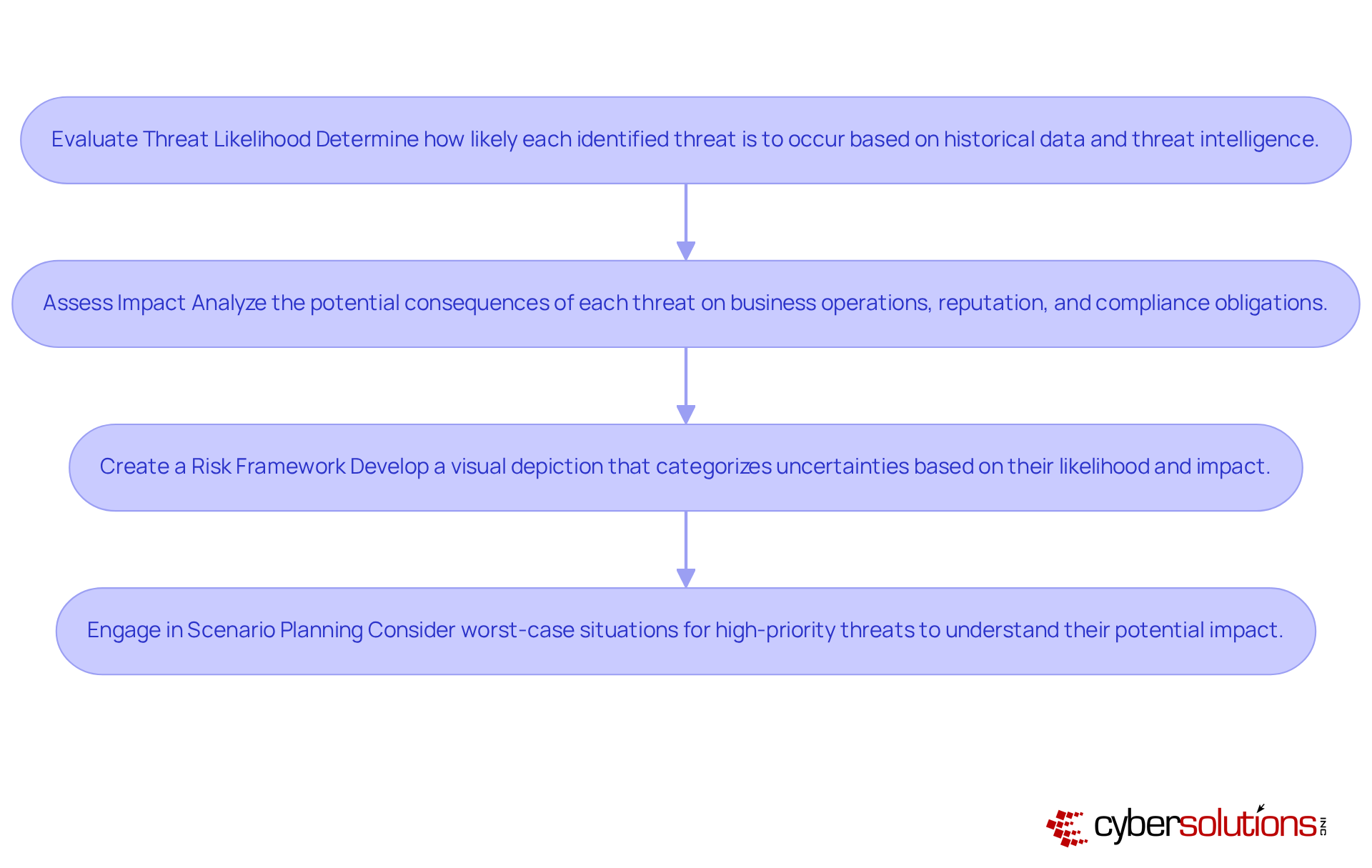
In an era where cyber threats loom larger than ever, healthcare organizations must confront the stark reality of their vulnerabilities. Once threats have been identified, the next step is to evaluate and prioritize them according to their potential effect on the organization. Here’s how to approach this critical task:
- Evaluate Threat Likelihood: Determine how likely each identified threat is to occur based on historical data and threat intelligence.
- Assess Impact: Analyze the potential consequences of each threat on business operations, reputation, and compliance obligations.
- Create a Risk Framework: Develop a visual depiction (risk framework) that categorizes uncertainties based on their likelihood and impact, aiding in prioritizing them effectively.
- Engage in Scenario Planning: Consider worst-case situations for high-priority threats to understand their potential impact on the organization.
By prioritizing threats, executives can make informed choices about where to allocate resources and concentrate their security efforts. Failing to prioritize these threats could leave your organization exposed, jeopardizing not just data, but patient trust and safety.
Develop a Cybersecurity Risk Mitigation Plan
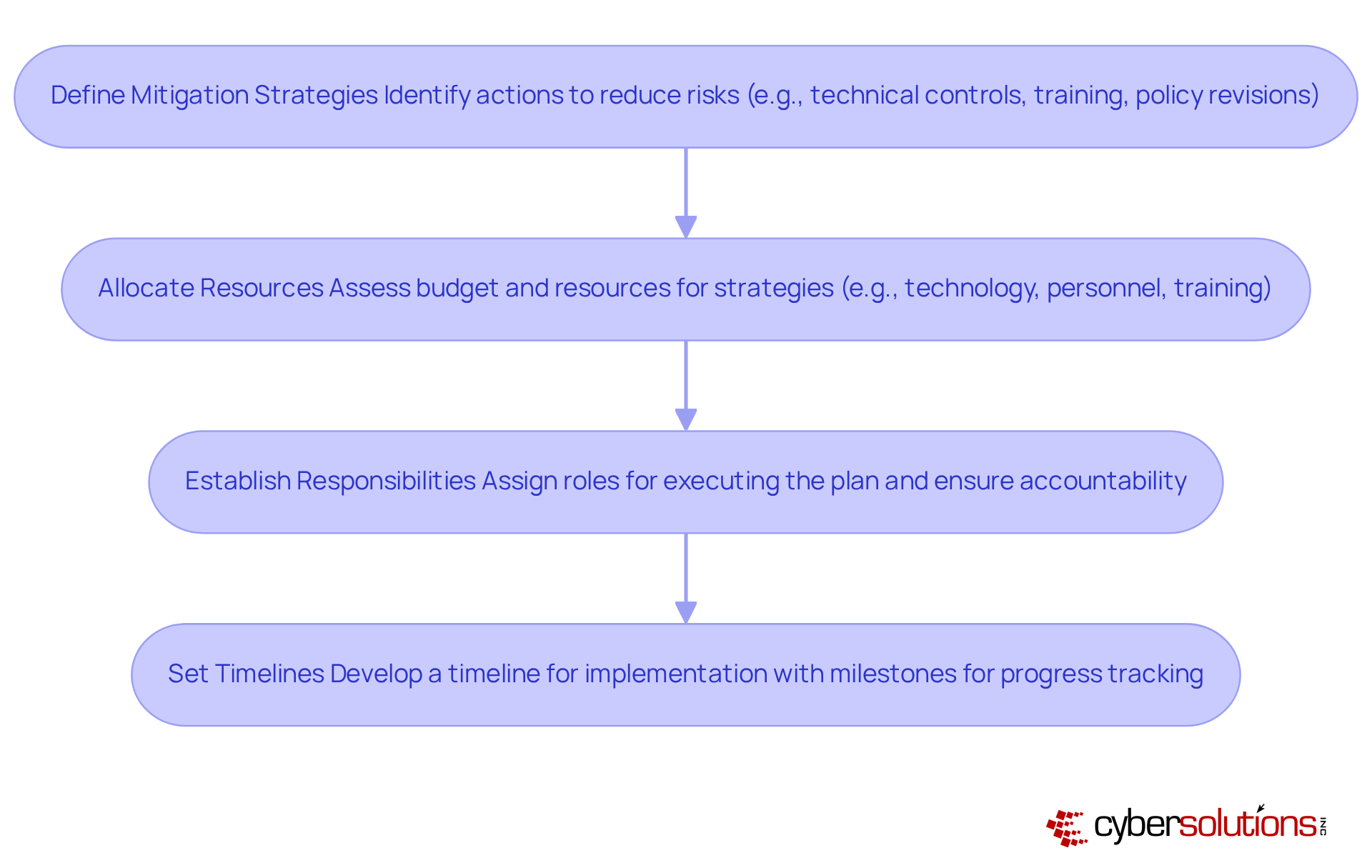
In an era where cyber threats loom large, healthcare executives must prioritize understanding how to reduce cyber security risks to safeguard their organizations and patients alike. To effectively address cybersecurity risks, executives should develop a comprehensive risk mitigation plan that encompasses the following steps:
- Define Mitigation Strategies: Identify specific actions to reduce or eliminate each prioritized risk. This could include implementing advanced technical controls, enhancing employee training, or revising policies to strengthen security measures. Using Compliance as a Service (CaaS) helps organizations meet regulatory standards like HIPAA and GDPR, so they can concentrate on their core operations.
- Allocate Resources: Assess the budget and resources necessary for implementing the chosen strategies, including investments in technology, personnel, and training. Small businesses typically allocate 10-20% of their budget to outside consultants, which can inform resource allocation decisions. Investing in incident response capabilities is essential for swiftly recognizing and addressing risks, minimizing potential harm.
- Establish Responsibilities: Assign clear roles and responsibilities for executing the mitigation plan, ensuring accountability across all levels. When CISOs and General Counsels work together, they better understand cyber threats and improve management strategies, which is crucial for formulating customized remediation plans that tackle compliance gaps.
- Set Timelines: Develop a detailed timeline for implementing each strategy, including milestones to track progress. Regular evaluation of incident response strategies is essential for readiness during a crisis, as emphasized in tabletop exercises related to information security. Effective incident response planning is critical for maintaining business continuity.
By creating a structured risk management strategy, executives empower their enterprises to learn how to reduce cyber security risks while facing digital security threats head-on, ultimately improving resilience and operational integrity. Ultimately, a proactive approach to cybersecurity not only shields against threats but also fortifies the foundation of healthcare operations.
Implement Ongoing Monitoring and Adaptation
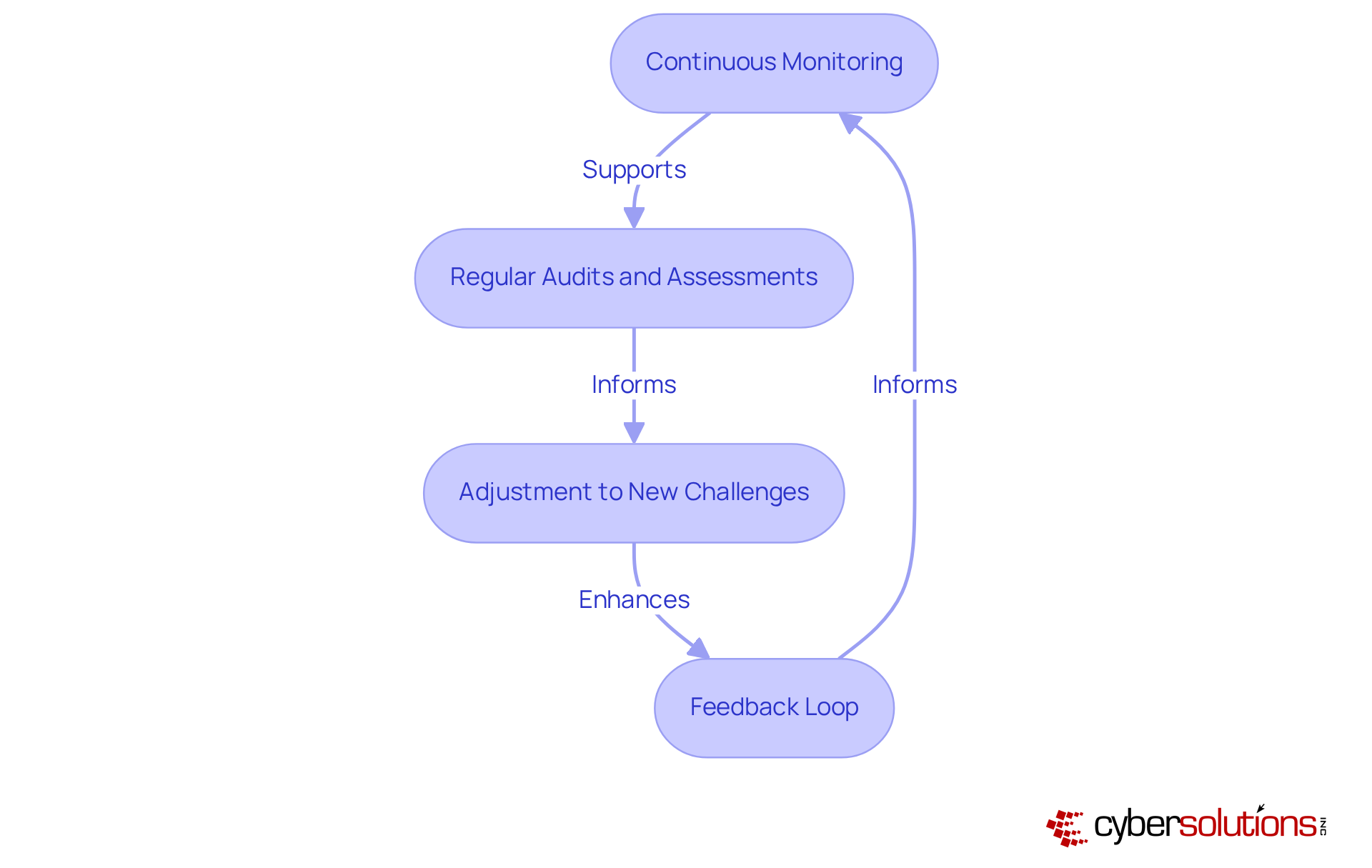
In an era where cyber threats are increasingly sophisticated, the healthcare sector must prioritize understanding how to reduce cyber security risks to protect sensitive patient information and maintain trust. To ensure an effective cybersecurity posture, organizations must implement ongoing monitoring and adaptation strategies:
- Continuous Monitoring: Organizations should leverage automated tools to keep a close eye on their security environment, identifying new vulnerabilities and risks in real-time. Those adopting continuous threat exposure management are reported to be three times less likely to suffer breaches, underscoring the effectiveness of proactive monitoring.
- Regular Audits and Assessments: Conducting periodic evaluations of security measures and management practices is essential to ensure they remain effective and compliant with regulations, including CMMC and NIST standards. A significant percentage of entities recognize the importance of regular audits in learning how to reduce cyber security risks, as they help identify lapses in cybersecurity hygiene that can lead to incidents.
- Adjustment to New Challenges: Staying updated on new challenges and modifying mitigation strategies as needed is crucial. This may involve updating technologies, policies, and training programs. For instance, organizations are increasingly combining AI-driven analytics with human-led risk hunting to enhance their capabilities in responding to sophisticated attacks.
- Feedback Loop: Establishing a feedback mechanism to learn from incidents and near-misses is vital. This information can be used to improve risk management practices. Ongoing monitoring not only assists in early risk detection but also encourages a culture of learning and adaptation, which is crucial for understanding how to reduce cyber security risks in the evolving cybersecurity landscape.
By embracing a proactive approach to cybersecurity, executives not only safeguard their organizations but also foster a culture of resilience that is essential in today’s digital landscape.
Conclusion
In an era where cyber threats loom larger than ever, executives must recognize that cybersecurity is not merely a technical issue but a strategic imperative that shapes organizational success. Proactive cybersecurity measures are essential; they safeguard not just organizational assets but also the trust that clients and stakeholders place in your leadership. Prioritizing cybersecurity risk management is crucial; it empowers executives to build resilient organizations that can withstand evolving threats and protect their reputations.
Throughout this guide, we’ve outlined essential steps to empower executives in their cybersecurity journey. From understanding the landscape of cybersecurity risks to conducting thorough assessments, developing robust mitigation plans, and implementing ongoing monitoring, each phase plays a crucial role in building a resilient security posture. Engaging stakeholders, leveraging risk intelligence, and continuously adapting strategies are vital components that ensure organizations remain ahead of potential threats.
Ultimately, the commitment to cybersecurity must be woven into the very fabric of an organization’s culture and operations. Executives are called upon to champion these initiatives, fostering a proactive mindset that emphasizes vigilance and adaptability. By embedding cybersecurity into their leadership approach, executives not only safeguard their organizations but also set a standard for accountability and resilience in the digital age.
Frequently Asked Questions
Why is cybersecurity important for the healthcare sector?
Cybersecurity is crucial for the healthcare sector as it helps protect sensitive information systems from cyber threats, which can significantly impact business operations and reputation.
What are the key components of cybersecurity risk management?
The key components include risk identification, threat evaluation, and risk mitigation. These components help organizations recognize potential threats, assess their impact, and implement strategies to reduce cybersecurity risks.
How can organizations identify potential cybersecurity threats?
Organizations can identify potential threats by recognizing risks such as malware, phishing, and insider threats, which could disrupt operations.
What is the significance of threat evaluation in cybersecurity?
Threat evaluation is important as it allows executives to assess the probability and consequences of identified threats, which can influence operations and financial outcomes. For example, 38% of boards are concerned about losing customers due to cyber incidents.
What strategies can be implemented for risk mitigation?
Effective risk mitigation strategies include deploying technical controls like application allowlisting, continuous monitoring of application activity, regular employee training, and fostering a culture of security awareness.
How does application allowlisting contribute to cybersecurity?
Application allowlisting helps block unauthorized software from executing, reducing vulnerabilities and minimizing the attack surface. It also aids in compliance with regulatory standards like HIPAA, PCI-DSS, and GDPR.
What role does collaboration play in identifying cybersecurity risks?
Collaboration with IT, compliance, and operational teams is essential to gather insights on vulnerabilities and past incidents, which can help organizations better understand their cybersecurity landscape.
What steps should executives take to assess their organization's cybersecurity risks?
Executives should conduct a risk assessment, engage stakeholders, review historical data, and utilize risk intelligence to identify and understand potential threats.
Why is it important to analyze historical data in cybersecurity?
Analyzing historical data helps identify patterns and recurring vulnerabilities, driving executives to prioritize cybersecurity investments and strategies, especially as the average cost of a data breach is projected to reach $4.88 million.
What emerging threats should organizations be aware of in cybersecurity?
Organizations should be aware of the increasing attacks by AI-enabled adversaries, which saw an 89% rise in 2025, highlighting the need for continuous monitoring and adaptation to new threats.
List of Sources
- Understand Cybersecurity Risk Management
- revival-holdings.com (https://revival-holdings.com/20-best-quotes-from-cyber-risk-leaders)
- 50+ Risk Management Statistics to Know in 2026 (https://secureframe.com/blog/risk-management-statistics)
- diligent.com (https://diligent.com/resources/blog/top-20-quotes-cyber-risk-virtual-summit)
- ivanti.com (https://ivanti.com/resources/research-reports/cybersecurity-risk-management)
- Identify Your Organization's Cybersecurity Risks
- Cyber threats to watch in 2026 – and other cybersecurity news (https://weforum.org/stories/2026/02/2026-cyberthreats-to-watch-and-other-cybersecurity-news)
- Navigating the Cyber Threat Landscape: 2026 Outlook and Emerging Risks (https://panorays.com/blog/cyber-threat-landscape-2026-emerging-risks)
- Top Cybersecurity Threats [2025] (https://onlinedegrees.sandiego.edu/top-cyber-security-threats)
- CrowdStrike 2026 Global Threat Report | Key Cyber Threat Trends (https://crowdstrike.com/en-us/global-threat-report)
- Key Cyber Security Statistics for 2026 (https://sentinelone.com/cybersecurity-101/cybersecurity/cyber-security-statistics)
- Develop a Cybersecurity Risk Mitigation Plan
- Preparing for looming national cyber security threats in 2026 and beyond | Federal News Network (https://federalnewsnetwork.com/commentary/2026/01/preparing-for-looming-national-cyber-security-threats-in-2026-and-beyond)
- diligent.com (https://diligent.com/resources/blog/top-20-quotes-cyber-risk-virtual-summit)
- Optimize Your 2026 Cybersecurity Budget Allocation: Guide (https://nordlayer.com/blog/cybersecurity-budget-allocation)
- Cybersecurity Budget 2026: Benchmarks & Spending Trends (https://elisity.com/blog/2026-cybersecurity-budget-complete-enterprise-planning-guide)
- Implement Ongoing Monitoring and Adaptation
- 10 Cyber Security Trends For 2026 (https://sentinelone.com/cybersecurity-101/cybersecurity/cyber-security-trends)
- Cybersecurity Trends 2026 | IBM (https://ibm.com/think/insights/more-2026-cyberthreat-trends)
- 7 Benefits of Continuous Monitoring & How Automation Can Maximize Impact (https://secureframe.com/blog/continuous-monitoring-cybersecurity)
- uscsinstitute.org (https://uscsinstitute.org/cybersecurity-insights/blog/must-have-cybersecurity-tools-for-2026)
- 205 Cybersecurity Stats and Facts for 2026 (https://vikingcloud.com/blog/cybersecurity-statistics)