Introduction
In an era where cyber threats are not just a possibility but a reality, healthcare leaders must confront the daunting challenge of safeguarding sensitive data against relentless attacks. The stakes are high, with sensitive data at risk and organizations facing potential operational disruptions.
Let’s explore some best practices that can help strengthen cybersecurity defenses and empower leaders to proactively combat these threats:
- Implement strong access controls.
- Regularly update and patch systems.
- Conduct employee training on cybersecurity awareness.
- Utilize encryption for sensitive data.
- Develop an incident response plan.
As cyber threats grow more sophisticated, the need for robust cybersecurity measures becomes increasingly urgent.
Define Malware and Spyware: Understanding the Threat Landscape
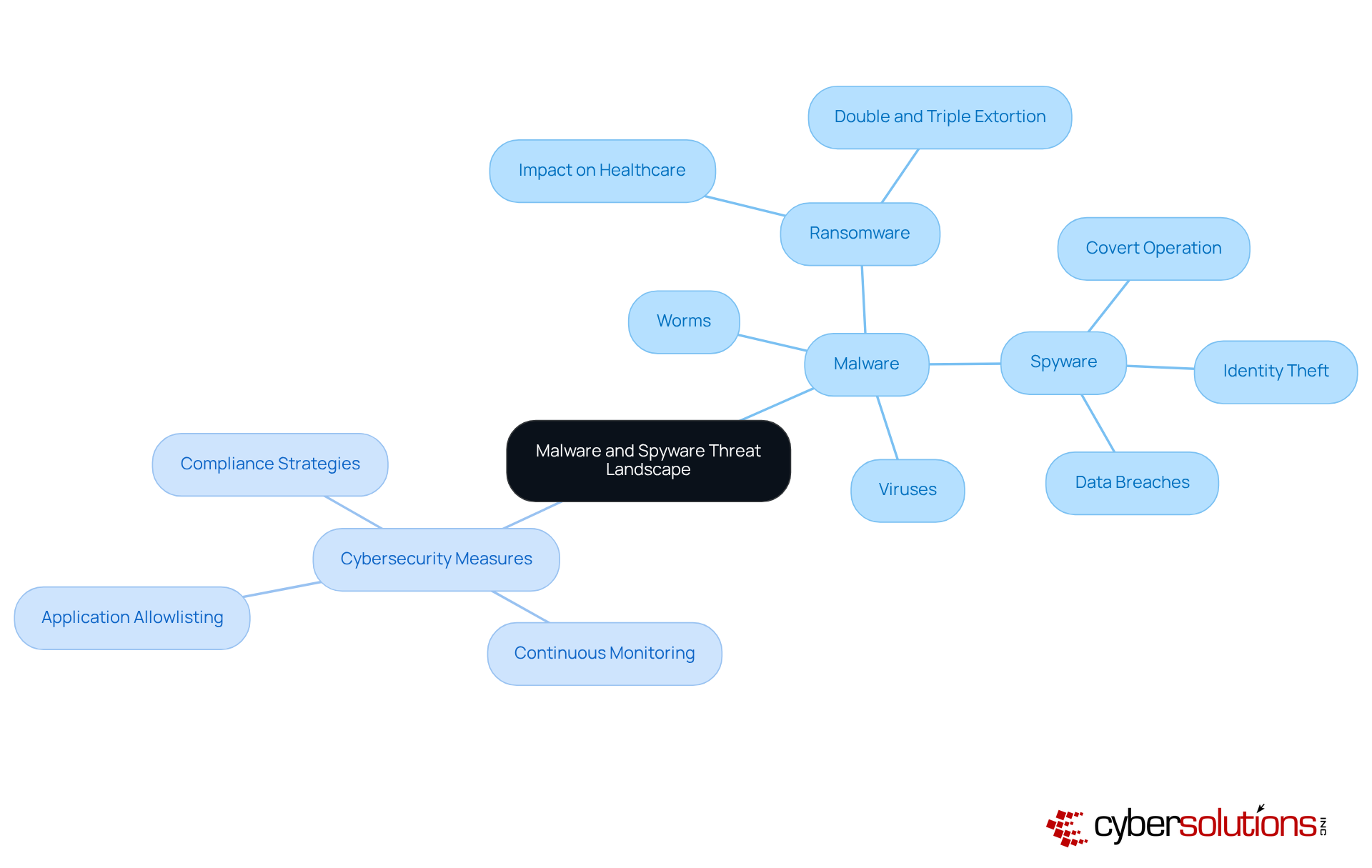
In an era where cyber threats are increasingly sophisticated, understanding malware is crucial for healthcare leaders. Malware, or malicious software, encompasses a range of harmful programs designed to disrupt, damage, or gain unauthorized access to computer systems. This category includes viruses, worms, ransomware, and spyware. Spyware, a specific subset of malware, operates covertly to collect user information and transmit it to third parties without consent, often resulting in identity theft and data breaches. For leaders, grasping these definitions is essential, as it underscores the critical need for robust cybersecurity measures, such as application allowlisting, to safeguard sensitive data and ensure operational integrity.
Application allowlisting proactively prevents unauthorized software from executing, significantly reducing the attack surface and minimizing vulnerabilities. This is particularly crucial in sectors like healthcare and finance, where data sensitivity is paramount. In 2026, ransomware is expected to continue being the largest worldwide cybersecurity risk, impacting 72.7% of entities. Additionally, the trend of AI-enabled attacks escalated, with a reported 89% increase in such incidents in 2025. Are your current cybersecurity measures truly enough to combat evolving threats? This evolution necessitates a proactive cybersecurity approach. Failing to adapt could leave your organization vulnerable to devastating attacks. Leaders must prioritize investments in advanced security solutions, including continuous monitoring and compliance strategies, to mitigate risks and safeguard their entities from the increasing prevalence of malware and spyware.
Implement Best Practices for Malware and Spyware Prevention
In an era where cyber threats loom larger than ever, the healthcare sector faces unique vulnerabilities that demand immediate attention. To effectively combat malware and spyware, organizations should adopt the following best practices:
- Regular Software Updates: Consistently update all operating systems and applications to patch vulnerabilities that harmful software can exploit. In 2026, the importance of maintaining up-to-date software is underscored by the fact that 24% of companies remain exposed to high-risk flaws due to outdated systems.
- Use Reputable Security Software: Invest in reliable antivirus and anti-malware solutions that offer real-time protection and regular updates. As of 2026, the market share of antivirus software continues to reflect a strong reliance on these tools, with top products achieving detection rates above 99.95. It is important to be aware of malware and spyware in controlled environments.
- Application Allowlisting: Adopt application allowlisting as a proactive measure to prevent unauthorized or malicious applications from executing. This approach not only reduces the attack surface but also helps meet compliance requirements such as HIPAA, PCI-DSS, and GDPR.
- Data Backups: Regularly back up critical data to secure locations, ensuring that it can be restored in the event of a cyber attack. Automated backups are essential for quick recovery from ransomware incidents, which have seen operational downtime averaging 24 days.
- Implement network segmentation to limit the spread of malware and spyware and to contain potential breaches. This strategy is vital for maintaining operational integrity, especially in sectors like healthcare and finance, where data sensitivity is paramount.
- Access Controls: Enforce strict access controls to limit user permissions based on roles, thereby reducing the risk of unauthorized access to sensitive information. Role-based access control (RBAC) is an essential measure that improves protection by ensuring that only authorized personnel can access critical systems.
By implementing these best practices, organizations not only safeguard their operations but also fortify their reputation in an increasingly scrutinized industry.

Educate Employees: Foster a Culture of Cyber Awareness
In an era where cyber threats loom large, establishing a culture of cyber awareness is not just beneficial - it's essential. Organizations should adopt the following strategies to mitigate risks associated with malware and spyware attacks:
- Conduct Regular Training Sessions: Implement continuous training programs that keep employees informed about the latest risks, safe browsing practices, and techniques for recognizing phishing attempts. Research indicates that organizations with strong protection cultures are more equipped to handle cyber risks because their employees are actively engaged. Notably, training can cut phishing susceptibility by over 85%, reducing it from approximately 33% to under 5% (KnowBe4 2025). This training should also encompass instruction on the significance of application allowlisting, which proactively prevents unauthorized software, such as malware and spyware, from executing, thereby enhancing overall protection and ensuring compliance with regulations like HIPAA and GDPR.
- Simulate Phishing Attacks: Regularly execute simulated phishing campaigns to assess employee awareness and reinforce training. These simulations have proven effective, with continuous reinforcement enhancing knowledge retention. Research shows that retention drops quickly after a single training session, underscoring the necessity for ongoing training.
- Encourage Reporting: Create an environment where employees feel empowered to report suspicious activities without fear of repercussions. This open dialogue helps create a proactive cybersecurity strategy, allowing for faster detection and resolution of possible risks. Are your employees aware that their actions could be the weak link in your cybersecurity strategy? It's important to note that 60% of all breaches are attributed to human elements, highlighting the need for employee vigilance.
- Provide Resources: Equip employees with practical resources, such as guides and checklists, to assist them in identifying and responding to potential threats. Personalized training tailored to specific job roles can significantly enhance engagement and effectiveness, leading to improved cybersecurity practices. Furthermore, incorporating application allowlisting into the entity's protection protocols can further reduce vulnerabilities and ensure adherence to data safeguarding standards.
Focusing on employee training and involvement helps companies build a vigilant workforce that strengthens their overall cybersecurity posture. Without a proactive approach to cybersecurity, organizations risk becoming the next headline in a data breach story.

In an era where cyber threats are escalating at an unprecedented rate, the healthcare sector stands at a critical juncture, facing unique challenges that demand immediate attention. To efficiently counter malware and spyware, organizations must implement advanced security technologies that tackle the changing danger environment. Key strategies include:
- Endpoint Protection Platforms (EPP): Implement EPP solutions that provide strong defense against malicious software across all endpoints, including desktops, laptops, and mobile devices. These platforms are essential for safeguarding sensitive data and ensuring operational integrity.
- Intrusion Detection Systems (IDS): Deploy IDS to continuously monitor network traffic for suspicious activities and potential threats. The effectiveness of IDS is underscored by their ability to identify anomalies and respond to intrusions in real-time. As adversaries exploit vulnerabilities at an alarming rate, can your organization afford to be unprepared?
- Application Allowlisting: Have you thought about how application allowlisting can proactively prevent unauthorized applications from running on your systems? By permitting only pre-approved software to operate, companies can significantly decrease the risk of malware and spyware, ransomware, and zero-day attacks. This approach not only minimizes vulnerabilities but also helps meet compliance requirements for standards such as HIPAA, PCI-DSS, and GDPR, ensuring adherence to strict data protection protocols. Features such as centralized management and continuous monitoring further enhance the effectiveness of application allowlisting, enabling entities to maintain control over their software environment.
- Security Information and Event Management (SIEM): Utilize SIEM solutions to gather and analyze data related to safety from across the organization. This enables rapid detection and response to incidents, enhancing overall security posture. The incorporation of SIEM can greatly decrease the average eCrime breakout duration, which has fallen to only 29 minutes, emphasizing the necessity of prompt detection of dangers.
- Artificial Intelligence (AI) and Machine Learning (ML): Incorporate AI and ML technologies to enhance detection capabilities and automate responses to identified dangers. With an 89% rise in assaults from AI-driven opponents, utilizing these technologies is essential for staying ahead of advanced cyber risks.
Without these advanced technologies, healthcare organizations risk not only their sensitive data but also their operational integrity and trust with patients. Addressing the challenges of managing and enforcing policies across modern infrastructure is vital for ensuring comprehensive security.

Conclusion
In an era where cyber threats loom large, the healthcare sector must prioritize cybersecurity to protect sensitive patient data and maintain trust. Understanding and combating malware and spyware is crucial for leaders in this field. A proactive cybersecurity strategy is essential, one that clearly defines these threats and implements robust measures to counter them. By prioritizing advanced security solutions and fostering a culture of cyber awareness, organizations can significantly enhance their defenses against these evolving risks.
Key practices to consider include:
- Regular software updates
- Utilizing reputable security software
- Implementing application allowlisting to mitigate vulnerabilities
Additionally, educating employees through continuous training and encouraging the reporting of suspicious activities are vital steps in building a vigilant workforce. The integration of advanced technologies such as endpoint protection platforms and intrusion detection systems further strengthens an organization’s security posture.
In a landscape where cyber threats are ever-changing, failing to act can lead to devastating breaches. The responsibility falls on leaders to ensure their organizations are equipped with the necessary tools and knowledge to combat malware and spyware effectively. By taking decisive action today, leaders can not only protect their organizations but also ensure they remain trusted stewards of sensitive information in a digital age fraught with risk.
Frequently Asked Questions
What is malware?
Malware, or malicious software, refers to a range of harmful programs designed to disrupt, damage, or gain unauthorized access to computer systems. This includes viruses, worms, ransomware, and spyware.
What is spyware?
Spyware is a specific type of malware that operates covertly to collect user information and transmit it to third parties without consent, often leading to identity theft and data breaches.
Why is understanding malware important for healthcare leaders?
Understanding malware is crucial for healthcare leaders as it highlights the need for robust cybersecurity measures to protect sensitive data and ensure operational integrity.
What is application allowlisting?
Application allowlisting is a cybersecurity measure that proactively prevents unauthorized software from executing, thereby significantly reducing the attack surface and minimizing vulnerabilities.
Why is application allowlisting particularly important in healthcare and finance?
It is crucial in these sectors due to the high sensitivity of the data they handle, which requires strong protection against unauthorized access and potential breaches.
What cybersecurity risk is expected to be the largest in 2026?
Ransomware is expected to continue being the largest worldwide cybersecurity risk in 2026, impacting 72.7% of entities.
What trend regarding cyber attacks was reported in 2025?
There was an 89% increase in AI-enabled attacks reported in 2025, indicating a growing sophistication in cyber threats.
What should leaders prioritize to combat evolving cybersecurity threats?
Leaders must prioritize investments in advanced security solutions, including continuous monitoring and compliance strategies, to mitigate risks and protect their organizations from malware and spyware.
List of Sources
- Define Malware and Spyware: Understanding the Threat Landscape
- av-test.org (https://av-test.org/en/statistics/malware)
- CrowdStrike 2026 Global Threat Report | Key Cyber Threat Trends (https://crowdstrike.com/en-us/global-threat-report)
- thebeckagefirm.com (https://thebeckagefirm.com/65146-2)
- 205 Cybersecurity Stats and Facts for 2026 (https://vikingcloud.com/blog/cybersecurity-statistics)
- morphisec.com (https://morphisec.com/blog/ransomware-in-healthcare-a-life-critical-business-priority-for-2026)
- Implement Best Practices for Malware and Spyware Prevention
- blackcloak.io (https://blackcloak.io/the-importance-of-regular-software-updates-for-enhanced-cybersecurity)
- Cyber Security Best Practices for 2026 (https://sentinelone.com/cybersecurity-101/cybersecurity/cyber-security-best-practices)
- app.stationx.net (https://app.stationx.net/articles/malware-statistics)
- Key Cyber Security Statistics for 2026 (https://sentinelone.com/cybersecurity-101/cybersecurity/cyber-security-statistics)
- Educate Employees: Foster a Culture of Cyber Awareness
- uscsinstitute.org (https://uscsinstitute.org/cybersecurity-insights/resources/cybersecurity-awareness-training-for-employees-in-2026)
- Phishing Statistics [2026]: Latest Attack Data & Trends (https://app.stationx.net/articles/phishing-statistics)
- ninjio.com (https://ninjio.com/blog/why-cisos-are-moving-beyond-annual-security-awareness-training)
- 205 Cybersecurity Stats and Facts for 2026 (https://vikingcloud.com/blog/cybersecurity-statistics)
- Leverage Technology: Utilize Advanced Security Tools and Solutions
- prnewswire.com (https://prnewswire.com/news-releases/top-endpoint-protection-solutions-recognized-in-info-tech-research-groups-2026-emotional-footprint-report-302727373.html)
- CrowdStrike 2026 Global Threat Report | Key Cyber Threat Trends (https://crowdstrike.com/en-us/global-threat-report)


