Introduction
Living off the land emerges as a powerful response to the vulnerabilities of modern supply chains, particularly underscored during recent global crises. This guide provides a comprehensive roadmap for individuals eager to embrace self-sufficiency and sustainability, detailing essential principles and practical steps to cultivate a resilient lifestyle.
As the world grapples with pressing environmental challenges, one must consider: how can we effectively transition to this sustainable way of living while ensuring both personal and community well-being?
Understand the Principles of Living Off the Land
is not merely a lifestyle choice; it is a vital practice that utilizes resources to fulfill essential needs—such as food, water, and shelter—while reducing dependence on external systems. The guiding principles of this approach are self-sufficiency and sustainability.
- Self-Sufficiency: Cultivating your own food and resources significantly diminishes dependence on commercial supply chains, thereby enhancing resilience against market fluctuations. For instance, Guyana has achieved complete food security, distinguishing itself as the only nation among 186 surveyed to fully meet its dietary requirements through local agriculture.
- Sustainability: It is imperative that the practices adopted do not deplete resources but rather contribute positively to the ecosystem, ensuring long-term viability. The COVID-19 pandemic has unveiled vulnerabilities in global trade systems, underscoring the necessity of local production.
- Permaculture: This principle revolves around designing agricultural systems that mimic natural ecosystems, thereby fostering productivity and longevity through biodiversity and natural processes. Case studies, such as Guyana's strategic investments in local agriculture, demonstrate how permaculture can significantly enhance food security.
- Minimalism: By prioritizing the reduction of consumption and focusing on essential needs, individuals can simplify their lives, decrease costs, and promote a more sustainable lifestyle.
Understanding these principles provides a robust foundation for your journey toward self-sufficiency and sustainability, empowering you to make informed decisions that benefit both your immediate environment and the broader community. As sustainability expert Andrea Nicolini asserts, the adoption of these principles is crucial for cultivating resilient local economies.

Prepare for a Self-Sufficient Lifestyle
To embark on a self-sufficient lifestyle, it is essential to follow these strategic steps:
- Assess Your Current Resources: Begin by taking stock of your existing assets, including land, tools, and skills. Utilize tools like checklists to evaluate your resources effectively.
- Define Your Goals: Clearly define what self-sufficiency means for you—be it growing your own food, minimizing waste, or generating energy. Establishing measurable goals will facilitate tracking your progress.
- Research Techniques: Dive into research on sustainable practices, gardening techniques, and resource management strategies. Enroll in workshops or online courses to enhance your understanding.
- Create a Budget: Allocate funds for necessary investments, such as seeds, tools, and educational materials. Initiate an emergency fund to prepare for unforeseen expenses and stockpile non-perishable items when they are affordable. This proactive approach will help manage costs effectively.
- Build a Community: Connect with local communities or online groups focused on self-sufficiency to share knowledge and resources. Engaging with others will provide valuable insights and support.
By preparing adequately, you can navigate the transition more smoothly and effectively, ultimately benefiting both your organization and the environment.

Establish Your Sustainable Food Sources
To establish sustainable food sources, consider the following steps:
- Choose the Right Location: Identify a suitable area for gardening, considering sunlight exposure, soil quality, and availability of moisture. Research indicates that urban gardens can yield up to 20% more produce when strategically placed in optimal locations. Furthermore, 9% of consumers rated economic and long-term viability as their top priority for environmental responsibility, highlighting the significance of location in optimizing both yield and sustainability.
- Select Crops: Opt for crops that thrive in your specific climate and soil conditions. Starting with easy-to-grow vegetables such as tomatoes, beans, and leafy greens can lead to successful harvests. Agricultural specialists recommend selecting native plants, as they typically require less water and are more resilient to local pests. This method not only promotes environmental responsibility but also aligns with the increasing trend of incorporating native plants into landscaping, especially in healthcare environments.
- Implement Companion Planting: Utilize companion plants to enhance growth and naturally deter pests. Recent studies show that certain plant combinations can increase yields by up to 15% while reducing the need for chemical pesticides. This method not only promotes biodiversity but also contributes to ecosystem health.
- Practice Crop Rotation: Rotate crops each season to maintain soil health and minimize pest buildup. This practice not only improves soil fertility but also helps in managing diseases that can affect specific crops.
- Consider Livestock: If possible, raising small livestock such as chickens or rabbits can offer extra sources of sustenance and help with waste management. Incorporating livestock into your garden can improve eco-friendliness by transforming organic waste into useful fertilizer.
By living off the land and establishing your food sources, you can significantly reduce reliance on external food systems, contributing to both personal and community sustainability. This approach is particularly beneficial in healthcare settings, where access to fresh produce can improve overall health outcomes.

Implement Resource Management and Preservation Techniques
To implement effective resource management, it is essential to consider the following strategies:
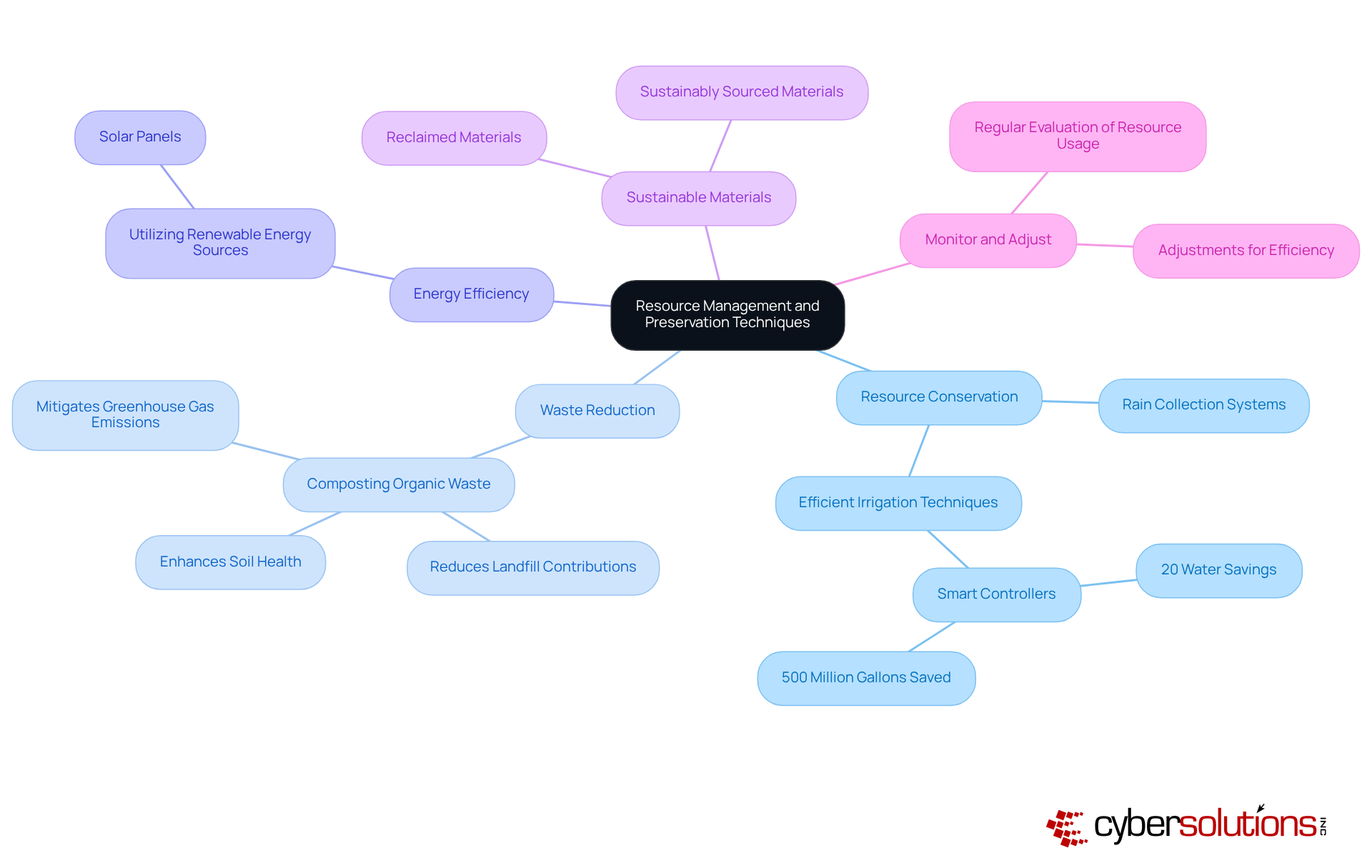
- Resource Conservation: Installing rain collection systems and practicing efficient irrigation techniques are vital for water savings. Smart controllers can optimize irrigation based on real-time weather data, achieving savings of up to 20% compared to traditional methods. The Church's initiative to install smart controllers at over 3,000 meetinghouses is anticipated to conserve around 500 million gallons in the first year.
- Waste Reduction: Composting enriches soil while significantly reducing landfill contributions. Notably, food waste accounts for 22% of municipal solid waste in the United States, making composting a crucial practice for sustainability and enhancing soil health. As Behnam Momeni from George Mason University states, "We’re running out of fresh resources, and we need a better way to get people to conserve."
- Renewable Energy: Utilizing renewable energy sources, such as solar panels, not only powers your home but also diminishes reliance on fossil fuels.
- Sustainable Materials: Employing reclaimed or sustainably sourced materials for building and gardening projects is essential for promoting environmental responsibility.
- Monitor and Adjust: Regular monitoring and making necessary modifications enhances efficiency and ecological balance. Scott Karpowitz, irrigation supervisor of Headquarters Facilities, emphasizes, "Everything has its own settings and its own parameters to give those plants the water that they need because quite often they’re different — different water needs for different plant material."
By implementing these techniques, you can significantly enhance the sustainability of your lifestyle while living off the land and make a positive contribution to the environment.
Conclusion
Mastering the art of living off the land is not merely an admirable pursuit; it is a crucial step towards achieving sustainability and self-sufficiency. Embracing the principles of self-sufficiency, sustainability, permaculture, and minimalism allows individuals to cultivate a lifestyle that reduces reliance on external systems while fostering resilience within their communities. This shift empowers individuals to meet their essential needs and contributes significantly to the health of the ecosystem.
Throughout this article, we have outlined key strategies for transitioning to a self-sufficient lifestyle. From assessing current resources and setting clear goals to establishing sustainable food sources and implementing effective resource management techniques, each step plays a vital role in creating a sustainable future. The importance of education, community support, and practical actions like composting and energy efficiency is paramount, as these elements collectively enhance the journey towards self-sufficiency.
Ultimately, the significance of living off the land extends beyond personal benefits; it serves as a call to action for individuals and communities alike to prioritize sustainability. By adopting these practices, one can not only improve their quality of life but also contribute to a larger movement towards ecological balance and resilience. Embracing this lifestyle is not just a trend; it is a necessary response to the challenges of modern living, paving the way for a healthier planet and a more sustainable future.
Frequently Asked Questions
What does it mean to live off the land?
Living off the land involves utilizing natural materials to meet essential needs such as food, water, and shelter, while reducing dependence on external systems.
Why is self-sufficiency important in living off the land?
Self-sufficiency reduces dependence on commercial supply chains, enhancing resilience against market fluctuations. An example is Guyana, which has achieved complete self-sufficiency in crop production.
How does sustainability relate to living off the land?
Sustainability ensures that the practices adopted do not deplete resources and contribute positively to the ecosystem, promoting long-term viability, especially highlighted during the vulnerabilities exposed by the COVID-19 pandemic.
What is permaculture and how does it support living off the land?
Permaculture involves designing agricultural systems that mimic natural ecosystems to enhance productivity and longevity through biodiversity and natural processes, as seen in case studies like Guyana’s investments in local systems for food security.
What role does minimalism play in living off the land?
Minimalism encourages the reduction of consumption and a focus on essential needs, helping individuals simplify their lives, decrease costs, and promote a more sustainable lifestyle.
How do these principles benefit local economies?
Adopting principles of self-sufficiency, sustainability, permaculture, and minimalism fosters resilient local economies by empowering individuals to make informed decisions that positively impact their immediate environment and community.
List of Sources
- Understand the Principles of Living Off the Land
- medium.com (https://medium.com/@sujay_5841/how-guyana-quietly-became-the-worlds-only-food-self-sufficient-country-8dfdc3d0ebfa)
- millermagazine.com (https://millermagazine.com/blog/algeria-aims-for-wheat-self-sufficiency-by-2025-5896)
- asiatimes.com (https://asiatimes.com/2025/02/chinas-grand-plan-for-food-self-sufficiency)
- mexicobusiness.news (https://mexicobusiness.news/agribusiness/news/mexico-reach-white-corn-self-sufficiency-2025)
- Prepare for a Self-Sufficient Lifestyle
- backdoorsurvival.com (https://backdoorsurvival.com/mapping-the-road-to-self-sufficiency)
- uaex.uada.edu (https://uaex.uada.edu/counties/clark/self-sufficient-u/posts/three-steps-to-self-sufficiency.aspx)
- simplifylivelove.com (https://simplifylivelove.com/self-sufficient-living-tips)
- yanmartractor.com (https://yanmartractor.com/resources/tractor-tips/how-to-create-a-self-sufficient-homestead)
- thehouseandhomestead.com (https://thehouseandhomestead.com/25-self-sufficiency-goals)
- Establish Your Sustainable Food Sources
- extension.umd.edu (https://extension.umd.edu/resource/sustainable-gardening-solutions-climate-change)
- farmonaut.com (https://farmonaut.com/usa/u-s-sustainable-agriculture-top-2025-trends-news)
- jpplanters.com (https://jpplanters.com/blogs/news/top-gardening-trends-for-2025-sustainability-style?srsltid=AfmBOor3vDATQ0A6YTnz7YNaIDIW_sPHMroojzh_7PnVMR8CL9_PvXFU)
- thepacker.com (https://thepacker.com/news/sustainability/growers-double-down-sustainability-key-profitability)
- onthegrow.net (https://onthegrow.net/blogs/news/gardening-trends-2025-sustainable-edible-vertical-gardening?srsltid=AfmBOorKayaEIIEWAqWYeM1x4uqKtJvwW2gaLLf41orgTTC5EFY_jqYK)
- Implement Resource Management and Preservation Techniques
- futureacresfarm.com (https://futureacresfarm.com/compost-corner/f/composting-trends-updates-in-2025-whats-new-why-it-matters)
- informs.org (https://informs.org/News-Room/INFORMS-Releases/News-Releases/Stop-Wasting-Water!-New-Study-Reveals-How-to-Get-People-to-Conserve-And-It-s-Not-Just-About-Money)
- newsroom.churchofjesuschrist.org (https://newsroom.churchofjesuschrist.org/article/church-to-complete-water-conservation-project-2025)
- keepmassbeautiful.org (https://keepmassbeautiful.org/news-events/the-kmb-blog/overview.html/article/2025/03/14/composting-to-reduce-food-waste-a-sustainable-path-forward)
- dec.ny.gov (https://dec.ny.gov/news/press-releases/2025/5/dec-highlights-benefits-of-composting-during-new-york-state-compost-awareness-week)