
4 Best Practices for FTC Safeguards Rule Compliance Success

4 Best Practices for FTC Safeguards Rule Compliance Success

Introduction

In an era where cyber threats are evolving at an alarming rate, the need for robust cybersecurity measures in healthcare has never been more urgent. This article will explore four best practices that not only help organizations meet regulatory requirements but also strengthen the protection of sensitive customer information.

Many organizations struggle to meet compliance demands while maintaining smooth operations. As organizations work to implement effective cybersecurity measures, they often wonder how to balance compliance with operational efficiency. By implementing these best practices, organizations can not only comply but also enhance their overall security posture.

Ultimately, the right strategies can transform compliance from a burden into a competitive advantage, ensuring customer trust is not just maintained but strengthened.

Understand the FTC Safeguards Rule: Key Requirements and Objectives

In an era where cyber threats loom larger than ever, the healthcare sector must prioritize robust cybersecurity measures to protect sensitive patient information. The creation, execution, and maintenance of a comprehensive information protection program to safeguard customer information is essential for FTC safeguards rule compliance by financial institutions.

Risk Assessment: How can organizations truly protect customer information without first understanding the risks they face? Conducting a thorough risk assessment is the first step. Organizations must identify and assess risks to customer information, especially since the threshold for reporting breaches has been lowered to 500 consumers. Cyber Solutions' Compliance As A Service (CaaS) provides businesses with end-to-end solutions, including risk assessments, to ensure FTC safeguards rule compliance with regulatory requirements.

Protection Program: Establishing a solid protection program is essential - think of it as a fortress built with administrative, technical, and physical safeguards to keep threats at bay. As noted by Maggie Paulk Welch, the revised Rule requires institutions to consider their service providers as potential 'agents,' which could trigger a notification requirement. Cyber Solutions offers extensive CaaS offerings that assist organizations in creating strong protection programs customized to their particular requirements.

Employee Training: Are your employees equipped to defend against cyber threats? Training them on their roles in the protection program is crucial for safeguarding customer information. Offering regular training ensures adherence and lessens the chance of non-compliance. Cyber Solutions emphasizes the importance of training in its managed protection services to ensure that personnel are well-prepared for FTC safeguards rule compliance.

Incident Response Plan: What happens when a security breach occurs? Having a solid incident response plan is vital for organizations to respond swiftly and effectively. This involves revising incident response strategies to align with the new threshold for reporting incidents involving 500 or more consumers. Cyber Solutions' Incident Response services reduce the effects of cyberattacks by swiftly detecting, containing, and alleviating threats, thus helping entities maintain FTC safeguards rule compliance.

The main aim of the Safeguards regulation is to ensure that financial institutions achieve FTC safeguards rule compliance by implementing suitable measures to safeguard sensitive customer information from unauthorized access and breaches, thereby promoting trust and adherence to regulatory standards. By applying these optimal methods and utilizing Cyber Solutions' CaaS and incident response features, organizations can improve their protective stance and more effectively manage the intricacies of compliance. By leveraging Cyber Solutions' expertise, organizations can not only meet compliance requirements but also build a resilient framework that safeguards their most valuable asset: customer trust.
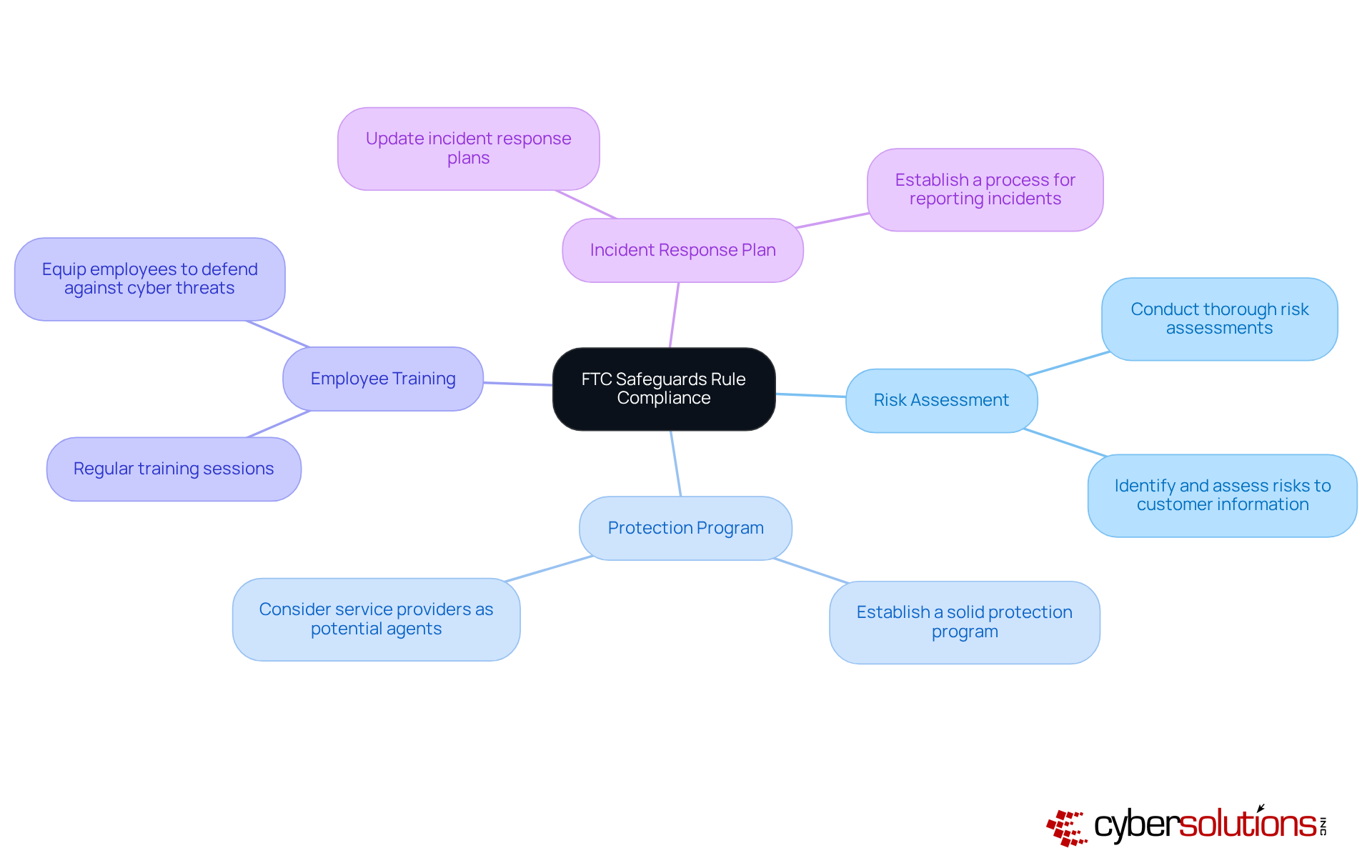
This mindmap illustrates the key components of the FTC Safeguards Rule compliance. Start at the center with the main goal, then explore each branch to see the essential elements that contribute to protecting customer information. Each branch represents a critical area of focus, and the sub-branches provide actionable insights.

Implement Effective Data Security Measures: Best Practices for Compliance

In an era where healthcare data breaches are increasingly common, the stakes for cybersecurity have never been higher. To comply with the FTC Safeguards Rule, organizations must implement robust data security measures, including:

  • Access Controls: Limit access to sensitive information strictly to authorized personnel. Role-based access controls are essential, ensuring employees can only access data necessary for their job functions. This method not only improves safety but also conforms to best practices for safeguarding sensitive information. Yet, it’s crucial to strike a balance; over-restricting access can slow down operations and frustrate staff.
  • Data Encryption: Encrypt sensitive customer information both at rest and in transit. This critical measure adds a vital layer of protection against unauthorized access, significantly reducing the risk of data breaches. Significantly, 88% of ransomware victims are entities with fewer than 1,000 employees, highlighting the necessity of strong data protection measures.
  • Regular Software Updates: Ensure that all software, including security tools, is regularly updated to protect against vulnerabilities. Keeping systems up to date is essential for ensuring FTC Safeguards Rule compliance and protecting against new threats.
  • Incident Response Testing: Regularly test the incident response plan to ensure that all employees understand their roles in the event of a data breach. This proactive approach helps teams know exactly what to do, reducing the impact of any breach that might occur. Cyber Solutions emphasizes the importance of rapid incident response, as demonstrated during a recent ransomware attack where a specialized team mobilized within 24 hours to contain the threat and begin remediation efforts.
  • Ongoing Monitoring Systems: Establish ongoing monitoring systems to identify adherence violations and safety incidents in real time. This is essential for prompt intervention and upholding regulations.
  • Automated Adherence Programs: Consider utilizing automated adherence programs to streamline efforts, reduce human error, and enhance overall security posture. Customized remediation approaches, including policy revisions and system enhancements, are vital for addressing regulatory gaps and preparing for audits.

By prioritizing these security measures, organizations not only protect their data but also reinforce their commitment to patient trust and regulatory compliance.
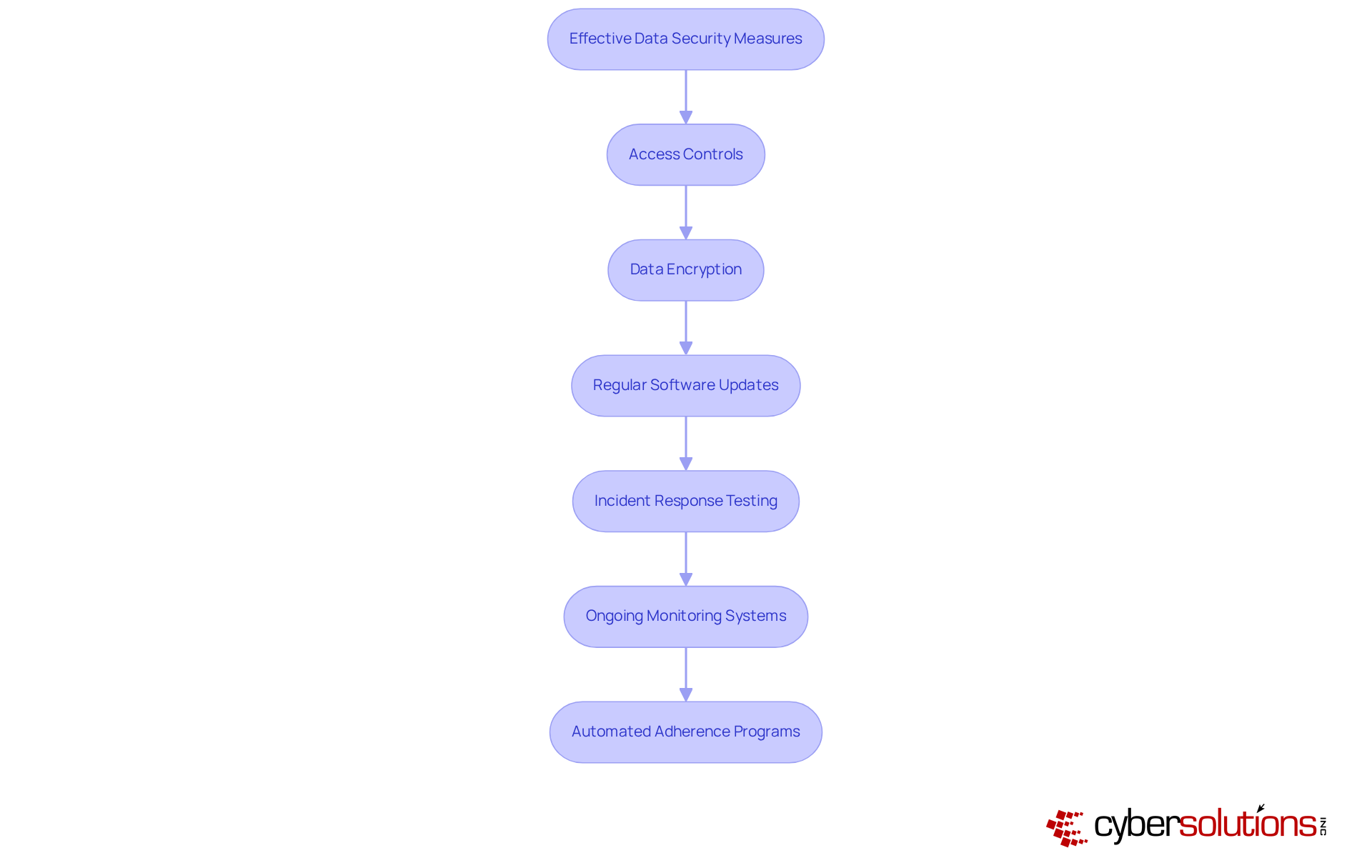
Each box represents a key practice for improving data security. Follow the arrows to see how these practices connect and support each other in protecting sensitive information and ensuring compliance.

Foster a Culture of Compliance: Training and Awareness Initiatives

In an era where data breaches can cripple organizations, establishing a culture of conformity is not just beneficial - it's essential for compliance with FTC Safeguards regulations. Organizations should implement the following strategies:

  • Regular Training Sessions: Conduct comprehensive training sessions that focus on the FTC Safeguards Rule, data security best practices, and the specific responsibilities of employees in maintaining compliance. This ensures that all staff members are well-informed and equipped to handle their roles effectively. As Douglas Allen, Vice President of Data Strategy at Ethisphere, states, "A culture of adherence benefits a business by enhancing its reputation, reducing legal and financial risks, improving operational efficiency, and fostering employee trust and engagement."
  • Awareness Campaigns: Initiate continual awareness initiatives to emphasize the significance of data protection and adherence. Utilize newsletters, posters, and digital communications to keep safety at the forefront of employees' minds, fostering a proactive approach to compliance. Given that only 20% of employees strongly agree they feel connected to their organization’s culture, these campaigns are crucial for engagement.
  • Feedback Mechanisms: Establish clear channels for employees to provide feedback on security practices and report potential vulnerabilities without fear of reprisal. This opens the door for honest conversations and helps pinpoint where we can improve our regulatory efforts. Research shows that employees are more than twice as likely to feel at ease bringing a concern to their manager if their manager involves them in ethics or regulatory discussions at least once every quarter.
  • Leadership Involvement: Ensure that leadership is visibly committed to regulatory initiatives. When leaders actively engage in and advocate for adherence initiatives, it establishes a positive atmosphere for the whole entity, reinforcing the significance of a robust adherence culture. The 'Compliance Management Trends' case study demonstrates how entities are increasingly automating their adherence strategies, emphasizing the necessity for leadership to propel these initiatives.

By fostering a culture of adherence through these initiatives, companies can greatly improve their protective stance and ensure FTC Safeguards Rule compliance, involving all staff in safeguarding sensitive customer data. Ultimately, a robust culture of adherence not only protects sensitive data but also fortifies the organization's reputation and trustworthiness in the eyes of its stakeholders.
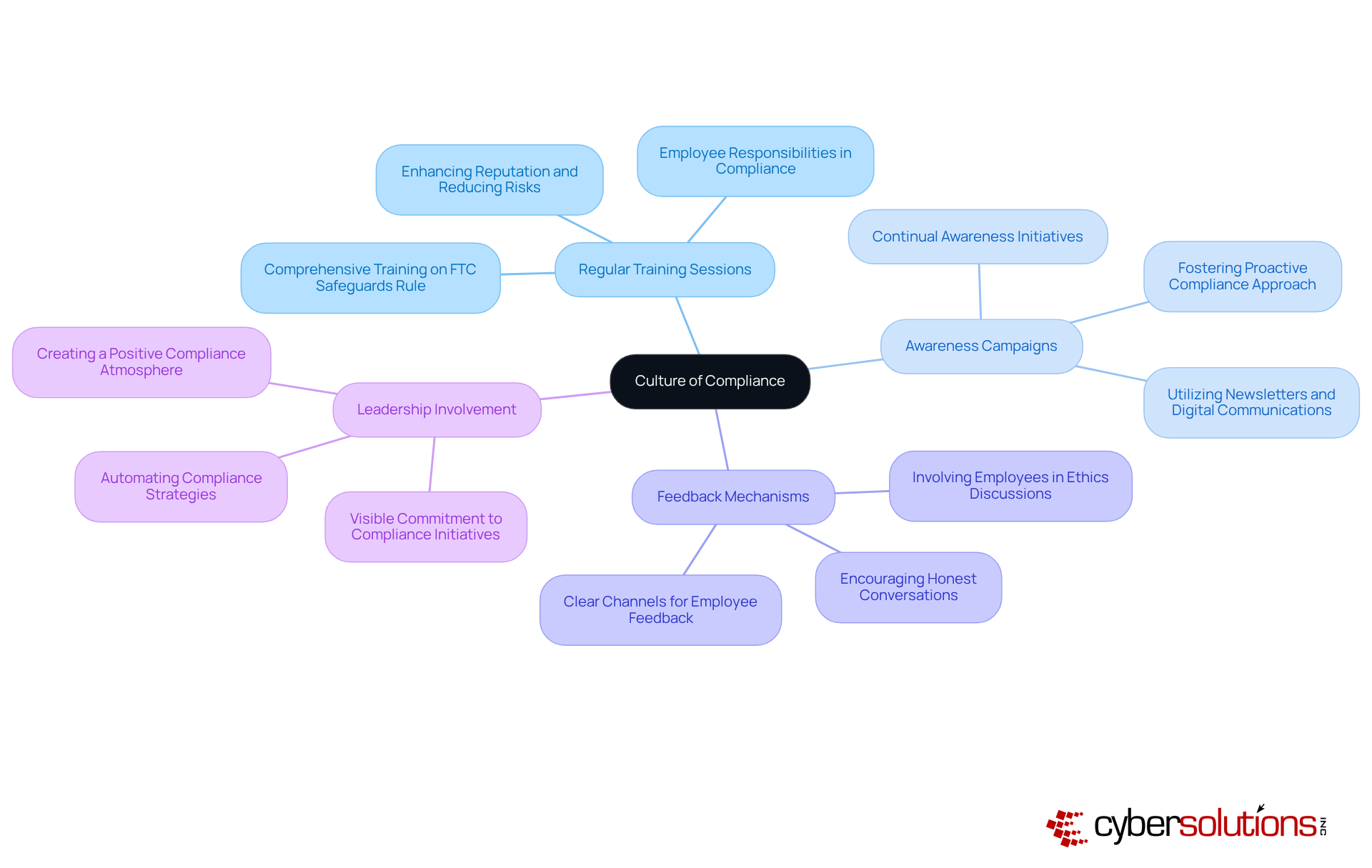
The central idea is the culture of compliance, with branches representing different strategies to achieve it. Each branch shows specific actions or benefits, helping you understand how these initiatives work together to enhance data protection and compliance.

Conduct Regular Compliance Audits: Assess and Adapt Your Strategies

In an era where cybersecurity threats loom large, healthcare organizations must prioritize ftc safeguards rule compliance to protect sensitive information and maintain trust. Frequent adherence assessments are essential for upholding conformity to these guidelines and improving a company's protective stance. Organizations can take decisive action by implementing these best practices:

  • Audit Schedule: Establish a consistent audit schedule, ideally quarterly or bi-annually, to evaluate compliance with the Safeguards Rule and assess the effectiveness of existing security measures, including application allowlisting, which proactively prevents unauthorized software from executing and helps mitigate vulnerabilities.
  • Documentation Review: Conduct thorough reviews of all documentation related to the information protection program, including risk assessments, incident response plans, and training records, to ensure they are current and effective.
  • Vulnerability Evaluations: Conduct regular vulnerability evaluations to identify and address potential weaknesses in protective measures proactively, thereby minimizing risks. Application allowlisting can significantly reduce the attack surface, making it harder for attackers to exploit vulnerabilities.
  • Adaptation of Strategies: Utilize findings from audits to continuously refine and enhance regulatory strategies. This may involve updating policies, improving training programs, or investing in advanced security technologies, including Compliance as a Service (CaaS) solutions that provide ongoing support and monitoring for regulatory compliance.

By embracing these proactive measures, organizations not only safeguard their assets but also fortify their reputation in an increasingly scrutinized industry.
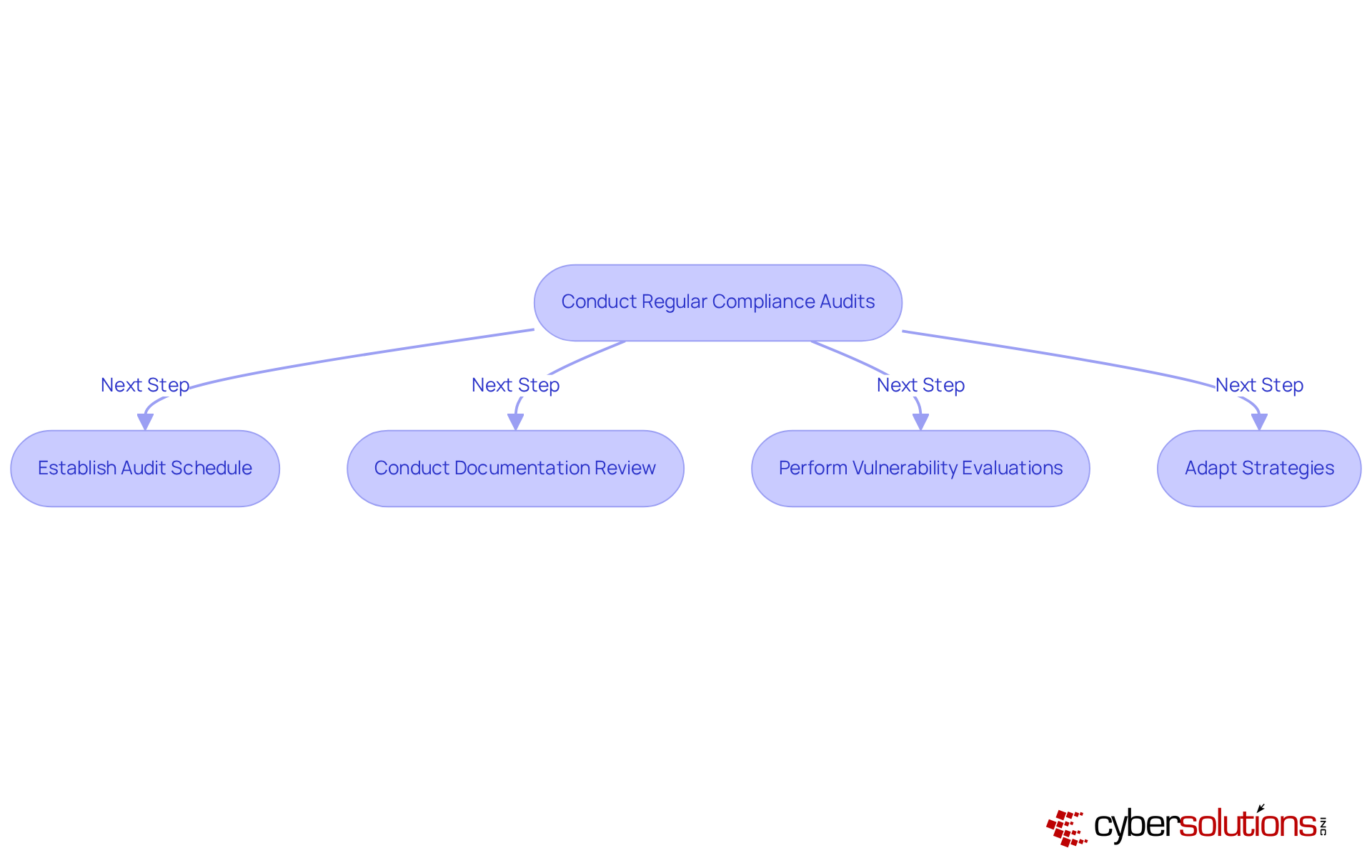
This flowchart shows the steps healthcare organizations should take to conduct compliance audits. Start at the top with the main action, then follow the arrows down to see each specific step involved in the process.

Conclusion

In today's digital landscape, the stakes of cybersecurity in healthcare have never been higher. Organizations must prioritize a multi-faceted approach to protect sensitive customer information, especially in the quest for FTC Safeguards Rule compliance. Understanding the key requirements of the Safeguards Rule is crucial. When businesses implement best practices, they create a secure environment that meets regulatory standards and fosters client trust.

Several critical strategies can help achieve compliance:

  1. Conducting thorough risk assessments is essential.
  2. Establishing robust protection programs.
  3. Comprehensive employee training and effective incident response plans are also vital.
  4. Ongoing compliance audits and fostering a culture of adherence further strengthen an organization's cybersecurity posture.

In the end, adhering to the FTC Safeguards Rule is about more than just compliance; it’s about safeguarding valuable customer trust and maintaining a strong reputation in an increasingly scrutinized industry. Organizations are encouraged to adopt these best practices and leverage available resources, such as Cyber Solutions' Compliance As A Service, to ensure they not only meet compliance requirements but also build a resilient framework that protects their most critical asset: customer trust.

Frequently Asked Questions

What is the FTC Safeguards Rule?

The FTC Safeguards Rule requires financial institutions to implement comprehensive measures to protect sensitive customer information from unauthorized access and breaches.

Why is a risk assessment important for compliance with the FTC Safeguards Rule?

A risk assessment is crucial because it helps organizations identify and understand the risks to customer information, which is essential for developing effective protection strategies, especially since the threshold for reporting breaches has been lowered to 500 consumers.

What components should a protection program include?

A protection program should include administrative, technical, and physical safeguards to create a robust defense against cyber threats.

How does the revised Rule impact service providers?

The revised Rule requires institutions to consider their service providers as potential 'agents,' which may trigger notification requirements in case of breaches.

Why is employee training necessary for compliance?

Employee training is necessary to ensure that staff understand their roles in the protection program, adhere to compliance requirements, and are equipped to defend against cyber threats.

What should an incident response plan entail?

An incident response plan should include strategies for swiftly detecting, containing, and alleviating threats, and it must be revised to align with the new threshold for reporting incidents involving 500 or more consumers.

How can Cyber Solutions assist organizations with compliance?

Cyber Solutions offers Compliance As A Service (CaaS), which includes risk assessments, assistance in creating protection programs, employee training, and incident response services to help organizations achieve FTC safeguards rule compliance.

What is the main objective of the Safeguards regulation?

The main objective of the Safeguards regulation is to ensure that financial institutions implement suitable measures to protect sensitive customer information, thereby promoting trust and adherence to regulatory standards.

List of Sources

  1. Understand the FTC Safeguards Rule: Key Requirements and Objectives
    • Everything to Know About the Updated FTC Safeguards Rule (https://hyperproof.io/resource/updated-ftc-safeguards-rule-2023)
    • How to Comply with The FTC Safeguards Rule (5 Strategies) | UpGuard (https://upguard.com/blog/complying-with-the-ftc-safeguards-rule)
  2. Implement Effective Data Security Measures: Best Practices for Compliance
    • 7 Compliance Statistics and What They Mean For You - Thoropass (https://thoropass.com/blog/7-compliance-statistics-and-what-they-mean-for-you)
    • Data Privacy Statistics: US 2025 | Infrascale (https://infrascale.com/data-privacy-statistics-usa)
    • Cyber security compliance statistics for 2026 | CyberArrow (https://cyberarrow.io/blog/cyber-security-compliance-statistics)
    • Data Security and Governance Best Practices for 2026 (https://leapxpert.com/data-security-and-governance)
    • Data Security Compliance: All You Need to Know in 2026 (https://snowflake.com/en/fundamentals/data-security-compliance)
  3. Foster a Culture of Compliance: Training and Awareness Initiatives
    • 130+ Compliance Statistics & Trends to Know for 2026 (https://secureframe.com/blog/compliance-statistics)
    • 10 Ways to Create a Culture of Compliance (https://ethisphere.com/news/10-ways-to-create-a-culture-of-compliance)
    • 6 quotes about company culture (https://predictiveindex.com/blog/company-culture-quotes)
    • 9 Vital Steps to Foster a Strong Compliance Culture (https://tealtech.com/blog/fostering-strong-compliance-culture)
    • LRN’s 2026 Ethics & Compliance Program Effectiveness Report: Compliance at an Inflection Point | JD Supra (https://jdsupra.com/legalnews/lrn-s-2026-ethics-compliance-program-6525539)
  4. Conduct Regular Compliance Audits: Assess and Adapt Your Strategies
    • How to Comply with The FTC Safeguards Rule (5 Strategies) | UpGuard (https://upguard.com/blog/complying-with-the-ftc-safeguards-rule)
    • 130+ Compliance Statistics & Trends to Know for 2026 (https://secureframe.com/blog/compliance-statistics)
    • 115 Compliance Statistics You Need To Know in 2023 - Drata (https://drata.com/blog/compliance-statistics)
Recent Posts
4 Best Practices for FTC Safeguards Rule Compliance Success
Master FTC Safeguard Rules: A Step-by-Step Compliance Guide
5 Steps to Reduce Cyber Security Risks for Executives
What Is a Data Backup? Importance, History, and Key Features
4 Best Practices to Combat Malware and Spyware for Leaders
Master Endpoint Detection and Remediation: Best Practices for Leaders
4 Best Practices to Combat Spyware and Malware Threats
How to Mitigate Cyber Security Risk: 4 Essential Steps for Executives
4 Best Practices for Effective Backup and Recovery Management
Why It’s Crucial to Backup Data for Business Resilience
Achieve CMMC 3.0 Compliance: A Step-by-Step Guide for Leaders
Achieve Regulatory Compliance: Strategies for C-Suite Leaders
10 Key Components of an Effective IT Backup and Disaster Recovery Plan
Crafting an Effective Multi-Factor Authentication Policy for Leaders
10 Essential IT KPI Examples for C-Suite Leaders to Track
4 Essential Practices for Effective Disaster Recovery Plans for Businesses
4 Best Practices for Effective RPO Backup Implementation
4 Proven Strategies for Effective Breach Prevention in Business
5 Essential CMMC Documentation Steps for Compliance Success
Master DR and RPO: Best Practices for C-Suite Leaders
Explain the Importance of Data Backup for Business Resilience
4 Best Practices for Choosing Information Security Services Companies
What Does It Mean to Be in Compliance? Key Insights for Leaders
Boost Operational Efficiency with Managed IT Services Mobile
4 Best Practices for Effective Cyber Security Evaluation
Understand Adware and Spyware: Protect Your Business Today
IT Policy for Company: Key Components and Industry Challenges
Best Practices for Choosing Your EDR Provider Effectively
Optimize Your Disaster Recovery Plan for Time and Cost Efficiency
What to Do If You Get Phished: Essential Strategies for Leaders
Master CMMC Processes: Essential Best Practices for Compliance Success
4 Best Practices for Advanced Threat Analysis in Cybersecurity
What Is Anti-Phishing Software and Why It Matters for Your Business
4 Steps to Master the Vulnerability Scanning Process for Security
What Expense Should You Expect When Buying a New Firewall?
Master the FTC Safeguards Rule for Your Risk Assessment Template
Master NIST 800-171 Compliance Audit in 6 Essential Steps
Master Managed Services Projects: Key Strategies for C-Suite Leaders
Master FTC MFA Requirements: A Step-by-Step Guide for Leaders
Enhance Password Compliance with These 4 Essential Strategies
10 Key Factors Influencing Network Firewall Pricing for Executives
4 Best Practices for Effective Firewall Testing and Security
Master the CMMC Assessment Guide Level 2 for Effective Compliance
Why Local IT Services Providers Are Key to Business Success
10 Key Benefits of Partnering with IT MSPs for Your Business
Why Healthcare CFOs Should Choose an Outsourced IT Provider
4 Best Practices for CFOs in AI Data Security Compliance
What Is Defense in Depth? Understanding Its Importance for Healthcare CFOs
Essential Corporate Data Backup Practices for Healthcare CFOs
10 Benefits of Outsourced IT Management for Healthcare CFOs
Master Restricting Access: Best Practices for CFOs on OAuth Management
Master Living Off the Land: A CFO's Guide to Sustainability
Master Digital Security Controls for Healthcare CFOs
10 Essential IT Services for Healthcare CFOs to Enhance Security
Master Critical Security Controls for Healthcare CFOs
Best Practices for Managed Cyber Security in Healthcare CFOs
What MSPs Stand For and Why They Matter for Healthcare CFOs
Choosing the Right Managed Cybersecurity Services Provider for CFOs
What Is CMMC Compliance and Why It Matters for Healthcare CFOs
How to Reduce the Risk of Cyber Attack: 4 Essential Steps for CFOs
What Compliance Means: Key Concepts for Healthcare CFOs
5 Best Practices for Achieving CMMC 1.0 Compliance Success
Understanding Cybersecurity as a Service for Healthcare CFOs
Why MSPs in Technology Are Essential for Healthcare CFOs
10 Benefits of Data Security as a Service for Healthcare CFOs
Evaluate 4 Leading Disaster Recovery Software Vendors for Your Business
What IT Services Can Be Outsourced for Business Success?
Enhance Cyber Resilience with Effective External Vulnerability Scanning
Cyber Security Outsourcing Companies vs. In-House Solutions: Key Insights
4 Steps to Optimize Business IT Support for Healthcare CFOs
Understanding Managed Service Provider Costs: Key Factors and Models
Why Fully Managed Services Are Essential for Cybersecurity Success
Understanding the Average Cost of Cybersecurity Services for Leaders
Master Managing Firewalls: Essential Steps for C-Suite Leaders
Master HIPAA Compliant Firewall Requirements for Your Organization
How to Manage Company Laptops: A Step-by-Step Guide for Leaders
6 Best Practices for a Successful Managed Services Strategy
4 Best Practices for Choosing Your NIST Compliance Tool
10 Essential CMMC 2.0 Controls List for Compliance Success
Best Practices for Effective Data Backup Support in Your Organization
4 Essential Cybersecurity Compliance Solutions for C-Suite Leaders
Master Data Backup and Recovery: Best Practices for C-Suite Leaders
Master Two-Factor Authentication for Business: Best Practices Unveiled
Best Practices for Backing Up Your Data Effectively
Enhance Security with Best Practices for Secure Web Browsing
Master 365 Services: Best Practices for Compliance and Efficiency
4 Strong Password Guidelines for C-Suite Leaders to Enhance Security
Essential Backup Information for Compliance and Security Strategies
Business IT Providers vs. In-House IT: Key Comparison for Leaders
Compare Top Two Factor Authentication Service Providers for Your Business
Master HIPAA Compliant Infrastructure: Key Steps for Executives
What LOTL Stands for in Cybersecurity and Its Implications
4 Best Practices for Your Cyber Attack Incident Response Plan
4 Best Practices for Effective Information Technology Spending
Understanding Cyber Security Exercises: Importance and Benefits
5 Best Practices for Optimizing Your Hybrid Work Setting
Understanding Office 365 Meaning: Key Features and Implications
What Office 365 Means for Cyber Solutions Inc.: A Case Study on Transformation
Master Defence in Depth Cyber Security: 5 Steps for C-Suite Leaders
Boost Security Awareness Among Employees with Proven Best Practices