
4 Best Practices for Effective Backup and Recovery Management

4 Best Practices for Effective Backup and Recovery Management

Introduction

In an era where cyberattacks are on the rise, healthcare organizations must prioritize the protection of sensitive patient data to maintain operational integrity. Implementing effective backup and recovery management is crucial; it not only safeguards against data loss but also ensures compliance with strict regulations that can lead to hefty penalties.

With the financial burden of a data breach looming, healthcare organizations must act swiftly to protect their assets. As the stakes continue to escalate - with the average cost of a data breach expected to surpass $12 million by 2026 - how can healthcare organizations adopt effective backup practices that not only reduce risks but also bolster their resilience against emerging threats?

The time to fortify your defenses is now; the cost of inaction could be catastrophic for your organization.

Understand the Importance of Backup and Recovery Management

In an era where cyber threats loom large, the healthcare sector must prioritize cybersecurity to protect sensitive patient information and maintain operational integrity. To safeguard sensitive information from the ever-present threats of cyberattacks and other disasters, organizations must prioritize efficient backup and recovery management. A robust backup and recovery management plan not only protects sensitive data but also ensures compliance with industry regulations, which can carry hefty financial penalties.

Consider this: the average cost of a healthcare data breach soared to $9.8 million in 2024, and it's projected to exceed $12 million by 2026. Organizations that overlook efficient backup and recovery management solutions risk facing significant penalties and reputational damage in the event of a data breach. Moreover, the financial burden of insufficient support can greatly surpass the initial expenditure on preventive actions, underscoring the necessity for organizations to invest in robust data preservation strategies.

Real-world incidents illustrate this urgency; for instance, a March 2024 survey revealed that 74% of hospitals reported direct impacts on patient care due to ransomware attacks, with many experiencing significant operational disruptions. These incidents highlight the critical importance of reliable support systems that enhance backup and recovery management, facilitating swift recovery and minimizing downtime, thus ensuring that organizations can uphold operational integrity and safeguard their profitability.

Additionally, implementing application allowlisting can further enhance cybersecurity by preventing unauthorized software from executing, thereby reducing the attack surface and ensuring compliance with regulations like HIPAA and GDPR. Rapid incident response strategies, as demonstrated in recent case studies, are essential for backup and recovery management to restore operations quickly after a ransomware attack, ensuring continuity of care and compliance in healthcare settings. Without a proactive approach to cybersecurity, healthcare organizations risk not only their finances but also the trust of the patients they serve.
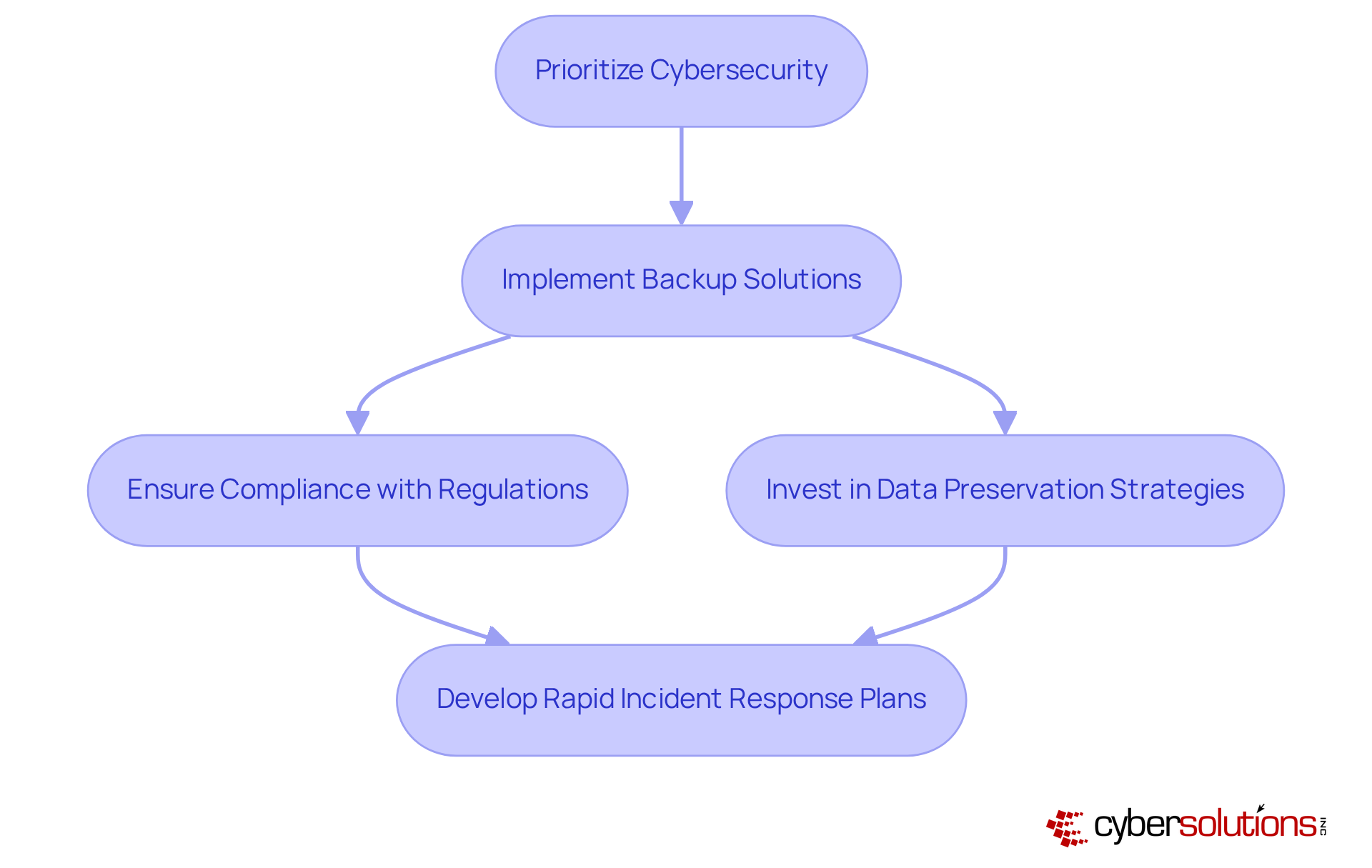
This flowchart illustrates the key steps healthcare organizations should take to manage backup and recovery effectively. Each box represents a crucial action, and the arrows show how these actions connect to enhance cybersecurity and operational integrity.

Explore Effective Backup Strategies and Methods

In an era where cyber threats loom larger than ever, healthcare organizations must prioritize data preservation strategies to safeguard their operations. Adopting the 3-2-1 rule means maintaining three copies of data across two different media types, with one copy securely stored offsite, ensuring enhanced availability and resilience against threats.

By 2026, the cloud-based storage solutions market is set to expand significantly, driven by the increasing demand for scalable and flexible alternatives that guarantee data accessibility during local emergencies. Implementing regular data copies, including incremental and differential methods, is crucial for optimizing storage and minimizing recovery time. Automated data preservation processes streamline operations, reducing the risk of human error.

With 72% of organizations seeing an increase in cyber risk, immutable backups are essential for protecting against ransomware, and organizations must prioritize their implementation. This was exemplified when a healthcare provider faced a ransomware attack; thanks to Cyber Solutions' rapid incident response, they not only restored 4,500 endpoints but also enhanced their security measures to safeguard patient data and operations against future threats.

This incident underscores the critical role of expert intervention in mitigating cyber threats and ensuring data integrity. The layered strategy - featuring endpoint isolation, malware removal, and user training - facilitated a quicker and more thorough restoration. This highlights how Cyber Solutions applies the 3-2-1 rule effectively in their strategies.

Frequent assessment of restoration and retrieval procedures is also essential to guarantee dependability during critical incidents. Ultimately, the effectiveness of Cyber Solutions in implementing the 3-2-1 rule can mean the difference between recovery and disaster in the face of cyber attacks.
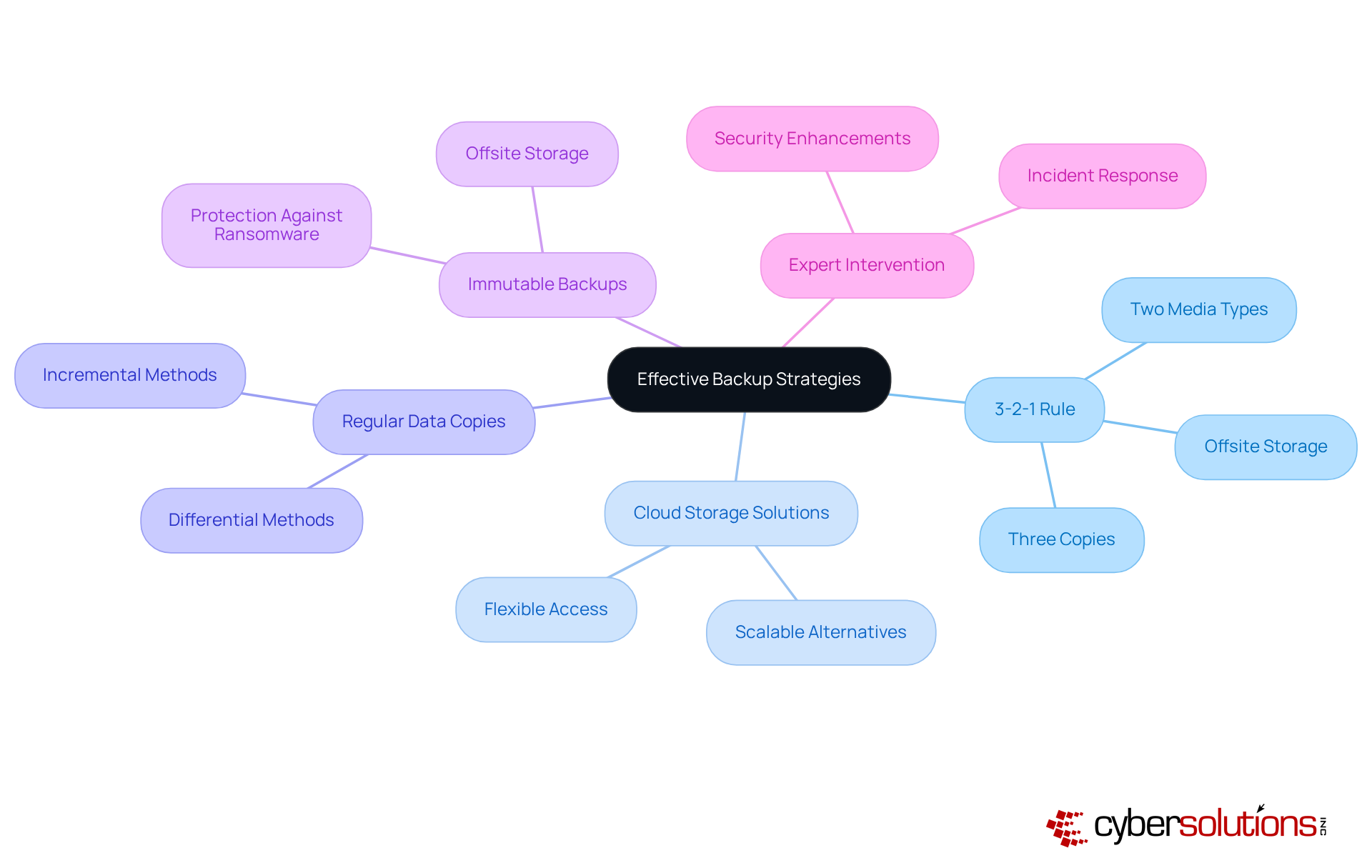
This mindmap starts with the main idea of backup strategies at the center. Each branch represents a different strategy or method, and the sub-branches provide more details. Follow the branches to see how each strategy connects to the overall goal of data preservation.

Implement Robust Data Recovery Practices

In an era where cyber threats loom large, the importance of a robust information restoration strategy cannot be overstated. To ensure efficient information retrieval, companies must develop and routinely evaluate a comprehensive backup and recovery management strategy that details methods for retrieving information from backups.

What crucial information and applications does your plan prioritize to ensure business continuity? Routine assessment of restoration procedures is essential. How often do you assess your restoration procedures? Organizations ought to simulate information loss situations to confirm the efficacy of their restoration tactics.

Statistics show that 30.2% of technology leaders regard backup and recovery management of vital information as the most critical measure in preventing and recovering from loss of information. Moreover, companies that conduct regular testing recover faster and incur lower financial losses. Clear records of your restoration procedures can significantly speed up response times when incidents occur.

For instance, a healthcare provider that consistently tested its restoration plan successfully retrieved patient information within hours after a ransomware attack, significantly reducing interruptions to patient care. This proactive strategy not only improves operational resilience but also aligns with best practices for backup and recovery management in 2026 and beyond.

As we move towards 2026, the organizations that prioritize proactive restoration strategies will not only survive but thrive in the face of adversity.
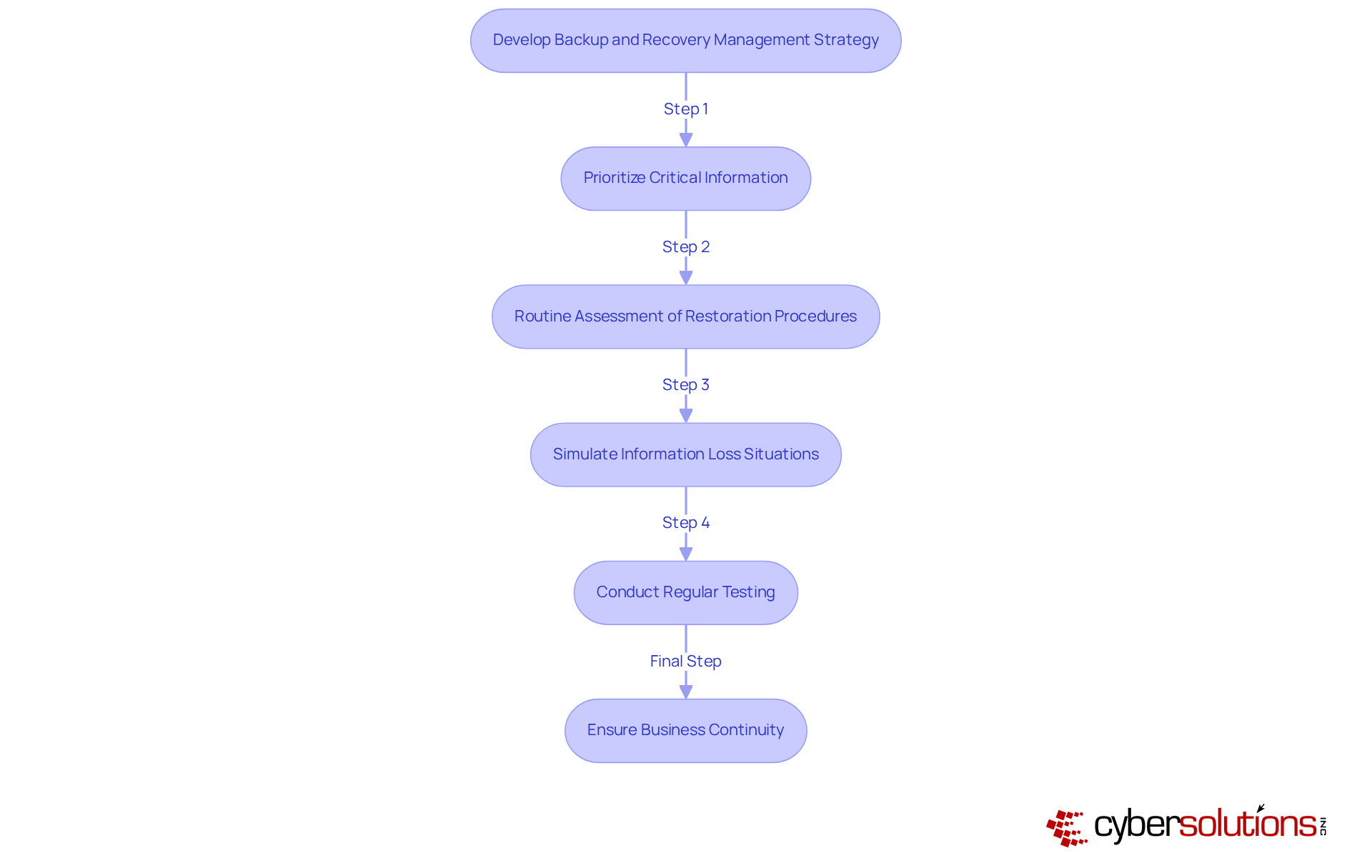
This flowchart guides you through the essential steps for creating a strong data recovery plan. Each box represents a key action, and the arrows show how these actions connect to ensure your organization can effectively recover from data loss.

Ensure Compliance and Security in Backup Practices

In an era where data breaches are rampant, the stakes for healthcare organizations have never been higher. Organizations must prioritize compliance and security in their data protection practices to mitigate legal risks and safeguard sensitive information.

  • Encryption is vital for protecting the integrity and confidentiality of stored information.
  • In fact, studies indicate that 82% of breaches involve information stored in the cloud, underscoring the need for strong encryption measures.
  • Adhering to industry-specific regulations such as HIPAA, PCI-DSS, and GDPR is crucial; for instance, HIPAA mandates healthcare providers to have a backup and recovery management plan that includes encryption to protect patient information.
  • Without robust data protection, organizations risk facing severe legal repercussions and loss of trust.
  • Frequent evaluations of recovery procedures can assist in recognizing weaknesses and ensuring that information protection measures stay up to date.
  • It's essential to have clear policies on how information is retained and who can access it to keep unauthorized users at bay.
  • Application allowlisting plays a crucial role in this context by proactively preventing unauthorized or malicious applications from running, thereby enhancing the security of storage systems.
  • This includes monitoring application activity to detect any unauthorized attempts and managing allowlists from a centralized dashboard.

A significant instance is a financial organization that applied stringent access controls and encryption for its backup and recovery management, successfully upholding compliance with regulatory standards while greatly lowering the risk of breaches. By prioritizing these measures, organizations not only protect sensitive data but also build trust with their stakeholders. Ultimately, the choice to prioritize data protection can mean the difference between security and vulnerability in a digital landscape.
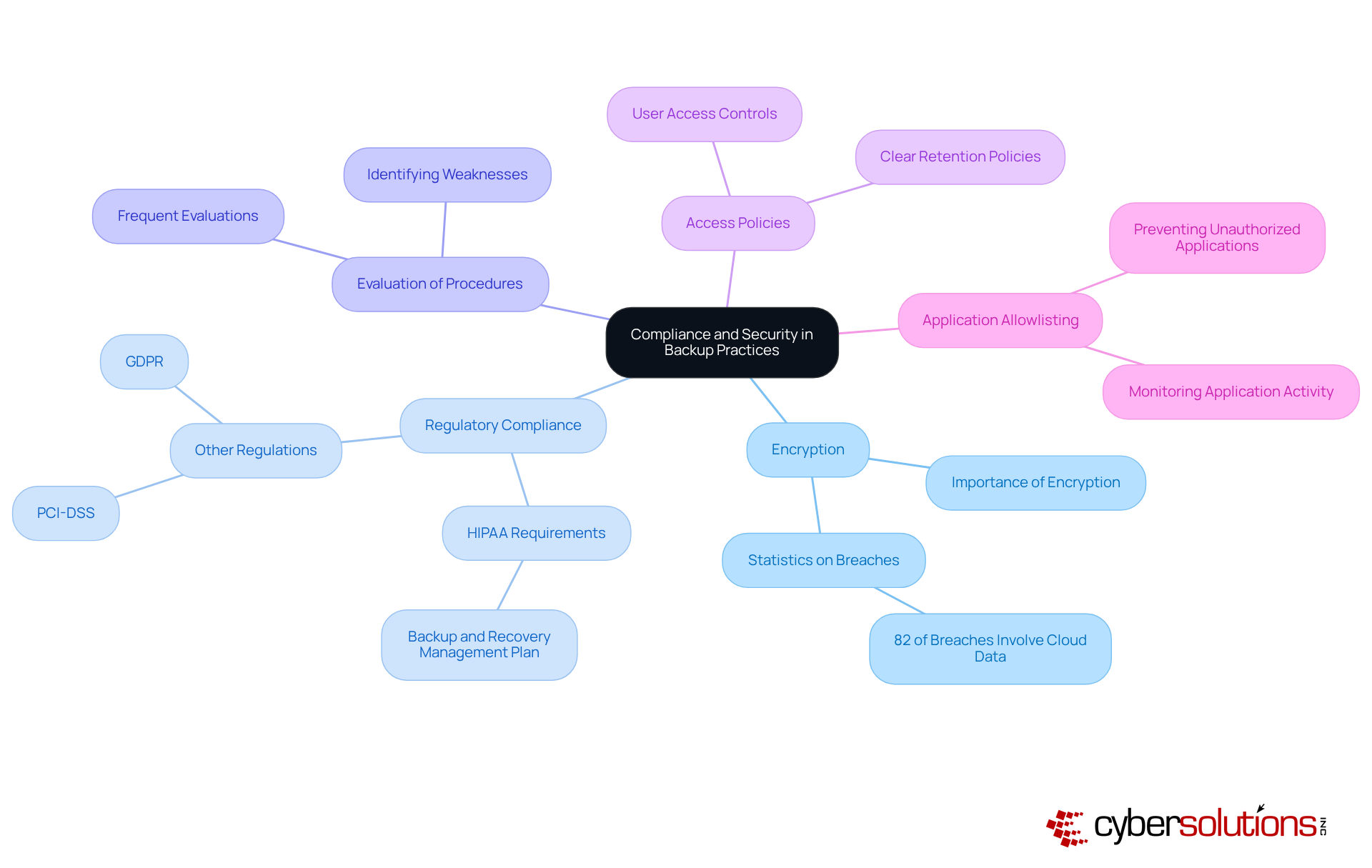
This mindmap starts with the main topic at the center and branches out to show key practices for ensuring data security and compliance. Each branch represents a critical area of focus, with further details provided in sub-branches. This layout helps visualize how these practices interconnect and contribute to overall data protection.

Conclusion

In today's healthcare landscape, the stakes of cybersecurity have never been higher, making effective backup and recovery management an absolute necessity. Prioritizing these practices is crucial. It protects sensitive patient information, ensures compliance with industry regulations, and safeguards organizational integrity against the constant threat of data breaches.

This article highlights several key strategies to bolster backup and recovery efforts. These include:

  1. Adopting the 3-2-1 rule for data storage
  2. Implementing immutable backups to combat ransomware
  3. Routinely assessing restoration procedures

By integrating robust encryption measures and application allowlisting, organizations can enhance their security posture, ensuring they are well-prepared to face potential cyber threats while minimizing operational disruptions.

Taking a proactive approach to backup and recovery isn’t just smart; it’s a vital investment in your organization’s resilience. As the landscape of cyber threats evolves, embracing these strategies will empower healthcare organizations to protect their data, uphold patient trust, and ensure compliance with regulatory standards. Investing in robust backup and recovery solutions today is not just a precaution; it’s a strategic move that can define the future of healthcare security.

Frequently Asked Questions

Why is backup and recovery management important in healthcare?

Backup and recovery management is crucial in healthcare to protect sensitive patient information from cyber threats and disasters, ensure compliance with industry regulations, and maintain operational integrity.

What are the financial implications of neglecting backup and recovery management?

Organizations that overlook efficient backup and recovery management risk facing significant penalties, reputational damage, and the financial burden of data breaches, which can cost an average of $9.8 million in 2024 and is projected to exceed $12 million by 2026.

How do ransomware attacks affect patient care in hospitals?

A March 2024 survey found that 74% of hospitals reported direct impacts on patient care due to ransomware attacks, leading to significant operational disruptions.

What role does application allowlisting play in cybersecurity?

Application allowlisting enhances cybersecurity by preventing unauthorized software from executing, which reduces the attack surface and helps ensure compliance with regulations like HIPAA and GDPR.

What strategies are essential for effective backup and recovery management?

Rapid incident response strategies are essential for quickly restoring operations after a ransomware attack, ensuring continuity of care and regulatory compliance in healthcare settings.

What are the risks of not adopting a proactive approach to cybersecurity in healthcare?

Without a proactive approach, healthcare organizations risk financial loss, penalties, and loss of trust from patients, which can severely impact their operations and reputation.

List of Sources

  1. Understand the Importance of Backup and Recovery Management
    • Ransomware Tops Growing Cyber Threats in Healthcare, Driving Up Breach Costs (https://scnsoft.com/healthcare/cybersecurity-statistics)
    • 5 Cybersecurity Trends to Watch Out for in 2026 (https://xopero.com/blog/en/cybersecurity-trends-2026)
    • Change Healthcare Cyberattack Underscores Urgent Need to Strengthen Cyber Preparedness for Individual Health Care Organizations and as a Field | AHA (https://aha.org/change-healthcare-cyberattack-underscores-urgent-need-strengthen-cyber-preparedness-individual-health-care-organizations-and)
    • Ransomware in Healthcare: A Life-Critical Business Priority for 2026 (https://morphisec.com/blog/ransomware-in-healthcare-a-life-critical-business-priority-for-2026)
    • Ransomware Attacks on U.S. Healthcare Systems Are Rising, and the Impact Is Real (https://linkedin.com/pulse/ransomware-attacks-us-healthcare-systems-rising-cw7me)
  2. Explore Effective Backup Strategies and Methods
    • 7 Best Cloud Backup Solutions for Enterprises in 2026 (https://cio.economictimes.indiatimes.com/tools/7-best-cloud-backup-solutions-for-enterprises-in-2026/129950720)
    • World Backup Day 2026: Backup Best Practices for MSPs and IT Teams | Comet Documentation (https://docs.cometbackup.com/blog/2026/2026-03-31-world-backup-day)
    • 2026 Standards for Data Backup - Keep Your Information Safe (https://netgainit.com/blogs/data-backup-keep-your-information-safe)
    • World Backup Day 2026 – recommended processes and solutions (https://greymatter.com/content-hub/world-backup-day-2026-recommended-processes-and-solutions)
    • World Backup Day 2026: Expert Insights from the Field (https://solutionsreview.com/backup-disaster-recovery/world-backup-day-2026-expert-insights-from-the-field)
  3. Implement Robust Data Recovery Practices
    • An Introduction to Disaster Recovery Testing in 2026 (https://harness.io/blog/an-introduction-to-disaster-recovery-testing-what-you-need-to-know-2026)
    • Disaster Recovery Testing: What It Is, How It Works and Where To Start (https://warrenaverett.com/insights/disaster-recovery-testing)
    • The Importance of Regular Disaster Recovery Testing and Updates - VAST (https://vastitservices.com/blog/the-importance-of-regular-disaster-recovery-testing-and-updates)
    • How Often Should a Disaster Recovery Plan Be Tested? | Cutover (https://cutover.com/blog/how-often-should-recovery-plans-be-tested)
    • Data Loss Statistics In The US In 2025 / Infrascale (https://infrascale.com/data-loss-statistics-usa)
  4. Ensure Compliance and Security in Backup Practices
    • World Backup Day 2026: Backup Best Practices for MSPs and IT Teams | Comet Documentation (https://docs.cometbackup.com/blog/2026/2026-03-31-world-backup-day)
    • Data Loss Statistics In The US In 2025 / Infrascale (https://infrascale.com/data-loss-statistics-usa)
    • World Backup Day 2026 – recommended processes and solutions (https://greymatter.com/content-hub/world-backup-day-2026-recommended-processes-and-solutions)
    • Critical servers under attack: Why backup isn’t enough in 2026 (https://acronis.com/en/blog/posts/critical-servers-under-attack-why-backup-isnt-enough-in-2026)
    • Data Protection Strategies for 2026 (https://hyperproof.io/resource/data-protection-strategies-for-2026)
Recent Posts
4 Best Practices for Effective Backup and Recovery Management
Why It’s Crucial to Backup Data for Business Resilience
Achieve CMMC 3.0 Compliance: A Step-by-Step Guide for Leaders
Achieve Regulatory Compliance: Strategies for C-Suite Leaders
10 Key Components of an Effective IT Backup and Disaster Recovery Plan
Crafting an Effective Multi-Factor Authentication Policy for Leaders
10 Essential IT KPI Examples for C-Suite Leaders to Track
4 Essential Practices for Effective Disaster Recovery Plans for Businesses
4 Best Practices for Effective RPO Backup Implementation
4 Proven Strategies for Effective Breach Prevention in Business
5 Essential CMMC Documentation Steps for Compliance Success
Master DR and RPO: Best Practices for C-Suite Leaders
Explain the Importance of Data Backup for Business Resilience
4 Best Practices for Choosing Information Security Services Companies
What Does It Mean to Be in Compliance? Key Insights for Leaders
Boost Operational Efficiency with Managed IT Services Mobile
4 Best Practices for Effective Cyber Security Evaluation
Understand Adware and Spyware: Protect Your Business Today
IT Policy for Company: Key Components and Industry Challenges
Best Practices for Choosing Your EDR Provider Effectively
Optimize Your Disaster Recovery Plan for Time and Cost Efficiency
What to Do If You Get Phished: Essential Strategies for Leaders
Master CMMC Processes: Essential Best Practices for Compliance Success
4 Best Practices for Advanced Threat Analysis in Cybersecurity
What Is Anti-Phishing Software and Why It Matters for Your Business
4 Steps to Master the Vulnerability Scanning Process for Security
What Expense Should You Expect When Buying a New Firewall?
Master the FTC Safeguards Rule for Your Risk Assessment Template
Master NIST 800-171 Compliance Audit in 6 Essential Steps
Master Managed Services Projects: Key Strategies for C-Suite Leaders
Master FTC MFA Requirements: A Step-by-Step Guide for Leaders
Enhance Password Compliance with These 4 Essential Strategies
10 Key Factors Influencing Network Firewall Pricing for Executives
4 Best Practices for Effective Firewall Testing and Security
Master the CMMC Assessment Guide Level 2 for Effective Compliance
Why Local IT Services Providers Are Key to Business Success
10 Key Benefits of Partnering with IT MSPs for Your Business
Why Healthcare CFOs Should Choose an Outsourced IT Provider
4 Best Practices for CFOs in AI Data Security Compliance
What Is Defense in Depth? Understanding Its Importance for Healthcare CFOs
Essential Corporate Data Backup Practices for Healthcare CFOs
10 Benefits of Outsourced IT Management for Healthcare CFOs
Master Restricting Access: Best Practices for CFOs on OAuth Management
Master Living Off the Land: A CFO's Guide to Sustainability
Master Digital Security Controls for Healthcare CFOs
10 Essential IT Services for Healthcare CFOs to Enhance Security
Master Critical Security Controls for Healthcare CFOs
Best Practices for Managed Cyber Security in Healthcare CFOs
What MSPs Stand For and Why They Matter for Healthcare CFOs
Choosing the Right Managed Cybersecurity Services Provider for CFOs
What Is CMMC Compliance and Why It Matters for Healthcare CFOs
How to Reduce the Risk of Cyber Attack: 4 Essential Steps for CFOs
What Compliance Means: Key Concepts for Healthcare CFOs
5 Best Practices for Achieving CMMC 1.0 Compliance Success
Understanding Cybersecurity as a Service for Healthcare CFOs
Why MSPs in Technology Are Essential for Healthcare CFOs
10 Benefits of Data Security as a Service for Healthcare CFOs
Evaluate 4 Leading Disaster Recovery Software Vendors for Your Business
What IT Services Can Be Outsourced for Business Success?
Enhance Cyber Resilience with Effective External Vulnerability Scanning
Cyber Security Outsourcing Companies vs. In-House Solutions: Key Insights
4 Steps to Optimize Business IT Support for Healthcare CFOs
Understanding Managed Service Provider Costs: Key Factors and Models
Why Fully Managed Services Are Essential for Cybersecurity Success
Understanding the Average Cost of Cybersecurity Services for Leaders
Master Managing Firewalls: Essential Steps for C-Suite Leaders
Master HIPAA Compliant Firewall Requirements for Your Organization
How to Manage Company Laptops: A Step-by-Step Guide for Leaders
6 Best Practices for a Successful Managed Services Strategy
4 Best Practices for Choosing Your NIST Compliance Tool
10 Essential CMMC 2.0 Controls List for Compliance Success
Best Practices for Effective Data Backup Support in Your Organization
4 Essential Cybersecurity Compliance Solutions for C-Suite Leaders
Master Data Backup and Recovery: Best Practices for C-Suite Leaders
Master Two-Factor Authentication for Business: Best Practices Unveiled
Best Practices for Backing Up Your Data Effectively
Enhance Security with Best Practices for Secure Web Browsing
Master 365 Services: Best Practices for Compliance and Efficiency
4 Strong Password Guidelines for C-Suite Leaders to Enhance Security
Essential Backup Information for Compliance and Security Strategies
Business IT Providers vs. In-House IT: Key Comparison for Leaders
Compare Top Two Factor Authentication Service Providers for Your Business
Master HIPAA Compliant Infrastructure: Key Steps for Executives
What LOTL Stands for in Cybersecurity and Its Implications
4 Best Practices for Your Cyber Attack Incident Response Plan
4 Best Practices for Effective Information Technology Spending
Understanding Cyber Security Exercises: Importance and Benefits
5 Best Practices for Optimizing Your Hybrid Work Setting
Understanding Office 365 Meaning: Key Features and Implications
What Office 365 Means for Cyber Solutions Inc.: A Case Study on Transformation
Master Defence in Depth Cyber Security: 5 Steps for C-Suite Leaders
Boost Security Awareness Among Employees with Proven Best Practices
Implement the NIST Incident Response Playbook in 4 Simple Steps
What is a Managed IT Support Service Provider and Why It Matters
Why Data Backup is Important for Business Resilience and Growth
Best Practices for Effective Managed IT Security Solutions
4 Best Practices for Backup & Disaster Recovery Services Success
Best Practices for AI and Machine Learning in Cyber Security
Why USB Malware Threats Matter for C-Suite Leaders Today
What Are Vulnerability Scanners and Why They Matter for Your Business