4 Best Practices to Combat Spyware and Malware Threats

4 Best Practices to Combat Spyware and Malware Threats

Introduction

As cyber threats escalate, healthcare organizations face unprecedented challenges in safeguarding sensitive patient data. Recognizing these threats is essential. With projections showing cybercrime costs could reach $13.86 trillion by 2025, the financial and reputational stakes are higher than ever. Organizations must prioritize effective cybersecurity measures.

What strategies can healthcare providers adopt to not only identify these threats but also fortify their defenses against them? This article will outline critical best practices that empower organizations to combat spyware and malware, safeguarding their systems and maintaining patient trust.

Define Spyware and Malware: Understanding the Threat Landscape

In an era where cyber threats loom large, it is crucial for healthcare organizations to understand the nuances between spyware and malware. Spyware is a type of malicious software that infiltrates a user's device without consent, gathering sensitive information like passwords and credit card numbers. Operating silently in the background, it often leads to data theft and privacy violations. By 2026, the impact of spyware and malware on data theft is expected to escalate, with around 80% of internet users having experienced system compromises due to spyware and malware.

Spyware and malware is a broader term that includes any malicious software, such as viruses, worms, and ransomware, that can disrupt, damage, or gain unauthorized access to computer systems. The global cost of cybercrime is projected to reach $13.86 trillion by 2025, underscoring the urgent need for organizations to prioritize cybersecurity measures as this trend continues into 2026.

Grasping these definitions is essential for organizations to identify potential risks and prioritize effective cybersecurity measures. For instance, the average cost of a data breach in the financial services sector is approximately $5.85 million, while the average breach cost in the U.S. reaches $10.22 million. These figures highlight the financial implications of inadequate cybersecurity. Differentiating between tracking software and harmful programs allows companies to tailor their security strategies, effectively mitigating evolving threats.

Implementing application allowlisting significantly enhances cybersecurity by blocking unauthorized applications, reducing the risk of harmful software infiltrating systems. This approach not only safeguards sensitive data but also aids organizations in meeting compliance requirements, ensuring a robust defense against the growing threat landscape. Failing to differentiate these threats could lead to devastating financial repercussions and compromised patient trust.
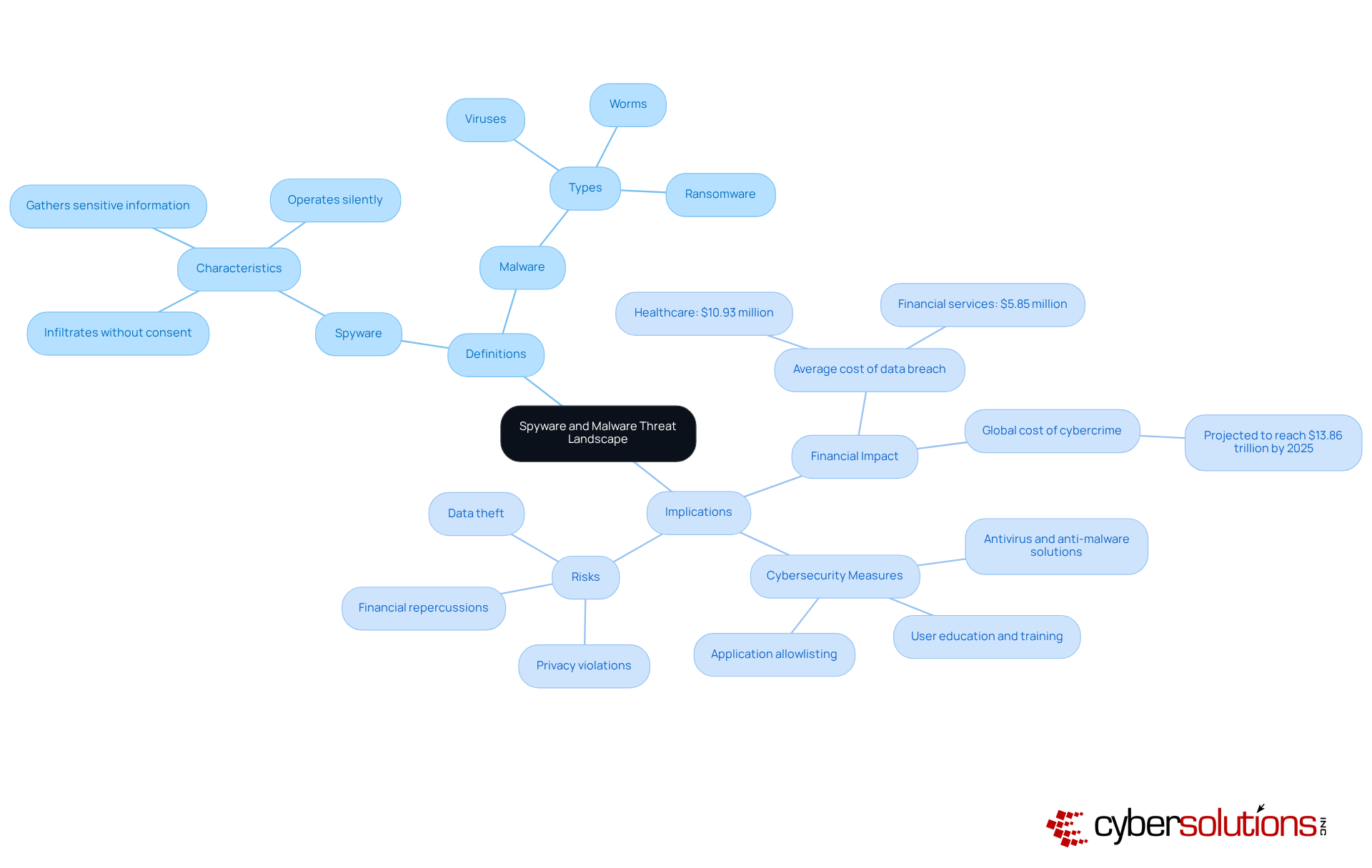
The central node represents the overall topic, while branches show key definitions and implications. Each color-coded branch helps you see how different aspects of spyware and malware connect, making it easier to understand the threat landscape.

Identify Signs of Infection: Recognizing Spyware and Malware on Your Systems

In an era where cyber threats loom large, the healthcare sector faces unprecedented challenges in safeguarding sensitive data against threats like spyware and malware. Identifying the indicators of infections caused by spyware and malware is essential for prompt action. Common indicators include:

  • Slow Performance: A noticeable decrease in system speed can indicate malware activity. In fact, spyware and malware can cause computers to become sluggish due to the extra processing demands they place on the system.
  • Unusual Pop-ups: Frequent pop-up advertisements or notifications, particularly those that appear questionable, may indicate the presence of malicious software. Symptoms of infection often include endless pop-up windows and unexpected browser changes due to spyware and malware.
  • Browser Redirects: If your web browser redirects you to unfamiliar sites, it could be a sign of infection. This behavior is a common tactic employed by spyware and malware to manipulate user activity.
  • New Toolbars or Applications: Unexpected changes in your browser or the appearance of unfamiliar applications can indicate malicious software installation. Users may notice new toolbars or icons that were not intentionally added, potentially due to spyware and malware.
  • Increased Data Usage: Unexplained spikes in data consumption may indicate that malicious software is sending information without your awareness. In 2026, entities reported significant data theft incidents linked to spyware and malware, which highlighted the importance of monitoring data flow.

Staying alert and keeping an eye out for these signs allows organizations to respond quickly to infections and reduce potential harm. A proactive approach, such as implementing application allowlisting, can significantly reduce the risk of spyware and malware execution by ensuring that only approved applications run on your systems. Furthermore, ongoing risk monitoring is crucial to identify and prevent suspicious activities related to spyware and malware before they escalate into significant dangers. This comprehensive strategy not only helps in immediate response but also reinforces the importance of ongoing vigilance in cybersecurity practices, ultimately safeguarding against costly incidents like ransomware attacks and threats from spyware and malware, which average $5.13 million in damages. Additionally, application allowlisting supports compliance with regulatory standards such as HIPAA, PCI-DSS, and GDPR, ensuring that entities adhere to strict data protection protocols. Without a robust cybersecurity strategy, organizations risk not only financial loss but also the trust of those they serve, making vigilance an imperative rather than an option.
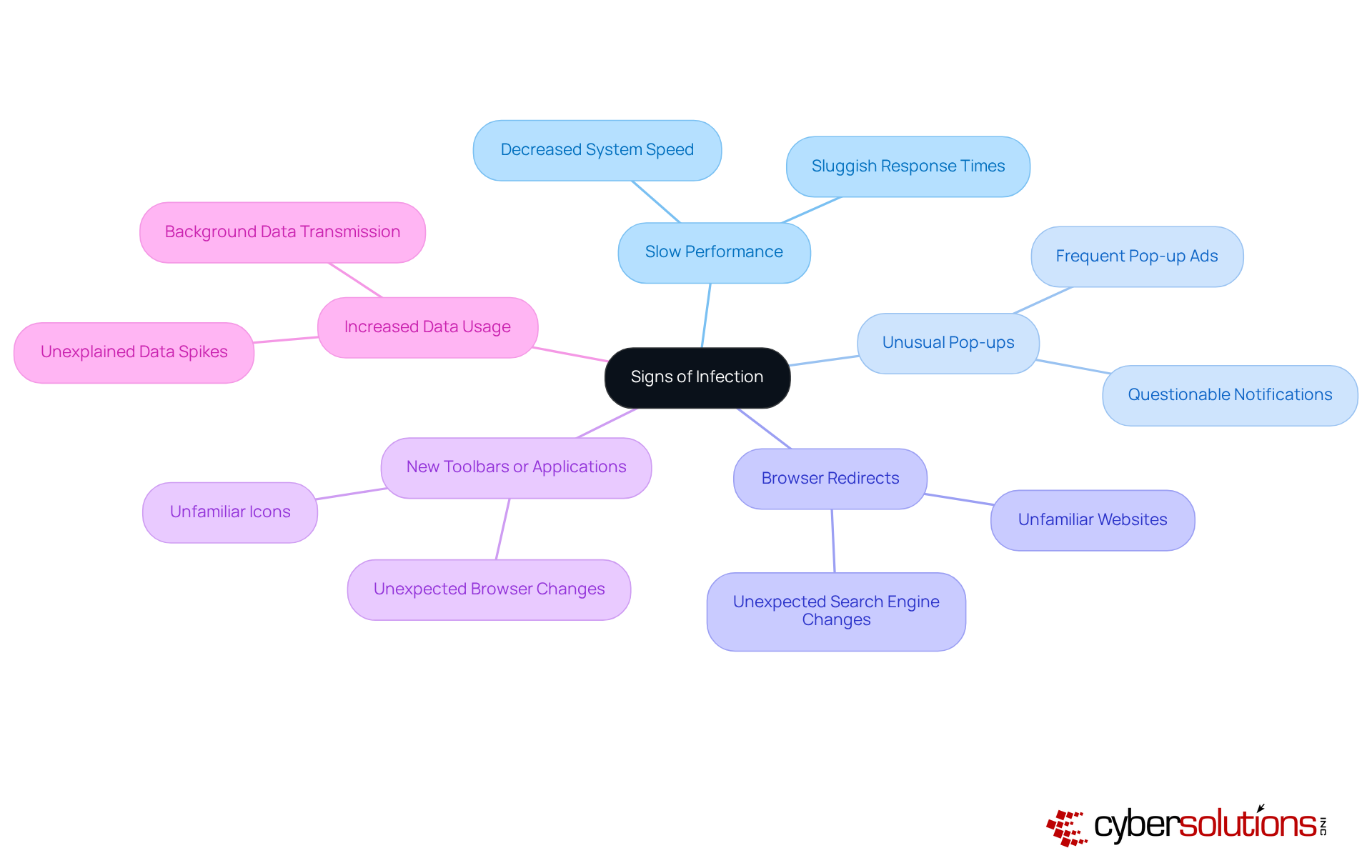
The central node represents the overall theme of identifying infections. Each branch shows a specific sign of infection, helping you quickly understand what to look for. The colors and layout make it easy to follow and remember the signs.

Implement Preventive Measures: Strategies to Protect Against Spyware and Malware

In an era where healthcare data breaches are increasingly common, the need for robust cybersecurity measures has never been more critical. To effectively combat spyware and malware threats, organizations should adopt the following preventive measures:

  • Install Reputable Security Software: Utilize comprehensive antivirus and anti-malware solutions that provide real-time protection and regular updates, including advanced endpoint protection offered by Cyber Solutions.
  • Application Allowlisting: Implement application allowlisting to proactively prevent unauthorized software from executing, significantly reducing the risk of malicious software and ransomware attacks. This approach not only enhances security but also helps meet compliance requirements such as HIPAA, PCI-DSS, and GDPR by limiting the applications that can run and minimizing the attack surface.
  • Regular Software Updates: Ensure that all operating systems and applications are kept up-to-date to protect against vulnerabilities that harmful software can exploit. Regular updates are essential, as they patch security flaws that could be targeted by cybercriminals.
  • Educate Employees: Conduct regular training sessions to inform staff about the risks associated with spyware and malware, which includes safe browsing practices and recognizing phishing attempts. Research shows that organizations with comprehensive training programs can reduce employee susceptibility to phishing attacks by up to 86%. This highlights the critical role of education in cybersecurity.
  • Use Strong Passwords: Encourage the use of complex passwords and implement multi-factor authentication to enhance security. Robust passwords are a crucial safeguard against unauthorized access, and companies should promote best practices for password management.
  • Limit User Privileges: Restrict administrative access to only those who need it, thereby reducing the risk of malware installation. By limiting user privileges, companies can minimize potential entry points for malicious software.

By implementing these strategies, including the proactive measures offered by Cyber Solutions, organizations can establish a strong defense against possible risks. Without these proactive strategies, organizations risk not only their data but also their reputation and trust within the community.
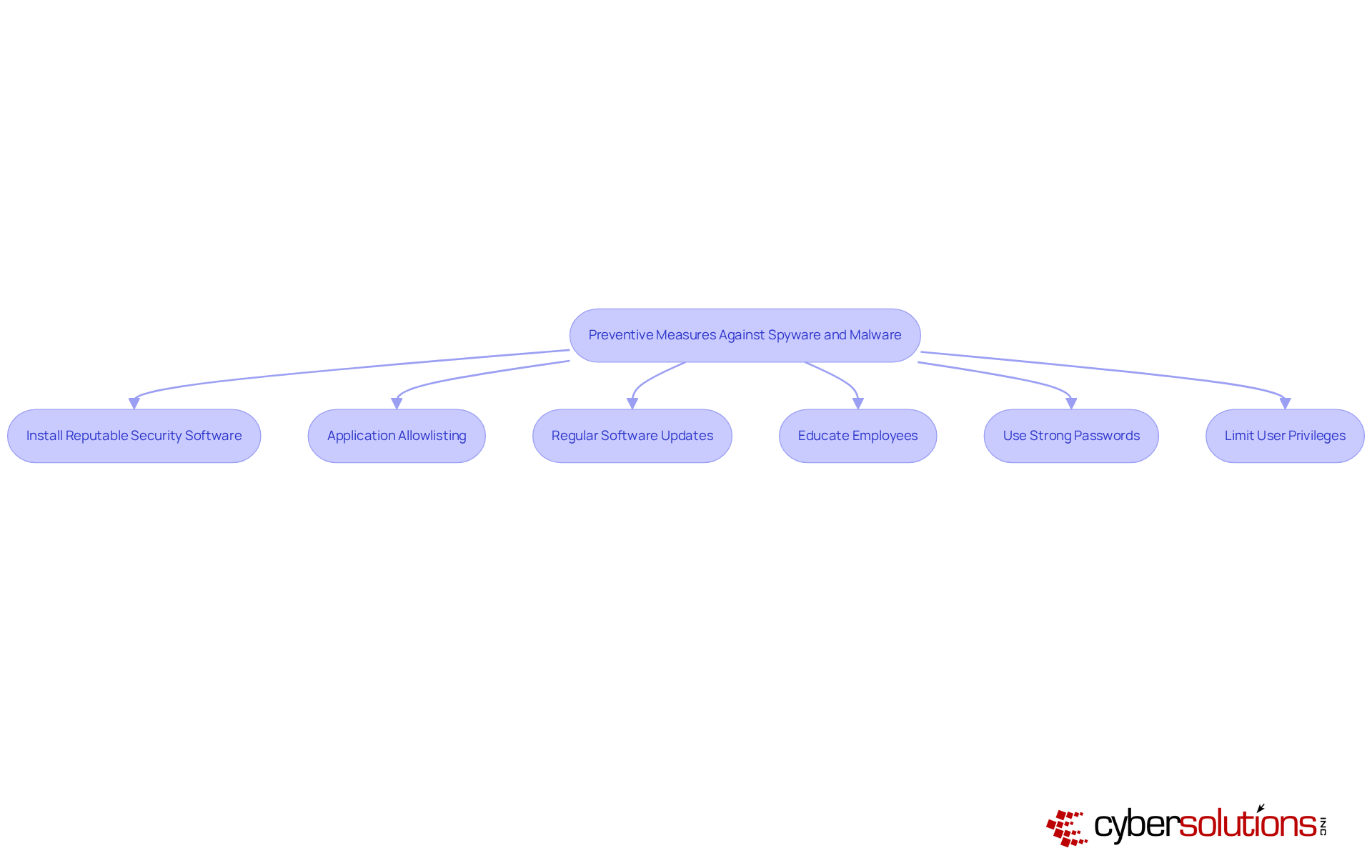
Each box represents a strategy to protect against spyware and malware. Follow the arrows to see how these strategies work together to create a strong defense. The central node shows the overall goal of implementing these measures.

Establish an Incident Response Plan: Managing Spyware and Malware Threats

In an era where cyber threats loom large, a robust incident response plan is not just beneficial; it's essential for safeguarding healthcare organizations against risks associated with spyware and malware. Key components include:

  • Preparation: Develop a clear plan that outlines roles and responsibilities, ensuring all team members know their tasks during an incident. Cyber Solutions emphasizes the importance of a systematic approach to prepare for potential risks, including specific actions like cleaning, patching, and reimaging compromised endpoints to bolster endpoint security.
  • Detection and Analysis: Implement monitoring tools to detect suspicious activity and analyze potential threats promptly. Continuous monitoring is crucial, as it allows for the immediate identification of unauthorized software attempts, a key aspect of application allowlisting.
  • Containment: Establish procedures to isolate infected systems to prevent further spread of malicious software. This step is vital in minimizing the impact of an incident, ensuring that compromised endpoints are effectively cleaned and patched.
  • Eradication: Remove the malicious software from affected systems and ensure that vulnerabilities are addressed to prevent future infections. Cyber Solutions' expertise in rapid incident response strategies guarantees that eradication is swift and thorough, closing potential attack vectors.
  • Recovery: Restore systems to normal operations and verify that they are secure before reconnecting to the network. This phase includes optimizing endpoint protections to enhance overall security.
  • Post-Incident Review: Conduct a thorough analysis of the incident to identify lessons learned and improve future response efforts. By examining incidents, companies can enhance their strategies, including the execution of application allowlisting to proactively avert future risks.

By prioritizing a structured incident response plan, organizations can not only defend against current threats but also fortify their cybersecurity posture for the future.

Each box represents a step in the incident response process. Follow the arrows to see how each step leads to the next, helping organizations effectively manage and respond to cyber threats.

Conclusion

In an era where cyber threats are increasingly sophisticated, safeguarding sensitive healthcare data is more critical than ever. Recognizing the differences between spyware and malware helps organizations prepare for the growing tide of cybercrime. Integrating effective cybersecurity measures is essential for safeguarding data integrity and maintaining trust with patients and clients.

The article outlined several best practices to mitigate the risks associated with spyware and malware. Key strategies include:

  • Implementing application allowlisting
  • Educating employees on safe online practices
  • Utilizing reputable security software
  • Establishing a comprehensive incident response plan

Each of these measures plays a crucial role in not only preventing infections but also in ensuring a swift and effective response should an incident occur. By staying vigilant and proactive, organizations can significantly reduce the likelihood of falling victim to cyber threats.

Every member of the organization plays a crucial role in protecting sensitive information. Fostering a culture of cybersecurity awareness, with continuous education and proactive strategies, is essential. By taking these steps, organizations can not only defend against current threats but also build a resilient framework that adapts to the evolving landscape of cyber risks. By prioritizing cybersecurity, organizations not only protect their data but also uphold the trust that is essential for patient care.

Frequently Asked Questions

What is spyware?

Spyware is a type of malicious software that infiltrates a user's device without consent, gathering sensitive information such as passwords and credit card numbers while operating silently in the background.

What is the broader definition of malware?

Malware is a broader term that includes any malicious software, such as viruses, worms, and ransomware, which can disrupt, damage, or gain unauthorized access to computer systems.

What is the expected impact of spyware and malware on data theft by 2026?

By 2026, it is expected that around 80% of internet users will have experienced system compromises due to spyware and malware.

What is the projected global cost of cybercrime by 2025?

The global cost of cybercrime is projected to reach $13.86 trillion by 2025.

What are the average costs associated with data breaches in the financial services sector and the U.S.?

The average cost of a data breach in the financial services sector is approximately $5.85 million, while the average breach cost in the U.S. is about $10.22 million.

Why is it important for organizations to differentiate between tracking software and harmful programs?

Differentiating between tracking software and harmful programs allows organizations to tailor their security strategies effectively, helping to mitigate evolving threats.

How can application allowlisting enhance cybersecurity?

Implementing application allowlisting significantly enhances cybersecurity by blocking unauthorized applications, reducing the risk of harmful software infiltrating systems, and helping organizations meet compliance requirements.

What are the potential consequences of failing to differentiate between different types of cyber threats?

Failing to differentiate these threats could lead to devastating financial repercussions and compromised patient trust.

List of Sources

  1. Define Spyware and Malware: Understanding the Threat Landscape
    • 2026 Global Threat Report | Latest Cybersecurity Trends & Insights | CrowdStrike (https://crowdstrike.com/en-us/global-threat-report)
    • What Is Spyware? Definition, Types And Protection | Fortinet (https://fortinet.com/resources/cyberglossary/spyware)
    • Top Cybersecurity Threats [2025] (https://onlinedegrees.sandiego.edu/top-cyber-security-threats)
    • 205 Cybersecurity Stats and Facts for 2026 (https://vikingcloud.com/blog/cybersecurity-statistics)
    • Cyberattack Report 2026: Statistics Every Security Team Needs to See (https://zerothreat.ai/blog/cyberattack-statistics)
  2. Identify Signs of Infection: Recognizing Spyware and Malware on Your Systems
    • Malware Statistics for 2026 (https://sentinelone.com/cybersecurity-101/cybersecurity/malware-statistics)
    • Recognizing and Avoiding Spyware | CISA (https://cisa.gov/news-events/news/recognizing-and-avoiding-spyware)
    • What Is Spyware? Definition, Types And Protection | Fortinet (https://fortinet.com/resources/cyberglossary/spyware)
    • SWK Technologies March 2026 Cybersecurity News Recap | SWK Technologies (https://swktech.com/swk-technologies-march-2026-cybersecurity-news-recap)
    • The Hacker News | #1 Trusted Source for Cybersecurity News (https://thehackernews.com)
    • Signs of Malware: How to identify and protect your business | Fortinet (https://fortinet.com/resources/cyberglossary/signs-of-malware)
    • Malware Statistics [2026]: 60+ Facts on Threats & Trends (https://app.stationx.net/articles/malware-statistics)
  3. Implement Preventive Measures: Strategies to Protect Against Spyware and Malware
    • What Is Spyware? Definition, Types And Protection | Fortinet (https://fortinet.com/resources/cyberglossary/spyware)
    • Malware Statistics for 2026 (https://sentinelone.com/cybersecurity-101/cybersecurity/malware-statistics)
    • The top 20 expert quotes from the Cyber Risk Virtual Summit (https://diligent.com/resources/blog/top-20-quotes-cyber-risk-virtual-summit)
    • 8 Great Cyber Security Quotes From Influencers | Proofpoint US (https://proofpoint.com/us/blog/identity-threat-defense/8-great-cyber-security-quotes-influencers)
    • Security Awareness Training Statistics 2025 [100+ Studies] | Brightside AI Blog (https://brside.com/blog/security-awareness-training-statistics-2025-100-studies)
    • Native Intelligence (https://nativeintelligence.com/free-security-resources/security-quotes)
  4. Establish an Incident Response Plan: Managing Spyware and Malware Threats
    • 205 Cybersecurity Stats and Facts for 2026 (https://vikingcloud.com/blog/cybersecurity-statistics)
    • The Critical Importance of a Robust Incident Response Plan in 2025 | Sygnia (https://sygnia.co/blog/critical-importance-incident-response-plan)
    • Key Cyber Security Statistics for 2026 (https://sentinelone.com/cybersecurity-101/cybersecurity/cyber-security-statistics)
Recent Posts
4 Best Practices to Combat Spyware and Malware Threats
How to Mitigate Cyber Security Risk: 4 Essential Steps for Executives
4 Best Practices for Effective Backup and Recovery Management
Why It’s Crucial to Backup Data for Business Resilience
Achieve CMMC 3.0 Compliance: A Step-by-Step Guide for Leaders
Achieve Regulatory Compliance: Strategies for C-Suite Leaders
10 Key Components of an Effective IT Backup and Disaster Recovery Plan
Crafting an Effective Multi-Factor Authentication Policy for Leaders
10 Essential IT KPI Examples for C-Suite Leaders to Track
4 Essential Practices for Effective Disaster Recovery Plans for Businesses
4 Best Practices for Effective RPO Backup Implementation
4 Proven Strategies for Effective Breach Prevention in Business
5 Essential CMMC Documentation Steps for Compliance Success
Master DR and RPO: Best Practices for C-Suite Leaders
Explain the Importance of Data Backup for Business Resilience
4 Best Practices for Choosing Information Security Services Companies
What Does It Mean to Be in Compliance? Key Insights for Leaders
Boost Operational Efficiency with Managed IT Services Mobile
4 Best Practices for Effective Cyber Security Evaluation
Understand Adware and Spyware: Protect Your Business Today
IT Policy for Company: Key Components and Industry Challenges
Best Practices for Choosing Your EDR Provider Effectively
Optimize Your Disaster Recovery Plan for Time and Cost Efficiency
What to Do If You Get Phished: Essential Strategies for Leaders
Master CMMC Processes: Essential Best Practices for Compliance Success
4 Best Practices for Advanced Threat Analysis in Cybersecurity
What Is Anti-Phishing Software and Why It Matters for Your Business
4 Steps to Master the Vulnerability Scanning Process for Security
What Expense Should You Expect When Buying a New Firewall?
Master the FTC Safeguards Rule for Your Risk Assessment Template
Master NIST 800-171 Compliance Audit in 6 Essential Steps
Master Managed Services Projects: Key Strategies for C-Suite Leaders
Master FTC MFA Requirements: A Step-by-Step Guide for Leaders
Enhance Password Compliance with These 4 Essential Strategies
10 Key Factors Influencing Network Firewall Pricing for Executives
4 Best Practices for Effective Firewall Testing and Security
Master the CMMC Assessment Guide Level 2 for Effective Compliance
Why Local IT Services Providers Are Key to Business Success
10 Key Benefits of Partnering with IT MSPs for Your Business
Why Healthcare CFOs Should Choose an Outsourced IT Provider
4 Best Practices for CFOs in AI Data Security Compliance
What Is Defense in Depth? Understanding Its Importance for Healthcare CFOs
Essential Corporate Data Backup Practices for Healthcare CFOs
10 Benefits of Outsourced IT Management for Healthcare CFOs
Master Restricting Access: Best Practices for CFOs on OAuth Management
Master Living Off the Land: A CFO's Guide to Sustainability
Master Digital Security Controls for Healthcare CFOs
10 Essential IT Services for Healthcare CFOs to Enhance Security
Master Critical Security Controls for Healthcare CFOs
Best Practices for Managed Cyber Security in Healthcare CFOs
What MSPs Stand For and Why They Matter for Healthcare CFOs
Choosing the Right Managed Cybersecurity Services Provider for CFOs
What Is CMMC Compliance and Why It Matters for Healthcare CFOs
How to Reduce the Risk of Cyber Attack: 4 Essential Steps for CFOs
What Compliance Means: Key Concepts for Healthcare CFOs
5 Best Practices for Achieving CMMC 1.0 Compliance Success
Understanding Cybersecurity as a Service for Healthcare CFOs
Why MSPs in Technology Are Essential for Healthcare CFOs
10 Benefits of Data Security as a Service for Healthcare CFOs
Evaluate 4 Leading Disaster Recovery Software Vendors for Your Business
What IT Services Can Be Outsourced for Business Success?
Enhance Cyber Resilience with Effective External Vulnerability Scanning
Cyber Security Outsourcing Companies vs. In-House Solutions: Key Insights
4 Steps to Optimize Business IT Support for Healthcare CFOs
Understanding Managed Service Provider Costs: Key Factors and Models
Why Fully Managed Services Are Essential for Cybersecurity Success
Understanding the Average Cost of Cybersecurity Services for Leaders
Master Managing Firewalls: Essential Steps for C-Suite Leaders
Master HIPAA Compliant Firewall Requirements for Your Organization
How to Manage Company Laptops: A Step-by-Step Guide for Leaders
6 Best Practices for a Successful Managed Services Strategy
4 Best Practices for Choosing Your NIST Compliance Tool
10 Essential CMMC 2.0 Controls List for Compliance Success
Best Practices for Effective Data Backup Support in Your Organization
4 Essential Cybersecurity Compliance Solutions for C-Suite Leaders
Master Data Backup and Recovery: Best Practices for C-Suite Leaders
Master Two-Factor Authentication for Business: Best Practices Unveiled
Best Practices for Backing Up Your Data Effectively
Enhance Security with Best Practices for Secure Web Browsing
Master 365 Services: Best Practices for Compliance and Efficiency
4 Strong Password Guidelines for C-Suite Leaders to Enhance Security
Essential Backup Information for Compliance and Security Strategies
Business IT Providers vs. In-House IT: Key Comparison for Leaders
Compare Top Two Factor Authentication Service Providers for Your Business
Master HIPAA Compliant Infrastructure: Key Steps for Executives
What LOTL Stands for in Cybersecurity and Its Implications
4 Best Practices for Your Cyber Attack Incident Response Plan
4 Best Practices for Effective Information Technology Spending
Understanding Cyber Security Exercises: Importance and Benefits
5 Best Practices for Optimizing Your Hybrid Work Setting
Understanding Office 365 Meaning: Key Features and Implications
What Office 365 Means for Cyber Solutions Inc.: A Case Study on Transformation
Master Defence in Depth Cyber Security: 5 Steps for C-Suite Leaders
Boost Security Awareness Among Employees with Proven Best Practices
Implement the NIST Incident Response Playbook in 4 Simple Steps
What is a Managed IT Support Service Provider and Why It Matters
Why Data Backup is Important for Business Resilience and Growth
Best Practices for Effective Managed IT Security Solutions
4 Best Practices for Backup & Disaster Recovery Services Success
Best Practices for AI and Machine Learning in Cyber Security