
Master NIST 800-171 Compliance Audit in 6 Essential Steps

Master NIST 800-171 Compliance Audit in 6 Essential Steps

Introduction

In the healthcare sector, the stakes of cybersecurity are higher than ever, as data breaches can lead to catastrophic outcomes. Understanding the complexities of cybersecurity compliance is crucial for organizations, especially given the unique challenges they face. This alarming statistic highlights the widespread struggle organizations face in achieving compliance: a staggering 91% of organizations fall short of full compliance.

So, how can entities effectively navigate the intricate steps required to master the NIST 800-171 compliance audit? Let’s dive into six essential steps that will empower organizations to enhance their security posture while ensuring adherence to critical regulatory standards.

  1. Assess current security posture
  2. Identify applicable requirements
  3. Develop a compliance strategy
  4. Implement necessary controls
  5. Conduct regular audits
  6. Maintain continuous improvement

Understand NIST SP 800-171 and Its Importance

In an era where data breaches can cripple healthcare organizations, understanding cybersecurity frameworks like NIST SP 800-171 is not just beneficial - it's essential. This framework establishes vital protection requirements for safeguarding Controlled Unclassified Information (CUI) within non-federal systems, making it crucial for organizations involved in defense contracting. Adhering to these standards not only fortifies security but also opens doors to federal contracts, reinforcing operational integrity.

Organizations need to familiarize themselves with the 14 control families and their specific requirements - this foundational knowledge is crucial for successful adherence. For instance, the DoD Assessment Methodology evaluates contractor adherence to these standards, ensuring that sensitive data is adequately protected. Moreover, entities that successfully apply NIST SP 800-171 can improve their competitive advantage in the federal contracting arena, as adherence is increasingly regarded as a prerequisite for obtaining government contracts.

Compliance as a Service (CaaS) provides businesses with end-to-end solutions to meet regulatory requirements, including assessments, policy development, continuous monitoring, proactive risk assessments, and preparation for a NIST 800-171 compliance audit. This service is particularly beneficial for small and medium-sized businesses, allowing them to access enterprise-level compliance expertise without the high cost of hiring in-house compliance staff. By embracing these standards, organizations not only safeguard their data but also enhance their standing in a competitive federal contracting landscape.
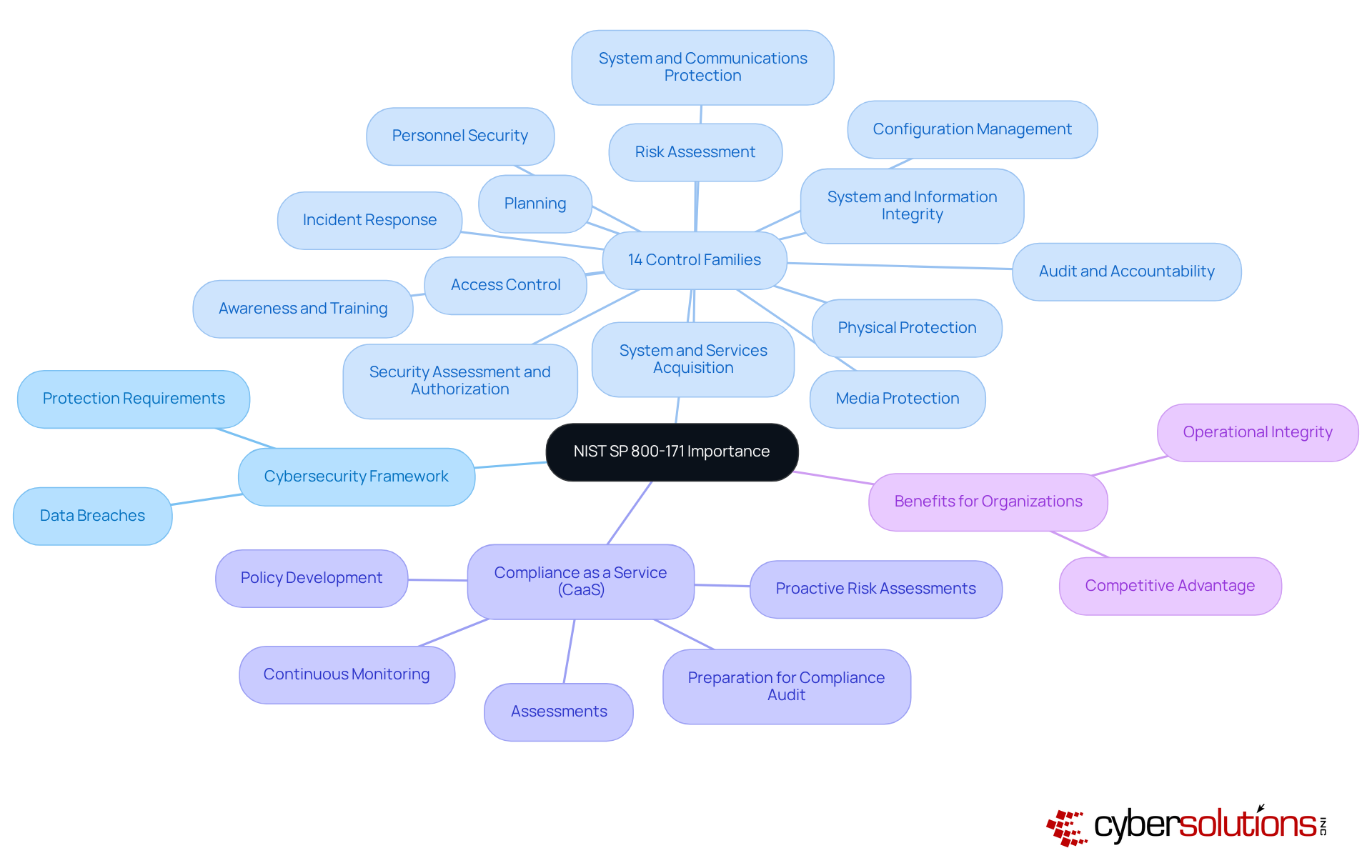
This mindmap starts with the central idea of NIST SP 800-171 and branches out to show its key components and benefits. Each branch represents a different aspect of the framework, helping you see how they connect and why they matter.

Identify NIST SP 800-171 Requirements and Controls

In an era where data breaches can cripple healthcare organizations, understanding NIST SP 800-171 is not just important - it's imperative for safeguarding sensitive information. This framework includes 14 categories of security requirements, each outlining specific measures that entities must adopt to protect Controlled Unclassified Information (CUI). These families encompass:

  • Access Control
  • Awareness and Training
  • Audit and Accountability
  • among others.

To effectively identify the requirements pertinent to your organization, start by assessing the types of CUI you manage and the associated risks. You need to evaluate each measure's importance and how thoroughly you need to implement it to boost your compliance efforts. Employing verification checklists can assist in ensuring that all required measures are considered.

Staggeringly, 91% of organizations have failed to fully implement the necessary controls, with an average compliance rate of only 39%. This highlights the pressing need for a comprehensive evaluation and proactive handling of CUI risks. Without a proactive approach, organizations risk severe data breaches and regulatory penalties, leaving them exposed to significant risks that extend beyond financial loss.

The central node represents the NIST SP 800-171 framework, while the branches show the different categories of security requirements. Each category is crucial for protecting sensitive information, and the sub-branches can detail specific actions or measures needed for compliance.

Conduct a Gap Analysis for Compliance Readiness

In an era where cyber threats loom large, healthcare organizations must prioritize robust cybersecurity measures to safeguard sensitive information. Conducting a gap analysis is essential for aligning your organization's security practices with the NIST 800-171 compliance audit requirements. Begin by thoroughly documenting your current measures and processes related to the protection of Controlled Unclassified Information (CUI).

How can you ensure your organization is truly secure? Evaluate each control against the NIST standards to pinpoint any deficiencies. This assessment can be achieved through:

  1. Interviews with key personnel
  2. Comprehensive documentation reviews
  3. The application of specialized assessment tools

The results from this gap analysis will not only emphasize areas requiring urgent enhancement but also direct the creation of your Plan of Action and Milestones (POA&M) for attaining NIST 800-171 compliance audit conformity. By taking these proactive steps, your organization not only meets compliance but also fortifies its defenses against evolving cyber threats.
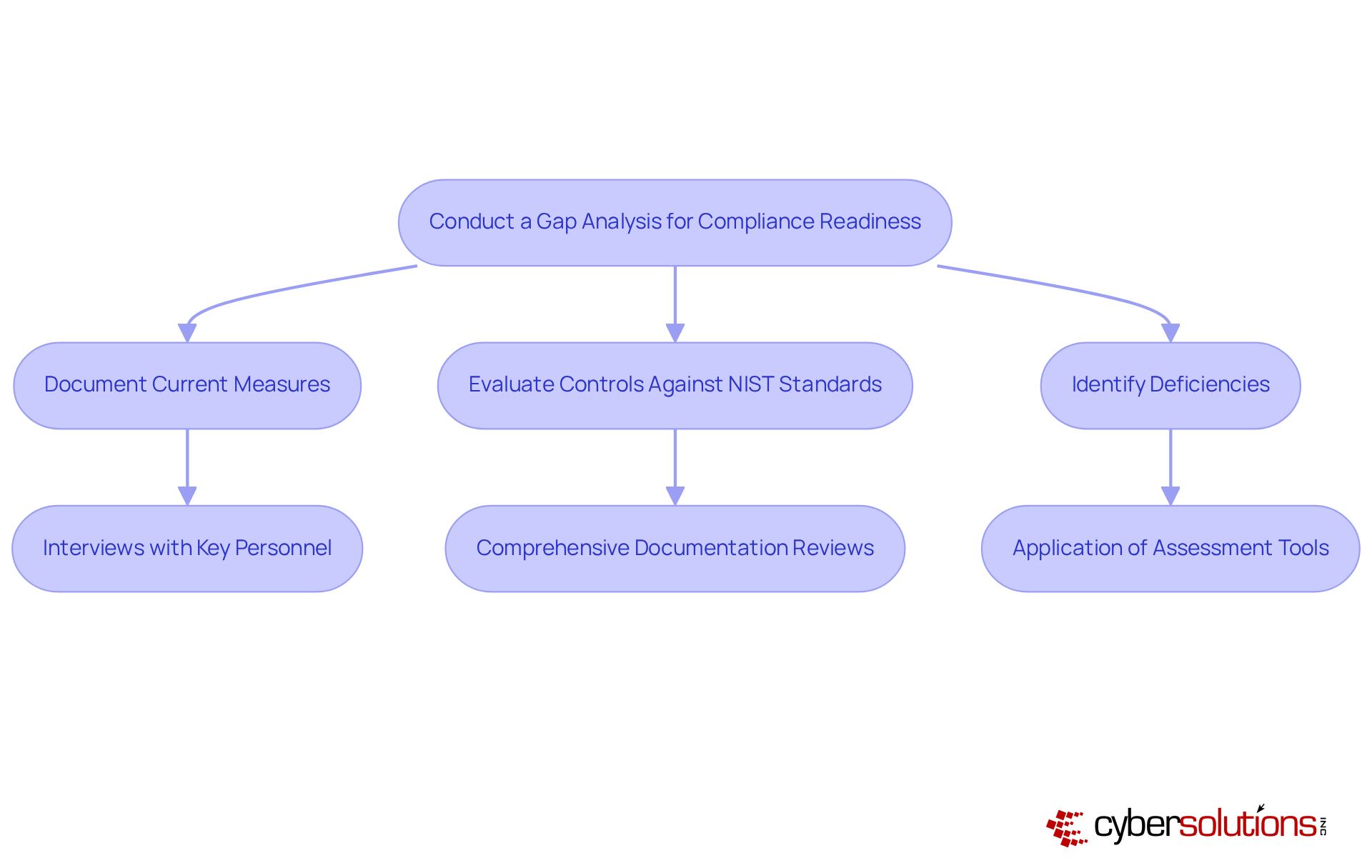
This flowchart outlines the steps to conduct a gap analysis for compliance. Start at the top and follow the arrows to see how each step leads to the next, helping your organization identify and address security gaps.

Implement Changes to Achieve Compliance

In an era where cybersecurity threats loom large, healthcare organizations must act decisively to safeguard their operations. After recognizing regulatory gaps, the next step is to implement the necessary changes effectively. Start by prioritizing measures based on the outcomes of your risk evaluation and the specific needs of your organization. Develop a comprehensive implementation plan that outlines the required actions, assigns responsibilities, and sets timelines for completion. This process might include:

  • Updating policies
  • Enhancing technical measures like multi-factor authentication
  • Providing specialized training for staff to understand their compliance responsibilities

Keep a close eye on all changes and make sure you have a solid record of your compliance efforts.

Frequently reassess and modify your implementation plan to respond to changing threats and regulatory demands, particularly considering GSA's revised guidance, which highlights the significance of cybersecurity adherence. With the U.S. Department of Justice reporting $6.8 billion in settlements related to cybersecurity compliance in fiscal year 2025, the financial risks of noncompliance are significant. By learning from entities that have successfully attained a NIST 800 171 compliance audit, you can better navigate the complexities of the regulatory landscape and ensure your entity remains resilient and compliant. Additionally, ensuring your systems meet stringent cybersecurity standards is crucial for protecting Controlled Unclassified Information (CUI) and Federal Contract Information (FCI), thereby maintaining eligibility for lucrative government contracts. Cyber Solutions emphasizes a layered approach to cybersecurity, which not only enhances recovery from incidents but also fosters strong partnerships with clients, ensuring they are well-equipped to handle future threats. Ultimately, the ability to adapt and respond to evolving threats will determine the future success of healthcare organizations in a competitive landscape.
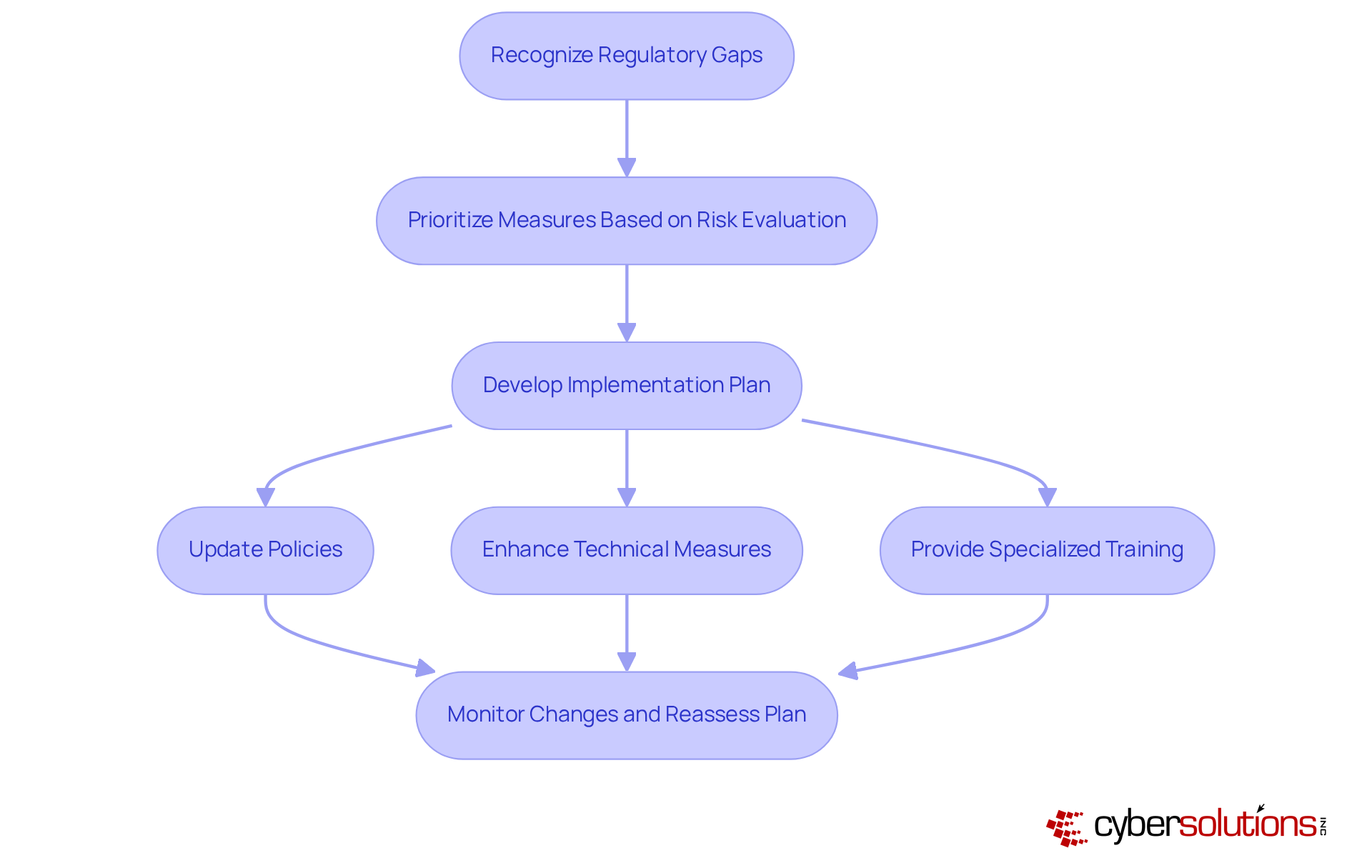
This flowchart outlines the steps healthcare organizations should take to implement changes for compliance. Start at the top with recognizing regulatory gaps, then follow the arrows to see how to prioritize measures, develop a plan, and take specific actions. The final step emphasizes the importance of monitoring and reassessing your plan.

Prepare Documentation for the Compliance Audit

In an era where healthcare organizations face unprecedented cybersecurity threats, the importance of robust documentation cannot be overstated. Documentation is essential for demonstrating adherence during a NIST 800-171 compliance audit.

How can you ensure that your Plan of Action and Milestones (POA&M) effectively identifies gaps and sets a clear timeline for remediation? Moreover, maintaining detailed records of training sessions and incident response strategies is crucial for demonstrating your commitment to a NIST 800-171 compliance audit. Did you know that 60% of regulatory failures stem from inadequate documentation? This statistic underscores the critical need for meticulous record-keeping.

Consistently revising your SSP to indicate alterations in adherence status or organizational structure ensures that it remains a dynamic document that precisely portrays your protective measures and practices. Involving cross-functional teams in the creation of the SSP not only enhances compliance but also strengthens your overall security posture.

The central node represents the main topic of compliance audit documentation. Each branch shows a critical area of focus, and the sub-branches provide specific actions or considerations related to that area. This structure helps visualize how all elements work together to ensure compliance.

Establish Continuous Monitoring and Improvement Practices

In an era where cyber threats loom large, the healthcare sector faces unprecedented challenges in safeguarding sensitive information. NIST 800 171 compliance audit is not just a checkbox; it requires a dedicated continuous monitoring program that adapts to new challenges. This program should routinely assess protective measures and identify emerging vulnerabilities, utilizing automated tools to monitor adherence status effectively.

Cyber Solutions' Compliance as a Service (CaaS) solutions streamline this process by offering risk evaluations, policy creation, and continuous oversight monitoring customized to meet the requirements of a NIST 800 171 compliance audit, as well as other standards such as HIPAA, PCI-DSS, CMMC, SOX, and GDPR. It's crucial for organizations to foster a culture of awareness, where every employee recognizes their vital role in maintaining compliance. Regular updates to policies and procedures are essential to adapt to evolving technologies, threats, and regulatory requirements, thereby ensuring that the entity remains compliant and secure.

By embracing continuous monitoring, organizations can significantly boost their compliance success rates and reinforce their security defenses. This not only enhances compliance but also strengthens overall security posture, as evidenced by organizations that have improved their defenses post-compliance. Without a proactive approach to compliance and security, organizations risk not only their reputation but also the trust of those they serve.
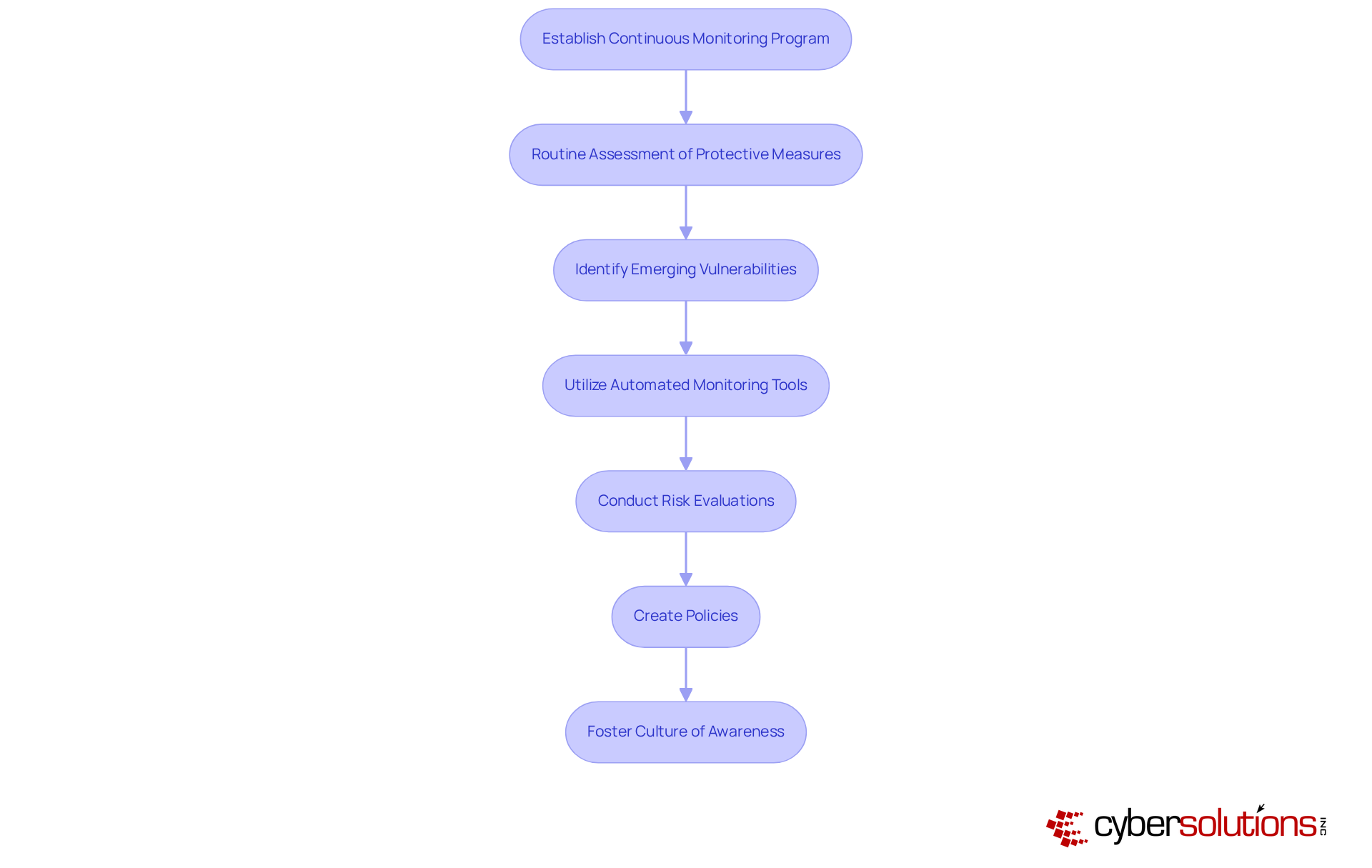
Each box represents a step in the continuous monitoring process. Follow the arrows to see how each step connects and builds upon the previous one, leading to enhanced compliance and security.

Conclusion

In an era where cyber threats loom large, mastering NIST 800-171 compliance is not just a regulatory checkbox; it’s a strategic necessity for organizations handling Controlled Unclassified Information (CUI). By understanding and implementing the framework's requirements, organizations can significantly enhance their cybersecurity posture while unlocking opportunities for federal contracts. Navigating the path to compliance can feel overwhelming, as it demands a solid understanding of control families, careful gap analysis, and proactive changes to your systems.

Throughout the article, key steps have been outlined to navigate the compliance audit effectively. These include:

  1. Understanding the NIST SP 800-171 framework
  2. Identifying specific requirements
  3. Conducting a gap analysis
  4. Implementing changes
  5. Preparing necessary documentation
  6. Establishing continuous monitoring practices

Each step plays a vital role in ensuring that organizations not only meet compliance standards but also bolster their defenses against evolving cyber threats.

Ultimately, taking decisive action towards NIST 800-171 compliance today will not only safeguard your organization but also pave the way for future success in an increasingly challenging cybersecurity landscape. Embracing these practices not only protects sensitive information but also enhances operational integrity and competitiveness in the federal contracting landscape.

Frequently Asked Questions

What is NIST SP 800-171 and why is it important?

NIST SP 800-171 is a cybersecurity framework that establishes protection requirements for safeguarding Controlled Unclassified Information (CUI) within non-federal systems. It is essential for organizations involved in defense contracting as it fortifies security and opens opportunities for federal contracts.

What are the main components of NIST SP 800-171?

NIST SP 800-171 includes 14 categories of security requirements, also known as control families, which outline specific measures organizations must adopt to protect CUI. These categories include Access Control, Awareness and Training, and Audit and Accountability, among others.

How can organizations assess their compliance with NIST SP 800-171?

Organizations can assess their compliance by evaluating the types of CUI they manage and the associated risks. They should use verification checklists to ensure all required measures are considered and determine the importance of each measure for boosting compliance efforts.

What is the current state of compliance among organizations regarding NIST SP 800-171?

Currently, 91% of organizations have failed to fully implement the necessary controls outlined in NIST SP 800-171, with an average compliance rate of only 39%. This indicates a significant gap in compliance efforts and the need for proactive handling of CUI risks.

What is Compliance as a Service (CaaS) and how does it help organizations?

Compliance as a Service (CaaS) provides businesses with end-to-end solutions to meet regulatory requirements, including assessments, policy development, continuous monitoring, and preparation for compliance audits. It is particularly beneficial for small and medium-sized businesses, allowing them to access enterprise-level compliance expertise without the high costs of hiring in-house staff.

What are the benefits of adhering to NIST SP 800-171 standards?

Adhering to NIST SP 800-171 standards not only safeguards sensitive data but also enhances an organization's competitive advantage in the federal contracting arena, as compliance is increasingly viewed as a prerequisite for obtaining government contracts.

List of Sources

  1. Understand NIST SP 800-171 and Its Importance
    • What is NIST SP 800-171? How to stay compliant - Guide - Titania (https://titania.com/resources/guides/nist-800-171)
    • NIST SP 800-171: Controls, Compliance & the DoD Assessment (https://anchore.com/compliance/nist/nist-800-171)
    • NIST Revises SP 800-171 Guidelines for Protecting Sensitive Information (https://nist.gov/news-events/news/2023/05/nist-revises-sp-800-171-guidelines-protecting-sensitive-information)
  2. Identify NIST SP 800-171 Requirements and Controls
    • Cybersecurity Updates: NIST Publishes SP 800-171 Revision 3. What Changed, and What Comes Next? (https://wiley.law/newsletter-Cybersecurity-Updates-NIST-Publishes-SP-800-171-Revision-3-What-Changed-and-What-Comes-Next)
    • Reality Check: Defense Industry’s Implementation of NIST SP 800-171 (https://cybersecurityventures.com/reality-check-defense-industrys-implementation-of-nist-sp-800-171)
  3. Conduct a Gap Analysis for Compliance Readiness
    • The Top 20 Expert Quotes On Cyber Risk and Security (https://surtech.co.za/20-expert-quotes-on-cyber-risk-and-security)
    • 8 Great Cyber Security Quotes From Influencers | Proofpoint US (https://proofpoint.com/us/blog/identity-threat-defense/8-great-cyber-security-quotes-influencers)
    • 41 Cybersecurity Quotes to Protect Your Digital Life (https://acecloudhosting.com/blog/cybersecurity-quotes)
    • Top 20 Cybersecurity Quotes You Need to Hear (https://secureworld.io/industry-news/top-20-cybersecurity-quotes)
  4. Implement Changes to Achieve Compliance
    • A Quiet Policy Shift Just Redefined Entire Federal Cybersecurity Landscape (https://forbes.com/sites/emilsayegh/2026/02/07/a-quiet-policy-shift-just-redefined-entire-federal-cybersecurity-landscape)
    • NIST Revises SP 800-171 Guidelines for Protecting Sensitive Information (https://nist.gov/news-events/news/2023/05/nist-revises-sp-800-171-guidelines-protecting-sensitive-information)
    • NIST 800-171 in 2026: The Foundation of CMMC Compliance - NIST SP 800 171 Compliance Experts - On Call Compliance Solutions (https://nist800171compliance.com/nist-800-171-in-2026-the-foundation-of-cmmc-compliance)
    • Rev. 3 is coming – Start preparing for the next CMMC requirement | Federal News Network (https://federalnewsnetwork.com/commentary/2026/04/rev-3-is-coming-start-preparing-for-the-next-cmmc-requirement)
    • Reality Check: Defense Industry’s Implementation of NIST SP 800-171 (https://cybersecurityventures.com/reality-check-defense-industrys-implementation-of-nist-sp-800-171)
  5. Prepare Documentation for the Compliance Audit
    • CMMC SSP Guide: System Security Plan for NIST 800-171 - BD Emerson (https://bdemerson.com/article/guide-to-system-security-plans-ssp-for-nist-sp-800-171-and-cmmc)
    • 60% of Compliance Failures Start with Poor Documentation (https://qualitysystemsnow.com.au/latestnews/b/60-of-compliance-failures-start-with-poor-documentation)
    • How to Write an Effective System Security Plan (SSP): A Strategic Approach to CMMC Compliance (https://kiteworks.com/cmmc-compliance/system-security-plan-ssp-best-practices)
    • Preparing for a CMMC Audit: The System Security Plan | Insights | Greenberg Traurig LLP (https://gtlaw.com/en/insights/2025/10/preparing-for-a-cmmc-audit-the-system-security-plan)
    • Building an Effective CMMC/NIST SP 800-171 System Security Plan (SSP) (https://madsecurity.com/madsecurity-blog/cmmc-nist-800-171-ssp-guide)
  6. Establish Continuous Monitoring and Improvement Practices
    • The Top 20 Expert Quotes On Cyber Risk and Security (https://surtech.co.za/20-expert-quotes-on-cyber-risk-and-security)
    • How to Meet GSA CUI Requirements | NIST 800-171 Guide (2026) (https://testpros.com/compliance/gsa-cui-compliance-guide-nist-requirements)
    • 25+ Best Cybersecurity Quotes (https://atera.com/blog/best-cybersecurity-quotes)
    • 41 Cybersecurity Quotes to Protect Your Digital Life (https://acecloudhosting.com/blog/cybersecurity-quotes)
Recent Posts
Master NIST 800-171 Compliance Audit in 6 Essential Steps
Master Managed Services Projects: Key Strategies for C-Suite Leaders
Master FTC MFA Requirements: A Step-by-Step Guide for Leaders
Enhance Password Compliance with These 4 Essential Strategies
10 Key Factors Influencing Network Firewall Pricing for Executives
4 Best Practices for Effective Firewall Testing and Security
Master the CMMC Assessment Guide Level 2 for Effective Compliance
Why Local IT Services Providers Are Key to Business Success
10 Key Benefits of Partnering with IT MSPs for Your Business
Why Healthcare CFOs Should Choose an Outsourced IT Provider
4 Best Practices for CFOs in AI Data Security Compliance
What Is Defense in Depth? Understanding Its Importance for Healthcare CFOs
Essential Corporate Data Backup Practices for Healthcare CFOs
10 Benefits of Outsourced IT Management for Healthcare CFOs
Master Restricting Access: Best Practices for CFOs on OAuth Management
Master Living Off the Land: A CFO's Guide to Sustainability
Master Digital Security Controls for Healthcare CFOs
10 Essential IT Services for Healthcare CFOs to Enhance Security
Master Critical Security Controls for Healthcare CFOs
Best Practices for Managed Cyber Security in Healthcare CFOs
What MSPs Stand For and Why They Matter for Healthcare CFOs
Choosing the Right Managed Cybersecurity Services Provider for CFOs
What Is CMMC Compliance and Why It Matters for Healthcare CFOs
How to Reduce the Risk of Cyber Attack: 4 Essential Steps for CFOs
What Compliance Means: Key Concepts for Healthcare CFOs
5 Best Practices for Achieving CMMC 1.0 Compliance Success
Understanding Cybersecurity as a Service for Healthcare CFOs
Why MSPs in Technology Are Essential for Healthcare CFOs
10 Benefits of Data Security as a Service for Healthcare CFOs
Evaluate 4 Leading Disaster Recovery Software Vendors for Your Business
What IT Services Can Be Outsourced for Business Success?
Enhance Cyber Resilience with Effective External Vulnerability Scanning
Cyber Security Outsourcing Companies vs. In-House Solutions: Key Insights
4 Steps to Optimize Business IT Support for Healthcare CFOs
Understanding Managed Service Provider Costs: Key Factors and Models
Why Fully Managed Services Are Essential for Cybersecurity Success
Understanding the Average Cost of Cybersecurity Services for Leaders
Master Managing Firewalls: Essential Steps for C-Suite Leaders
Master HIPAA Compliant Firewall Requirements for Your Organization
How to Manage Company Laptops: A Step-by-Step Guide for Leaders
6 Best Practices for a Successful Managed Services Strategy
4 Best Practices for Choosing Your NIST Compliance Tool
10 Essential CMMC 2.0 Controls List for Compliance Success
Best Practices for Effective Data Backup Support in Your Organization
4 Essential Cybersecurity Compliance Solutions for C-Suite Leaders
Master Data Backup and Recovery: Best Practices for C-Suite Leaders
Master Two-Factor Authentication for Business: Best Practices Unveiled
Best Practices for Backing Up Your Data Effectively
Enhance Security with Best Practices for Secure Web Browsing
Master 365 Services: Best Practices for Compliance and Efficiency
4 Strong Password Guidelines for C-Suite Leaders to Enhance Security
Essential Backup Information for Compliance and Security Strategies
Business IT Providers vs. In-House IT: Key Comparison for Leaders
Compare Top Two Factor Authentication Service Providers for Your Business
Master HIPAA Compliant Infrastructure: Key Steps for Executives
What LOTL Stands for in Cybersecurity and Its Implications
4 Best Practices for Your Cyber Attack Incident Response Plan
4 Best Practices for Effective Information Technology Spending
Understanding Cyber Security Exercises: Importance and Benefits
5 Best Practices for Optimizing Your Hybrid Work Setting
Understanding Office 365 Meaning: Key Features and Implications
What Office 365 Means for Cyber Solutions Inc.: A Case Study on Transformation
Master Defence in Depth Cyber Security: 5 Steps for C-Suite Leaders
Boost Security Awareness Among Employees with Proven Best Practices
Implement the NIST Incident Response Playbook in 4 Simple Steps
What is a Managed IT Support Service Provider and Why It Matters
Why Data Backup is Important for Business Resilience and Growth
Best Practices for Effective Managed IT Security Solutions
4 Best Practices for Backup & Disaster Recovery Services Success
Best Practices for AI and Machine Learning in Cyber Security
Why USB Malware Threats Matter for C-Suite Leaders Today
What Are Vulnerability Scanners and Why They Matter for Your Business
Create a Disaster Recovery Plan Template for Your Small Business
Master USB Malware: Detect, Prevent, and Educate Your Team
Implementing a Cloud First Approach: A Step-by-Step Guide for Leaders
Compare MS Office or Office 365: Features, Pricing, and Security
Master Dark Web Security Monitoring: Key Practices for C-Suite Leaders
Master CMMC 2.0 Compliance Requirements in 5 Actionable Steps
Master IT Security Assessments: Key Practices for C-Suite Leaders
Why Companies Should Restrict Internet Access: Key Security and Compliance Reasons
10 Essential CMMC Controls List for Compliance Success
Master KPIs for IT: Drive Success with Effective Strategies
9 Essential CMMC Level 3 Controls for C-Suite Leaders
10 Essential CMMC 2.0 Controls for Cybersecurity Success
What Is a Virtual CIO? Understanding Its Role and Benefits for Leaders
Understanding IT Managed Services Contracts: Key Insights for C-Suite Leaders
4 Best Practices to Prevent Attacks on Firewall Security
10 Managed Services Provider Best Practices for C-Suite Leaders
Master Proactive Information Management for Enhanced Security and Efficiency
Enhance Organizational Security: Align Strategies and Manage Risks
Understanding IT Support Cost Per Hour: Key Factors for C-Suite Leaders
Master Cyber Drilling: Best Practices for C-Suite Leaders
Understanding All-Inclusive IT Support: Key Benefits for Leaders
Why All-Inclusive IT Support is Essential for Cybersecurity Success
4 Best Practices for Securing Network Printers Effectively
Understanding TOAD Phishing: A Comparison with Traditional Methods
3 Essential Practices for Printer Network Security in Your Organization
Secure Network Printer: Best Practices for C-Suite Leaders
Enhance Network Printer Security with Proven Best Practices
4 Best Practices for Effective Local IT Solutions Implementation