Introduction
In an industry where precision and compliance are paramount, the significance of cybersecurity in healthcare cannot be overstated. Healthcare CFOs face the daunting task of optimizing IT support to enhance operational efficiency while safeguarding sensitive patient information. This guide outlines essential steps to:
- Identify unique IT needs
- Evaluate potential providers
- Assess cost-effectiveness
Providing CFOs with a roadmap to align technology with organizational goals. As the digital landscape evolves, healthcare leaders must consider how their IT strategies can not only comply with regulations but also adapt to the rapid pace of technological change.
How can they ensure that these strategies effectively address the unique challenges presented by cybersecurity threats?
Identify Your Unique IT Support Needs in Healthcare
Recognizing distinct IT requirements is crucial for healthcare organizations to ensure efficiency and compliance. The following key steps will guide your assessment:
- Conduct a Needs Assessment: Engage with various departments—clinical, administrative, and IT—to gather insights on their specific IT challenges and requirements. This collaborative approach guarantees a thorough understanding of the organization's needs.
- Evaluate Compliance Requirements: Recognize the regulations, particularly standards like HIPAA, which mandate specific IT practices. Understanding these requirements is essential for compliance and safeguarding patient information. Implementing security measures can significantly enhance your compliance efforts by ensuring that only approved applications operate on your systems, thereby reducing the risk of unauthorized access and data breaches. Features such as continuous monitoring of application activity and centralized management of allowlists further strengthen your security posture.
- Analyze Current Infrastructure: Review existing IT systems to identify gaps in support, security, and functionality. This analysis helps pinpoint areas that require immediate attention and improvement. Continuous monitoring of application activity is vital to detect any attempts to run unauthorized software, ensuring immediate identification and blocking of threats.
- Prioritize Requirements: Rank the identified requirements based on their urgency and potential impact on patient care and operational efficiency. This prioritization allows for informed and effective decision-making. By incorporating comprehensive strategies, including proactive risk management and audit assistance, medical organizations can better safeguard patient health information (PHI) and ensure adherence to standards.
A comprehensive requirements evaluation not only aligns IT support with operational objectives but also enhances the overall effectiveness of healthcare delivery. As Simon Lorenz, co-founder of Klara, emphasizes, effective communication and understanding of organizational requirements are essential for successful IT implementation in the medical field. Furthermore, nearly 50% of all medication errors occur when a medication is prescribed or ordered, underscoring the critical need for robust IT systems that can help mitigate such risks. By following these steps, CFOs in the medical sector can ensure their IT support is efficient, compliant, and tailored to their unique operational challenges.

Evaluate IT Support Providers for Healthcare Expertise
In today's digital landscape, the significance of robust cybersecurity in healthcare cannot be overstated. Evaluating IT support providers is critical, and organizations must consider the following criteria:
- Industry Experience: Seek providers with a proven track record in healthcare IT support. Look for case studies or references from similar organizations to assess their expertise. For instance, a provider may have experience mobilizing a specialized incident response team within 24 hours to mitigate risks and ensure continuity of care.
- Compliance Knowledge: Ensure the provider is knowledgeable about healthcare regulations. Their ability to showcase compliance capabilities is vital, as the medical sector is heavily regulated and non-compliance can result in significant penalties.
- Service Offerings: Evaluate if the provider delivers a complete variety of services, including cybersecurity, data management, and round-the-clock assistance. This is crucial as 52 percent of medical organizations are investing in technology to safeguard sensitive information. Providers should also have tools to detect anomalies and potential vulnerabilities, ensuring proactive threat prevention.
- Response Time and Assistance: Assess their service level agreements (SLAs) to confirm they can fulfill your organization's requirements for prompt help. Quick response times are vital in healthcare settings, where delays can impact patient care. Cyber Solutions' around-the-clock efforts during a ransomware incident exemplify the importance of timely support.
- Scalability: Choose a provider that can grow with your organization, adapting to changing needs. The medical sector produces about 30 percent of the globe’s data, and with an annual growth rate of 36 percent anticipated, scalability is crucial for effectively handling rising data demands.
By thoroughly assessing potential providers of IT support against these criteria, healthcare organizations can ensure they collaborate with firms that grasp the complexities of healthcare IT and can provide customized solutions to enhance operational efficiency and compliance.

Assess Cost-Effectiveness and Budget Alignment
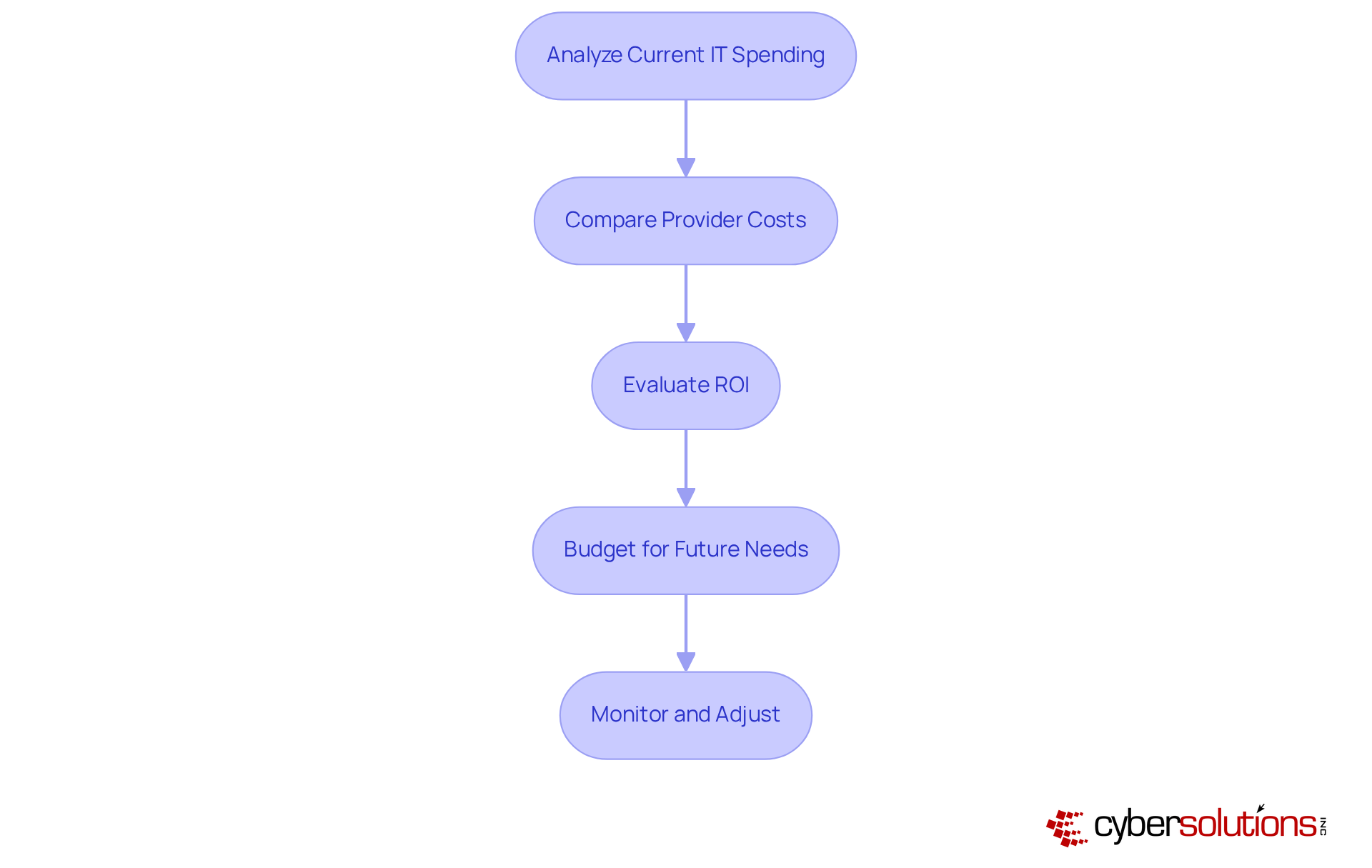
To ensure budget alignment and assess cost-effectiveness in healthcare, it is essential to follow these structured steps:
- Start: Begin with a comprehensive review of your existing IT budget. This step is critical for identifying areas of overspending or inefficiencies. Notably, nearly 80% of hospitals and health systems have recently increased their IT and software spending, underscoring the necessity for vigilant financial oversight.
- Compare Provider Costs: Next, gather quotes from various providers to evaluate their pricing structures. Be vigilant for potential hidden fees that may inflate overall costs. Understanding the costs can establish a benchmark for your budget.
- Evaluate ROI: It is vital to assess the potential return on investment (ROI) from IT support. Business IT support through improved IT services can significantly reduce downtime and enhance compliance, both of which are crucial for maintaining and adhering to regulatory standards.
- Plan Ahead: Proactively anticipate future IT requirements, including necessary upgrades and expansions. This forward-thinking budgeting approach ensures that your financial plan remains flexible and responsive to evolving technological demands and challenges.
- Monitor and Adjust: Finally, regularly review IT spending against performance metrics. This ongoing analysis guarantees alignment with your financial goals and allows for timely adjustments, ensuring that your IT investments achieve the desired outcomes.
By conducting a thorough cost assessment, healthcare organizations can make informed decisions that enhance both operational efficiency and financial health.
Establish Communication and Support Protocols
To establish communication and support protocols, it is imperative to implement the following steps:
- Define Communication Channels: Clearly outline how staff should communicate IT issues—such as through tickets or direct calls—and ensure that everyone is aware of these channels.
- Set Response Expectations: Establish clear expectations for response times based on the severity of the issue, ensuring that urgent matters are prioritized.
- Regular Training Sessions: Conduct training for staff on how to effectively communicate IT needs and utilize available assistance resources.
- Feedback Mechanism: Establish a system to collect input from users of IT assistance and identify areas for enhancement.
- Documentation Practices: Maintain clear records of protocols and procedures to guarantee consistency and accountability.
By establishing robust communication and support protocols, you can significantly enhance the efficiency of your IT support and ensure that staff can effectively address their needs.

Conclusion
Optimizing IT support for healthcare CFOs is not just beneficial; it is essential for enhancing operational efficiency, ensuring compliance, and ultimately improving patient care. Understanding and addressing the unique IT needs of healthcare organizations allows for the creation of a robust framework that meets regulatory standards while supporting the dynamic environment of healthcare.
Key strategies encompass:
- Conducting thorough needs assessments
- Evaluating potential IT support providers for industry expertise and compliance knowledge
- Ensuring cost-effectiveness through diligent budgeting practices
Moreover, establishing clear communication and support protocols significantly enhances the effectiveness of IT support, empowering healthcare staff to address technology challenges swiftly and efficiently.
In conclusion, integrating strategic IT support transcends mere technical necessity; it is a critical component of healthcare management that directly influences patient safety and organizational success. By prioritizing these steps, CFOs can guide their organizations toward a future where technology not only enhances operational capabilities but also improves patient outcomes. Implementing these best practices will safeguard sensitive information and foster a culture of continuous improvement in healthcare IT.
Frequently Asked Questions
Why is it important for healthcare organizations to identify their unique IT support needs?
Identifying unique IT support needs is crucial for healthcare organizations to ensure optimal operational efficiency and compliance with regulatory standards.
What is the first step in assessing IT support needs in healthcare?
The first step is to conduct a needs assessment by engaging with various departments—clinical, administrative, and IT—to gather insights on their specific IT challenges and requirements.
How do compliance requirements impact IT support in healthcare?
Compliance requirements, particularly standards like HIPAA, mandate specific IT practices that are essential for maintaining compliance and safeguarding patient information.
What is application allowlisting, and how does it enhance compliance efforts?
Application allowlisting ensures that only approved applications operate on IT systems, reducing the risk of unauthorized access and data breaches. It includes features like continuous monitoring of application activity and centralized management of allowlists to strengthen security.
What should be analyzed when evaluating current IT infrastructure?
Existing IT systems should be reviewed to identify gaps in support, security, and functionality, helping to pinpoint areas that require immediate attention and improvement.
How should healthcare organizations prioritize their IT requirements?
Organizations should rank identified requirements based on their urgency and potential impact on patient care and operational efficiency, allowing for strategic resource allocation and effective decision-making.
What role does cybersecurity play in healthcare IT support?
Comprehensive cybersecurity solutions, including proactive risk management and audit assistance, are essential for safeguarding patient health information (PHI) and ensuring adherence to HIPAA standards.
What is the overall benefit of conducting a thorough IT support needs assessment in healthcare?
A comprehensive evaluation aligns IT support with operational objectives and enhances the quality of patient care, helping to mitigate risks such as medication errors.
List of Sources
- Identify Your Unique IT Support Needs in Healthcare
- performancehealthus.com (https://performancehealthus.com/blog/top-10-health-it-challenges-in-2025)
- klara.com (https://klara.com/blog/12-best-quotes-on-the-future-of-healthcare)
- informationweek.com (https://informationweek.com/it-sectors/healthcare)
- tateeda.com (https://tateeda.com/blog/healthcare-technology-statistics-and-market-share)
- dashboard.healthit.gov (https://dashboard.healthit.gov/quickstats/quickstats.php)
- Evaluate IT Support Providers for Healthcare Expertise
- kelsercorp.com (https://kelsercorp.com/blog/it-healthcare-trends-2025)
- ero.health (https://ero.health/news/why-more-healthcare-organizations-are-turning-to-health-it-managed-services-in-2025)
- radixweb.com (https://radixweb.com/blog/healthcare-it-statistics)
- dashealth.com (https://dashealth.com/blog/top-healthcare-it-challenges-in-2025-das-health)
- finance.yahoo.com (https://finance.yahoo.com/news/north-american-healthcare-market-forecast-083200228.html)
- Assess Cost-Effectiveness and Budget Alignment
- medcitynews.com (https://medcitynews.com/?p=132802)
- medixteam.com (https://medixteam.com/blog/top-6-costs-to-include-in-your-healthcare-it-budget)
- healthcareitnews.com (https://healthcareitnews.com/news/hospital-it-purchasers-resource-strain-and-optimal-roi-are-top-concerns)
- deloitte.com (https://deloitte.com/us/en/insights/industry/health-care/life-sciences-and-health-care-industry-outlooks/2025-global-health-care-executive-outlook.html)
- bbrown.com (https://bbrown.com/us/insight/2025-healthcare-cost-outlook-drivers-trend-insights)
- Establish Communication and Support Protocols
- tateeda.com (https://tateeda.com/blog/healthcare-technology-statistics-and-market-share)
- asimily.com (https://asimily.com/blog/healthcare-cybersecurity-key-statistics-2024)
- 38 Must-Know Healthcare Cybersecurity Stats (https://varonis.com/blog/healthcare-cybersecurity-statistics)
- sequencehealth.com (https://sequencehealth.com/blog/best-practices-for-improving-response-time-in-health-call-centers)