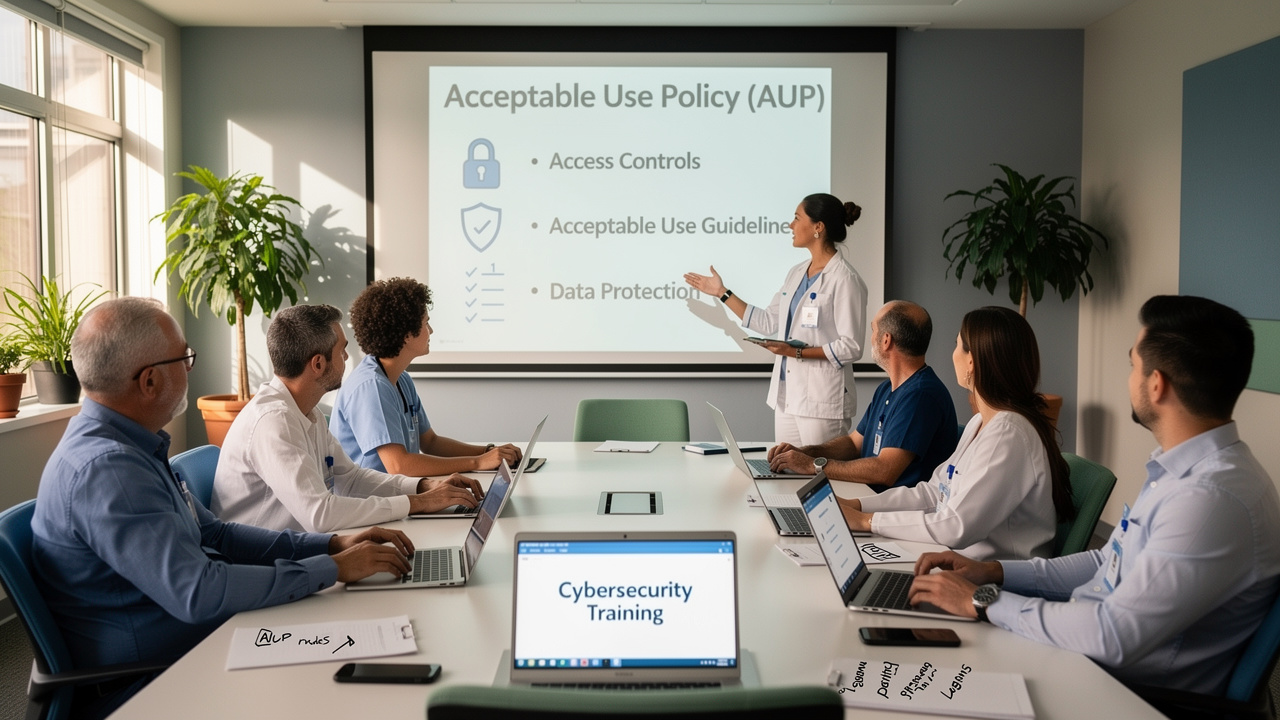
Introduction
In today's digital landscape, the absence of a robust Acceptable Use Policy (AUP) can expose healthcare organizations to significant cybersecurity threats. A well-defined AUP not only delineates acceptable technology use but also fosters a culture of accountability among employees. Without an AUP, organizations risk:
- Data breaches
- Legal penalties
- Loss of trust from patients and clients
Leaders must ask themselves: What are the potential consequences of neglecting to implement an AUP? By implementing a robust AUP, leaders can empower their teams to make informed decisions and protect sensitive information.
Define Acceptable Use Policy (AUP)
In an era where cyber threats loom large, the need for a robust acceptable use policy cybersecurity in healthcare is more critical than ever. An AUP is a formal document that outlines the rules for using technology resources, including computers, networks, and internet access. It clearly defines what actions are permissible and impermissible, ensuring users understand their responsibilities when utilizing company assets. A well-crafted AUP protects against misuse and unauthorized access, safeguarding your organization's digital infrastructure and sensitive data. By setting clear expectations, the acceptable use policy cybersecurity fosters a culture of accountability and responsible tech use among staff, which is essential in today’s cybersecurity landscape.
Key components of an effective AUP include:
- Access controls
- Data classification
- Protocols for remote access
- Guidelines for social media use
Regular reviews and updates of the acceptable use policy cybersecurity are critical to ensure its effectiveness against evolving cyber threats. Regular training sessions and workshops should be interactive and tailored to the actual work environment, reinforcing the importance of compliance and minimizing risks associated with improper technology use.
You might be surprised at just how crucial an AUP is; it not only protects your organization from legal issues but also demonstrates to regulators that your staff knows the rules. As remote work becomes more common, clear guidelines on acceptable conduct for remote personnel are essential, addressing matters such as personal device usage and secure internet connections. Incorporating real-world examples of incidents into training can help employees understand the consequences of not following the AUP, emphasizing the importance of adherence to these policies. Ultimately, neglecting to implement a comprehensive acceptable use policy cybersecurity could expose your organization to significant risks that could have been easily mitigated.

Contextualize AUP in Cybersecurity
In an era where cyber threats loom large, an acceptable use policy (AUP) cybersecurity serves as a critical defense mechanism for organizations, particularly in healthcare. AUPs are essential in sectors like healthcare and finance, where compliance with regulations such as HIPAA and PCI-DSS is not just beneficial but mandatory. By clearly outlining acceptable behaviors, AUPs help organizations mitigate risks associated with data breaches, malware infections, and other security incidents. Without a clear AUP, organizations are left vulnerable to the chaos of cyber threats.
For example, over 90% of cyberattacks in healthcare are phishing scams. How many of your employees are aware of the risks associated with their online behavior? A well-crafted AUP significantly reduces the likelihood of human error. Since human error accounts for 73% of policy violations, establishing clear guidelines for technology usage and data handling is crucial. This proactive approach fosters a security-aware culture, empowering employees to spot potential threats and understand their role in protecting sensitive information.
Furthermore, entities with thorough AUPs face 67% fewer incidents related to threats compared to those without formal policies. This statistic highlights that acceptable use policy cybersecurity is essential not just for compliance but as a strategic move to strengthen overall cybersecurity. Regular reviews and updates of AUPs are vital to adapt to evolving threats and ensure ongoing compliance with regulatory standards.
Incorporating proactive defense strategies, such as application allowlisting, further strengthens AUPs by preventing unauthorized software from executing. This layered approach to cybersecurity, combined with effective incident response strategies, ensures that organizations are better equipped to handle potential threats and maintain a secure environment.
Ultimately, the implementation of AUPs not only fortifies defenses but also transforms employees into vigilant guardians of sensitive information.

Identify Key Components of an AUP
In an era where cyber threats loom large, a robust acceptable use policy cybersecurity is not merely a recommendation; it's a necessity for healthcare organizations. An effective AUP should encompass several key components:
- Scope and Applicability: Clearly define who the policy applies to, including employees, contractors, and third-party vendors.
- Acceptable Use Guidelines: Outline permissible activities, such as accessing work-related websites and using company email for professional communication. As Emily Schwenke observes, AUPs outline acceptable and unacceptable behaviors concerning company technology and assets to ensure safety and productivity.
- Prohibited Activities: Specify actions that are not allowed, such as downloading unauthorized software, accessing inappropriate content, or using company resources for personal gain. Violating the acceptable use policy cybersecurity can lead to consequences such as warnings, termination of employment, and in serious instances, law enforcement involvement, as highlighted by Joey Rubin.
- Protection Measures: Include guidelines for password management, device safety, and data safeguarding practices to protect sensitive information. AUPs should clearly define password management, system access, and acceptable use of corporate communications.
- Monitoring and Enforcement: Describe how compliance will be monitored and the consequences for violations, which may include disciplinary actions ranging from warnings to termination. Monitoring user activity for excessive personal use and inappropriate content is necessary to maintain compliance.
- Review and Revision: Establish a process for regularly reviewing and updating the AUP to reflect changes in technology and emerging threats. Regular updates to the acceptable use policy cybersecurity are essential for protecting company assets and data from evolving cyber threats.
Ultimately, a well-crafted AUP is the cornerstone of a secure and compliant healthcare environment, safeguarding both assets and reputation.

Examine Consequences of Not Having an AUP
In today's digital landscape, neglecting an acceptable use policy cybersecurity can expose organizations to severe threats. Without clear guidelines, employees may engage in risky behaviors that put Cyber Solutions at risk, leading to data breaches and malware attacks. The financial consequences of data breaches are staggering. In fact, the average cost is projected to reach $4.44 million globally by 2026. Organizations that do not have an acceptable use policy cybersecurity may struggle to demonstrate compliance with industry regulations, further exacerbating their financial liabilities.
Without an AUP, organizations struggle to navigate complex regulations, often feeling lost and vulnerable. This lack of direction can lead to costly breaches and legal repercussions, putting the organization at significant risk. Moreover, when expectations are unclear, productivity often takes a hit as employees may misuse technology or get sidetracked by non-work activities, ultimately affecting operational efficiency.
Reputational harm is another vital issue; incidents can diminish trust among clients and stakeholders, resulting in long-term repercussions for the entity. For instance, a multinational corporation faced substantial losses due to a staff member's failure to recognize a phishing attempt, underscoring the dangers associated with inadequate policies. In 2024, the healthcare sector alone experienced an average breach cost of $11.2 million, highlighting the financial stakes involved.
Implementing application allowlisting as part of your cybersecurity strategy can significantly reduce these risks by ensuring that only approved applications are allowed to run, thereby preventing unauthorized software from executing. This proactive measure not only reduces vulnerabilities but also assists entities in meeting stringent compliance requirements, including those established by HIPAA, PCI-DSS, and GDPR. Features such as continuous monitoring of application activity and centralized management of allowlists improve protection and operational efficiency.
In summary, the implications of not having an acceptable use policy cybersecurity are extensive. Establishing a robust acceptable use policy cybersecurity is not merely a regulatory requirement; it’s a critical step in safeguarding your organization’s future. By doing so, organizations can protect their assets, ensure operational integrity, and foster a culture of accountability and security awareness among employees.

Conclusion
In an era where cyber threats loom large, a comprehensive acceptable use policy (AUP) is not just beneficial; it's essential for healthcare organizations. By establishing clear guidelines for technology usage, an AUP fosters a culture of accountability and minimizes risks associated with data breaches and other security incidents. This proactive approach protects sensitive information and ensures compliance with critical regulations. In doing so, it safeguards organizational integrity.
Throughout this discussion, we've highlighted key components of an effective AUP, including:
- Access controls
- Acceptable use guidelines
- Monitoring practices
Regular reviews and updates to the policy are crucial, as they ensure that organizations remain prepared against evolving cyber threats. Statistics reveal that organizations with a well-defined AUP experience significantly fewer security incidents, underscoring its strategic value in enhancing overall cybersecurity.
The implications of neglecting an acceptable use policy are profound. Without a clear AUP, organizations face increased vulnerability to cyber threats, leading to potential data breaches, legal repercussions, and reputational damage. Failing to implement an AUP can lead to devastating data breaches and loss of trust. As organizations tackle the challenges of cybersecurity, implementing a robust AUP is not merely a regulatory obligation but a critical step towards securing digital assets and fostering a vigilant workforce. Leaders must prioritize the development and enforcement of these policies to ensure a resilient and compliant operational environment. By prioritizing a robust AUP, leaders not only protect their organizations but also cultivate a culture of cybersecurity awareness that is vital in today's digital landscape.
Frequently Asked Questions
What is an Acceptable Use Policy (AUP)?
An Acceptable Use Policy (AUP) is a formal document that outlines the rules for using technology resources, including computers, networks, and internet access. It defines permissible and impermissible actions, ensuring users understand their responsibilities when utilizing company assets.
Why is an AUP important in cybersecurity, especially in healthcare?
An AUP is crucial in cybersecurity as it protects against misuse and unauthorized access, safeguarding an organization's digital infrastructure and sensitive data. It fosters a culture of accountability and responsible tech use among staff, which is essential in today's cybersecurity landscape.
What are the key components of an effective AUP?
Key components of an effective AUP include access controls, data classification, protocols for remote access, and guidelines for social media use.
How often should an AUP be reviewed and updated?
Regular reviews and updates of the AUP are critical to ensure its effectiveness against evolving cyber threats.
What role does training play in the implementation of an AUP?
Regular training sessions and workshops should be interactive and tailored to the actual work environment, reinforcing the importance of compliance and minimizing risks associated with improper technology use.
How does an AUP help organizations avoid legal issues?
By clearly outlining acceptable conduct and ensuring staff understand the rules, an AUP protects organizations from legal issues and demonstrates compliance to regulators.
What specific issues should an AUP address for remote personnel?
An AUP should provide clear guidelines on acceptable conduct for remote personnel, addressing matters such as personal device usage and secure internet connections.
Why is it beneficial to incorporate real-world examples into AUP training?
Incorporating real-world examples of incidents into training helps employees understand the consequences of not following the AUP, emphasizing the importance of adherence to these policies.
What risks could an organization face by neglecting to implement an AUP?
Neglecting to implement a comprehensive AUP could expose an organization to significant risks, including data breaches and legal repercussions, which could have been easily mitigated.
List of Sources
- Define Acceptable Use Policy (AUP)
- Importance of Acceptable Use Policy – IT Systems & Services (https://atlasps.com/importance-of-acceptable-use-policy-it-systems-services)
- Corporate Acceptable Use Policy: A Key Part of Security Awareness Training | CompTIA (https://comptia.org/en-us/blog/corporate-acceptable-use-policy-a-key-part-of-security-awareness-training)
- institutedata.com (https://institutedata.com/us/blog/acceptable-use-policy-in-cybersecurity)
- Why every organization needs an acceptable use policy in 2026 (https://community.trustcloud.ai/docs/grc-launchpad/grc-101/governance/why-every-organization-needs-an-acceptable-use-policy-aup-exploring-legal-and-security-implications)
- Contextualize AUP in Cybersecurity
- Protecting Your Business: The Importance of an Acceptable Use Policy (AUP) (https://news.tianet.org/protecting-your-business-the-importance-of-an-acceptable-use-policy-aup)
- hipaajournal.com (https://hipaajournal.com/healthcare-cybersecurity)
- Acceptable Use Policy Example: Complete Templates & Guide 2025 - IT Tool Kit (https://ittoolkit.com/acceptable-use-policy-example-complete-templates-guide-2025)
- hipaatimes.com (https://hipaatimes.com/acceptable-use-policies-aup-and-hipaa-compliance)
- HIPAA Update to Include Cybersecurity Requirements for Health Care Organizations (https://renalandurologynews.com/features/hipaa-update-to-include-cybersecurity-requirements-for-health-care-organizations)
- Identify Key Components of an AUP
- Acceptable Use Policy Best Practices for HR Teams & IT Security (https://changeengine.com/articles/best-practices-for-an-acceptable-use-of-technology-policy---a-tool-for-hr-teams)
- Acceptable use policy: how to write & enforce one in 2025 (https://statsig.com/perspectives/acceptable-use-policy-2025)
- What Is an Acceptable Use Policy and Why It Matters? (https://mimecast.com/blog/acceptable-use-policy-guide)
- Corporate Acceptable Use Policy: A Key Part of Security Awareness Training | CompTIA (https://comptia.org/en-us/blog/corporate-acceptable-use-policy-a-key-part-of-security-awareness-training)
- Protecting Your Business: The Importance of an Acceptable Use Policy (AUP) (https://news.tianet.org/protecting-your-business-the-importance-of-an-acceptable-use-policy-aup)
- Examine Consequences of Not Having an AUP
- app.stationx.net (https://app.stationx.net/articles/data-breach-statistics)
- 90 Data Breach Trends & Statistics for 2026 | Huntress (https://huntress.com/blog/data-breach-statistics)
- What an Acceptable Use Policy (AUP) Means for Your Organization — Cyber Solutions Inc (/cyber-security-news/what-an-acceptable-use-policy-aup-means-for-your-organization)
- Avoid these 5 common acceptable use policy mistakes in 2025 (https://community.trustcloud.ai/docs/grc-launchpad/grc-101/governance/acceptable-use-policy-5-common-mistakes-to-avoid-when-implementing-aup)
- Protecting Your Business: The Importance of an Acceptable Use Policy (AUP) (https://news.tianet.org/protecting-your-business-the-importance-of-an-acceptable-use-policy-aup)