

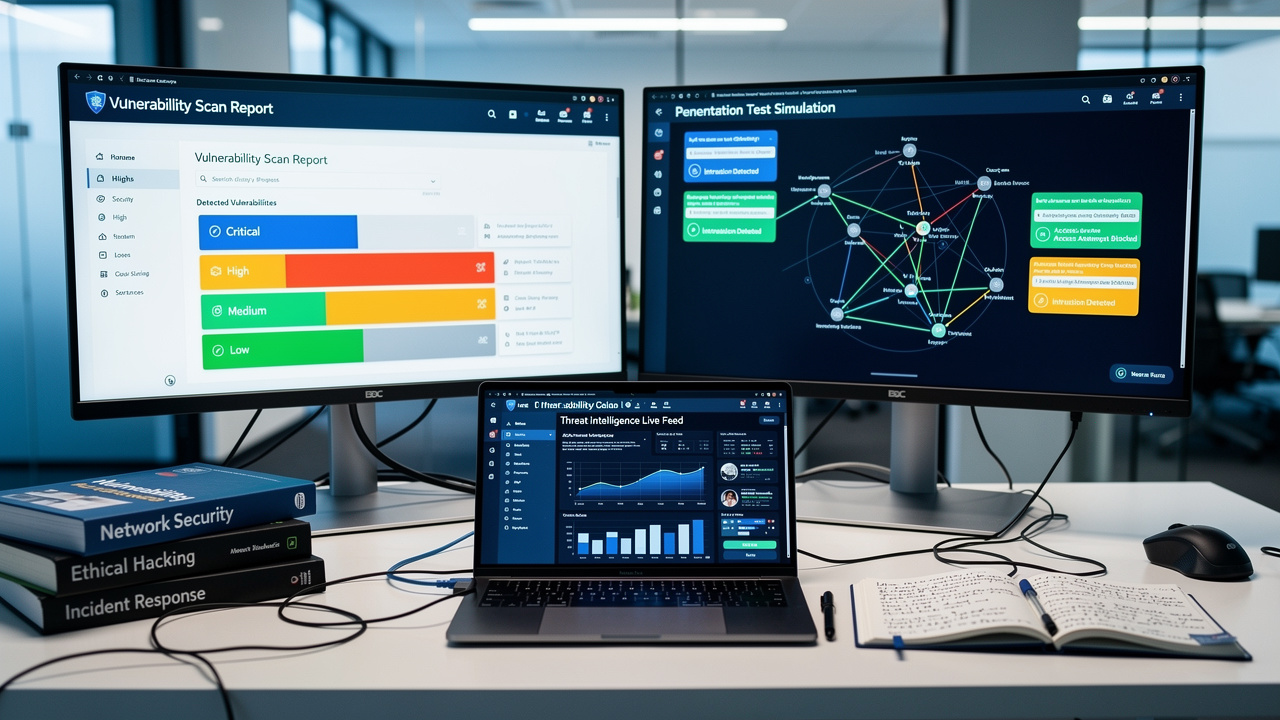
In an era where cyber threats are becoming more sophisticated, understanding cybersecurity is not just important - it's imperative for healthcare organizations. Among the most critical strategies are:
Each serving a unique purpose in identifying and mitigating risks. Vulnerability scanning provides a broad overview of potential weaknesses, while penetration testing dives deeper, simulating real-world attacks to reveal the true impact of these vulnerabilities.
So, what sets vulnerability scanning apart from penetration testing, and how can healthcare organizations effectively combine these approaches to strengthen their defenses? Integrating both strategies is not merely a strategy; it's a necessity for safeguarding patient data and ensuring operational continuity.
In an era where cyber threats are evolving at an unprecedented pace, vulnerability scanning has become a critical component of a robust cybersecurity strategy. This method provides organizations with a comprehensive view of vulnerabilities, empowering them to prioritize remediation efforts effectively. In contrast, [penetration testing](https://thehackernews.com/search/label/Penetration Testing), commonly known as pen testing, entails a more thorough and hands-on approach where ethical hackers mimic actual attacks to exploit identified weaknesses. This technique not only reveals vulnerabilities but also assesses the potential consequences of these flaws if exploited by malicious actors.
With the latest advancements in flaw detection technology, organizations can now quickly identify vulnerabilities, with the average daily CVE disclosure rate projected to rise to approximately 127-131 in 2025. How can organizations keep up with the relentless pace of vulnerability disclosures? The integration of Continuous Threat Exposure Management (CTEM) has become essential, allowing organizations to continuously identify, prioritize, and remediate exploitable exposures.
The newest trends suggest an increasing awareness of the necessity for both security assessments and intrusion analysis as complementary practices in cybersecurity. While security scanning provides a broad overview, penetration assessment offers a deeper understanding of how weaknesses can be exploited in real-world scenarios. For instance, in 2025, over 54% of critical weaknesses experienced active exploitation within the first week of disclosure, highlighting the urgency for organizations to adopt both practices to protect their systems.
Cybersecurity specialists stress that efficient threat management demands a [proactive strategy](https://thehackernews.com/search/label/Penetration Testing), merging automated scanning with manual evaluation to guarantee thorough coverage. Organizations that fail to adapt risk falling victim to the very vulnerabilities they overlook. To stay ahead, organizations must evolve their strategies to seamlessly integrate both vulnerability scanning and [penetration testing](https://thehackernews.com/search/label/Penetration Testing), which raises the question of what is the main difference between vulnerability scanning and [penetration testing](https://thehackernews.com/search/label/Penetration Testing), ensuring they are prepared to tackle the complexities of contemporary cyber threats. Without a dual approach of scanning and penetration testing, organizations may find themselves vulnerable to attacks that could have been prevented.

In an era where cyber threats are increasingly sophisticated, maintaining robust cybersecurity measures is non-negotiable for healthcare organizations. A critical routine measure aimed at maintaining security hygiene is vulnerability scanning, which leads us to consider what is the main difference between vulnerability scanning and penetration testing, typically conducted on a monthly or quarterly basis. This proactive strategy ensures that new weaknesses are identified and addressed quickly. This significantly lowers the risk of exploitation. Did you know that in 2025, organizations that regularly scanned for vulnerabilities significantly reduced potential breaches? In fact, 60% of breaches exploited known vulnerabilities that had available patches.
On the other hand, security assessments are conducted less often, typically once or twice a year, and mimic real-world attack situations. This approach offers deeper insights into the effectiveness of current protective measures and assists organizations in evaluating their actual risk exposure. For example, compliance frameworks such as PCI DSS 4.0 require yearly vulnerability assessments, especially following major infrastructure modifications, to guarantee strong protective measures.
Both practices are vital if organizations want a robust security strategy. What is the main difference between vulnerability scanning and penetration testing is that vulnerability scanning concentrates on detection, whereas penetration testing highlights exploitation and risk evaluation. As organizations navigate the evolving threat landscape, the integration of both methods is crucial. Failing to combine these methods could leave organizations vulnerable to significant threats. Experts advise that organizations carry out security assessments monthly or quarterly, while intrusion tests should be customized to the organization's risk profile, with many recommending at least one thorough examination yearly to comply with regulatory obligations and best practices. Additionally, with Cyber Solutions' Managed IT Service plans, which include features like 24/7 IT support and proactive monitoring, businesses can simplify their budgeting and eliminate unexpected IT expenses, ensuring they have the support needed to protect their operations. Organizations that neglect these assessments risk not only compliance failures but also the safety of their sensitive data.

In an era where cyber threats are increasingly sophisticated, understanding the nuances of cybersecurity approaches is paramount for healthcare organizations. The approaches of weakness scanning and penetration testing raise the question of what is the main difference between vulnerability scanning and penetration testing in cybersecurity. Security scanning automates the evaluation of numerous systems. It provides a comprehensive overview of potential weaknesses, which can be performed weekly or even daily, highlighting its proactive nature. However, without context, organizations may misinterpret the severity of vulnerabilities. In contrast, security assessments are a manual, hands-on method carried out by skilled experts who actively seek to exploit identified weaknesses. This deeper understanding allows organizations to prioritize their defenses more effectively, providing a more realistic evaluation of their protective stance.
While vulnerability scans can be conducted with minimal expertise, have you considered how the expertise required for security assessments impacts your organization's resources? Assessment tests generally need experienced ethical hackers who can maneuver through intricate protective environments. This level of analysis is vital for organizations dealing with sensitive data, helping them prioritize remediation based on real risks. Penetration assessments should ideally be conducted quarterly to maintain an effective security posture.
Understanding what is the main difference between vulnerability scanning and penetration testing is crucial, as both approaches are complementary. Vulnerability scanning establishes the foundation for recognizing weaknesses, leading to the question of what is the main difference between vulnerability scanning and penetration testing, as penetration testing enhances the comprehension of risk and possible effects. Vulnerability scanning is generally a low-cost option compared to penetration testing, which can be significantly more expensive due to its intensive nature. By integrating both vulnerability scanning and penetration testing, organizations can not only identify weaknesses but also fortify their defenses against the ever-evolving landscape of cyber threats. As cybersecurity specialists advise, merging both options is strongly recommended for companies to ensure continuous oversight.

In an era where cyber threats are increasingly sophisticated, organizations must prioritize flaw scanning as a critical component of their cybersecurity strategy. Incorporating flaw scanning into regular maintenance allows organizations to proactively detect and address weaknesses. Regular vulnerability assessments are crucial for compliance with many regulations, and this economical practice can be performed frequently, providing a comprehensive view of potential vulnerabilities. It is particularly beneficial for overseeing safety in infrastructure elements and during development stages.
Organizations should utilize vulnerability assessments when evaluating the effectiveness of their protective measures or after significant changes to their IT environment, such as introducing new systems or applications. Organizations should aim to conduct vulnerability assessments at least once a year or whenever they make significant changes to their systems to maintain robust protection. This method mimics real-world attacks, revealing hidden weaknesses that automated scans may overlook, and provides a detailed remediation report tailored to organizational needs.
Additionally, conducting penetration testing before major audits or compliance evaluations is vital to address vulnerabilities proactively. Organizations can also benefit from Compliance as a Service (CaaS), which offers expert guidance and support for audit preparation, continuous monitoring, and proactive risk assessments. CaaS encompasses various assessments and monitoring practices that simplify the compliance process, helping organizations navigate the complexities of regulations like CMMC and HIPAA. Organizations can optimize their cybersecurity strategies, allocate resources effectively, and enhance their overall security posture by understanding what is the main difference between vulnerability scanning and penetration testing.

In the ever-evolving landscape of cybersecurity, understanding the difference between vulnerability scanning and penetration testing is not just beneficial - it's essential. While vulnerability scanning focuses on identifying weaknesses within systems, penetration testing goes further by simulating real-world attacks to evaluate the potential impact of these vulnerabilities. This combination not only helps organizations spot weaknesses but also strengthens their defenses against ever-changing cyber threats.
Throughout the article, we've highlighted the necessity of integrating both methods. Vulnerability scanning serves as a proactive measure, enabling organizations to regularly assess their systems and swiftly address potential risks. Conversely, penetration testing provides a more detailed analysis, revealing how vulnerabilities can be exploited and helping organizations prioritize their remediation efforts effectively. Together, these practices ensure that organizations remain vigilant and prepared in an increasingly complex threat landscape.
Failing to implement both methods can lead to undetected vulnerabilities that may result in costly breaches. By embracing both strategies, organizations not only protect their data but also position themselves as leaders in cybersecurity resilience. This integrated approach is essential for safeguarding sensitive data and maintaining compliance with regulatory standards, ultimately empowering organizations to navigate the challenges of modern cybersecurity effectively.
What is vulnerability scanning?
Vulnerability scanning is a method used to identify and assess vulnerabilities within an organization's systems, providing a comprehensive view that helps prioritize remediation efforts.
What is penetration testing?
Penetration testing, or pen testing, is a hands-on approach where ethical hackers simulate actual attacks to exploit identified weaknesses, revealing vulnerabilities and assessing the potential consequences of these flaws if exploited by malicious actors.
Why is vulnerability scanning important in cybersecurity?
Vulnerability scanning is critical because it helps organizations identify vulnerabilities quickly, allowing them to prioritize and address these issues effectively, especially in an era of rapidly evolving cyber threats.
What is Continuous Threat Exposure Management (CTEM)?
Continuous Threat Exposure Management (CTEM) is an approach that enables organizations to continuously identify, prioritize, and remediate exploitable exposures, helping them keep up with the increasing rate of vulnerability disclosures.
How do vulnerability scanning and penetration testing complement each other?
Vulnerability scanning provides a broad overview of potential weaknesses, while penetration testing offers a deeper understanding of how those weaknesses can be exploited in real-world scenarios, making both practices essential for comprehensive cybersecurity.
What trends are emerging in cybersecurity assessments?
There is an increasing awareness of the necessity for both security assessments and intrusion analysis as complementary practices, highlighting the urgency for organizations to adopt both vulnerability scanning and penetration testing.
What risks do organizations face if they do not integrate both vulnerability scanning and penetration testing?
Organizations that fail to integrate both practices risk overlooking vulnerabilities, which could lead to successful cyber attacks that might have been prevented with a more thorough security strategy.
Managed IT Service Provider | Cyber Security | Incident Response | Compliance As A Service | Hosted Phone Service | Managed Security Service Provider | AI As A Service