Why Information Security Is the Responsibility of Every Leader

Why Information Security Is the Responsibility of Every Leader

Introduction

In today's healthcare landscape, the stakes of cybersecurity have never been higher, with breaches threatening not just data but lives. The responsibility of safeguarding sensitive information falls squarely on the shoulders of organizational leaders. Understanding the critical nature of information security is essential, as it directly impacts an organization’s reputation, financial health, and compliance with regulatory standards. Leaders often struggle to engage their teams in security practices, leading to vulnerabilities. How can they turn this around? Together, we’ll explore how leaders can inspire every employee to take part in safeguarding our most valuable asset: data.

Define Information Security and Its Importance

In an era where cyber threats are evolving rapidly, the significance of robust data protection in healthcare cannot be overstated. Data protection, or InfoSec, involves the tools and processes designed to protect sensitive data from unauthorized access and misuse. It's essential for managing risks and ensuring that data remains confidential, intact, and accessible. As cyber threats become more sophisticated, leaders must understand that effective data protection is not just a technical issue; it’s a strategic necessity that safeguards their organization’s reputation, financial stability, and compliance with regulations.

Consider this: the average cost of a data breach has skyrocketed to nearly $4.9 million globally, with healthcare organizations facing expenses exceeding $10 million. Such breaches can lead to significant financial losses, legal repercussions, and a loss of customer trust. So, how can leaders ensure data protection is a top priority in their organizations? By aligning data protection with their overall business strategy, they can reduce risks and enhance resilience.

A crucial aspect of this strategy is application allowlisting, which proactively blocks malware and unauthorized software from running, thereby minimizing vulnerabilities and ensuring compliance with standards like HIPAA, PCI-DSS, and GDPR. Features such as centralized management and continuous monitoring of application activity further enhance the effectiveness of application allowlisting, providing organizations with the necessary tools to maintain visibility and control over their software environment. The staggering GDPR fines of €4.5 billion in 2023 serve as a stark reminder of the financial consequences of neglecting data protection measures.

The central node represents the main topic of information security. Each branch explores different aspects: significance highlights why it's crucial, risks show potential costs and consequences, strategies outline how to prioritize data protection, and measures detail specific actions like application allowlisting.

Outline Employee Responsibilities in Information Security

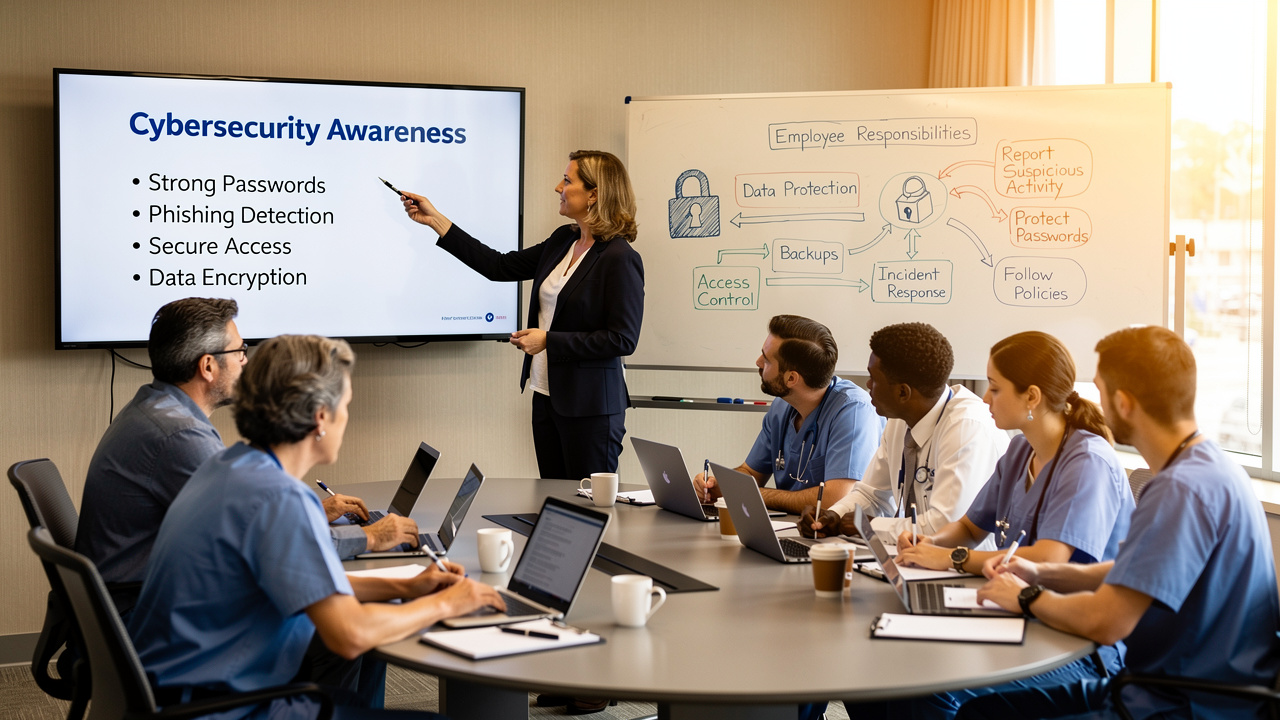
In the realm of healthcare, every staff member plays a pivotal role in safeguarding sensitive information against ever-evolving cyber threats. Their responsibilities include:

  1. Following regulations
  2. Participating in training programs
  3. Staying vigilant against potential threats like phishing attacks or unauthorized access attempts

What they do can really shape how secure the organization is. One careless click on a malicious link can compromise sensitive data, leading to severe consequences. Therefore, organizations must cultivate a culture where employees understand that information security is the responsibility of all staff and feel empowered to report suspicious activities.

Implementing 24/7 threat monitoring is crucial for proactive cybersecurity measures. This approach ensures that suspicious activities are detected and addressed before they escalate into serious threats, protecting the organization from ransomware, phishing, and other malware attacks. Additionally, application allowlisting is a vital tool in cybersecurity, preventing unauthorized or malicious software from executing. By restricting the applications that can run, companies can significantly reduce vulnerabilities and enhance compliance with regulations like HIPAA and GDPR. Consistent training and transparent communication regarding safety protocols are essential to ensure that all personnel are prepared to assist in the organization's protective initiatives. Empowering employees with knowledge and tools is not just a strategy; it's a necessity for maintaining trust and compliance in healthcare.

This mindmap illustrates how every employee contributes to information security. Start at the center with the main theme, then explore each branch to see specific responsibilities and tools that help protect sensitive information.

Examine Consequences of Inadequate Information Security

In an era where data breaches are increasingly common, the stakes for healthcare institutions have never been higher. It is important to recognize that information security is the responsibility of institutions, as insufficient measures can lead to disastrous outcomes. Data breaches can lead to significant financial losses. These include costs for remediation, legal fees, and potential fines for not complying with regulations like GDPR and HIPAA.

For instance, the typical expense of a data breach in the financial sector is around USD 6.08 million, whereas healthcare entities encounter even greater costs, averaging USD 9.8 million per breach. Beyond these financial implications, companies frequently experience significant reputational harm, leading to a loss of customer trust and reduced market share. Research indicates that:

Moreover, operational interruptions can occur as companies may need to halt activities to handle safety incidents, additionally affecting productivity and revenue. What happens when security measures fail? The combined impact of these outcomes highlights why leaders must prioritize and invest in robust data protection measures, ensuring that cybersecurity is regarded as a collective responsibility at all tiers of the entity. The time to act is now; the future of your organization depends on it.

This pie chart shows the financial costs of data breaches in different sectors and the impact on customer trust. Each slice represents a different consequence: the larger the slice, the more significant the impact.

Cultivate a Culture of Security Awareness and Accountability

In an era where cyber threats loom large, fostering a culture of awareness and accountability is not just beneficial; it's essential for safeguarding sensitive information. Leaders must create an environment that prioritizes safety in their messages and actions, demonstrating that it is a core principle of the organization. This involves:

  • Regular training sessions
  • Open dialogues about safety challenges
  • Acknowledgment of individuals who actively contribute to safety initiatives.

For instance, companies can establish initiatives that motivate staff to disclose suspicious actions without fear of retaliation, cultivating an atmosphere where safety is a collective duty. By embedding protection into the organizational culture, leaders can enhance the overall defense stance and resilience against cyber threats, emphasizing that information security is the responsibility of all staff in safeguarding sensitive information.

Moreover, when leaders commit to security, it not only shapes employee behavior but also fosters a proactive security culture that is essential for navigating today's complex threat landscape. Effective training programs can lead to an impressive 86% reduction in phishing susceptibility, underscoring the significant impact of well-structured initiatives on fostering accountability and awareness. Ultimately, the commitment to a proactive security culture can mean the difference between resilience and vulnerability in today's complex threat landscape.

The central idea is about fostering security awareness. Each branch represents a key area of focus, and the sub-branches provide specific actions or examples that contribute to building a strong security culture. Follow the branches to understand how each component supports the overall goal.

Conclusion

In an era where cyber threats loom large, the responsibility for information security must be embraced by every leader, not just the IT department. By recognizing that robust data protection is integral to safeguarding reputation, financial stability, and regulatory compliance, leaders can foster a proactive approach to mitigate the risks associated with cyber threats. This alignment not only builds resilience but also fosters a culture where everyone sees information security as a shared duty.

Throughout the article, key insights highlight the dire financial and reputational consequences of inadequate information security, particularly in the healthcare sector. The staggering costs associated with data breaches - averaging millions - underscore the necessity for leaders to implement comprehensive strategies that include:

  1. Employee training
  2. Application allowlisting
  3. A commitment to continuous monitoring

By empowering employees and fostering a culture of accountability, organizations can significantly reduce vulnerabilities and enhance their defenses against potential threats.

Ultimately, the significance of prioritizing information security cannot be overstated. Leaders are called to take decisive action, embedding security awareness into the organizational culture and ensuring that every staff member understands their role in protecting sensitive data. Without decisive action, organizations risk catastrophic breaches that could undermine patient trust and financial health. The ability to safeguard sensitive data will ultimately determine the organization's resilience and reputation in an increasingly digital world.

Frequently Asked Questions

What is information security (InfoSec) in the context of healthcare?

Information security, or InfoSec, refers to the tools and processes designed to protect sensitive data from unauthorized access and misuse, ensuring that data remains confidential, intact, and accessible.

Why is data protection important in healthcare?

Data protection is crucial in healthcare to manage risks, safeguard the organization's reputation, maintain financial stability, and ensure compliance with regulations, especially as cyber threats continue to evolve.

What are the potential financial impacts of a data breach in healthcare?

The average cost of a data breach is nearly $4.9 million globally, with healthcare organizations facing expenses that can exceed $10 million, leading to significant financial losses, legal repercussions, and a loss of customer trust.

How can leaders prioritize data protection in their organizations?

Leaders can prioritize data protection by aligning it with their overall business strategy, which helps reduce risks and enhance resilience against cyber threats.

What is application allowlisting and how does it contribute to data protection?

Application allowlisting is a security measure that proactively blocks malware and unauthorized software from running, minimizing vulnerabilities and ensuring compliance with standards like HIPAA, PCI-DSS, and GDPR.

What additional features enhance the effectiveness of application allowlisting?

Centralized management and continuous monitoring of application activity further enhance the effectiveness of application allowlisting by providing organizations with visibility and control over their software environment.

What are the consequences of neglecting data protection measures?

Neglecting data protection measures can lead to significant financial consequences, as evidenced by GDPR fines of €4.5 billion in 2023, highlighting the importance of robust data protection strategies.

List of Sources

  1. Define Information Security and Its Importance
    • Why Leadership Must Make Security a Strategic Imperative (https://bankdirector.com/article/why-leadership-must-make-security-a-strategic-imperative)
    • At Davos, Cybersecurity Is a Leadership Imperative | Fortinet Blog (https://fortinet.com/blog/industry-trends/at-davos-cybersecurity-is-a-leadership-imperative)
    • The rise of cybersecurity as a strategic economic priority (https://weforum.org/stories/2026/05/cybersecurity-systemic-economic-and-strategic-imperative)
    • Why Data Protection Must Be a Strategic Priority in 2026 (https://edgescan.com/why-data-protection-must-be-a-strategic-priority-in-2026)
    • What Every Company Needs To Know About Cybersecurity In 2026 (https://forbes.com/sites/chuckbrooks/2025/12/31/what-every-company-needs-to-know-about-cybersecurity-in-2026)
    • Why is information security important for businesses in 2026? - Wapice (https://wapice.com/wapice-news/why-is-information-security-important-for-businesses-in-2026)
  2. Outline Employee Responsibilities in Information Security
    • Home | IP Pathways (https://ippathways.com/the-importance-of-cybersecurity-training-for-employees)
    • Fudo Security (https://fudosecurity.com/blog/the-importance-of-employee-training-in-preventing-cybersecurity-breaches)
    • What Security Personnel Responsibilities Include in 2026: Key Duties Explained (https://trustconsultingservices.com/what-security-personnel-responsibilities-2026)
    • Security Awareness Training Statistics 2025 [100+ Studies] | Brightside AI Blog (https://brside.com/blog/security-awareness-training-statistics-2025-100-studies)
    • The Importance of Cybersecurity Awareness Training for Employees (https://sentinelone.com/platform/small-business/cybersecurity-awareness-training-for-employees)
    • What Are Employee Responsibilities in Information Security? (https://hbs.net/blog/employee-responsibilities-in-information-security)
    • The Ultimate Security Awareness Training Topics Checklist for 2026 - AwareGO (https://awarego.com/the-ultimate-security-awareness-training-topics-checklist-for-2026)
  3. Examine Consequences of Inadequate Information Security
    • 2026 Data Breaches: Cybersecurity Incidents - PKWARE® (https://pkware.com/blog/2026-data-breaches)
    • The Impact of Data Breaches on Different Industries (https://wire.com/en/blog/the-impact-of-data-breaches-on-industries)
    • The Real Cost of a Data Breach for Financial Services Firms (https://opti9tech.com/blog/the-real-cost-of-a-data-breach-for-financial-services-firms)
    • Effects of Cyber Attacks on Financial Institutions | Huntress (https://huntress.com/cybersecurity-for-financial-institutions-guide/effects-cyber-attacks-financial-institutions)
    • The biggest cyber breaches of 2026 so far (https://acilearning.com/blog/the-biggest-cybersecurity-breaches-of-2026-so-far-and-the-training-that-could-have-prevented-them)
  4. Cultivate a Culture of Security Awareness and Accountability
    • Security Awareness Training Statistics 2025 [100+ Studies] | Brightside AI Blog (https://brside.com/blog/security-awareness-training-statistics-2025-100-studies)
    • Accountability in Security Starts with Leadership Practices (https://xmatters.com/blog/accountability-in-security-starts-with-leadership-practices)
    • Cybersecurity Culture in 2026: Building Resilience Beyond Compliance - AwareGO (https://awarego.com/cybersecurity-culture-in-2026-building-resilience-beyond-compliance)
    • SANS Security Awareness & Culture Summit 2026 (https://sans.org/cyber-security-training-events/security-awareness-summit-2026)
    • Why top leadership must foster a security-conscious culture (https://scworld.com/perspective/why-top-leadership-must-foster-a-security-conscious-culture)
    • Leadership Influence on Cybersecurity (https://extension.ucr.edu/features/leadershipinfluenceoncybersecurity)
    • What Every Company Needs To Know About Cybersecurity In 2026 (https://forbes.com/sites/chuckbrooks/2025/12/31/what-every-company-needs-to-know-about-cybersecurity-in-2026)
    • The Role of Leadership In Security - Professional Computer Concepts (https://calpcc.com/the-role-of-leadership-in-security)
Recent Posts
Master Threat Scenarios: Best Practices for C-Suite Leaders
4 Best Practices to Combat Phishing in Healthcare
What Is Cloud App Security? Importance, Features, and Risks Explained
What Is the Main Difference Between Vulnerability Scanning and Penetration Testing?
Master Security Drills: Best Practices for C-Suite Leaders
Why Information Security Is the Responsibility of Every Leader
Why Security Is Everyone's Responsibility in Your Organization
What Is a Good Way to Protect Your Data from Computer Malfunctions?
10 Cloud Services in Lafayette for Business Growth and Security
Master CMMC-RP Compliance: Strategies for C-Suite Leaders
Build Your Cybersecurity Tech Stack: 4 Essential Best Practices
Understanding the MSP Environment Meaning for Business Leaders
Understanding the Cost of Cyberattacks: Key Insights for Executives
4 Best Practices for Data in Use Encryption Success in Business
Maximize Cybersecurity with Effective Endpoint Detection and Response Services
Master HIPAA Compliance Technical Requirements for C-Suite Leaders
10 Essential Strategies for Information Technology Disaster Recovery
Master FTC Safeguards Rule Requirements for Effective Compliance
4 Best Practices for FTC Safeguards Rule Compliance Success
Master FTC Safeguard Rules: A Step-by-Step Compliance Guide
5 Steps to Reduce Cyber Security Risks for Executives
What Is a Data Backup? Importance, History, and Key Features
4 Best Practices to Combat Malware and Spyware for Leaders
Master Endpoint Detection and Remediation: Best Practices for Leaders
4 Best Practices to Combat Spyware and Malware Threats
How to Mitigate Cyber Security Risk: 4 Essential Steps for Executives
4 Best Practices for Effective Backup and Recovery Management
Why It’s Crucial to Backup Data for Business Resilience
Achieve CMMC 3.0 Compliance: A Step-by-Step Guide for Leaders
Achieve Regulatory Compliance: Strategies for C-Suite Leaders
10 Key Components of an Effective IT Backup and Disaster Recovery Plan
Crafting an Effective Multi-Factor Authentication Policy for Leaders
10 Essential IT KPI Examples for C-Suite Leaders to Track
4 Essential Practices for Effective Disaster Recovery Plans for Businesses
4 Best Practices for Effective RPO Backup Implementation
4 Proven Strategies for Effective Breach Prevention in Business
5 Essential CMMC Documentation Steps for Compliance Success
Master DR and RPO: Best Practices for C-Suite Leaders
Explain the Importance of Data Backup for Business Resilience
4 Best Practices for Choosing Information Security Services Companies
What Does It Mean to Be in Compliance? Key Insights for Leaders
Boost Operational Efficiency with Managed IT Services Mobile
4 Best Practices for Effective Cyber Security Evaluation
Understand Adware and Spyware: Protect Your Business Today
IT Policy for Company: Key Components and Industry Challenges
Best Practices for Choosing Your EDR Provider Effectively
Optimize Your Disaster Recovery Plan for Time and Cost Efficiency
What to Do If You Get Phished: Essential Strategies for Leaders
Master CMMC Processes: Essential Best Practices for Compliance Success
4 Best Practices for Advanced Threat Analysis in Cybersecurity
What Is Anti-Phishing Software and Why It Matters for Your Business
4 Steps to Master the Vulnerability Scanning Process for Security
What Expense Should You Expect When Buying a New Firewall?
Master the FTC Safeguards Rule for Your Risk Assessment Template
Master NIST 800-171 Compliance Audit in 6 Essential Steps
Master Managed Services Projects: Key Strategies for C-Suite Leaders
Master FTC MFA Requirements: A Step-by-Step Guide for Leaders
Enhance Password Compliance with These 4 Essential Strategies
10 Key Factors Influencing Network Firewall Pricing for Executives
4 Best Practices for Effective Firewall Testing and Security
Master the CMMC Assessment Guide Level 2 for Effective Compliance
Why Local IT Services Providers Are Key to Business Success
10 Key Benefits of Partnering with IT MSPs for Your Business
Why Healthcare CFOs Should Choose an Outsourced IT Provider
4 Best Practices for CFOs in AI Data Security Compliance
What Is Defense in Depth? Understanding Its Importance for Healthcare CFOs
Essential Corporate Data Backup Practices for Healthcare CFOs
10 Benefits of Outsourced IT Management for Healthcare CFOs
Master Restricting Access: Best Practices for CFOs on OAuth Management
Master Living Off the Land: A CFO's Guide to Sustainability
Master Digital Security Controls for Healthcare CFOs
10 Essential IT Services for Healthcare CFOs to Enhance Security
Master Critical Security Controls for Healthcare CFOs
Best Practices for Managed Cyber Security in Healthcare CFOs
What MSPs Stand For and Why They Matter for Healthcare CFOs
Choosing the Right Managed Cybersecurity Services Provider for CFOs
What Is CMMC Compliance and Why It Matters for Healthcare CFOs
How to Reduce the Risk of Cyber Attack: 4 Essential Steps for CFOs
What Compliance Means: Key Concepts for Healthcare CFOs
5 Best Practices for Achieving CMMC 1.0 Compliance Success
Understanding Cybersecurity as a Service for Healthcare CFOs
Why MSPs in Technology Are Essential for Healthcare CFOs
10 Benefits of Data Security as a Service for Healthcare CFOs
Evaluate 4 Leading Disaster Recovery Software Vendors for Your Business
What IT Services Can Be Outsourced for Business Success?
Enhance Cyber Resilience with Effective External Vulnerability Scanning
Cyber Security Outsourcing Companies vs. In-House Solutions: Key Insights
4 Steps to Optimize Business IT Support for Healthcare CFOs
Understanding Managed Service Provider Costs: Key Factors and Models
Why Fully Managed Services Are Essential for Cybersecurity Success
Understanding the Average Cost of Cybersecurity Services for Leaders
Master Managing Firewalls: Essential Steps for C-Suite Leaders
Master HIPAA Compliant Firewall Requirements for Your Organization
How to Manage Company Laptops: A Step-by-Step Guide for Leaders
6 Best Practices for a Successful Managed Services Strategy
4 Best Practices for Choosing Your NIST Compliance Tool
10 Essential CMMC 2.0 Controls List for Compliance Success
Best Practices for Effective Data Backup Support in Your Organization
4 Essential Cybersecurity Compliance Solutions for C-Suite Leaders
Master Data Backup and Recovery: Best Practices for C-Suite Leaders