


In the high-stakes world of healthcare, cybersecurity isn't just a technical issue; it's a matter of trust and survival. C-suite leaders face a daunting challenge: understanding the critical differences between password spraying and credential stuffing. These two attack methods threaten the integrity of sensitive data and pose significant financial and reputational risks to organizations, particularly in regulated industries like healthcare and finance.
As organizations navigate these threats, a crucial question arises: how can leaders effectively protect their enterprises from these prevalent cyber attacks?
Let’s explore the nuances of password spraying and credential stuffing together, arming decision-makers with the insights necessary to strengthen their cybersecurity strategies and shield their organizations from potential breaches.
In an era where cyber threats loom large, the healthcare sector must confront the stark reality of password spraying vs stuffing attacks that threaten their very foundation.
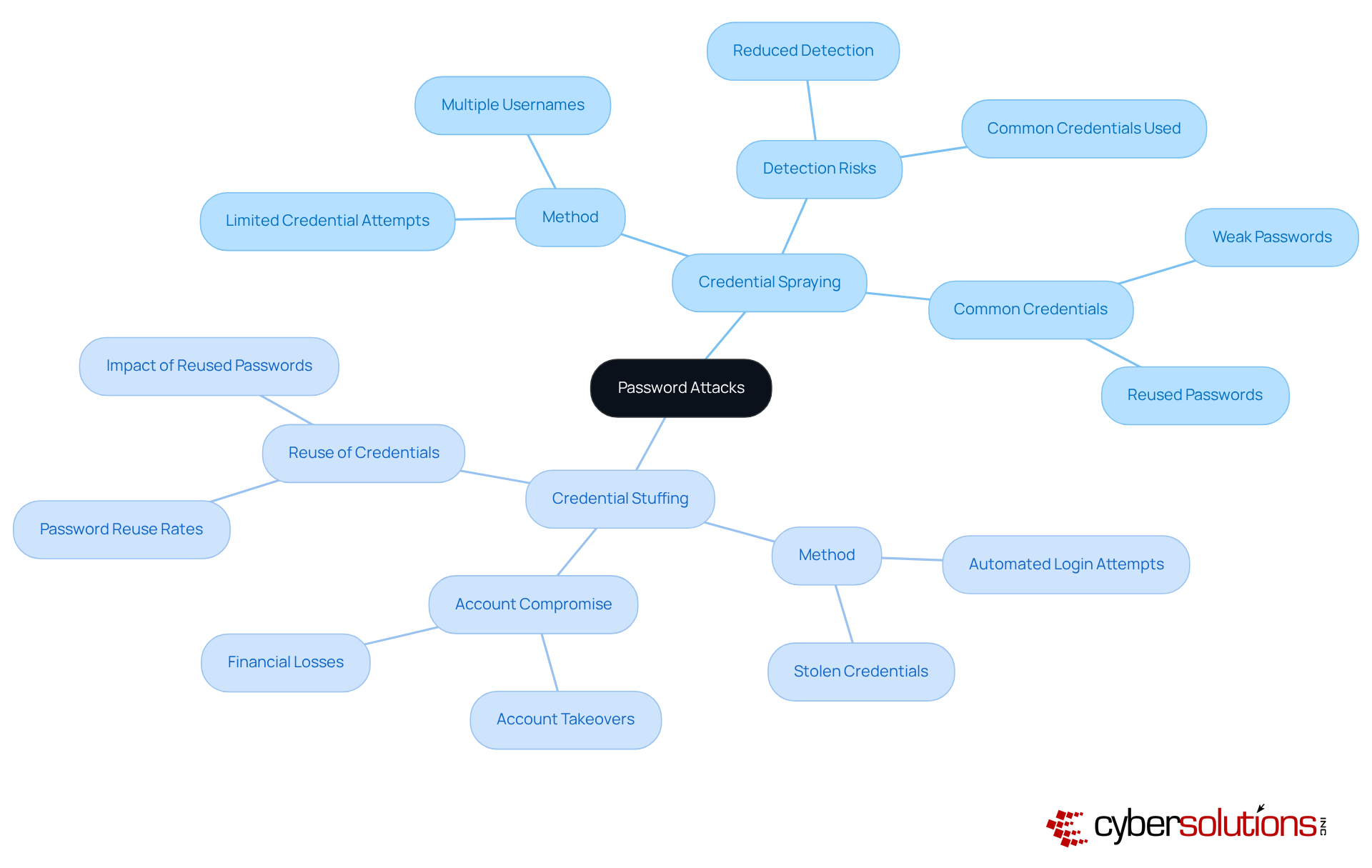
Credential Spraying: This method involves attackers trying to access multiple accounts using a limited set of commonly used credentials. Instead of overwhelming a single account with numerous credential attempts-which could trigger account lockouts-attackers apply a few combinations across many usernames. This approach reduces detection risks and increases the chances of success, especially in organizations where users may utilize weak or common credentials, which is relevant when considering password spraying vs stuffing.
Account Compromise: In contrast, account compromise utilizes stolen username and access pairs obtained from previous data breaches. Attackers automate the entry of these credentials into various login forms across different platforms, relying on the common habit of users to reuse access codes across multiple sites. This method can result in account takeovers if users have not implemented unique passwords for each service.
C-suite leaders must grasp these concepts, particularly the differences between password spraying vs stuffing, to effectively tackle the cybersecurity challenges that could jeopardize their organizations. Credential stuffing incidents are anticipated to happen roughly every 11 seconds against small businesses, underscoring the necessity for strong security measures (Verizon). Furthermore, breaches caused by compromised access points incur an average cost of $4.67 million, highlighting the financial consequences of these incidents (IBM). Additionally, 22% of breaches examined had compromised access details as the initial entry point, down from 31%, and 88% of attacks on basic web applications involved the use of stolen access information (Verizon).
Recent events in the finance industry, such as those impacting major banks, demonstrate the real-world consequences of account stuffing, where attackers successfully accessed sensitive accounts due to reused access information. By prioritizing distinct credentials and implementing multi-factor authentication (MFA), organizations can significantly reduce their risk of falling victim to these prevalent cyber threats. Without proactive measures, organizations risk not only financial loss but also the trust of their patients and stakeholders, making cybersecurity a non-negotiable priority.
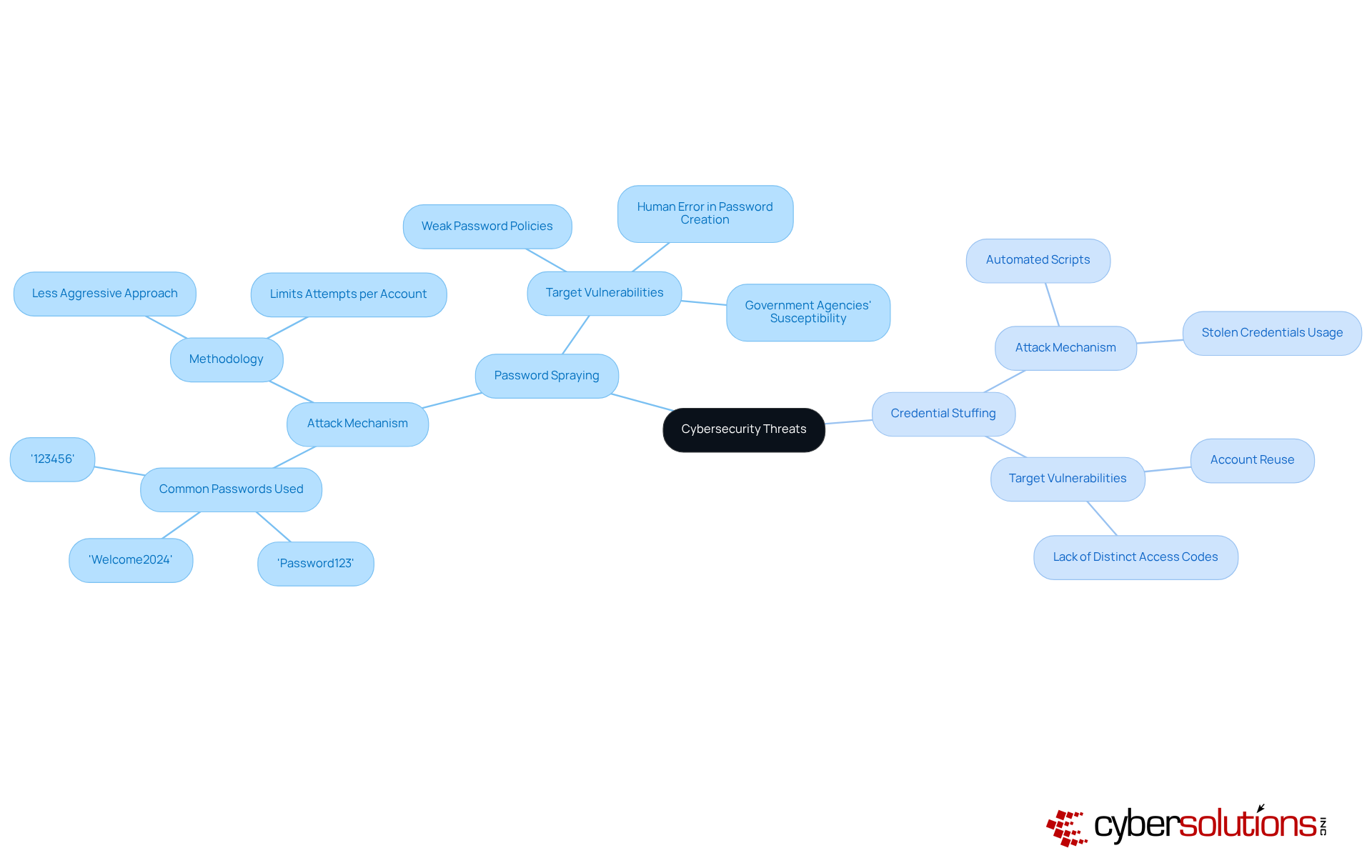
In an era where healthcare data breaches are on the rise, understanding the nuances of cybersecurity threats is crucial for CFOs navigating this complex landscape. The methods of password spraying vs stuffing differ significantly, which impacts their effectiveness and the vulnerabilities they exploit.
Attack Mechanisms:
Target Vulnerabilities:
Understanding these mechanisms enables C-suite leaders to pinpoint specific vulnerabilities within their organizations and implement targeted security measures, particularly in the context of password spraying vs stuffing. For example, a recent survey showed that 65% of users acknowledge reusing credentials across various platforms, highlighting the essential need for strong security policies and user education. As cybersecurity expert Colleen Lerch observes, "Spraying techniques are effective because many individuals utilize weak and easily guessable credentials that depend on commonly used combinations (12345, password123, QWERTY, etc.)." By proactively addressing these vulnerabilities, organizations not only safeguard their data but also protect their reputation and trust with patients and stakeholders alike.
In an era where cyber threats loom larger than ever, the healthcare sector faces unique challenges that demand immediate attention. Both password spraying vs stuffing pose considerable risks to businesses, impacting security, financial stability, and reputation.
Business Impacts:
Security Risks:
C-suite leaders must acknowledge these impacts and risks to prioritize cybersecurity investments effectively. Without proactive measures, organizations risk not only financial loss but also reputational damage that can take years to recover from, ensuring their entities are equipped to defend against these prevalent threats and maintain operational integrity.

In an era where healthcare data breaches are on the rise, the stakes for cybersecurity have never been higher. To mitigate the risks associated with password spraying and credential stuffing, organizations should adopt a multi-layered approach to cybersecurity that includes the following strategies:
Prevention Strategies:
When discussing security threats, it's important to understand the differences between password spraying vs stuffing. Implementing rate limiting on login attempts and utilizing CAPTCHA can assist in preventing automated intrusions, making it more challenging for perpetrators to carry out methods such as password spraying vs stuffing. These measures are essential in maintaining the integrity of user accounts and protecting sensitive information.
Without a robust cybersecurity strategy, organizations risk not only financial loss but also the trust of their patients and stakeholders.

In an era where cyber threats loom large, understanding the nuances between password spraying and credential stuffing is essential for C-suite leaders. Both methods exploit vulnerabilities in user behavior and security practices, but they do so in fundamentally different ways. Without a clear understanding of these threats, organizations risk falling victim to costly breaches. By grasping these differences, leaders can implement more effective strategies to protect sensitive data and maintain operational integrity.
The mechanics of each attack reveal critical insights:
The financial and reputational impacts of these attacks are significant, with breaches leading to costly legal repercussions and loss of customer trust. Proactive measures, such as enforcing strong credential policies, implementing multi-factor authentication, and providing user education, are essential in mitigating these risks.
It's up to organizational leaders to make cybersecurity a top priority in their business strategy. By investing in robust security measures and fostering a culture of awareness, organizations can not only defend against these prevalent threats but also safeguard their reputation and trust with clients and stakeholders. The future of your organization hinges on proactive cybersecurity measures; the time to prioritize this is now.
What is credential spraying?
Credential spraying is a cyber attack method where attackers attempt to access multiple accounts using a limited set of commonly used credentials. This approach reduces detection risks and increases the chances of success by applying a few combinations across many usernames instead of overwhelming a single account.
How does credential stuffing differ from credential spraying?
Credential stuffing involves using stolen username and password pairs obtained from previous data breaches to automate login attempts across various platforms. This method relies on users reusing passwords across multiple sites, leading to account takeovers if unique passwords are not implemented.
Why is it important for C-suite leaders to understand password spraying and credential stuffing?
C-suite leaders need to grasp these concepts to effectively address cybersecurity challenges that could jeopardize their organizations. Understanding the differences helps in implementing stronger security measures to protect against these prevalent threats.
How frequently do credential stuffing incidents occur?
Credential stuffing incidents are anticipated to happen roughly every 11 seconds against small businesses, highlighting the urgent need for robust security measures.
What are the financial consequences of breaches caused by compromised access points?
Breaches caused by compromised access points incur an average cost of $4.67 million, emphasizing the significant financial impact of these incidents.
What percentage of breaches examined had compromised access details as the initial entry point?
22% of breaches examined had compromised access details as the initial entry point, down from 31%.
What measures can organizations take to reduce the risk of falling victim to credential stuffing and spraying?
Organizations can reduce their risk by prioritizing the use of distinct credentials and implementing multi-factor authentication (MFA).
What are the potential consequences of not addressing these cyber threats?
Without proactive measures, organizations risk financial loss and damage to the trust of their patients and stakeholders, making cybersecurity a critical priority.
Managed IT Service Provider | Cyber Security | Incident Response | Compliance As A Service | Hosted Phone Service | Managed Security Service Provider | AI As A Service