

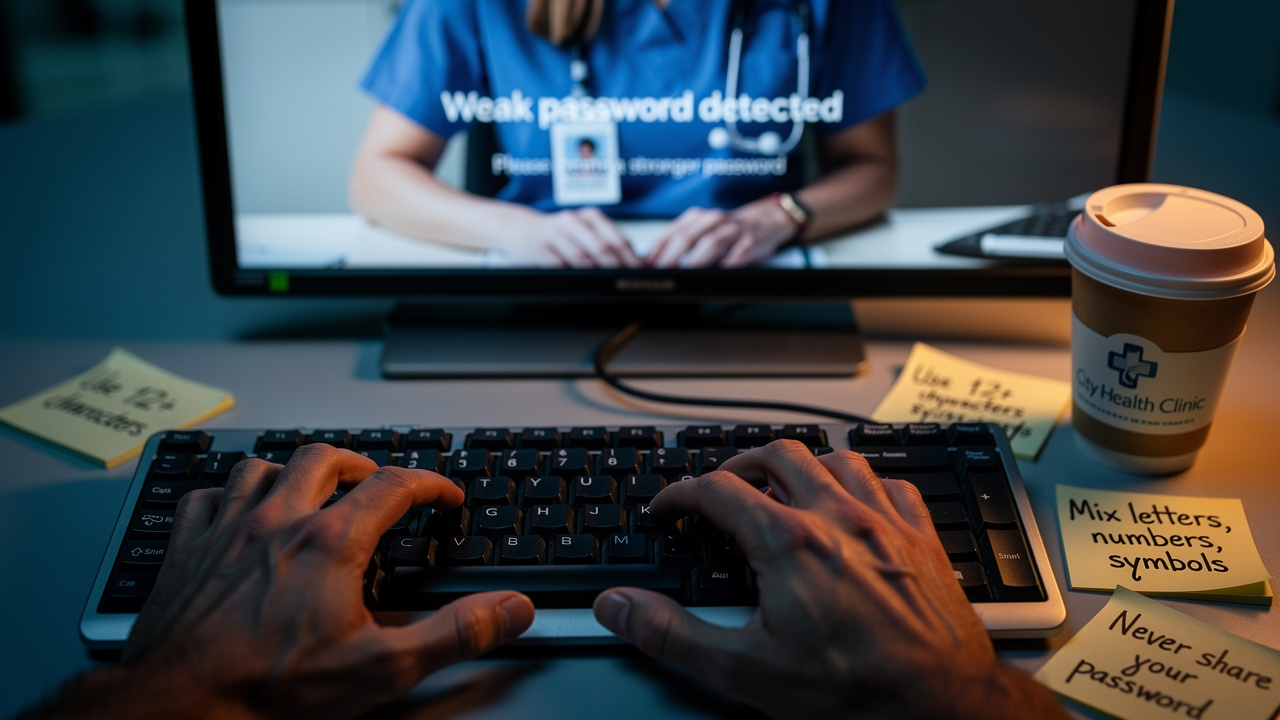
In the high-stakes world of healthcare, understanding cyber threats is not just important - it's essential for survival. Credential stuffing and password spraying are among the most common attack methods today, exploiting user behavior and system vulnerabilities. These tactics pose significant risks, threatening both data security and the integrity of healthcare organizations.
With cybercriminals growing more sophisticated, it's crucial for C-suite executives to understand these tactics. Only then can they implement effective defenses to protect their organizations. Organizations that fail to act may find themselves not only facing financial losses but also jeopardizing patient trust and safety.
In an era where cyber threats loom large, understanding the nuances of credential-based attacks is vital for healthcare organizations. Credential stuffing is a cyberattack technique where attackers utilize stolen username and credential pairs from previous data breaches to gain unauthorized access to user accounts across various platforms. This technique exploits the widespread habit of reusing credentials, with an estimated 80-85% of individuals using the same access codes across multiple platforms, making them particularly vulnerable.
On the other hand, credential spraying is a more subtle attack strategy that involves attempting to access a large number of accounts using a few commonly used credentials. Instead of relying on stolen access details, attackers make educated guesses, targeting accounts with weak or default combinations. This method reduces the risk of account lockouts, as it spreads attempts across many accounts rather than focusing on a single one.
While both credential stuffing and spraying methods threaten organizations, they do so in distinct ways that require different strategies to combat. Credential exploitation relies on previously compromised data, while the comparison of credential stuffing and spraying highlights how account spraying takes advantage of user behavior and weak credential practices. Statistics reveal that by 2026, account takeover incidents will account for 22% of all data breaches, with the finance sector facing an average loss of $5.6 million. This stark reality underscores the urgent need for robust password policies and multi-factor authentication to mitigate these risks. Understanding these differences is crucial for C-suite leaders as they navigate the complexities of cybersecurity and implement strategies to protect their organizations from evolving threats. Without proactive measures, organizations risk not only financial loss but also the trust of their patients and stakeholders.

In the ever-evolving landscape of cybersecurity threats, healthcare organizations face unprecedented challenges that demand immediate attention. Cybercriminals are increasingly using automated scripts or bots to enter stolen login information into forms across various websites. They leverage extensive databases of compromised credentials, often sourced from previous data breaches, to enhance their chances of success. This method is highly effective. It allows attackers to take over multiple accounts quickly.
On the other hand, the strategies used in credential stuffing vs spraying attacks are different. Here, attackers choose a limited number of common codes, such as '123456' and 'password', and try to log in to numerous accounts. This approach is less aggressive than credential stuffing, as it avoids triggering account lockout mechanisms that typically follow multiple failed login attempts. Instead, it takes advantage of the widespread use of weak or easily guessable credentials among users.
While both credential stuffing vs spraying exploit user behavior and system vulnerabilities, organizations need to understand these differences to strengthen their defenses against these common cyber threats. Furthermore, adherence to regulations such as HIPAA, PCI-DSS, and GDPR is crucial for organizations in regulated sectors to reduce risks linked to these threats. Implementing multi-factor authentication (MFA) significantly reduces the chances of unauthorized access during account exploitation and credential spraying.
Cyber Solutions employs a comprehensive cybersecurity strategy that includes:
By adopting proactive network hardening strategies and ensuring rapid incident response capabilities, Cyber Solutions helps organizations maintain a heightened level of cybersecurity. Failing to act now could leave organizations vulnerable to devastating breaches that compromise patient trust and safety.

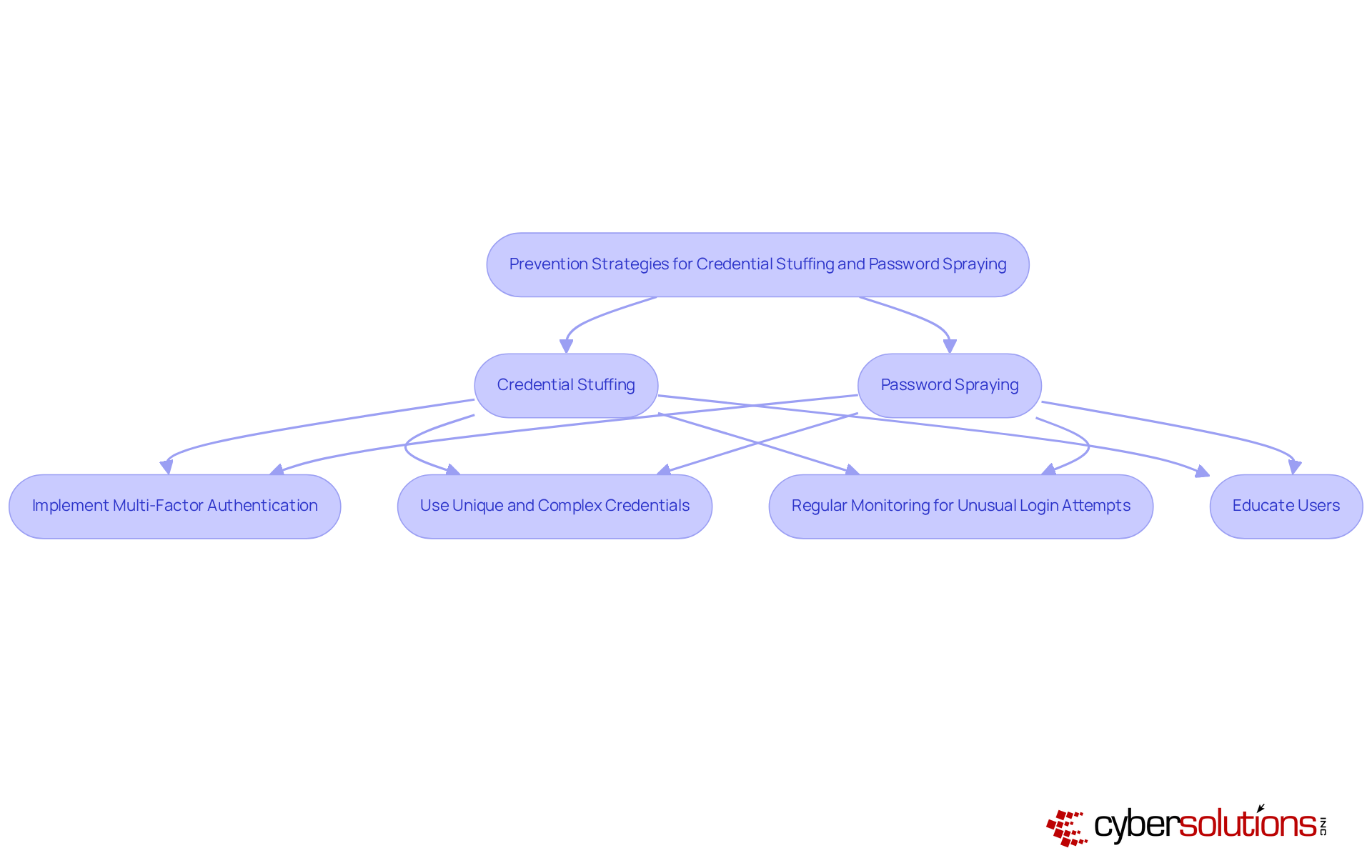
In an era where cyber threats loom large, the healthcare sector faces unprecedented risks from account takeovers that can cripple operations and compromise patient data. Implementing multi-factor authentication (MFA) offers a crucial layer of security beyond conventional logins. Robust security policies that require unique and complex credentials are essential in greatly diminishing the chances of successful attacks. Regular monitoring for unusual login attempts, combined with bot detection technologies, can further enhance defenses against the threats of credential stuffing vs spraying.
When discussing credential stuffing vs spraying, educating users about keeping their access codes clean is vital. Encouraging employees to utilize distinct access codes across various accounts can significantly reduce the risk of unauthorized entry. Implementing account lockout policies after a specified number of failed login attempts serves as a deterrent against attackers. Furthermore, employing monitoring tools that track login attempts and flag suspicious activity can strengthen defenses against this type of threat.
Addressing both account compromise and access attempts demands a proactive security strategy tailored to the unique characteristics of each threat. The implementation of MFA has become increasingly critical, especially as regulatory frameworks like PCI DSS v4.0.1 now mandate it for organizations handling sensitive data. As illustrated in case studies, such as the Dunkin' Donuts credential compromise, the financial and reputational consequences of insufficient security measures can be severe, highlighting the necessity of strong defenses. Organizations that neglect these security measures not only jeopardize their data but also expose themselves to severe financial and reputational repercussions that can last for years.
In an era where cyber threats loom large, the financial stakes for healthcare organizations have never been higher. Credential injection attacks can lead to significant financial losses. Successful breaches often result in unauthorized transactions, data theft, and reputational damage. Industry reports indicate that businesses may incur millions in losses annually due to credential stuffing vs spraying, encompassing not only direct financial impacts but also the costs associated with incident response and recovery efforts. For instance, the 2019 Citrix breach, linked to password spraying, compromised over 76,000 personal records, leading to extensive legal fees and regulatory scrutiny.
What happens when organizations overlook their cybersecurity responsibilities? They may face legal penalties and fines for failing to protect user data. Password spraying, while potentially less damaging in terms of immediate financial loss, can still have severe repercussions. Successful intrusions can grant unauthorized access to sensitive information, resulting in data breaches that undermine customer trust and regulatory compliance. The Ticketfly breach in 2018, which compromised data from approximately 27 million accounts, serves as a stark reminder of the potential fallout from such attacks.
Both credential stuffing vs spraying emphasize the critical need for robust cybersecurity measures, including compliance with standards such as HIPAA, PCI-DSS, and GDPR. At Cyber Solutions, we know that proactive threat prevention strategies are crucial for safeguarding your organization. Implementing multi-factor authentication and strong password policies can help protect digital assets and maintain customer confidence. With 24/7 monitoring and advanced threat detection, Cyber Solutions ensures that suspicious activities are detected and stopped before they escalate into threats, protecting businesses from ransomware, phishing, and other malware attacks. The impacts extend beyond immediate financial losses to long-term reputational harm, operational disruptions, and the erosion of customer trust, as noted by SentinelOne. Without robust cybersecurity measures, organizations risk not just financial loss but the very trust of their customers.

In an era where cybersecurity threats loom large, understanding the nuances of credential stuffing and password spraying is crucial for C-suite executives. Both attack methods pose significant threats to organizations, particularly in regulated sectors like healthcare and finance. By recognizing the unique characteristics of each approach, leaders can implement tailored strategies to safeguard their operations and protect sensitive data.
Credential stuffing exploits previously compromised credentials, while password spraying relies on common passwords to access multiple accounts. Both methods can seriously hurt an organization's finances and reputation, emphasizing the importance of robust security measures. Implementing multi-factor authentication, enforcing strong password policies, and conducting regular risk assessments are critical steps organizations must take to mitigate these risks. Furthermore, adherence to compliance standards such as HIPAA, PCI-DSS, and GDPR is vital for maintaining audit readiness and protecting against potential breaches.
The stakes are high for organizations that fail to address these cybersecurity threats. Without proactive measures, organizations risk not only financial loss but also irreparable damage to their reputations. Proactive measures, including continuous monitoring and user education, are essential to fortify defenses against credential-based attacks. By committing to a robust cybersecurity strategy, organizations can secure their future and uphold the trust of their clients and stakeholders.
What is credential stuffing?
Credential stuffing is a cyberattack technique where attackers use stolen username and password pairs from previous data breaches to gain unauthorized access to user accounts across various platforms. This method exploits the common practice of reusing credentials.
What is credential spraying?
Credential spraying is a cyberattack strategy that involves attempting to access a large number of accounts using a few commonly used credentials. Instead of relying on stolen access details, attackers make educated guesses, targeting accounts with weak or default combinations.
How do credential stuffing and credential spraying differ?
Credential stuffing relies on previously compromised data to exploit reused credentials, while credential spraying targets accounts by guessing weak or default passwords, spreading attempts across many accounts to avoid account lockouts.
What are the potential impacts of credential-based attacks on organizations?
Credential-based attacks can lead to significant financial losses and data breaches. By 2026, account takeover incidents are expected to account for 22% of all data breaches, with the finance sector facing an average loss of $5.6 million.
What measures can organizations take to combat credential-based attacks?
Organizations can mitigate the risks of credential stuffing and spraying by implementing robust password policies and multi-factor authentication, which enhance security and protect against unauthorized access.
Why is it important for C-suite leaders to understand these cyber threats?
Understanding credential-based attacks is crucial for C-suite leaders as they navigate cybersecurity complexities and implement strategies to protect their organizations from evolving threats, thereby safeguarding financial assets and maintaining stakeholder trust.
Managed IT Service Provider | Cyber Security | Incident Response | Compliance As A Service | Hosted Phone Service | Managed Security Service Provider | AI As A Service