

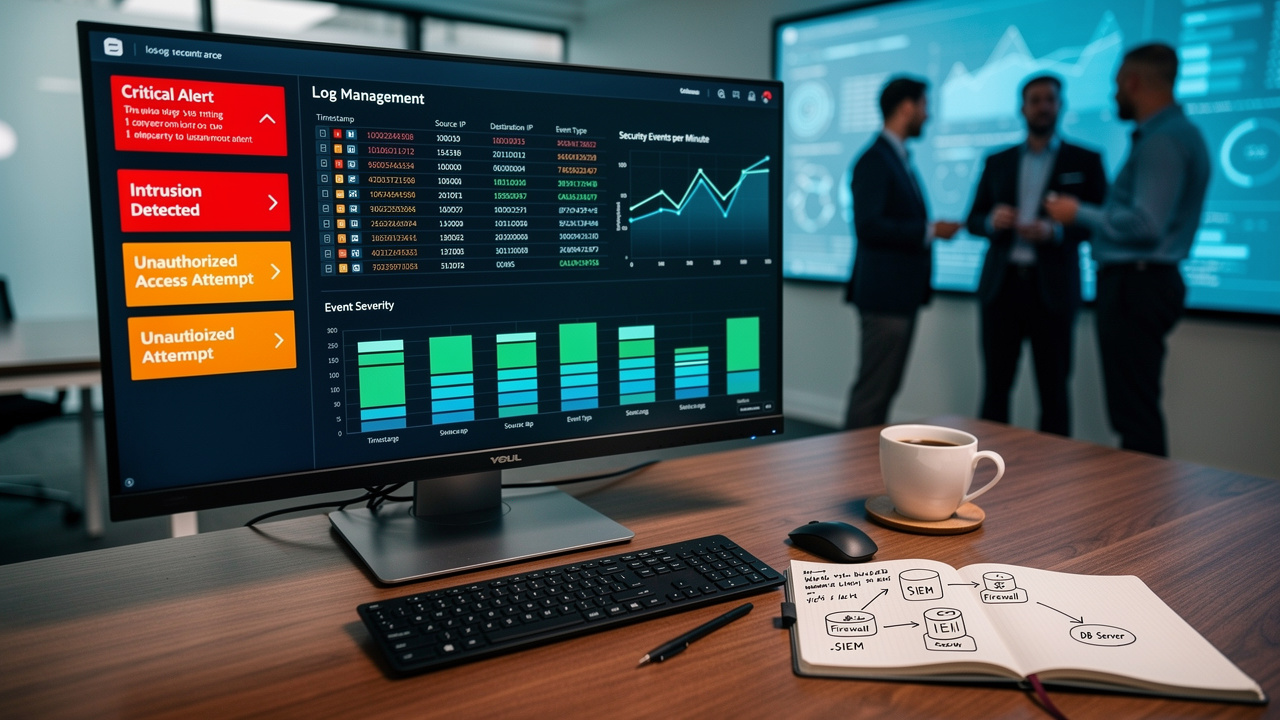
In an era where cyber threats are increasingly sophisticated, the importance of robust logging practices in cybersecurity cannot be overstated. Logging is not just a technical requirement; it’s a critical component that helps organizations protect sensitive data and comply with regulatory standards. It serves as a foundation for threat detection and incident response, enhancing overall business resilience.
Yet, as cyber threats evolve, how can organizations ensure their logging practices are not just adequate, but truly resilient? This piece will explore:
Underscoring its vital role in protecting operations in our digital landscape.
In an era where cyber threats loom large, understanding why logging is important in cybersecurity cannot be overstated. Logging is the systematic recording of events and activities within an IT environment, encompassing data from servers, applications, and network devices. In the realm of cybersecurity, record-keeping is indispensable as it creates a historical account of system activities. This enables organizations to monitor for suspicious behavior, detect threats, and investigate incidents. Effective record-keeping is essential for a robust cybersecurity strategy, which raises the question of why logging is important. It ensures compliance with regulatory standards like CMMC, NIST, HIPAA, and PCI-DSS, which protect Controlled Unclassified Information (CUI) and Federal Contract Information (FCI).
For example, financial institutions in South Carolina have successfully implemented comprehensive tracking systems that not only enhance security but also ensure adherence to stringent compliance standards. These institutions utilize advanced log management solutions to centralize log collection, secure storage, and regular reviews. This approach is essential for detecting anomalies and responding to potential threats swiftly. Such methods have proven effective in reducing risks linked to cyberattacks, especially in a context where 73% of entities report being impacted by cyber-enabled fraud.
Looking ahead to 2026, we see a trend where artificial intelligence and machine learning are becoming key players in log analysis. This evolution enables entities to identify patterns and anomalies that may suggest security breaches, thereby enhancing their overall security posture. Additionally, the implementation of new monitoring standards by global cyber agencies seeks to unify practices across sectors, further improving adherence and security protocols.
In South Carolina, regulatory adherence is vital. Companies like Cyber Solutions monitor systems to keep clients secure and resilient against evolving cyber threats. By adopting proactive tracking strategies, businesses can significantly reduce the time it takes to detect and respond to incidents, ultimately safeguarding their operations and sensitive data. Without robust logging practices, organizations risk leaving their sensitive data vulnerable to exploitation.

In an era where cybersecurity threats loom large, the stakes for healthcare organizations have never been higher. The advantages of monitoring in cybersecurity are numerous, especially for Cyber Solutions that must comply with strict standards such as CMMC, HIPAA, and PCI-DSS.
Firstly, it is essential to understand why logging is important, as it allows for real-time monitoring of system activities. This capability is critical for early threat detection and helps maintain eligibility for lucrative government contracts. By analyzing logs, organizations can identify anomalies that may indicate a security breach, allowing for swift incident response. This capability is essential for minimizing damage. Our case study illustrates this, showing how a 24-hour on-site response team effectively contained a threat through a layered approach, including endpoint isolation and user training.
Secondly, logs serve as a valuable resource for forensic investigations, which highlights why logging is important as they provide insights into the sequence of events leading up to an incident. This is particularly important for demonstrating compliance with various regulatory frameworks, ensuring audit readiness, and supporting risk assessments. Additionally, effective record-keeping can enhance operational efficiency by identifying performance bottlenecks and system failures, ultimately leading to improved service delivery and reduced downtime.
In a landscape where proactive security strategies are paramount, record-keeping stands as a foundational element in Cyber Solutions' comprehensive cybersecurity strategy. Statistics indicate that on average, it takes organizations 204 days to identify a data breach and 73 days to manage it. How prepared is your organization to respond in such a critical timeframe? Without robust monitoring, organizations risk not only their data but also their reputation and compliance standing.

In an era where data breaches are rampant, the stakes for healthcare organizations have never been higher. Insufficient record-keeping practices expose entities to significant risks, including unnoticed security breaches and compliance infractions. Without thorough monitoring, how can organizations even hope to detect breaches before it's too late? They struggle to identify unauthorized access or suspicious activities, leaving them vulnerable to data breaches. For instance, in 2023, 36% of data incidents originated from third-party vendors, emphasizing the dangers linked to inadequate tracking of vendor activities.
Moreover, inadequate record-keeping can obstruct forensic investigations, making it difficult to comprehend the extent of an incident and to carry out essential remediation actions. In finance, failing to keep detailed logs can lead to hefty regulatory penalties and damage to reputation. The average breach cost in this sector? A staggering $6.08 million. The healthcare industry, with the highest average breach expense at $11.2 million, highlights the essential need for strong monitoring practices to ensure adherence to regulations such as HIPAA, PCI-DSS, and GDPR.
At Cyber Solutions, we believe effective record-keeping isn’t just a technical box to check; it’s a cornerstone of a proactive security strategy. It enables entities to respond swiftly to potential threats and safeguard their operational integrity. Ignoring these record-keeping essentials could jeopardize not just compliance, but also highlights why logging is important for the very future of your organization. To address regulatory gaps effectively, tailored remediation strategies must be implemented, including:

In an era where cyber threats loom large, the healthcare sector must prioritize robust cybersecurity measures to safeguard sensitive patient data. To implement effective tracking practices, organizations must adhere to several best methods that enhance adherence and cybersecurity resilience.
By following these best practices, organizations can significantly enhance their logging capabilities, which leads to understanding why logging is important in fortifying their defenses against evolving cyber threats. By neglecting these best practices, organizations risk not only their compliance but also the trust of those they serve.

In an era where cyber threats are increasingly sophisticated, understanding the significance of logging in cybersecurity is not just beneficial - it's essential. Logging serves as a foundational element that aids in monitoring system activities and ensures compliance with essential regulatory standards such as HIPAA, PCI-DSS, and CMMC. Maintaining comprehensive records allows businesses to detect anomalies, respond to incidents, and safeguard sensitive data. This ultimately strengthens their cybersecurity posture.
Let’s explore the key benefits of effective logging practices. These include:
Organizations that prioritize logging can significantly reduce the time it takes to identify and manage data breaches, minimizing potential damage and ensuring compliance with industry regulations. Furthermore, the risks associated with poor logging practices - such as unnoticed security breaches - underscore the necessity of robust record-keeping strategies.
Ultimately, the importance of logging extends beyond mere compliance; it is a proactive measure that empowers organizations to defend against evolving cyber threats. By implementing best practices for logging, businesses can protect their data and build trust with their clients and stakeholders. Organizations that embrace robust logging practices will not only shield their data but also position themselves as trustworthy partners in an uncertain digital landscape.
What is logging in the context of cybersecurity?
Logging is the systematic recording of events and activities within an IT environment, including data from servers, applications, and network devices.
Why is logging important for cybersecurity?
Logging is crucial as it creates a historical account of system activities, enabling organizations to monitor for suspicious behavior, detect threats, and investigate incidents.
How does logging contribute to regulatory compliance?
Effective logging ensures compliance with regulatory standards such as CMMC, NIST, HIPAA, and PCI-DSS, which protect Controlled Unclassified Information (CUI) and Federal Contract Information (FCI).
Can you provide an example of logging implementation in South Carolina?
Financial institutions in South Carolina have implemented comprehensive tracking systems that enhance security and ensure compliance with stringent standards by utilizing advanced log management solutions for centralized log collection and regular reviews.
What are the benefits of advanced log management solutions?
These solutions help in detecting anomalies, responding to potential threats swiftly, and reducing risks associated with cyberattacks.
What trends are expected in log analysis by 2026?
The integration of artificial intelligence and machine learning in log analysis is expected to enhance the identification of patterns and anomalies that may indicate security breaches.
How does Cyber Solutions contribute to cybersecurity in South Carolina?
Cyber Solutions monitors systems to keep clients secure and resilient against evolving cyber threats, adopting proactive tracking strategies to reduce detection and response times to incidents.
What risks do organizations face without robust logging practices?
Without effective logging, organizations risk leaving their sensitive data vulnerable to exploitation and may struggle to detect and respond to security incidents promptly.
Managed IT Service Provider | Cyber Security | Incident Response | Compliance As A Service | Hosted Phone Service | Managed Security Service Provider | AI As A Service