Cybersecurity Education and Training

Understanding NIST Guidelines for Passwords: Importance and Key Insights

Introduction

In today's world, where data breaches and cyber threats loom larger than ever, effective password management stands as a cornerstone of cybersecurity. The NIST guidelines for passwords, particularly those detailed in Special Publication 800-63B, offer vital insights into crafting secure yet user-friendly authentication practices. By emphasizing password length over complexity and promoting the use of passphrases, these guidelines not only challenge traditional security notions but also enhance the user experience.

How can organizations harness these evolving standards to safeguard sensitive information while streamlining their security processes? This question is crucial as the landscape of cybersecurity continues to evolve, presenting unique challenges that demand innovative solutions. By adopting these best practices, organizations can not only bolster their defenses but also foster a culture of security awareness among users.

Define NIST Password Guidelines

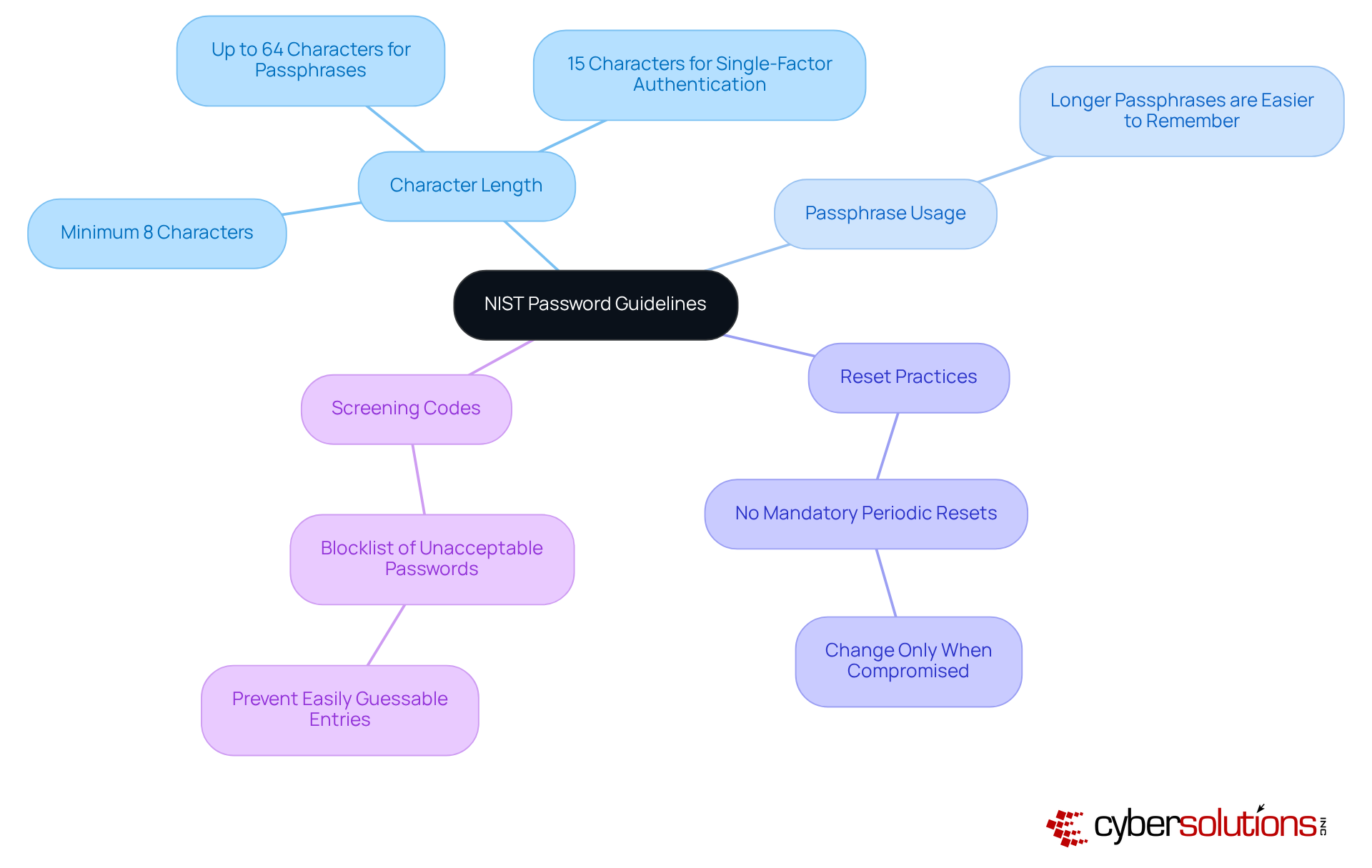
In today's digital age, the importance of robust cybersecurity in healthcare cannot be overstated. The NIST guidelines for passwords, outlined in Special Publication 800-63B, provide a strong framework for credential creation and management that enhances both security and user experience. These guidelines emphasize access key length over complexity, recommending:

  1. A minimum of 8 characters for general use
  2. 15 characters for single-factor authentication
  3. Passphrases of up to 64 characters

This shift acknowledges that longer passphrases are not only more secure but also easier for individuals to remember.

Moreover, the guidelines advocate for the discontinuation of mandatory periodic access code resets. Instead, changes should only be made when there is clear evidence of a compromise. This approach not only alleviates frustration for users but also encourages the adoption of more secure authentication practices. Additionally, access codes must be screened against a blocklist of unacceptable combinations, effectively preventing the use of easily guessable entries.

By prioritizing accessible strategies and emphasizing the importance of educating individuals on the NIST guidelines for passwords, organizations can significantly enhance overall security. This proactive stance not only reduces the administrative burden associated with credential management but also fosters a safer digital environment. Are you ready to embrace these best practices and elevate your organization's cybersecurity posture?

The central node represents the main guidelines, while the branches show specific recommendations. Each color-coded branch helps you quickly identify different aspects of password management, making it easier to remember and apply these best practices.

Explore the Evolution of NIST Guidelines

The evolution of the NIST guidelines for passwords has been significant to address the ever-changing landscape of cybersecurity threats and individual behaviors. Initially, these guidelines mandated complex passcodes, combining characters, numbers, and symbols. However, research revealed that such complexity often led to weaker security practices, as individuals resorted to predictable patterns or reused credentials. In response, NIST shifted its focus toward longer phrases and passphrases, in accordance with the NIST guidelines for passwords, which are not only easier to remember but also more resistant to attacks.

The 2025 updates further simplify these requirements by eliminating mandatory periodic resets and emphasizing the use of credential managers. These tools are essential for securely storing and generating strong, unique combinations. This approach not only enhances safety but also aligns with individual behavior, reducing the likelihood of password-related vulnerabilities. Organizations adopting these guidelines are witnessing improved compliance and a significant decrease in reset requests. Studies indicate that supporting Unicode characters results in 43% fewer resets.

By prioritizing length over complexity and recommending the maintenance of a blocklist to prevent weak credentials, the latest recommendations align with NIST guidelines for passwords, simplifying protection for users while effectively addressing evolving cyber threats. Moreover, the integration of multi-factor authentication (MFA) is crucial for bolstering security alongside these new access code guidelines. Are you ready to enhance your organization's cybersecurity posture? Embrace these guidelines and fortify your defenses against emerging threats.
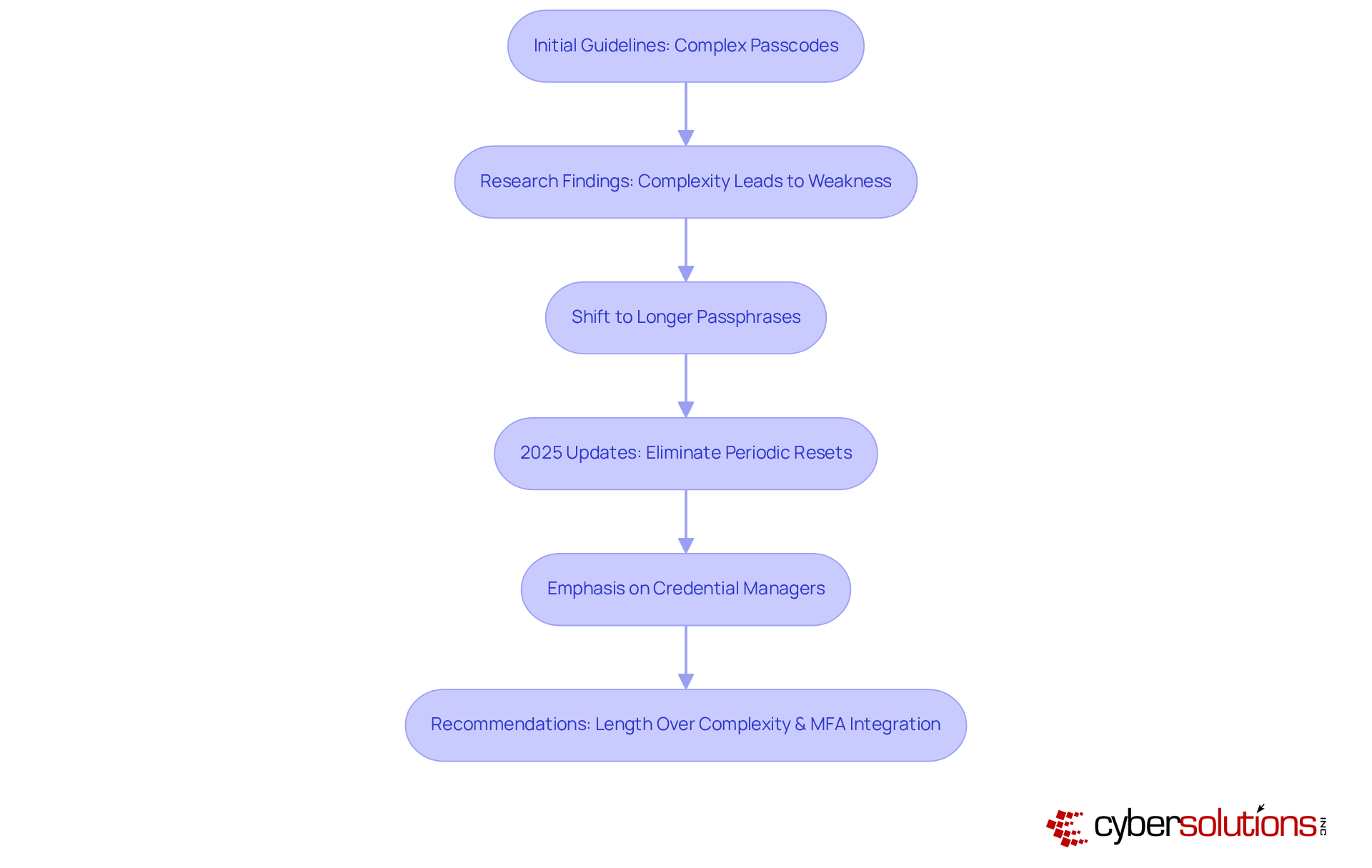
Follow the arrows to see how NIST guidelines have changed over time. Each box represents a key stage in the evolution, showing how the focus has shifted to improve security practices.

Discuss the Importance of NIST Guidelines for Businesses

For businesses, adhering to NIST Password Guidelines is not just important; it’s essential for safeguarding against the ever-evolving landscape of cybersecurity threats. Did you know that 94% of data breaches involve compromised credentials? This staggering statistic underscores the necessity of robust authentication policies. By adopting strong access credential practices, organizations can significantly mitigate the risk of data breaches and cyberattacks, which can lead to substantial financial losses and reputational damage.

Moreover, compliance with these guidelines is crucial for meeting various regulatory obligations, including HIPAA and PCI-DSS, which mandate strong protective measures. The recent updates for 2025 emphasize the importance of access code length over complexity, recommending a minimum of 15 characters for single-factor codes. This shift not only enhances protection but also aligns organizations with national standards, fostering a culture of vigilance.

Organizations that align their credential practices with these guidelines often experience enhanced user satisfaction and reduced help desk expenses related to resets and account lockouts. As the institute aptly states, 'making the credential a component, not the focal point, of authentication' is vital for a comprehensive protection strategy. This alignment streamlines operations and contributes to a more resilient organizational framework, ultimately ensuring that sensitive information remains secure.
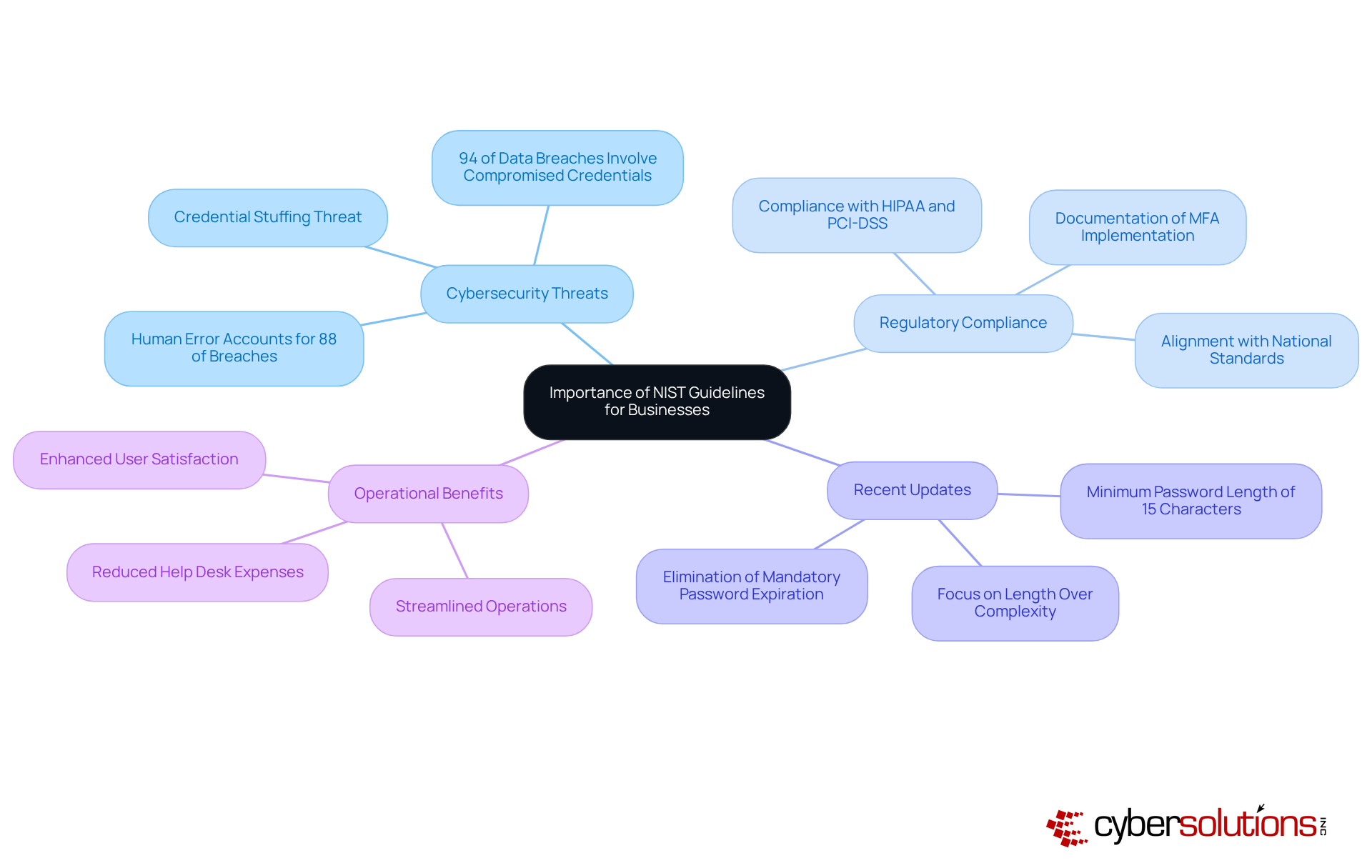
The center shows the main topic, and the branches represent key areas related to NIST guidelines. Each sub-branch provides specific details, helping you see how everything connects and why these guidelines matter for businesses.

Highlight Key Recommendations of NIST Guidelines

In today's digital landscape, cybersecurity is not just a necessity; it's a critical imperative for healthcare organizations. With increasing threats looming over sensitive patient data, CFOs must navigate unique challenges that demand robust security measures. The NIST Guidelines for Authentication offer essential recommendations to bolster security protocols:

  • Prioritize Password Length: Encourage the use of passwords that are at least 12-16 characters long. Longer passwords are significantly harder to crack, providing a stronger defense against unauthorized access.
  • Eliminate Complexity Requirements: Instead of imposing intricate character criteria, allow individuals to create memorable passphrases. Simplicity can enhance recall without sacrificing security.
  • Avoid Mandatory Password Resets: Reset passwords only when there is clear evidence of a compromise. This approach minimizes unnecessary disruptions for users, maintaining productivity.
  • Implement Credential Managers: Promote the use of credential managers to help individuals generate and securely store strong, unique passwords.
  • Monitor for Compromised Passwords: Regularly check passwords against known compromised lists to proactively prevent unauthorized access.

By following NIST guidelines for passwords, healthcare organizations can significantly enhance their security posture while also improving user experience. The time to act is now-strengthening cybersecurity is not just about compliance; it's about safeguarding the trust of patients and stakeholders alike.
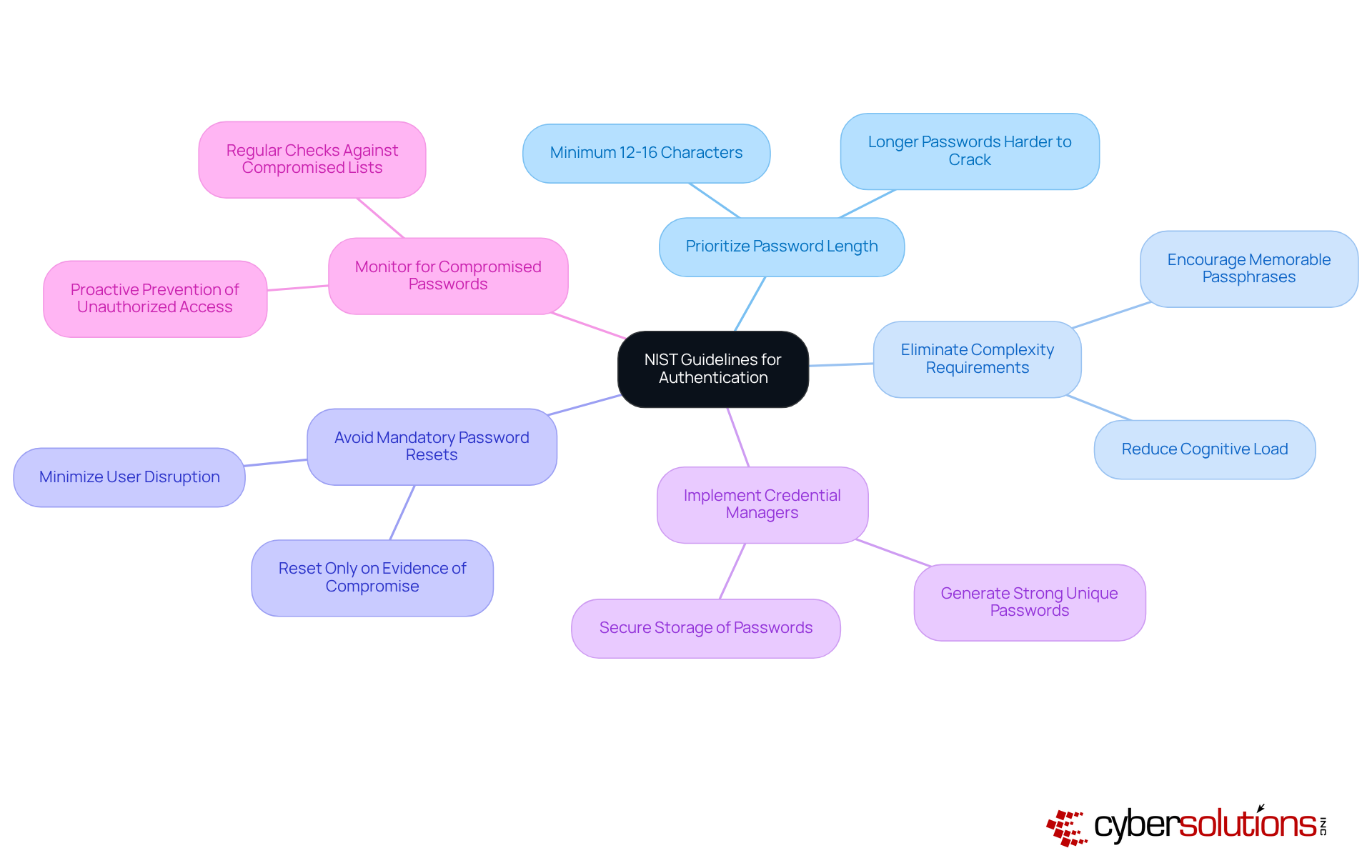
The central node represents the NIST guidelines, and each branch shows a specific recommendation. Follow the branches to understand how each suggestion contributes to better cybersecurity practices.

Conclusion

Cybersecurity in healthcare is not just a necessity; it’s a critical imperative. The NIST guidelines for passwords mark a significant shift in how organizations approach this vital aspect of their operations. By prioritizing password length over complexity and promoting user-friendly practices, these guidelines aim to create a more secure and manageable authentication environment. This evolution not only enhances security but also cultivates a culture of compliance and awareness among users.

Key insights throughout the article underscore the importance of adopting robust password practices. Consider the following recommendations:

  • Utilize longer passphrases.
  • Eliminate unnecessary password resets.
  • Promote the use of credential managers.

These strategies are designed to mitigate risks associated with data breaches, which are alarmingly prevalent in today’s digital landscape. Moreover, integrating multi-factor authentication alongside these guidelines adds an essential layer of security that organizations cannot afford to overlook.

Ultimately, embracing the NIST guidelines transcends mere compliance; it’s about safeguarding sensitive information and maintaining the trust of patients and stakeholders. Organizations must implement these best practices to strengthen their defenses against emerging threats, ensuring that cybersecurity remains a top priority in an ever-evolving digital world. Taking proactive steps today can significantly enhance security posture and contribute to a safer, more resilient future.

Frequently Asked Questions

What are the NIST password guidelines?

The NIST password guidelines, outlined in Special Publication 800-63B, provide a framework for creating and managing passwords that enhances security and user experience.

What is the recommended minimum password length according to NIST?

The NIST guidelines recommend a minimum password length of 8 characters for general use and 15 characters for single-factor authentication.

How long can passphrases be under the NIST guidelines?

Passphrases can be up to 64 characters long according to the NIST guidelines.

Why does NIST emphasize longer passphrases?

NIST emphasizes longer passphrases because they are more secure and easier for individuals to remember.

What does NIST say about mandatory periodic password resets?

NIST recommends discontinuing mandatory periodic password resets, suggesting that changes should only occur when there is clear evidence of a compromise.

How do the NIST guidelines improve user experience?

By eliminating mandatory resets, users experience less frustration and are encouraged to adopt more secure authentication practices.

What is the purpose of screening access codes against a blocklist?

Screening access codes against a blocklist prevents the use of easily guessable entries, enhancing security.

How can organizations enhance overall security according to the NIST guidelines?

Organizations can enhance security by prioritizing accessible strategies and educating individuals on the NIST password guidelines, which reduces the administrative burden of credential management.

Recent Posts
Understanding NIST Guidelines for Passwords: Importance and Key Insights
Maximize ROI with Tailored IT Solutions and Managed Services
Achieve NIST 800 Compliance: 4 Essential Steps for Leaders
Compare 4 Dark Web Monitoring Companies: Features, Benefits, Pricing
Master the NIST Incident Response Process for Effective Security
Best Practices for Selecting Multi-Factor Authentication Tools
10 Managed Security Services Companies to Watch in 2025
Navigating DOD CMMC Requirements: Compare Compliance Impacts and Trends
Understanding Desktop-as-a-Service: Key Insights for Executives
Understanding Failover Systems: Importance and Key Configurations
10 Essential Strategies for Small Business Ransomware Protection
Understanding Managed Cybersecurity Solutions: Importance and Benefits
Understanding Secure Infrastructure Solutions: Importance and Key Features
How Vulnerability Scanning Works: A Guide for C-Suite Leaders
10 Essential Managed IT Solutions in Maine for Business Leaders
Master Cybersecurity and Compliance: Best Practices for C-Suite Leaders
Backup vs Disaster Recovery: Key Differences for C-Suite Leaders
Why Managed IT Compliance Services Are Essential for Business Success
Understanding Disaster Recovery Tiers: Importance and Key Features
4 Best Practices for Effective Backup and Continuity Strategies
Achieve CMMC 2.0 Level 2 Compliance: A Step-by-Step Approach
Create an Effective Acceptable Use Policy (AUP) in 7 Steps
10 Essential Strategies for Hybrid Work Security Success
10 Essential Cyber Security KPIs for Business Resilience
Comparing Cyber Security Pricing Models for Strategic Decision-Making
Understanding the Benefits of a Managed Service Provider for Leaders
7 Managed Security Services Cloud Solutions for Business Resilience
9 Key Benefits of Cyber Attack Simulation Exercises for Leaders
What an Acceptable Use Policy (AUP) Means for Your Organization
Why Use a Managed Service Provider for Strategic Business Success
10 Key Benefits of the Managed Service Provider Business Model
Understanding the Difference Between MSP and MSSP for Leaders
10 Managed Network IT Services to Boost Business Efficiency
What is a Managed Services Consultant and Why It Matters for Leaders
Understanding the Cost of Cybersecurity for Small Businesses
7 Top Data Center Managed Services Providers for C-Suite Leaders
10 Essential MSP IT Plans for C-Suite Leaders to Enhance Efficiency
Understanding Managed Services Benefits and Risks for Executives
10 Essential Security Services in Information Security for C-Suite Leaders
Create Your CMMC SSP: A Step-by-Step Guide for Leaders
Understanding CVE Funding Cuts: Impacts and Strategies for Leaders
IT Spending as a Percentage of Revenue by Industry: Key Insights
Understanding MSP Company Meaning: Role and Impact for Leaders
10 Examples of Managed Service Providers for C-Suite Leaders
10 Benefits of Defensive Artificial Intelligence for C-Suite Leaders
10 Key Insights on What Juice Jacking Means for Your Business
10 Insights on IT Spending as Percentage of Revenue for Leaders
10 Key Benefits of SSL DPI for C-Suite Leaders
10 Benefits of Managed Firewall Solutions for Business Security
10 Essential Emergency IT Support Services for C-Suite Leaders
Understanding Hourly IT Support Rates: Key Factors and Calculations
10 Essential SMB IT Services to Enhance Security and Efficiency
10 Digital Certificate Types Every C-Suite Leader Should Know
Understanding Juice Jacking Meaning: Protect Your Business Today
10 Essential Practices for Effective Cybersecurity Documentation
Protect Your Business: Combat USB Drop Attacks Effectively
Essential IT Services SMBs Must Consider for Success
What Is Threat Intelligence in Cybersecurity and Why It Matters
Understanding Endpoint Protection: Definition and Key Insights
10 Key Benefits of Managed Services Security Companies for Leaders
Backup vs Archiving: Key Insights for C-Suite Leaders
Meet the CMMC Compliance Deadline: Steps for C-Suite Leaders
3 Best Practices for Effective Disaster Recovery Storage Solutions
10 Essential Malware Prevention Best Practices for Executives
10 Essential Strategies for Effective Voice Disaster Recovery
Best Practices for Data and System Recovery in Your Organization
Understanding Outsourced IT Support Costs for Strategic Leaders
10 Key Factors Influencing Cyber Security Certification Cost
Mastering Your Information Security Assessment: A Step-by-Step Guide
10 Key Elements of a NIST Incident Response Plan for Leaders
Master Cyber Security Assessment: A Step-by-Step Approach
7 Managed Services Billing Software Solutions for C-Suite Leaders
10 Essential CMMC Controls for C-Suite Leaders to Implement
Master Compliance in Cyber Security: Strategies for C-Suite Leaders
10 Benefits of 24/7 Managed IT Services for C-Suite Leaders
Master Cyber Security KPIs to Align with Business Goals
10 Managed Services Cyber Security Strategies for C-Suite Leaders
What Does Compliance Mean in Business? Key Insights for Leaders
4 Key Insights on the Cost of IT for C-Suite Leaders
Implement an External Vulnerability Scanner: A Step-by-Step Guide
What is Failover? Key Insights for Business Continuity Leaders
Understanding Managed IT Support Pricing: Key Factors and Models
Understand Spam Bombs: Protect Your Organization from Attacks
Master Internal Vulnerability Scanning: Best Practices for Executives
10 Key Insights on Configuration vs Change Management for Leaders
What Cybersecurity Professionals Use Logs For: Key Insights and Practices
10 Essential Data Backup Strategies for C-Suite Leaders
10 Reasons to Choose a Managed IT Support Company for Your Business
Why Partnering with a Cybersecurity Compliance Company Matters
Master Cloud Backup and Disaster Recovery for Business Resilience
10 Key Elements of a Security Assessment Report for Leaders
10 Key Insights on Vulnerability Scanning vs Penetration Testing
10 Safe Web Browsing Tips for C-Suite Leaders to Enhance Security
10 Essential Firewall Solutions for C-Suite Leaders
10 Essential Information Security Alerts for C-Suite Leaders
Master IT Security Alerts: Essential Insights for C-Suite Leaders
10 Reasons C-Suite Leaders Need Custom Business Software Now
10 Benefits of Custom Business Software Development for Executives
Understanding Business Custom Software: Importance and Benefits for Leaders
10 Key Attack Vectors Definitions Every C-Suite Leader Must Know

Join our newsletter

Sign up for the latest industry news.
We care about your data in our privacy policy.
Thank you! Your submission has been received!
Oops! Something went wrong while submitting the form.