
Introduction
In a world where cyber threats hide in the shadows of the internet, the importance of dark web monitoring is more critical than ever. Organizations can gain invaluable insights into potential breaches and compromised data, empowering them to take decisive action against increasingly sophisticated cybercriminals.
But with a multitude of providers offering different features, benefits, and pricing structures, how can businesses determine which dark web monitoring service aligns best with their specific needs?
This comparative analysis explores the offerings of four leading companies, equipping readers with the knowledge necessary to make informed decisions in protecting their digital assets.
Define Dark Web Monitoring: An Overview
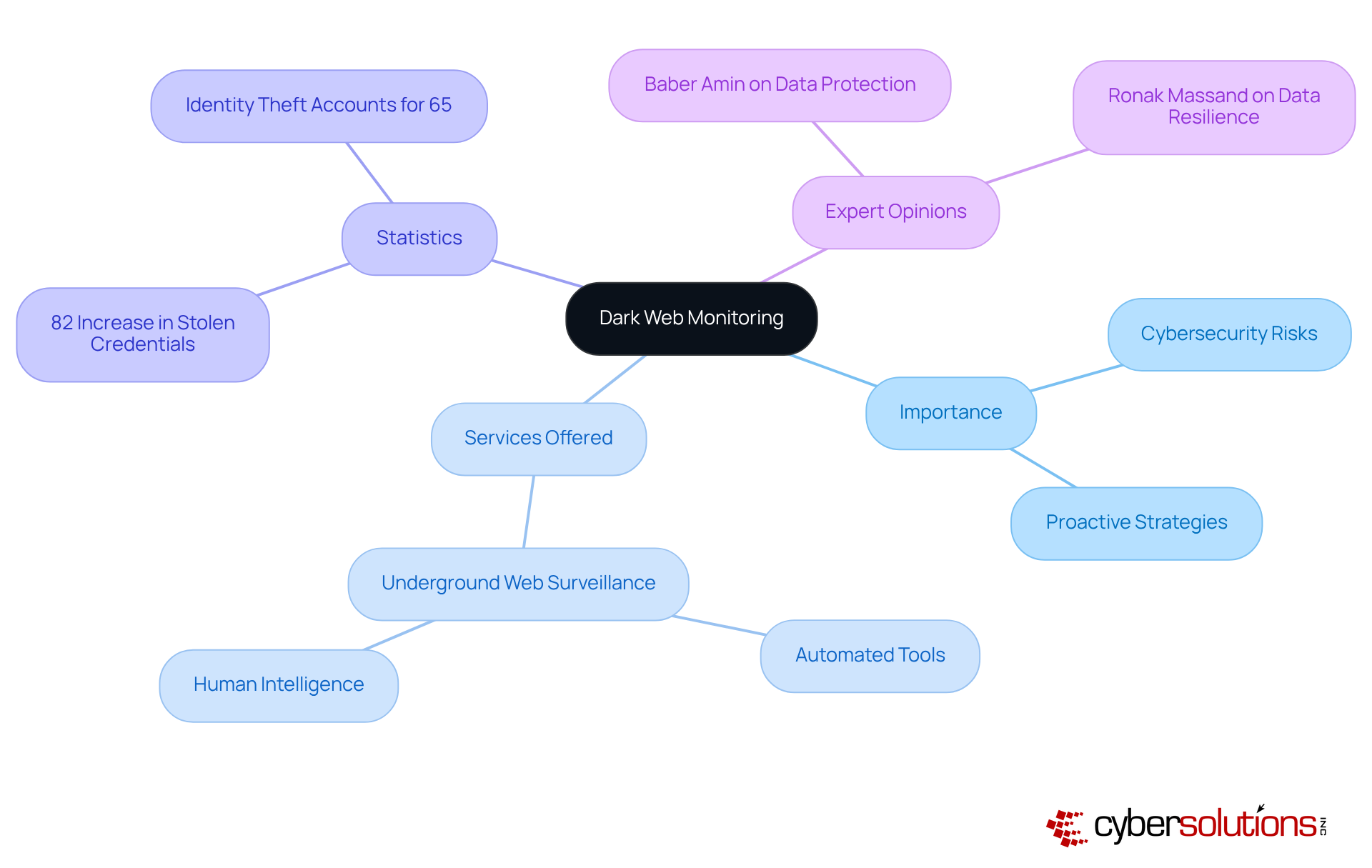
In today's digital landscape, the importance of cybersecurity cannot be overstated, especially when it comes to dark web monitoring. This ongoing examination of the concealed parts of the internet - known as the hidden web - plays a crucial role in detecting and tracing compromised information, such as stolen credentials and sensitive corporate data. By adopting this proactive strategy, organizations can identify potential threats before they escalate into significant breaches. In fact, by 2025, entities with compromised credentials found on the hidden web will face a staggering 2.56 times greater risk of experiencing a cyberattack.
At Cyber Solutions, we offer services that combine automated tools with human intelligence. Our approach gathers insights from various underground web sources, including forums and marketplaces where illegal activities thrive. These services provide early warnings about data breaches, enabling businesses to take swift action to mitigate risks and protect their assets. Starting in 2025, more organizations are recognizing the necessity of these services, with many integrating them into their cybersecurity strategies.
Experts agree that dark web monitoring is vital for maintaining a robust security posture. The alarming surge in data breaches - a staggering 82% increase in 2022, totaling an estimated 15 billion - underscores the persistent threat posed by cybercriminals. Moreover, identity theft accounts for over 65% of all illegal activities observed on the hidden web, further emphasizing the urgency of these oversight services. By leveraging deep web surveillance alongside our comprehensive security solutions - such as continuous network monitoring, alerts, threat intelligence, email security, and firewalls - companies can stay ahead of potential breaches and enhance their overall cybersecurity framework. This proactive stance ensures they are better equipped to respond to incidents. As Baber Amin, Chief Product Officer at Anetac, aptly notes, organizations must address threats to both human and non-human identities to effectively safeguard their data.
Compare Features of Dark Web Monitoring Solutions
In today's digital landscape, cybersecurity is paramount, especially for organizations navigating the complexities of the dark web. When evaluating solutions, several key features emerge as essential:
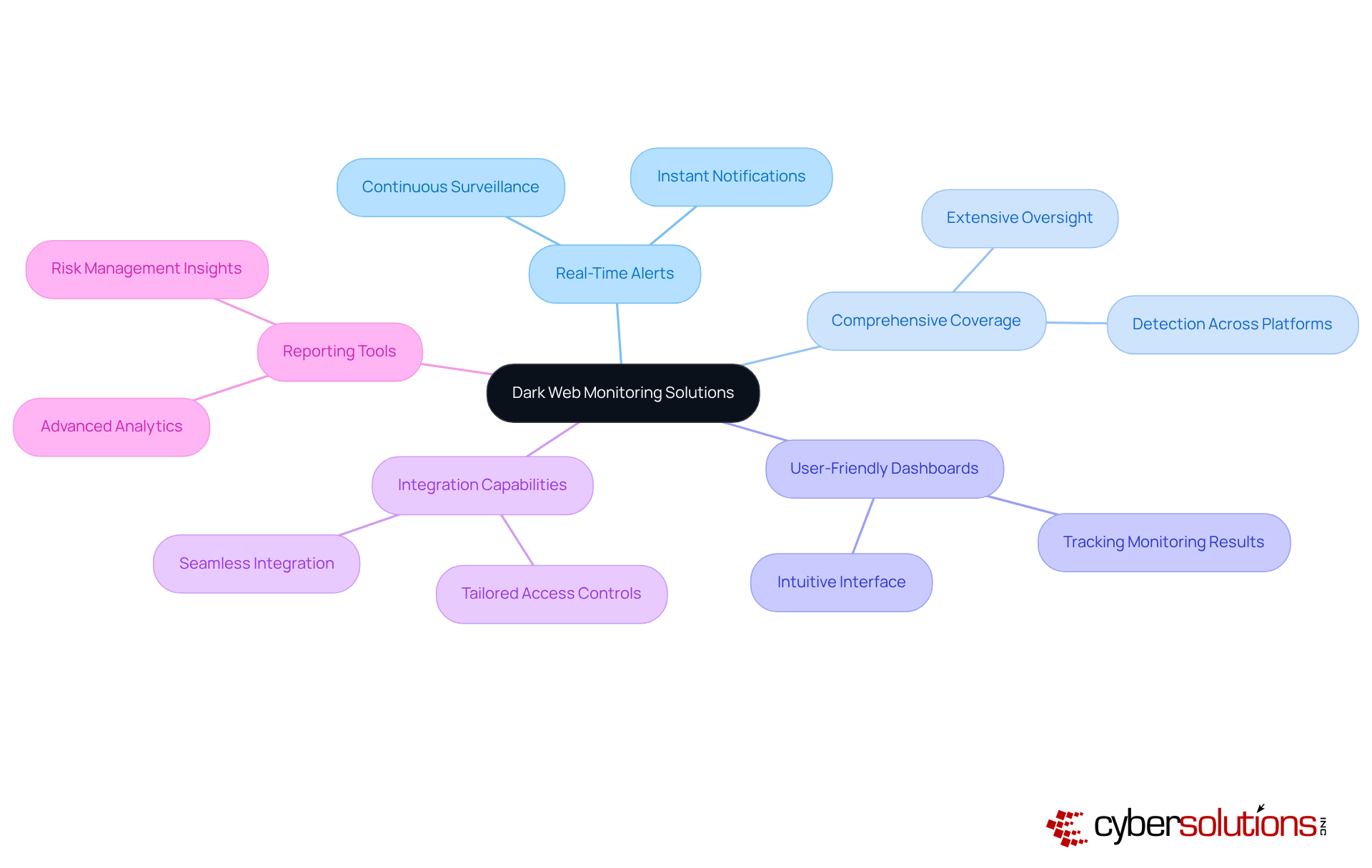
- Notifications: Many services provide instant notifications upon detecting compromised data, enabling organizations to respond swiftly to potential threats. Cyber Solutions enhances this capability with continuous surveillance, ensuring that anomalies and vulnerabilities are identified without delay.
- Coverage: While some solutions focus on specific areas like social media or forums, companies offer extensive oversight across various platforms. Cyber Solutions' ongoing surveillance guarantees that suspicious activities are detected and addressed before they escalate into serious threats.
- Usability: An intuitive interface significantly improves usability, making it easier to track monitoring results and manage alerts. This is particularly crucial for C-Suite leaders who must make informed decisions based on real-time insights.
- Integration: The ability to seamlessly integrate with existing security systems can streamline operations and bolster overall security posture. Cyber Solutions provides tailored access controls, ensuring that only authorized users can access sensitive information.
- Reporting Tools: Reporting tools empower organizations to generate insights and analytics regarding their exposure, aiding in the formulation of effective risk management strategies. With Cyber Solutions, entities can harness data to defend against ransomware, phishing, and other malware attacks.
By carefully assessing these attributes, organizations can pinpoint which companies best meet their operational needs and security objectives.
Evaluate Benefits of Dark Web Monitoring Services
The advantages of dark web monitoring services are not just beneficial; they are essential in today’s cybersecurity landscape:
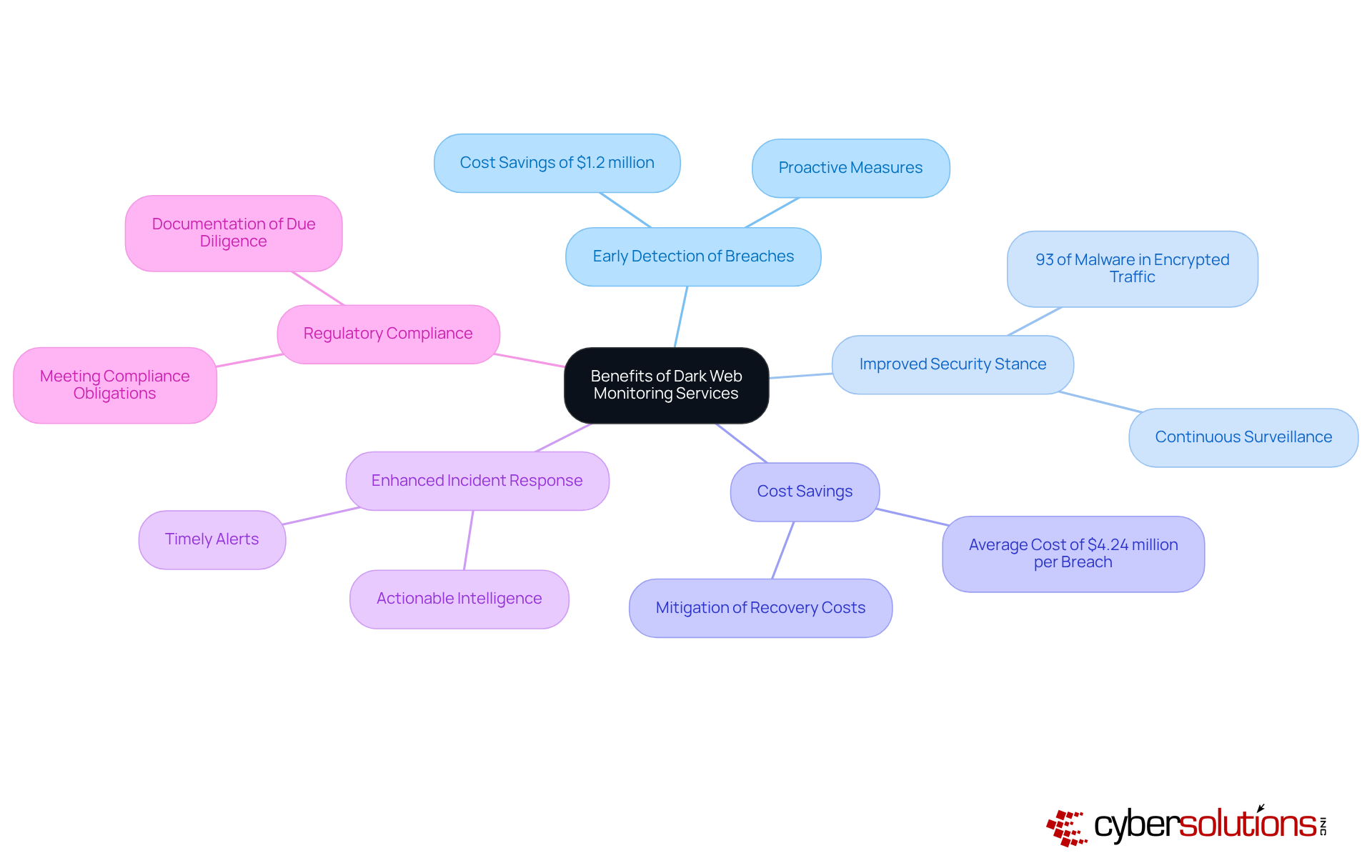
- Swiftly identifying compromised data allows organizations to take proactive measures, significantly reducing the risks of identity theft and extensive data breaches. Early intervention is crucial; studies show that entities detecting breaches within the first 30 days can save an average of $1.2 million in recovery costs.
- Continuous surveillance keeps organizations one step ahead of cybercriminals, fortifying their security structure and ensuring compliance with stringent regulations. In an era where 93 percent of malware hides in encrypted traffic, enhancing defenses is imperative.
- Preventing data breaches leads to significant savings. Organizations can sidestep the hefty costs associated with recovery, legal fees, and reputational damage, which average around $4.24 million per breach, according to recent industry reports. This is a critical advantage.
- With timely alerts and actionable intelligence, organizations can respond more efficiently to incidents, minimizing the impact of potential threats. Effective incident response hinges on having the right information and organizational structure, enabling swift remediation.
- Many industries face strict regulations regarding data protection. Dark web monitoring helps organizations meet these compliance obligations by providing documented proof of due diligence in safeguarding sensitive information. This is particularly important, ensuring accountability.
These advantages underscore the necessity of investing in dark web monitoring services as a critical element of a robust cybersecurity strategy, especially as organizations confront evolving risks in 2025.
Analyze Pricing Models of Dark Web Monitoring Providers
In today's digital landscape, understanding the pricing models for dark web monitoring services is essential for organizations aiming to safeguard their assets against cyber threats. With the increasing prevalence of data breaches, it's crucial to make informed decisions.
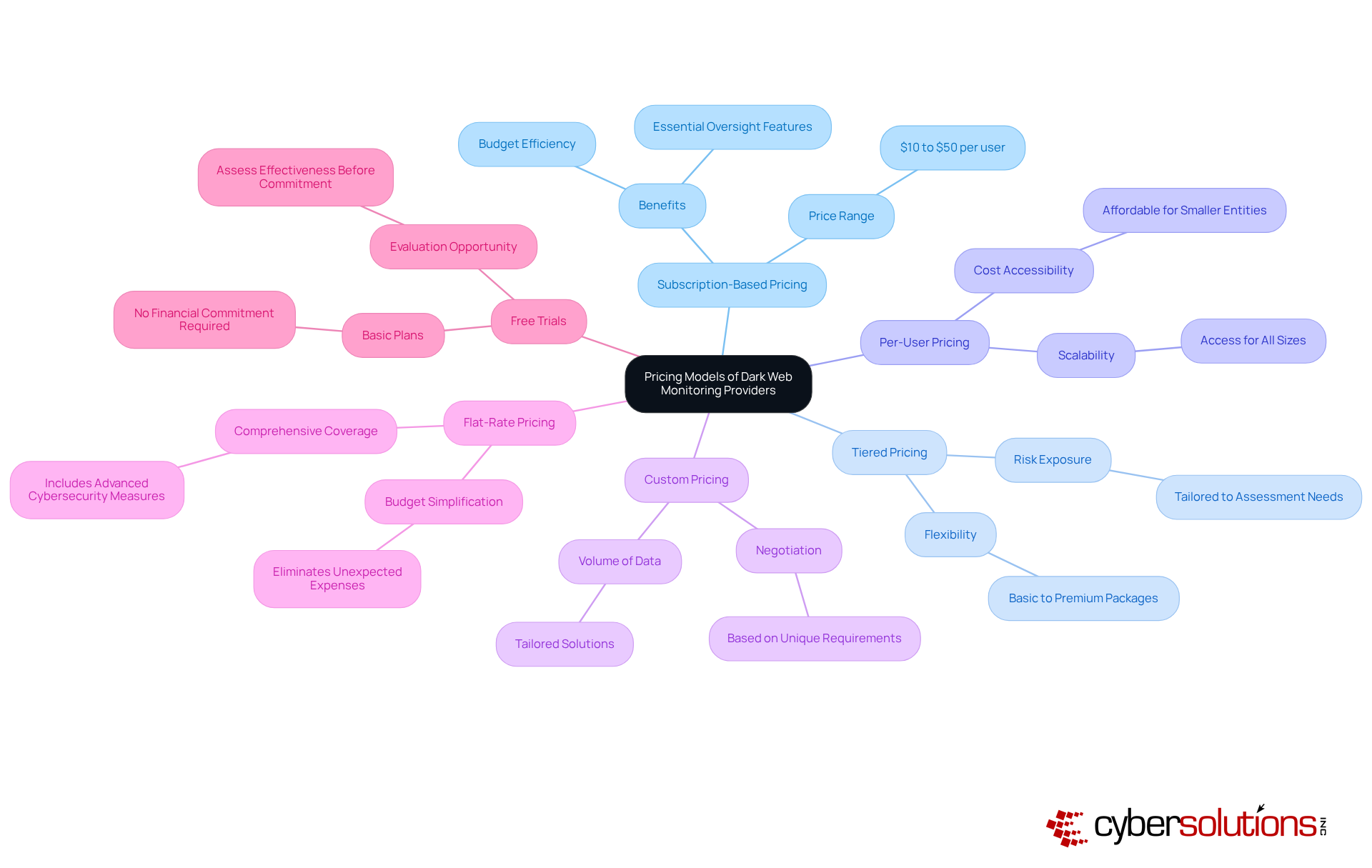
- Monthly and Annual Subscription Plans: Many providers offer monthly or annual subscription plans, typically ranging from $10 to $50 per user. This model allows organizations to budget efficiently while leveraging essential oversight features.
- Tiered Pricing: Some services implement tiered pricing, enabling organizations to select from basic to premium packages tailored to their specific assessment needs and budget constraints. This flexibility accommodates varying levels of risk exposure, ensuring that every organization can find a suitable option.
- Per-User or Per-Asset Pricing: This model charges organizations based on the number of users or assets monitored, providing scalability for companies of all sizes. It allows smaller entities to access dark web monitoring without incurring excessive costs, making cybersecurity more accessible.
- Custom Pricing: Larger enterprises often negotiate custom pricing based on their unique requirements and the volume of data monitored. This approach ensures that organizations receive tailored solutions that align with their specific security needs.
- All-Inclusive Pricing: Cyber Solutions offers an all-inclusive pricing model that simplifies budgeting by eliminating unexpected IT expenses. This comprehensive pricing covers everything from email licenses to advanced cybersecurity measures, providing peace of mind in one package. Unlike subscription-based and tiered pricing, all-inclusive pricing enhances predictability and can improve operational efficiency, enabling organizations to allocate resources more effectively.
- Free Trials or Basic Plans: Numerous providers offer free trials or basic plans, allowing organizations to evaluate the service before making a financial commitment. This can be particularly beneficial for assessing the effectiveness of the monitoring solution.
By carefully analyzing these pricing models, organizations can identify options that provide solutions aligning with their budget while ensuring robust protection against evolving cyber threats. Are you ready to take the next step in securing your organization?
Conclusion
In today’s digital landscape, the importance of cybersecurity cannot be overstated. Organizations are increasingly aware of the critical need to protect sensitive data from emerging threats, particularly through dark web monitoring. By leveraging advanced monitoring solutions, businesses can proactively identify vulnerabilities and respond to potential breaches before they escalate. This proactive approach not only strengthens their security posture but also safeguards their assets in an ever-evolving threat environment.
This article has delved into the essential features of dark web monitoring services, including:
- Real-time alerts
- Comprehensive coverage
- User-friendly interfaces
These elements are crucial for effective cybersecurity. The benefits of these services-such as early detection of breaches, improved incident response, and significant cost savings-underscore their vital role in defending against the sophisticated tactics employed by cybercriminals. Moreover, understanding various pricing models allows organizations to make informed decisions that align with their operational needs and budget constraints.
As the threat landscape continues to evolve, investing in dark web monitoring services is not merely a strategic choice; it is an essential step toward securing organizational assets and ensuring compliance with regulatory demands. Embracing these solutions empowers businesses to navigate the complexities of cybersecurity effectively, keeping them one step ahead of potential threats. Taking action now can significantly mitigate risks and enhance overall security in the face of an uncertain future.
Frequently Asked Questions
What is dark web monitoring?
Dark web monitoring refers to the ongoing examination of the hidden parts of the internet to detect and trace compromised information, such as stolen credentials and sensitive corporate data.
Why is dark web monitoring important for organizations?
It helps organizations identify potential threats before they escalate into significant breaches, reducing the risk of cyberattacks associated with compromised credentials.
What services does Cyber Solutions offer for dark web monitoring?
Cyber Solutions offers underground web surveillance services that use automated tools combined with human intelligence to gather insights from various underground web sources, including forums and marketplaces.
How does dark web monitoring benefit businesses?
It provides early warnings about data exposures, enabling businesses to take swift action to mitigate risks and protect their assets.
What is the expected trend in dark web monitoring by 2025?
By 2025, more organizations are expected to recognize the necessity of dark web monitoring services and integrate them into their cybersecurity strategies.
What alarming statistics highlight the need for dark web monitoring?
There was an 82% increase in stolen account credentials in 2022, totaling an estimated 15 billion, and identity theft accounts for over 65% of all illegal activities observed on the hidden web.
How can companies enhance their cybersecurity framework alongside dark web monitoring?
Companies can leverage deep web surveillance along with comprehensive cybersecurity solutions such as continuous network monitoring, alerts, endpoint protection, email security, and firewalls to stay ahead of potential breaches.
What is the overall goal of implementing dark web monitoring?
The goal is to ensure organizations are better equipped to navigate the evolving landscape of cyber threats and effectively safeguard both human and non-human identities.
List of Sources
- Define Dark Web Monitoring: An Overview
- pandasecurity.com (https://pandasecurity.com/en/mediacenter/dark-web-statistics)
- Solutions Review: Cybersecurity Awareness Month Quotes from Industry Experts in 2024 - Mark43 (https://mark43.com/press/solutions-review-cybersecurity-awareness-month-quotes-from-industry-experts-in-2024)
- chattinncyber.com (https://chattinncyber.com/2025/12/18/unveiling-the-dark-web-cyber-threat-intelligence-and-forensics-with-alyssa-lisiewski)
- digitaldefynd.com (https://digitaldefynd.com/IQ/inspirational-cybersecurity-quotes)
- Compare Features of Dark Web Monitoring Solutions
- pandasecurity.com (https://pandasecurity.com/en/mediacenter/dark-web-statistics)
- patentpc.com (https://patentpc.com/blog/dark-web-monitoring-how-often-is-leaked-data-found)
- cyburanus.com (https://cyburanus.com/blog/51-powerful-cybersecurity-quotes)
- Evaluate Benefits of Dark Web Monitoring Services
- cyrisma.com (https://cyrisma.com/blog/dark-web-monitoring-importance)
- Solutions Review: Cybersecurity Awareness Month Quotes from Industry Experts in 2024 - Mark43 (https://mark43.com/press/solutions-review-cybersecurity-awareness-month-quotes-from-industry-experts-in-2024)
- digitaldefynd.com (https://digitaldefynd.com/IQ/inspirational-cybersecurity-quotes)
- atera.com (https://atera.com/blog/best-cybersecurity-quotes)
- Analyze Pricing Models of Dark Web Monitoring Providers
- alertus.com (https://alertus.com/case-study-cobb-emc)
- cyburanus.com (https://cyburanus.com/blog/51-powerful-cybersecurity-quotes)
- solutionsreview.com (https://solutionsreview.com/security-information-event-management/cybersecurity-awareness-month-quotes-from-industry-experts)
- belltec.com (https://belltec.com/how-much-do-cybersecurity-services-cost)