


The emergence of hybrid work environments signifies a pivotal shift in organizational operations, merging the flexibility of remote work with the collaborative advantages of in-office settings. This evolution is not just a trend; it’s a necessity for companies aiming to meet the evolving expectations of their workforce. For C-suite leaders, grasping the intricacies of hybrid work is crucial to fostering productivity and enhancing employee satisfaction.
However, as organizations adopt this model, they encounter significant challenges, particularly in maintaining team cohesion and ensuring effective communication. How can executives navigate these complexities? By understanding the dynamics of hybrid work, leaders can unlock its full potential, ensuring their teams remain engaged and productive. This is not merely about adapting to change; it’s about thriving in a new landscape.
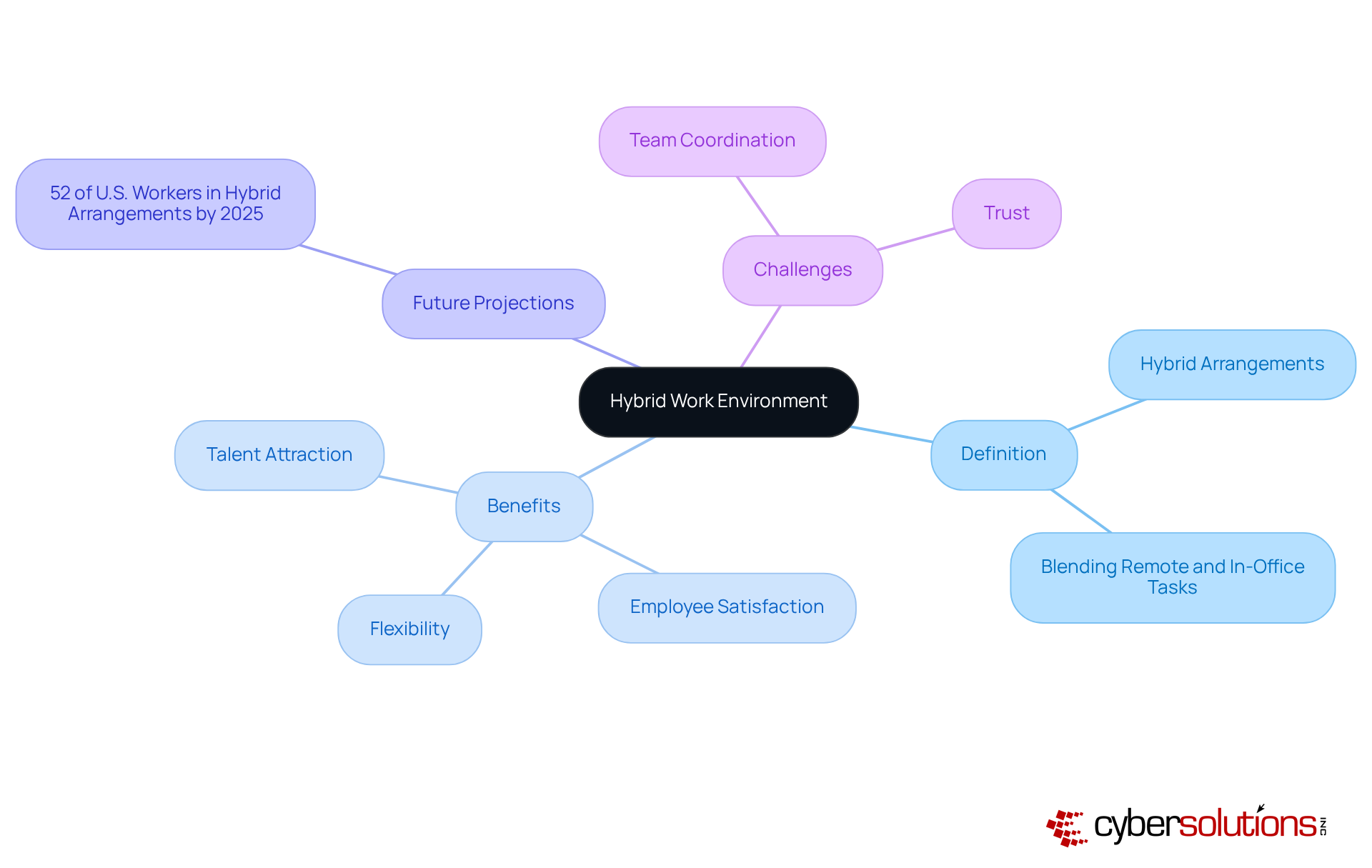
The hybrid work model is represented by various approaches, which signify a pivotal shift in the workplace, blending remote and in-office tasks to empower employees with flexibility. As organizations adapt to evolving labor needs, especially in the wake of the COVID-19 pandemic, understanding the hybrid work model has gained significant traction. By allowing staff to alternate between home and office environments, companies can demonstrate the value of flexibility while sustaining productivity and granting individuals greater control over their work environments.
This flexibility not only boosts employee morale but also enhances recruitment efforts by playing a vital role in attracting and retaining top talent in a fiercely competitive job market. In fact, projections indicate that by 2025, nearly 52% of U.S. workers will be engaged in hybrid work, marking a 1% increase from previous reports. Furthermore, research reveals that employees who have a say in their schedules experience higher job satisfaction and lower turnover rates, underscoring the importance of adaptability in today’s professional landscape.
As Nicholas Bloom aptly notes, "If handled correctly, allowing staff to operate from home two or three days a week still provides the level of mentoring, culture-building, and innovation that you desire." However, organizations must confront challenges such as team coordination and trust to ensure that productivity and employee engagement remain robust as they refine their understanding of hybrid work.
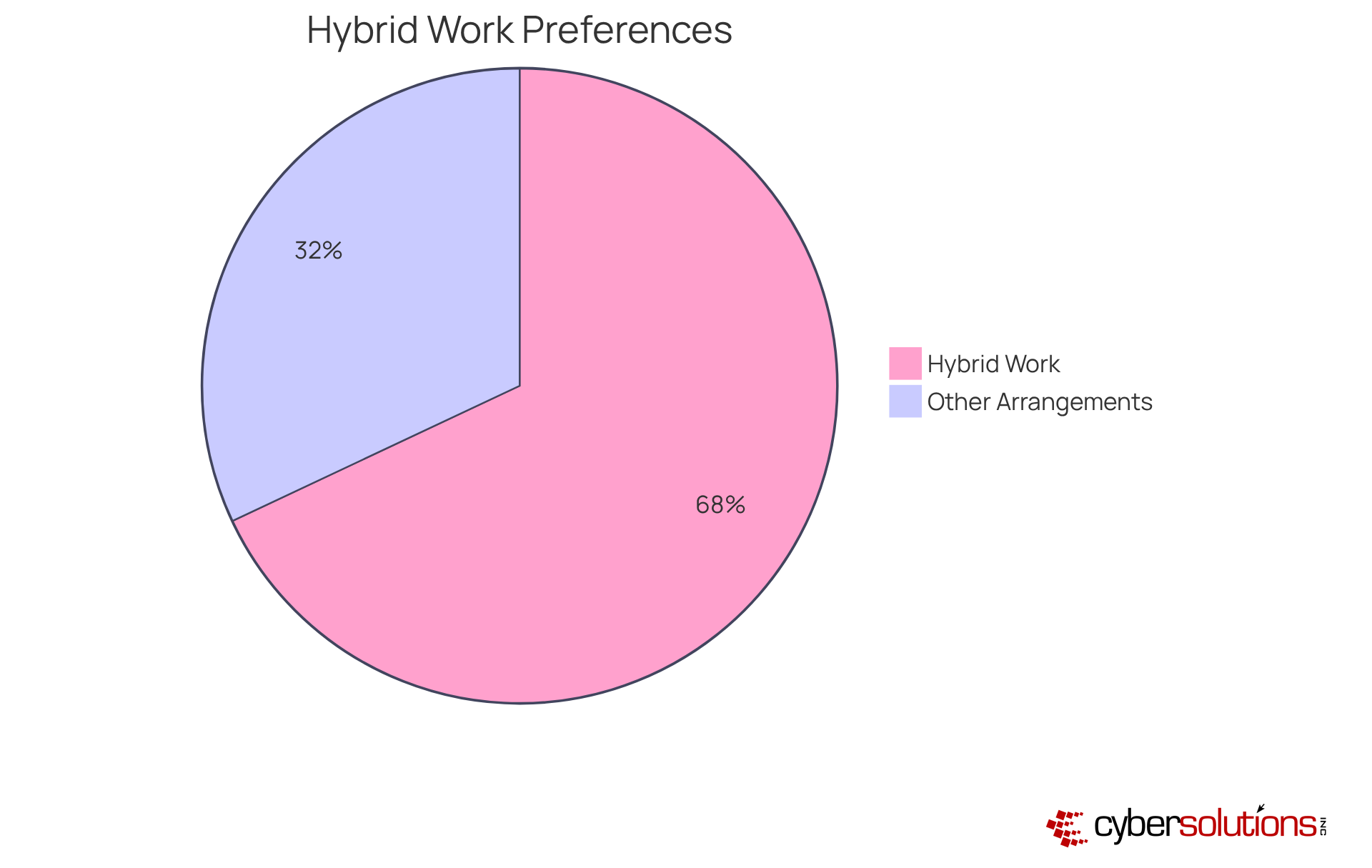
The blended employment model has emerged as a pivotal force in the wake of the COVID-19 pandemic, compelling organizations to adapt rapidly to remote work arrangements. As businesses navigated lockdowns and social distancing measures, many realized that employees could sustain productivity outside traditional office environments. In the post-pandemic landscape, the demand for hybrid work has surged, with studies revealing that a significant majority of employees prefer the flexibility of hybrid work, meaning it provides benefits like work-life balance and increased job satisfaction. Notably, 68% of American workers indicate that the hybrid model, meaning the ability to work both remotely and on-site, represents the ideal employment arrangement.
This transformation has prompted organizations to rethink their workplace strategies, leading to a more permanent integration of hybrid work. By 2025, two-thirds of U.S. companies are projected to have implemented flexible employment policies. Companies that have successfully embraced this mixed model, such as Trip.com, conducted a six-month blended experiment in 2021, reporting no negative impact on productivity or career advancement, while significantly boosting retention rates.
As organizations continue to evolve, the hybrid work model, meaning the combination of remote and in-office work, is becoming a lasting feature of the workplace, reflecting broader changes in employee expectations and organizational culture.
Hybrid arrangements showcase a remarkable diversity, shaped by organizational needs and employee preferences. Understanding the models is crucial for organizations aiming to enhance productivity and employee satisfaction.
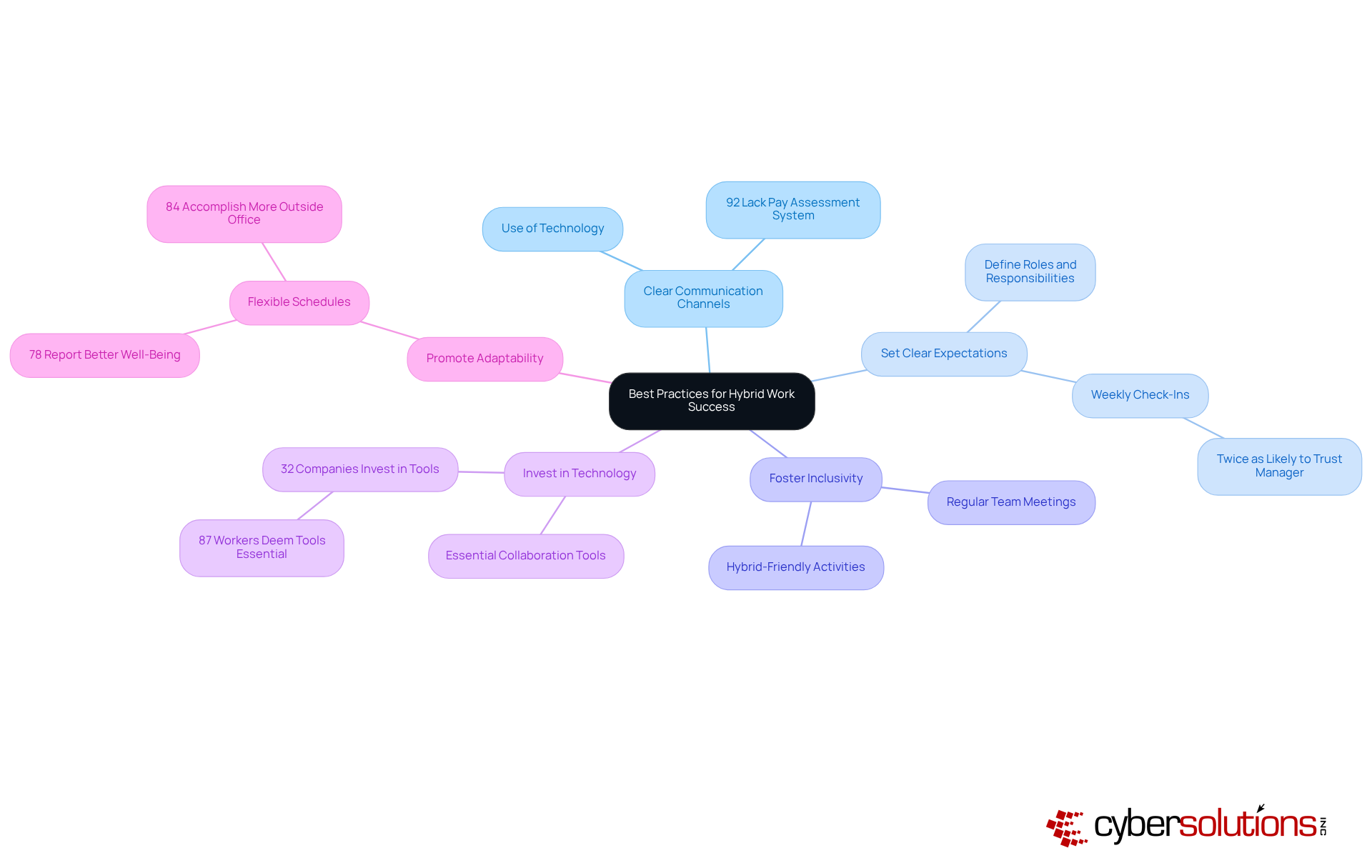
Each model presents unique challenges, necessitating a thorough evaluation of specific organizational contexts to identify the most effective hybrid strategy. For instance, organizations adopting office-first structures often report improved team dynamics and collaboration, while those embracing remote-first models benefit from reduced overhead costs and access to a broader talent pool. However, companies enforcing strict return-to-office policies risk losing skilled talent to competitors offering flexible arrangements. Additionally, a staggering 92% of employers lack a system for determining compensation for part-time remote employees, highlighting a significant hurdle in implementing blended employment models. As hybrid arrangements continue to evolve, grasping the implications will be vital for leaders aiming to boost productivity and employee satisfaction. Moreover, shifting performance assessments from presence to outcomes is becoming increasingly important in hybrid settings, as organizations strive to adapt to the changing landscape of evaluations.

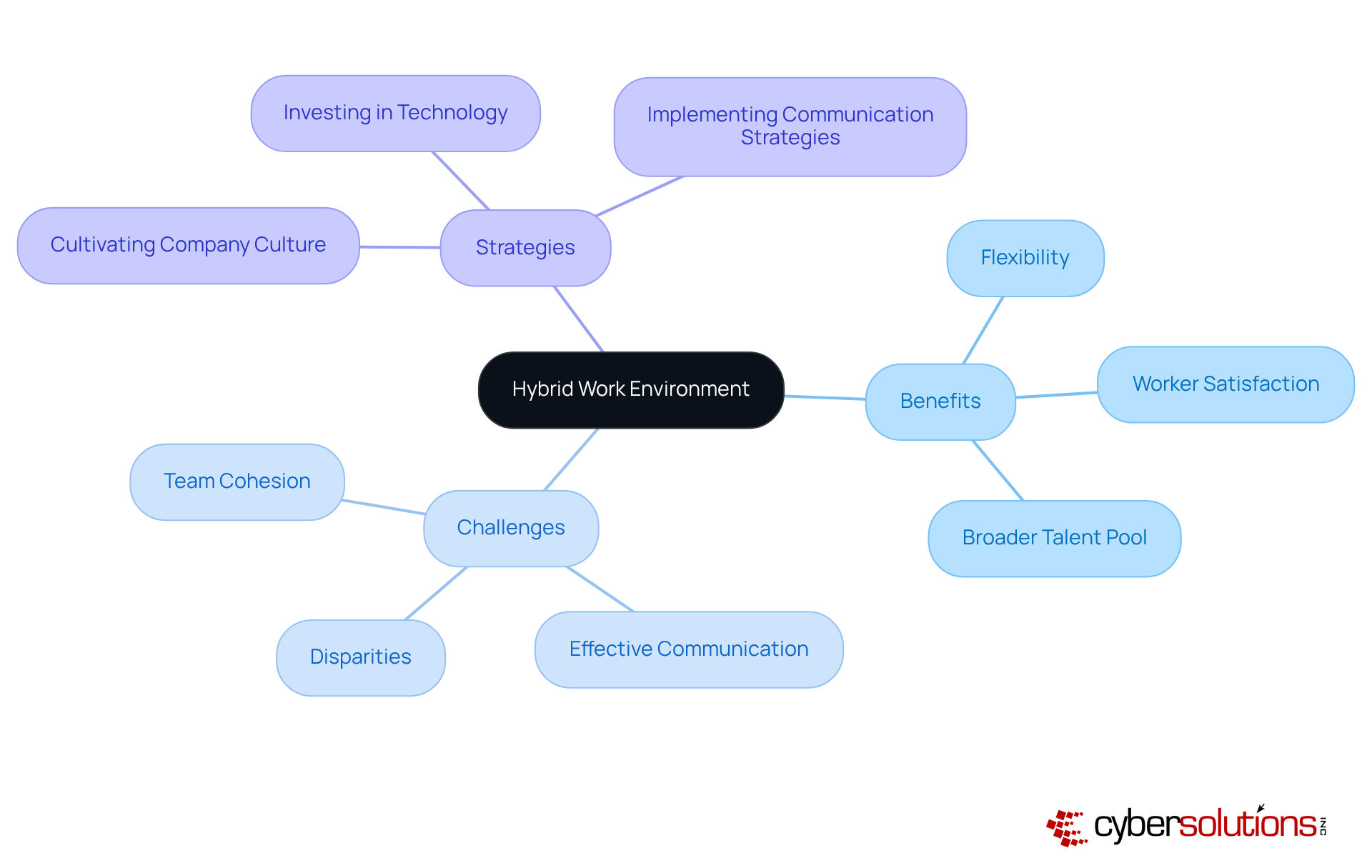
The concept of hybrid work signifies a pivotal shift in the workplace landscape, offering flexibility, increased worker satisfaction, and access to a broader talent pool. Employees value the opportunity to manage their work-life balance, which not only boosts productivity but also mitigates burnout. Yet, this model is not without its challenges. Maintaining team cohesion, ensuring effective communication, and addressing employee engagement are critical issues that organizations must confront.
To succeed, organizations must take decisive action.
By addressing these challenges head-on, organizations can fully leverage the hybrid work model and its benefits.
To ensure the success of hybrid work, organizations must adopt several best practices:
By implementing these practices, organizations can create a thriving hybrid work environment meaning that benefits both employees and the organization as a whole, ultimately driving productivity and engagement.
The hybrid work environment represents a pivotal shift in modern employment, merging remote and in-office work to provide employees with enhanced flexibility and control over their professional lives. This transformation not only meets the evolving demands of the workforce but also offers organizations a strategic opportunity to boost productivity and employee satisfaction, especially in the aftermath of the pandemic.
Key insights throughout this discussion reveal the growing popularity of hybrid work models, the diverse types of hybrid arrangements available, and the substantial benefits they bring, such as improved work-life balance and access to a wider talent pool. However, challenges like maintaining team cohesion and effective communication must not be overlooked. Organizations need to adopt practices that promote inclusivity and adaptability in this new work landscape.
As the hybrid work model continues to gain momentum, it is crucial for C-suite leaders to understand its significant impact on organizational culture and employee engagement. Embracing this shift positions companies to attract and retain top talent while ensuring competitiveness in a rapidly evolving market. By prioritizing clear communication, setting expectations, and investing in technology, leaders can cultivate a thriving hybrid work environment that benefits all stakeholders.
What is hybrid work?
Hybrid work refers to a flexible work environment that combines remote and in-office tasks, allowing employees to alternate between telecommuting and working on-site.
Why has the hybrid work model gained popularity?
The hybrid work model has gained popularity due to the COVID-19 pandemic, which forced organizations to adapt to remote work. Many employees discovered they could maintain productivity outside traditional office settings, leading to a preference for flexible employment arrangements.
What are the benefits of hybrid work for employees?
Hybrid work provides benefits such as improved work-life balance, reduced commuting times, and higher job satisfaction. Employees who have control over their schedules tend to experience lower turnover rates.
What is the projected growth of hybrid work by 2025?
By 2025, it is projected that nearly 52% of U.S. workers will be engaged in hybrid arrangements, with two-thirds of U.S. companies expected to implement flexible employment policies.
What challenges do organizations face with hybrid work?
Organizations face challenges such as team coordination and building trust among employees to ensure productivity and engagement remain high while implementing hybrid work models.
Can hybrid work impact employee retention?
Yes, companies that have adopted hybrid work models, such as Trip.com, reported improved retention rates without negatively impacting productivity or career advancement.
How does hybrid work influence organizational culture?
The hybrid work model reflects broader changes in employee expectations and can lead to a more adaptable organizational culture that values flexibility and employee satisfaction.
Managed IT Service Provider | Cyber Security | Incident Response | Compliance As A Service | Hosted Phone Service | Managed Security Service Provider | AI As A Service