


In today’s landscape, where operational efficiency and cybersecurity are critical, C-suite leaders grapple with the complex task of navigating intricate IT environments while ensuring their organizations not only survive but thrive. Network managed service providers (MSPs) present a strategic solution, offering a range of benefits that streamline operations, bolster security, and cut costs. Yet, as organizations increasingly adopt these services, a pressing question emerges: how can they fully harness the capabilities of MSPs to transform their business operations and secure a competitive advantage in a rapidly changing market?
The importance of cybersecurity cannot be overstated, especially in sectors where data integrity is paramount. With the rise of sophisticated cyber threats, healthcare organizations face unique challenges that demand immediate attention. MSPs can play a pivotal role in addressing these challenges, providing tailored solutions that not only protect sensitive information but also enhance overall operational efficiency.
As we delve deeper into the capabilities of MSPs, it becomes clear that leveraging their expertise is essential for organizations aiming to stay ahead. By understanding the intricacies of these services, leaders can make informed decisions that drive their organizations forward in an increasingly competitive landscape.
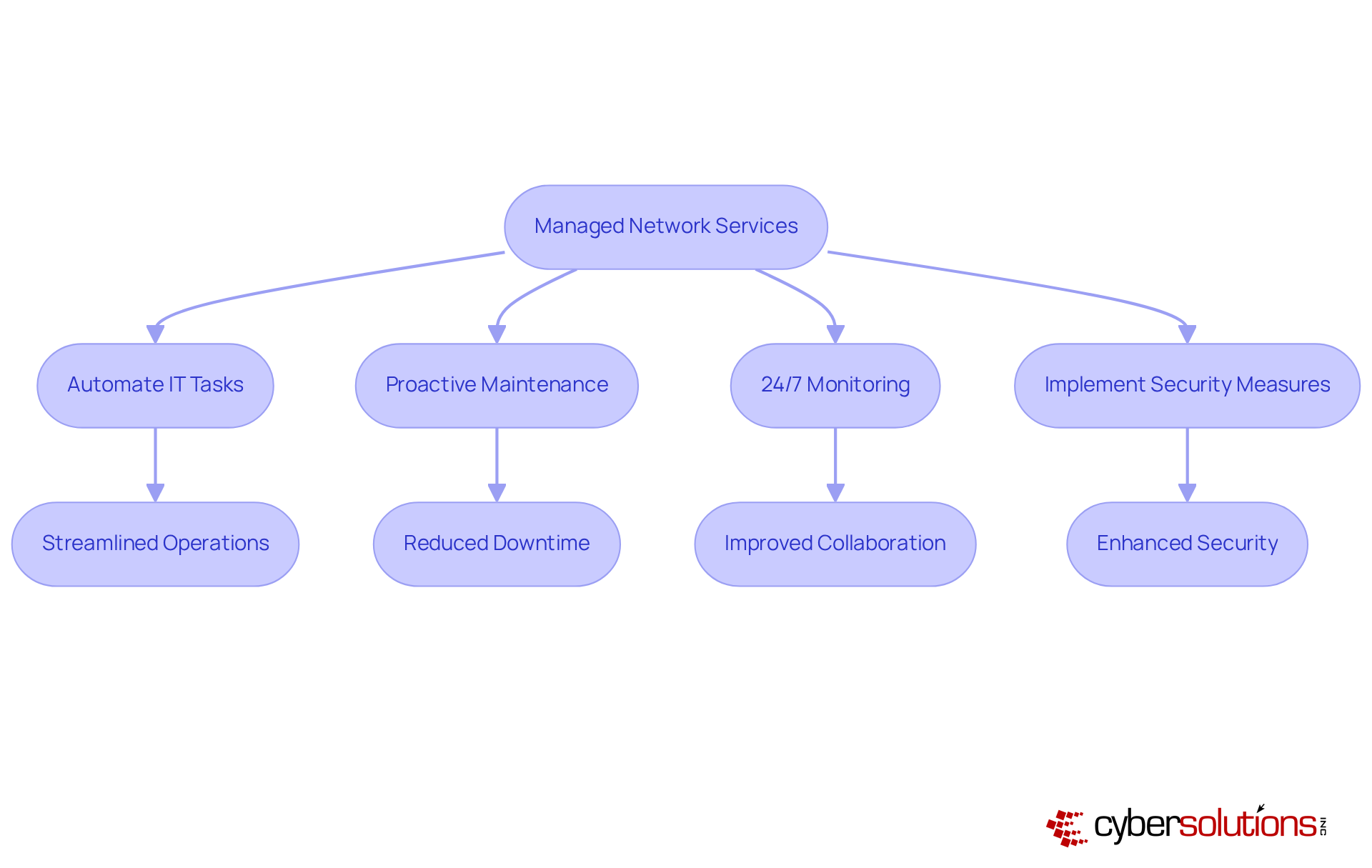
In today’s landscape, where cybersecurity threats loom large, particularly in healthcare, managed network services are essential. By automating routine IT tasks, not only do these services improve efficiency but also allow organizations to concentrate on their core business activities instead of getting bogged down in IT management. For instance, solutions from Cyber Solutions can prevent downtime, significantly boosting productivity and performance.
With monitoring and instant alerts, Cyber Solutions, a leading example of managed network services, swiftly identifies and addresses potential vulnerabilities, enhancing security. Companies leveraging these solutions have reported minimal downtime and faster data transfer, facilitating seamless collaboration among teams. By proactively managing system performance and implementing comprehensive firewall and security measures, managed network services can help organizations avoid bottlenecks and allocate resources more effectively, ultimately saving valuable time and reducing operational costs.
Moreover, managed network services enhance security posture by actively protecting systems against emerging threats, fostering a more resilient infrastructure. This preparation equips firms for sustained success in an increasingly competitive environment. Are you ready to fortify your organization’s defenses and ensure operational continuity? Cyber Solutions stands ready to help you navigate these challenges with confidence.
In today’s rapidly evolving digital landscape, cybersecurity is not just an option; it’s a necessity for healthcare organizations. By outsourcing network management to experts like Cyber Solutions, organizations can reduce costs associated with hiring and training in-house IT staff. Our managed service model operates on a flat-rate pricing structure, covering everything from email licenses to software updates. This ensures efficiency and enhances productivity.
Moreover, we aim to provide extensive solutions at a lower expense than internal teams. This strategic approach often leads to a remarkable decrease in total IT costs. Organizations that transition to managed services frequently report a significant reduction in expenses, all while improving service quality. With our monitoring and alert systems, we proactively identify anomalies and potential weaknesses, ensuring your enterprise is safeguarded against threats before they escalate.
Is your organization prepared to face the growing cybersecurity threats? Let Cyber Solutions be your partner in navigating these challenges effectively.
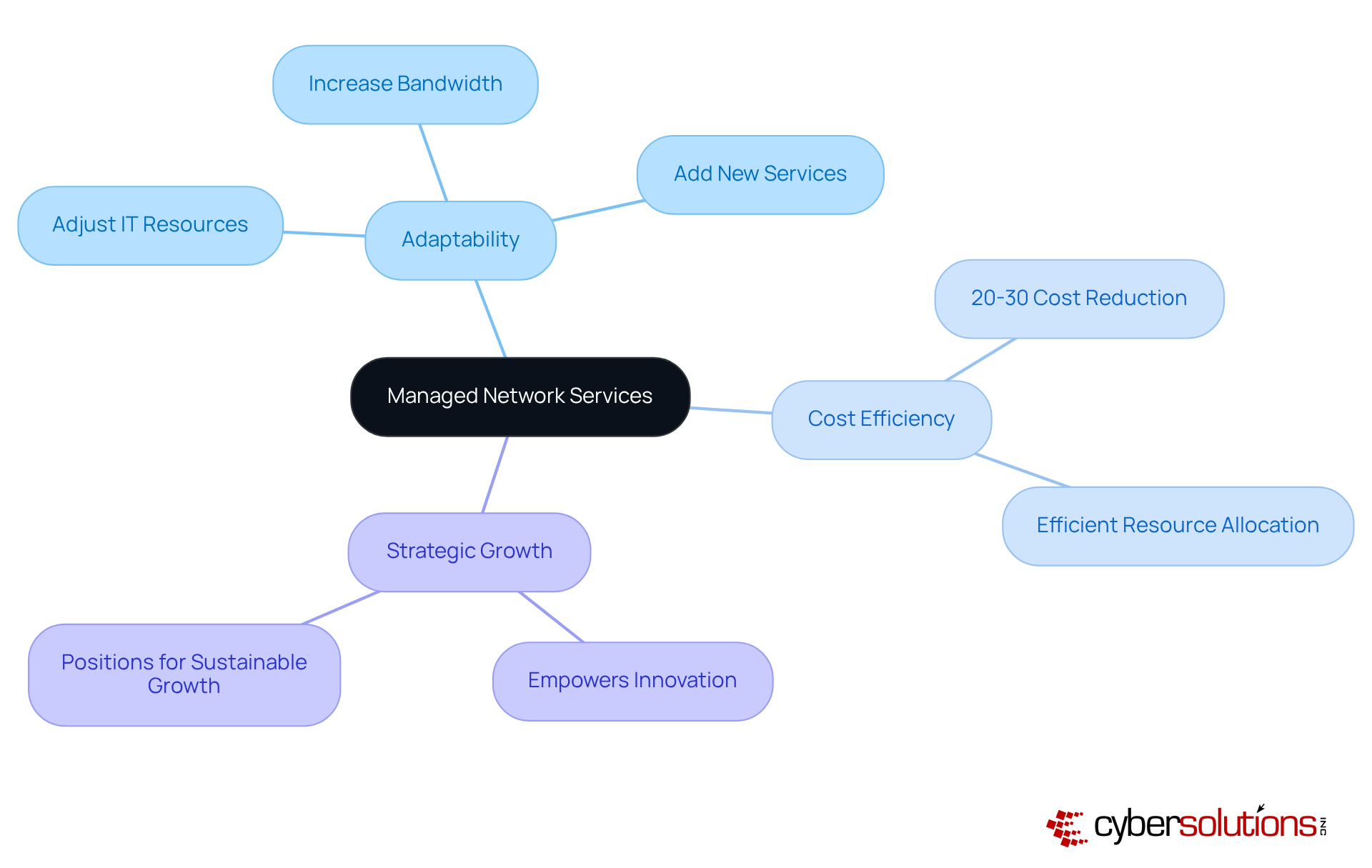
Managed network services offer unparalleled adaptability, allowing organizations to adjust in response to evolving market conditions. This is crucial for companies experiencing growth or seasonal changes. For instance, during peak periods, businesses can swiftly increase bandwidth or add new services without incurring hefty capital expenses.
Statistics reveal that organizations utilizing managed network services can scale compared to traditional infrastructure, enabling more efficient resource allocation. Moreover, companies that collaborate with managed service providers frequently report improved agility, as these partners facilitate seamless modifications to operational strategies. This ensures that businesses stay competitive and responsive to market demands.
Such services not only address immediate operational requirements but also position organizations for sustainable growth in a constantly shifting landscape. As industry experts note, MSPs are evolving into strategic enablers rather than mere cost savers, driving long-term success.
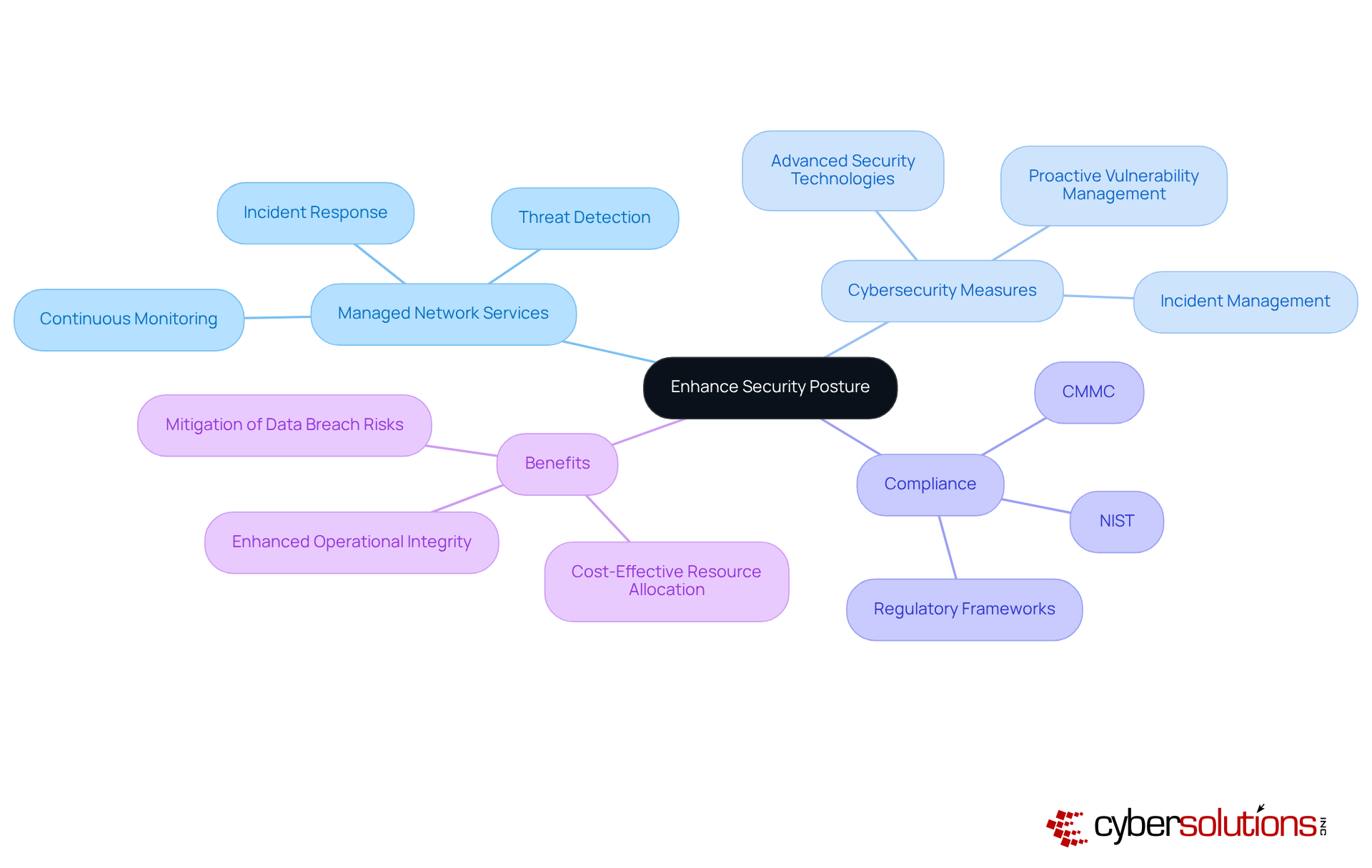
Cybersecurity is not just a necessity; it’s a critical component of organizational integrity in today’s digital landscape. Managed network solutions provide essential services, continuous monitoring, threat detection, and support that are essential for safeguarding networks against evolving cyber threats. By partnering with managed service providers, organizations gain access to cutting-edge security technologies and specialized expertise, ensuring robust protection that significantly mitigates risks. This proactive approach reduces the likelihood of breaches, enhancing overall security.
Organizations that utilize managed services for security measures can effectively adapt to changing threats, fostering resilience and operational integrity. With a staggering percentage of enterprises facing penalties for non-compliance by 2025, partnering with an MSP not only strengthens security but also ensures compliance. This is particularly vital for entities managing federal data, as compliance with standards such as NIST is essential for maintaining eligibility for government contracts.
Moreover, the compliance as a service solutions offered by Cyber Solutions provide comprehensive support, including assessments, policy development, audit preparation, and continuous monitoring. This ensures businesses remain aligned with regulatory requirements and can navigate the complexities of compliance effectively. To enhance your entity's security stance and compliance preparedness, consider partnering with a managed service provider today.
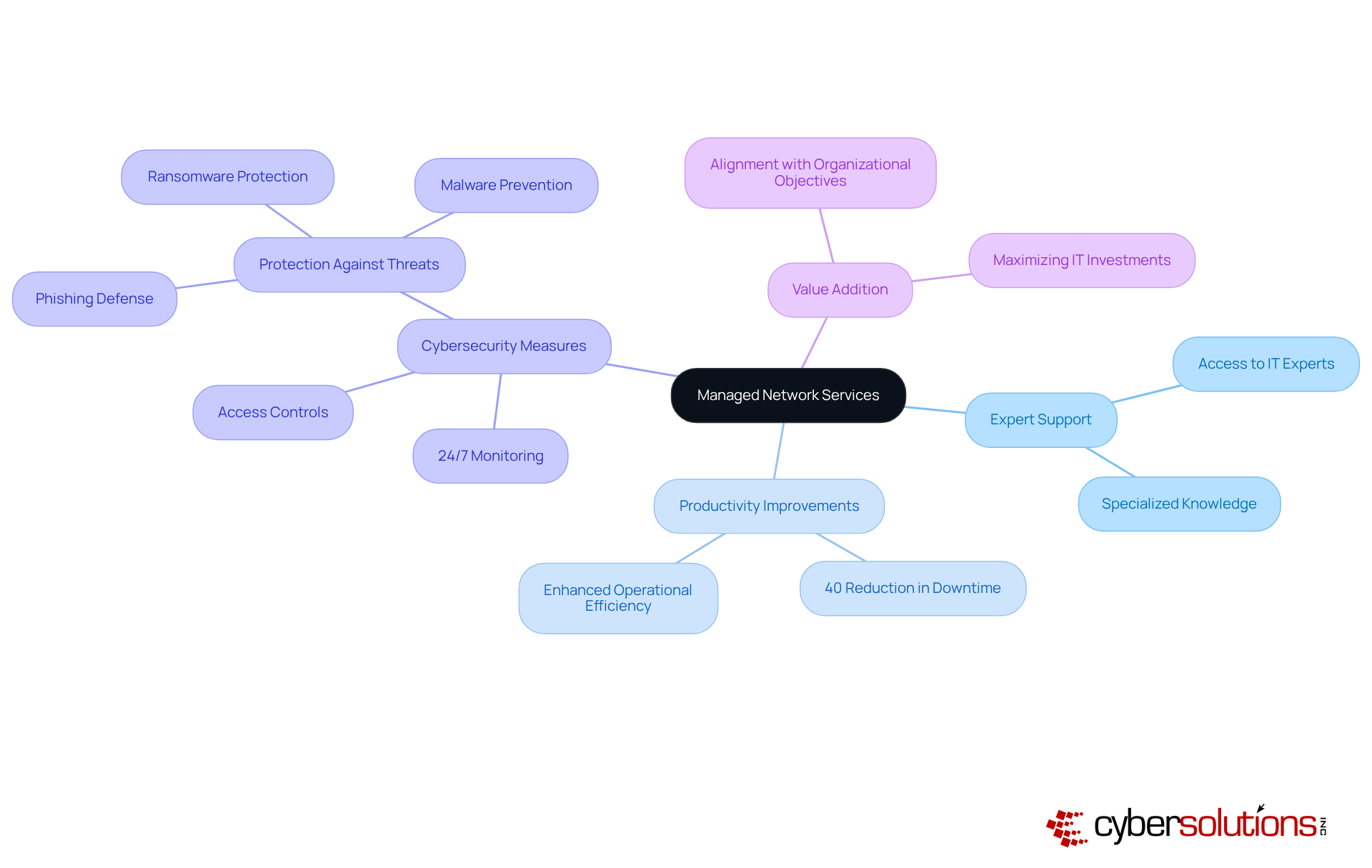
For organizations aiming to thrive in today’s competitive landscape, managed network services are essential. By providing access to a dedicated team of IT experts, these services equip businesses with the specialized knowledge necessary to tackle challenges effectively. This expertise is not just beneficial; it’s crucial for leaders that align technology initiatives with overarching organizational objectives, maximizing value in the process.
Consider the leveraging of MSP expertise. For instance, a mid-sized manufacturing firm experienced a remarkable 40% reduction in downtime after partnering with an MSP, directly enhancing both productivity and revenue. Such collaborations not only drive efficiency but also foster sustainable growth and innovation, positioning organizations to excel.
In the realm of cybersecurity, Cyber Solutions offers tools that empower businesses to identify anomalies and potential vulnerabilities in real-time. This capability helps to prevent downtime or breaches, ensuring that suspicious activities are detected and mitigated before they escalate into serious threats. With protections against ransomware, phishing, and other malware attacks, organizations can operate with confidence.
Moreover, security measures guarantee that only authorized users can access sensitive information, further bolstering security. The expertise and knowledge provided by managed service providers underscore the immense value that these MSPs contribute, making them indispensable partners in navigating the complexities of modern IT environments.
Managed services play a crucial role in enhancing visibility through advanced technologies. This capability allows organizations to continuously track performance metrics, enabling the identification of issues before they escalate into critical problems. For example, organizations leveraging real-time analytics have experienced a remarkable 45% increase in their ability to expedite incident response processes. This statistic underscores the effectiveness of managed services in averting IT challenges.
Moreover, detailed analytics equip executives with valuable insights, empowering them to make informed decisions regarding resource allocation. In addition, our solutions provide small and medium-sized businesses in regulated sectors with essential support for compliance management. This ensures that your organization remains aligned with current regulatory requirements, minimizing risks.
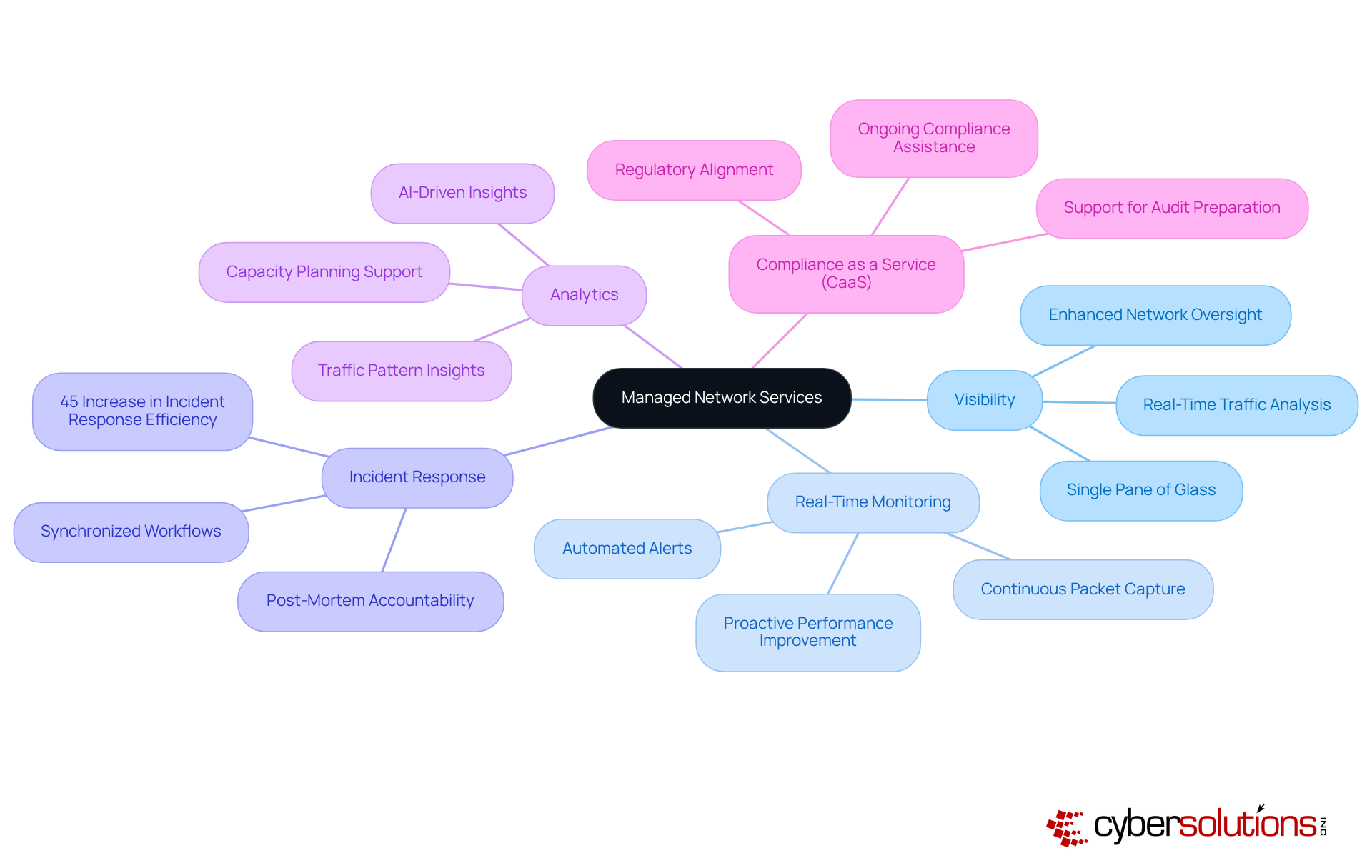
Outsourcing network management to a managed service provider is a strategic move that empowers internal IT teams to shift their focus from routine maintenance tasks to strategic initiatives. This transition not only enhances job satisfaction among IT staff but also allows them to engage in work that aligns with their skills and expertise. For instance, organizations that have embraced outsourcing report that their productivity has increased.
Statistics reveal a significant increase in job satisfaction among IT staff post-outsourcing, with many expressing greater enthusiasm for their roles as they contribute to strategic projects rather than being bogged down by daily operational tasks. In fact, studies indicate that outsourcing can lead to a remarkable 20% increase in overall productivity. This shift cultivates a more innovative environment, driving companies toward their growth goals. Firms that utilize managed services have reported a 30% enhancement in operational efficiency, underscoring the value of this approach.

In today's rapidly evolving landscape, the importance of cybersecurity in healthcare cannot be overstated. Organizations are increasingly integrating advanced technologies to enhance operational capabilities and service delivery. By embracing managed network services, organizations gain unmatched flexibility and scalability, allowing them to swiftly respond to changing market demands.
Moreover, Cyber Solutions offers real-time monitoring, empowering entities to detect threats in real-time. This not only improves security but also enhances operational efficiency. Implementing comprehensive cybersecurity measures ensures compliance and secure remote access, tailored to meet specific business needs.
As a result, companies can cultivate a more agile operational framework, positioning themselves to effectively meet customer demands while maintaining a competitive edge in their respective industries. Are you ready to elevate your cybersecurity posture and safeguard your organization against emerging threats?

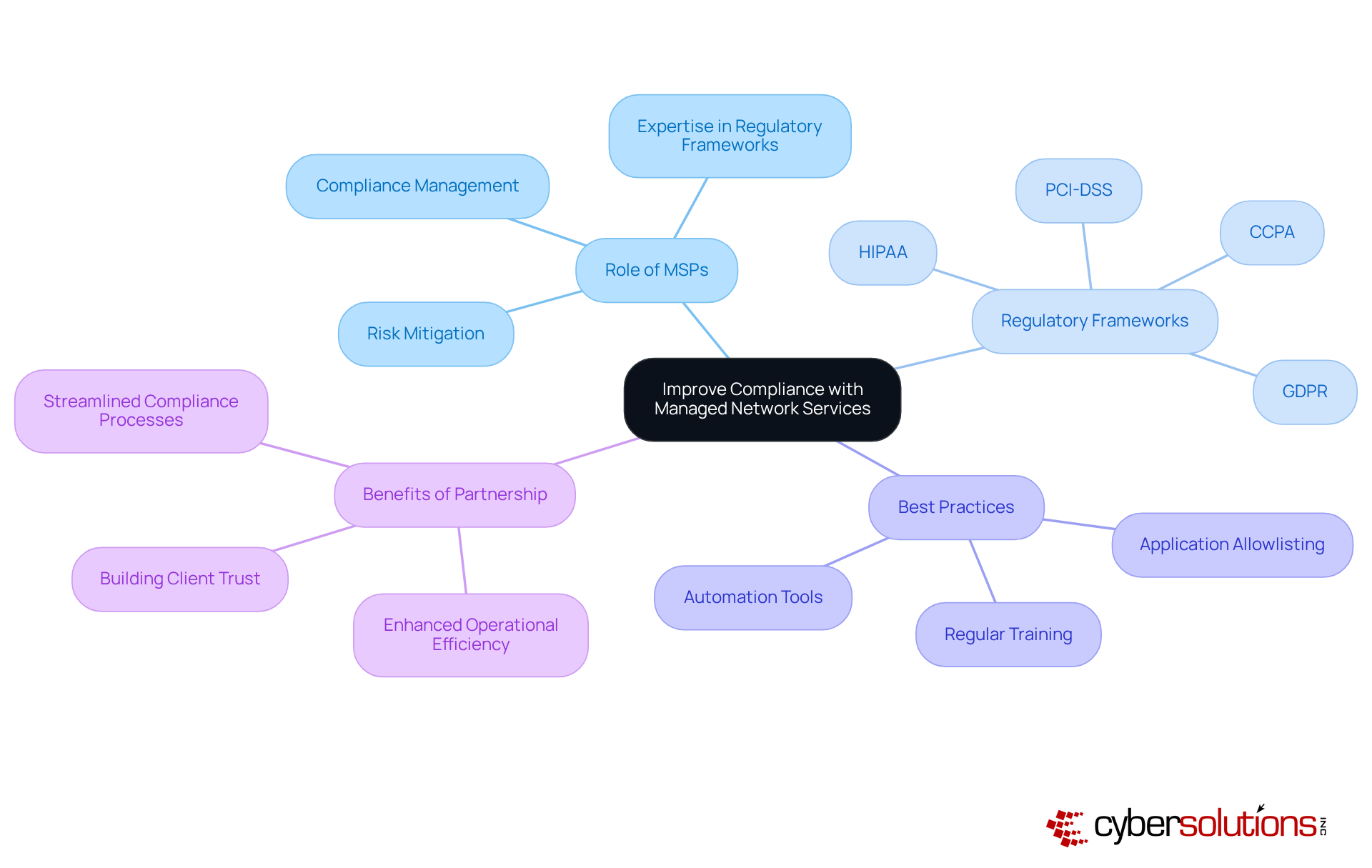
Network managed service providers (MSPs) play a crucial role in assisting organizations to navigate the complexities of regulatory environments, especially in finance. With specialized expertise, MSPs implement tailored solutions that align with specific industry standards, significantly mitigating the risk of non-compliance. For instance, they assist organizations in adhering to stringent regulations, ensuring that sensitive information is managed securely and in line with legal requirements.
A critical aspect of this compliance is software whitelisting, which proactively blocks unauthorized software from running. This not only reduces vulnerabilities but also aids organizations in fulfilling requirements for federal contracts. By leveraging their comprehensive understanding of frameworks such as the GDPR and the HIPAA, network managed service providers empower businesses to maintain compliance while concentrating on their core operations.
Moreover, case studies illustrate how organizations have effectively navigated challenges with the support of network managed service providers, highlighting the value of having a knowledgeable partner in compliance management. This partnership not only enhances operational efficiency but also builds trust with clients and stakeholders, positioning firms as reliable entities in their respective markets.
play a crucial role in ensuring business continuity, especially when unforeseen disruptions occur. With robust disaster recovery solutions in place, organizations can significantly reduce downtime and quickly restore operations. For example, disaster recovery plans enable rapid recovery, ensuring that essential functions remain operational during crises. Did you know that the average cost of downtime can reach thousands of dollars per minute? This staggering statistic highlights the urgent need for effective disaster recovery strategies.
Moreover, partnering with network managed service providers (MSPs) allows organizations to access tailored solutions that cater to their specific operational needs. This strategic collaboration empowers businesses to navigate disruptions with confidence. By adopting a proactive approach, companies not only protect critical data but also enhance their overall resilience, positioning themselves to thrive in an increasingly unpredictable environment.

The integration of network managed service providers (MSPs) into organizational strategies is not just an opportunity; it’s a strategic necessity for C-suite leaders aiming to enhance operational efficiency, security, and overall business performance. By leveraging the expertise and resources of MSPs, organizations can redirect their focus from routine IT management to strategic initiatives that drive growth and innovation.
Key benefits of partnering with network managed service providers are significant. These include:
Data shows that organizations utilizing MSPs can experience a marked decrease in IT expenses, increased operational efficiency, and a fortified cybersecurity posture. This positions them for sustained success in a competitive landscape.
In conclusion, embracing managed network services is not merely an operational choice; it is a strategic imperative for organizations striving to thrive in an increasingly complex environment. By prioritizing these partnerships, C-suite leaders can ensure their organizations remain agile, secure, and well-prepared to navigate future challenges. Consider the potential of managed services as a catalyst for innovation and resilience, and take decisive steps to strengthen your organization's foundation for long-term success.
What are managed network services and why are they important?
Managed network services involve outsourcing IT management to specialized providers, such as Cyber Solutions, which helps organizations enhance operational efficiency, streamline operations, and focus on core business activities while managing cybersecurity threats.
How do managed network services improve operational efficiency?
They automate routine IT tasks, provide proactive maintenance, and offer 24/7 monitoring, which minimizes downtime and boosts productivity. This allows organizations to allocate resources more effectively and reduce operational costs.
What specific benefits do organizations gain from using Cyber Solutions as a managed service provider?
Organizations benefit from minimal downtime, faster data transfer, proactive system performance management, and comprehensive security measures that protect against cyber threats, fostering a resilient infrastructure.
How do managed network services contribute to cost reduction?
By outsourcing network management, organizations can reduce costs associated with hiring and training in-house IT staff. Managed services operate on a flat-rate pricing model, leading to predictable monthly costs and significant reductions in total IT expenses, often by 25% to 45%.
What kind of scalability and flexibility do managed network services offer?
Managed network services allow organizations to adjust IT resources based on evolving business needs, such as increasing bandwidth during peak periods without significant capital expenses, enabling more efficient resource allocation.
How do managed network services enhance security for organizations?
Managed service providers actively protect systems against emerging cyber threats through continuous monitoring and proactive identification of vulnerabilities, ensuring sustained operational continuity and resilience.
What is the impact of managed network services on IT costs and efficiency?
Organizations using managed services report a 20-30% reduction in IT costs and an enhancement in operational efficiency by 45% to 65%, allowing for better resource allocation and improved agility in response to market demands.
Managed IT Service Provider | Cyber Security | Incident Response | Compliance As A Service | Hosted Phone Service | Managed Security Service Provider | AI As A Service