


The digital transformation reshaping the business landscape highlights the crucial role of hosting and cloud services in bolstering organizational resilience. As companies navigate an increasingly complex environment, the ability to scale operations, secure sensitive data, and ensure continuous access to resources is not just important - it’s essential. But this shift from traditional hosting solutions to cloud-based platforms raises a vital question: how can businesses effectively harness these technologies to not only survive disruptions but also thrive in the face of them?
In today’s fast-paced world, the stakes are higher than ever. Organizations must adapt swiftly to changing demands while safeguarding their operations against potential threats. This is where the strategic implementation of cloud services comes into play, offering a pathway to enhanced flexibility and security. By embracing these technologies, businesses can position themselves not just to endure challenges but to emerge stronger.
The journey toward cloud adoption is not without its hurdles. Companies must consider factors such as data security, compliance, and the integration of existing systems. However, with the right approach and a clear understanding of the benefits, organizations can navigate these complexities effectively. The question remains: are you ready to leverage the power of cloud solutions to secure your organization’s future?
Cloud computing is revolutionizing how businesses manage their operations. By leveraging virtual servers that tap into extensive networks of physical servers, organizations can move beyond the limitations of traditional hosting environments, where a single server handles all tasks. This shift not only enhances performance but also allows companies to innovate, reduce costs, and increase flexibility.
Consider this: cloud adoption is marking a staggering 21% increase year-over-year. The global computing market is on track to exceed $1 trillion by early 2026. These figures underscore the growing reliance on cloud solutions to drive efficiency. Organizations that embrace online services can expect improved access, facilitating connections to systems and data - an essential factor for maintaining productivity during disruptions.
A compelling case study, 'Company A and Company B,' showcases how cloud solutions minimize downtime and sustain productivity amid challenges. Successful implementations across various sectors demonstrate that remote servers not only ensure operational continuity but also drive innovation and growth. As businesses increasingly prioritize flexibility and efficiency, cloud services are becoming a vital component of contemporary organizational strategy.
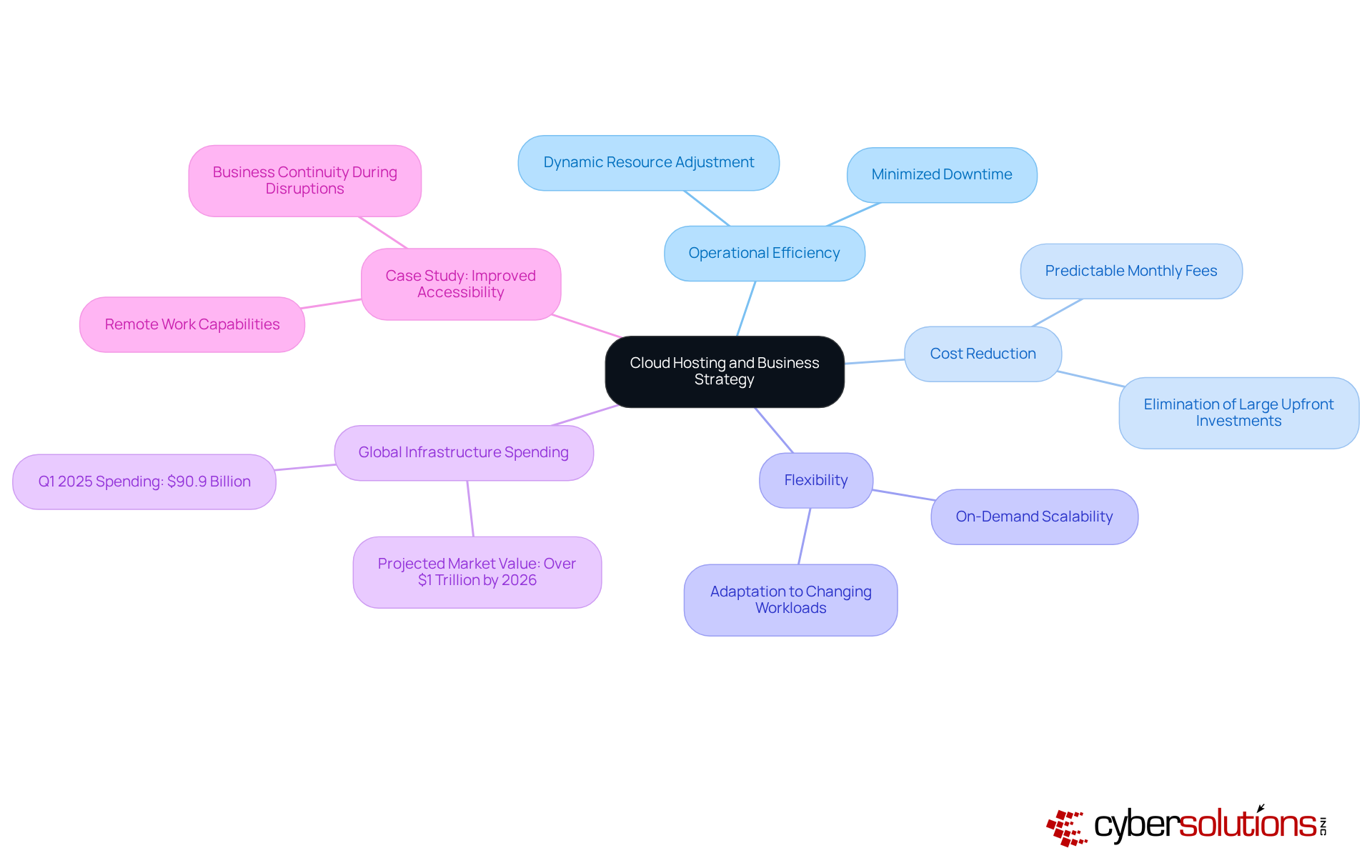
Hosting and cloud services are not just a trend; they are essential for enhancing and driving growth. Scalability stands out as a primary advantage, allowing organizations to adjust resources dynamically based on demand. This flexibility is crucial during periods of rapid expansion or unexpected challenges, enabling businesses to thrive without the burden of excess costs.
Moreover, hosting and cloud services significantly boost security through advanced protocols like encryption and regular backups. This safeguards against potential breaches. With Cyber Solutions' 24/7 support, organizations can swiftly detect and neutralize suspicious activities before they escalate into serious threats. This proactive approach not only mitigates risks but also ensures business continuity, allowing companies to recover more quickly from unforeseen challenges.
Additionally, the cloud fosters enhanced collaboration among teams, facilitating remote work and real-time data access - an increasingly vital component in today's digital landscape. These advantages collectively create a robust model capable of withstanding disruptions while seizing new growth opportunities. Organizations that have successfully migrated to cloud environments often report increased efficiency.
In conclusion, embracing hosting and cloud services is not merely a strategic choice; it is a necessary step toward securing a competitive edge in an ever-evolving market.
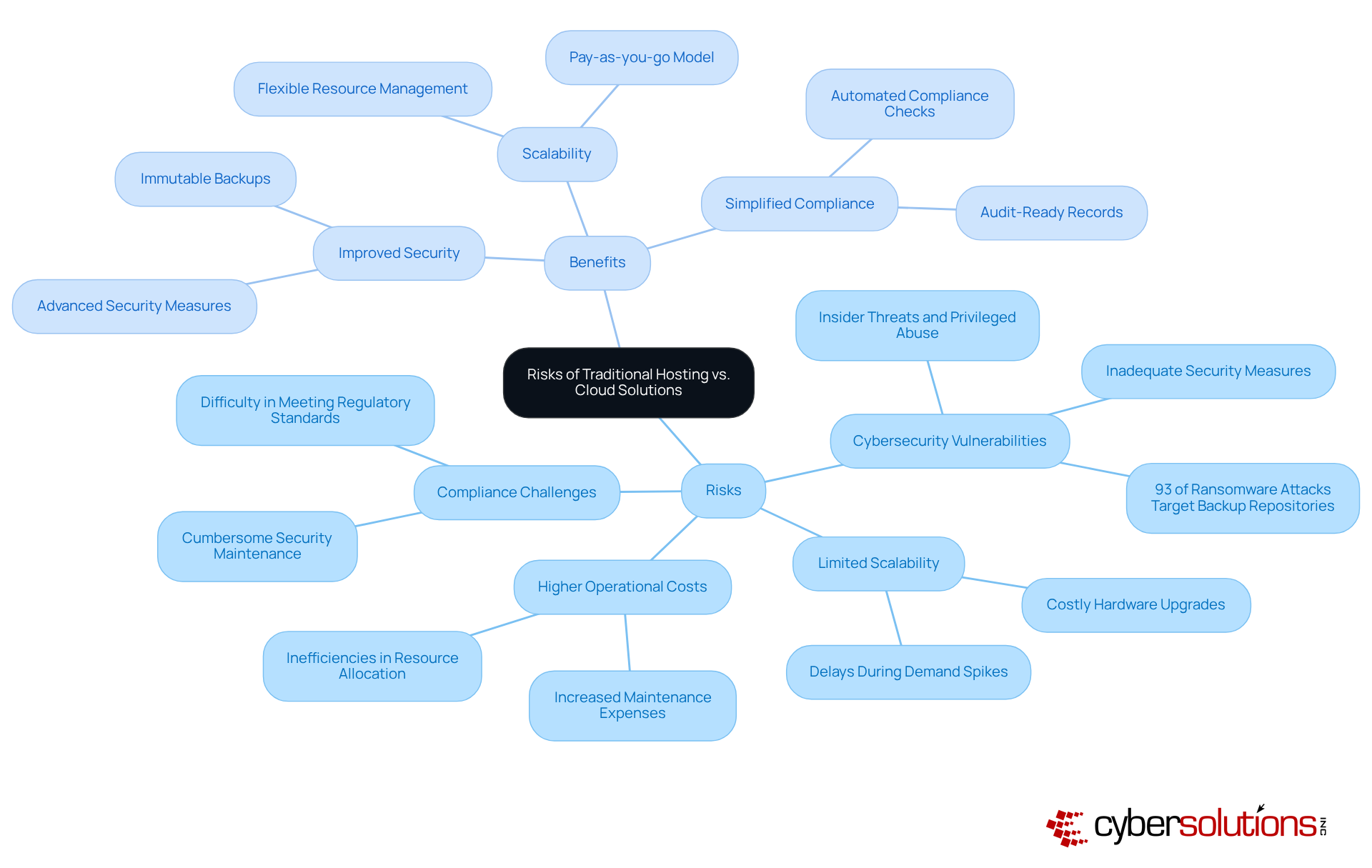
Conventional service models expose businesses to risks, particularly in the realm of technology. Limited scalability, higher operational costs, and increased vulnerability to security breaches are just a few of the challenges organizations face today. For instance, during demand spikes, hosting resources and infrastructure often necessitate upgrades, leading to delays and potential downtime.
Moreover, these environments typically lack the inherent security features in online solutions, rendering them more susceptible to cyberattacks. Did you know that 93% of ransomware attacks in 2023 targeted backup repositories? This statistic highlights the critical vulnerabilities of traditional systems. Maintenance also poses challenges; maintaining security and data integrity on a single server can be cumbersome and inadequate.
As organizations encounter tighter compliance mandates and increasing cyber threats, the shift to online solutions becomes crucial. Cloud services provide not only flexibility but also simplify compliance capabilities. Ultimately, this transition nurtures a more resilient infrastructure, empowering businesses to thrive in an increasingly complex digital landscape.
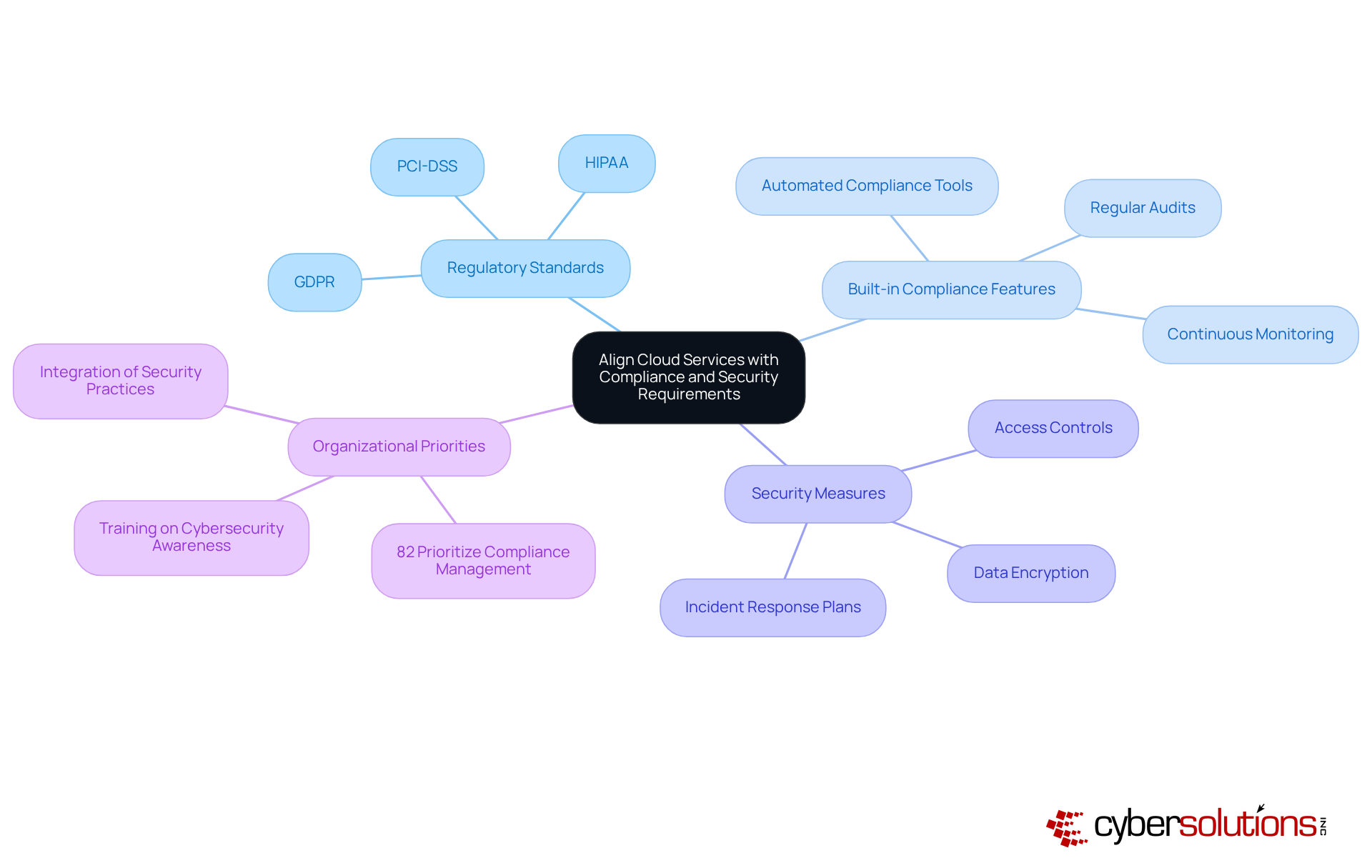
In today’s regulatory landscape, ensuring that online services meet compliance and security requirements is not just important - it's essential, especially for businesses in sectors like healthcare and finance. Cloud providers are stepping up, frequently integrating built-in compliance features that help organizations adhere to critical regulations such as HIPAA, GDPR, and PCI DSS. By leveraging these features, businesses can confidently manage data in a way that aligns with legal standards.
Moreover, many online solutions come equipped with security tools, including continuous monitoring and automated updates. These tools significantly bolster compliance efforts, minimizing risks associated with audits and regulatory penalties. This strategic alignment fosters a culture of compliance within enterprises, which is crucial in today’s digital age.
Consider this: over 82% of organizations are prioritizing cybersecurity as a key component of their risk management strategy. This statistic underscores the growing necessity for robust security measures to ensure operational resilience. As the landscape of cybersecurity threats evolves, organizations must act decisively to integrate cloud solutions, ensuring they protect their valuable data while also meeting compliance requirements.
Embracing hosting and cloud services is no longer just an option for businesses; it has become a fundamental necessity for achieving resilience and adaptability in a rapidly changing environment. By integrating these advanced solutions into their operational strategies, organizations can enhance efficiency, scalability, and security, ultimately positioning themselves for sustained growth and success.
The advantages of cloud hosting are numerous and compelling. It facilitates remote work, improves data security, and ensures compliance with regulatory standards. These services not only mitigate risks associated with traditional hosting but also empower organizations to respond swiftly to challenges and capitalize on new opportunities. Consider the statistics and case studies that illustrate the transformative impact of cloud solutions on business resilience. How can your organization afford to ignore these benefits?
As the digital landscape continues to evolve, the importance of adopting cloud services cannot be overstated. Businesses must prioritize the integration of these technologies to safeguard their operations, enhance collaboration, and maintain a competitive edge. The call to action is clear: organizations should proactively embrace cloud hosting and services to not only survive but thrive in an increasingly complex and interconnected world.
What is cloud hosting?
Cloud hosting is a service that uses virtual servers connected to extensive networks of physical servers, allowing businesses to manage their operations more efficiently than with traditional hosting.
How does cloud hosting benefit businesses?
Cloud hosting enhances operational efficiency, allows for dynamic resource adjustments, reduces costs, and increases flexibility for organizations.
What is the significance of the global infrastructure spending on digital services?
Global infrastructure spending on digital services reached $90.9 billion in Q1 2025, representing a 21% year-over-year increase, highlighting the growing reliance on cloud services for business resilience.
What is the projected growth of the global computing market?
The global computing market is expected to exceed $1 trillion by early 2026.
How does cloud hosting improve accessibility for businesses?
Cloud hosting facilitates secure remote access to systems and data, which is essential for maintaining productivity during disruptions.
Can you provide an example of how cloud services support remote work?
A case study titled 'Improved Accessibility and Remote Work Capabilities' illustrates how cloud services minimize downtime and sustain productivity, demonstrating their effectiveness in various sectors.
Why are hosting and cloud services important for organizational strategy?
As businesses prioritize flexibility and efficiency, hosting and cloud services have become vital components of contemporary organizational strategy, driving innovation and growth.
Managed IT Service Provider | Cyber Security | Incident Response | Compliance As A Service | Hosted Phone Service | Managed Security Service Provider | AI As A Service