
Incident Response Strategies

What is an IR Plan? Importance, Components, and Evolution Explained

Introduction

An Incident Response Plan (IRP) is not merely a formal document; it serves as a vital framework that empowers organizations to adeptly navigate the turbulent waters of cybersecurity threats.

In a landscape where cyberattacks are becoming increasingly sophisticated, the necessity of a well-structured IRP is undeniable. It provides businesses with a roadmap for swift detection, response, and recovery from incidents.

Yet, with nearly half of organizations lacking a documented plan, one must ask: can businesses truly afford to overlook this essential strategy in an era where every second counts during a breach?

The stakes are high, and the time to act is now.

Define Incident Response Plan (IRP)

An IR plan is not just a formal document; it’s a vital strategy that outlines the procedures and protocols a company must follow in response to cybersecurity events. In today’s landscape, where cyber threats are increasingly sophisticated, having an IR plan is essential for guiding teams in detecting, responding to, and recovering from security breaches or attacks. This plan typically includes predefined roles and responsibilities, communication strategies, and specific actions aimed at mitigating damage and restoring normal operations.

By establishing an IR plan, companies can ensure a coordinated and effective response to incidents, significantly reducing potential impacts on business continuity and data integrity. Consider this: organizations with an IRP experience an average breach lifecycle of 258 days, compared to just 189 days for those without one. Alarmingly, 45% of entities currently lack a documented IR plan, underscoring the urgent need for businesses to prioritize this critical aspect of their cybersecurity strategy.

According to NIST, effective response to an event is guided by six principles:

  1. Govern
  2. Identify
  3. Protect
  4. Detect
  5. Respond
  6. Recover

Implementing automated IR playbooks can lead to substantial cost savings, averaging $2.22 million per breach. This highlights not only the operational but also the financial benefits of a well-structured IR plan. In a world where every second counts, can your organization afford to be without one?
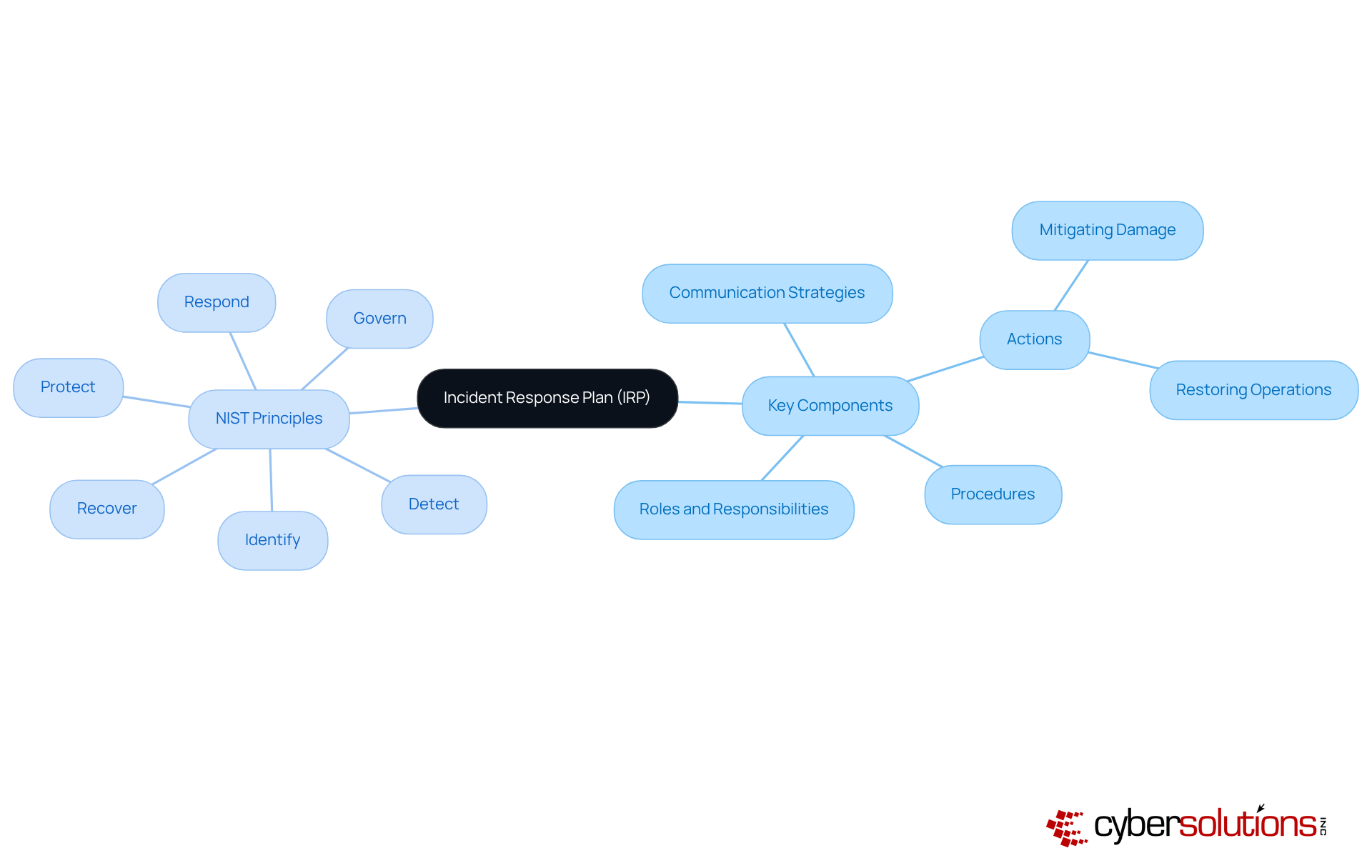
The central node represents the Incident Response Plan, with branches showing its key components and guiding principles. Each color-coded branch helps you see how different aspects of the IRP connect and contribute to effective incident management.

Explain the Importance of an IR Plan in Cybersecurity

In today’s landscape of sophisticated cyber threats, the significance of an IR plan in cybersecurity cannot be overstated. A well-defined IR plan empowers organizations to respond swiftly to incidents, minimizing potential damage and operational disruptions. Did you know that organizations with a formal IRP experience a breach lifecycle averaging just 189 days? This is significantly shorter than those without such plans. Furthermore, regulatory frameworks like HIPAA and GDPR mandate the existence of an IR plan, making it not just a best practice but a necessity across various industries.

A successful IRP cultivates a culture of preparedness, ensuring that every employee knows their role during a cybersecurity incident. For instance, businesses with established communication plans can reduce their reaction time by 30%. This statistic underscores the tangible benefits of maintaining an organized approach. Organizations that have adopted an IR plan report enhanced resilience, showcasing notable improvements in their ability to recover from incidents and uphold operational integrity.

The rise in ransomware attacks, affecting nearly 1 in 4 small and mid-sized companies in 2025, highlights the urgent need for robust response strategies. By investing in an IR plan, organizations not only protect their assets and reputation but also equip themselves to navigate the complexities of regulatory compliance effectively. As George Chapman, a Senior Security Consultant, aptly puts it, "A tested plan and a trusted partner can make all the difference between quick recovery and lasting damage." In summary, having a comprehensive IR plan is crucial for defending against cyber threats and ensuring long-term organizational resilience.
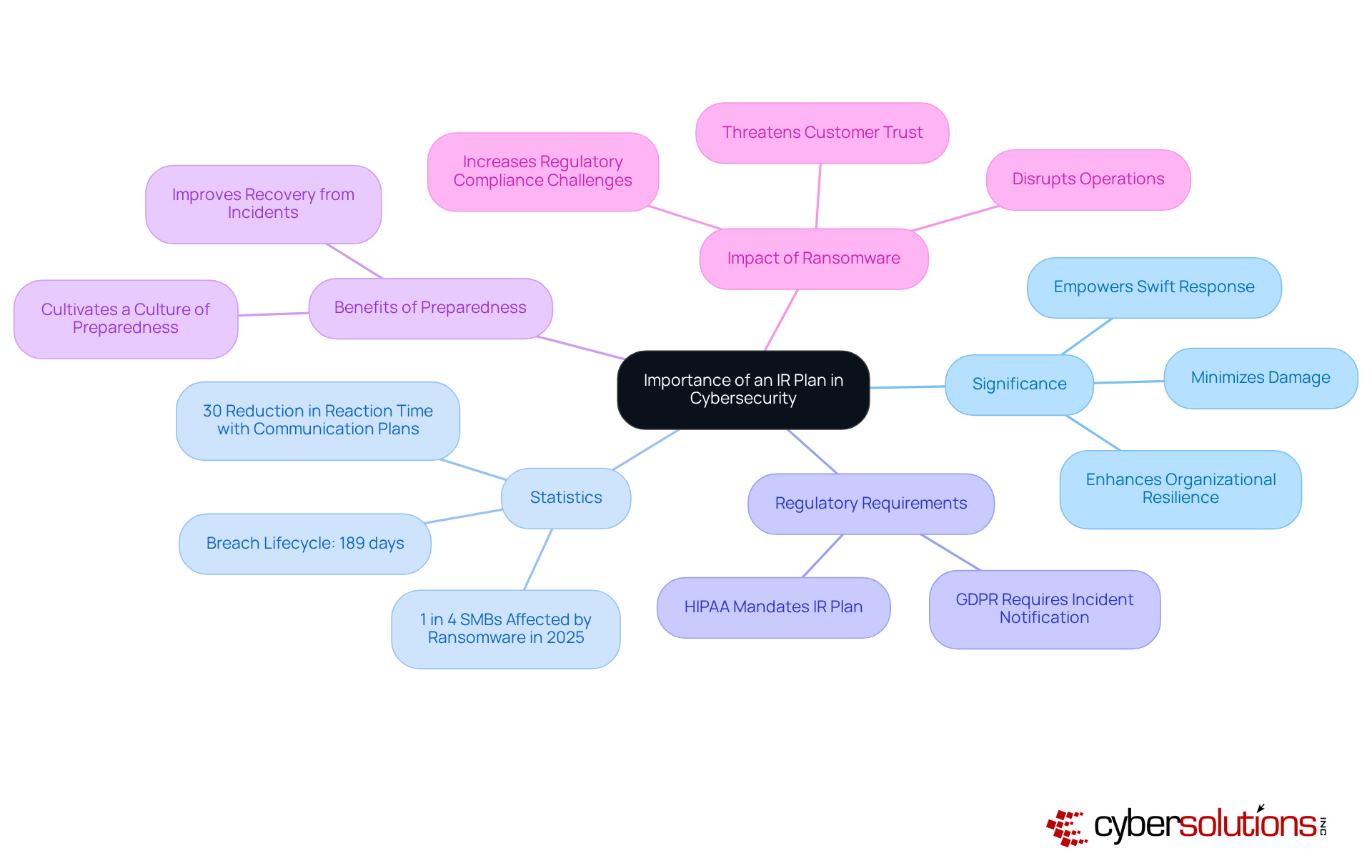
Start at the center with the main idea, then follow the branches to explore various aspects of why an IR plan is crucial. Each branch represents a different argument or statistic that supports the central theme.

Outline Key Components of an Effective IR Plan

An effective ir plan is crucial for organizations aiming to navigate cybersecurity events with efficiency and confidence. In today’s landscape, where threats are ever-evolving, having a robust IR plan can mean the difference between a minor incident and a catastrophic breach. Here are the key components that work together to ensure a comprehensive response:

  1. Preparation: Establishing clear policies and assembling dedicated teams equipped with the right tools is essential for effective management of cybersecurity situations. Organizations that engage in regular training and simulations can reduce breach costs by an average of $1.49 million. Are you prepared to face the challenges ahead?

  2. Detection and Analysis: Implementing robust systems for the prompt identification and evaluation of incidents is vital. Companies that utilize automated detection tools can significantly reduce false positives, allowing their teams to concentrate on genuine threats. How quickly can your organization identify a potential breach?

  3. Containment: Effective strategies must be in place to limit the spread of an event and prevent further damage. Organizations with clear internal communication protocols can prevent 21% more secondary breaches caused by mismanaged responses. Is your communication strategy up to par?

  4. Eradication: This step involves removing the root cause of the incident from the environment, ensuring that vulnerabilities are addressed. Without this, the same issues may resurface, leading to further complications.

  5. Recovery: Restoring systems and operations to normal is vital. During this phase, organizations should ensure that all vulnerabilities are remediated. Those that address breaches in under 30 days save more than $1 million compared to those with extended resolution times. Can your organization afford to wait?

  6. Post-Incident Review: Analyzing the occurrence afterward is critical for learning and enhancing future responses. High-performing security teams conduct thorough post-mortem evaluations after each event, improving their readiness for future threats. What lessons can your team learn from past incidents?

Each of these components plays a crucial role in mitigating the impact of cybersecurity events and enhancing the overall security posture of an organization. By prioritizing an effective IR plan, organizations can not only protect their assets but also build trust with their stakeholders.
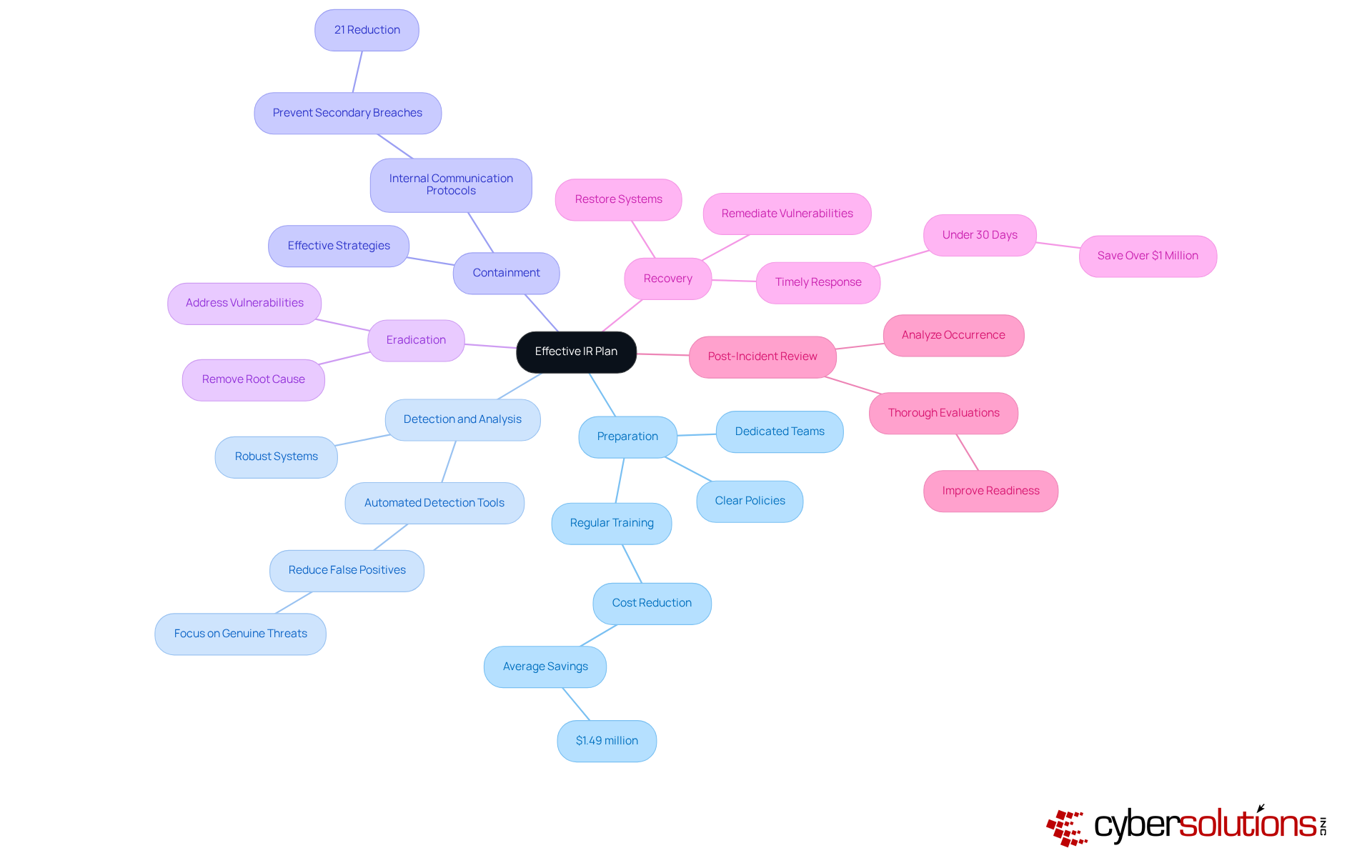
The center represents the overall IR plan, while each branch shows a key component. Follow the branches to see the important details and strategies associated with each part of the plan.

Trace the Evolution of Incident Response Plans

The evolution of the IR plan is profoundly influenced by the escalating complexity of cyber threats and the increasing recognition of the necessity for structured responses. Initially, emergency measures were predominantly reactive, often triggered only after breaches occurred. However, as cyber threats advanced, organizations began to embrace proactive strategies. Frameworks such as the NIST Cybersecurity Framework and guidelines from the SANS Institute have equipped organizations with systematic approaches to managing incidents.

Over time, the focus has shifted from merely responding to incidents to incorporating risk management, compliance, and continuous improvement into the response process. Today, the IR plan is not static; it is a dynamic document that must adapt alongside emerging threats and technologies. This evolution underscores the critical need for regular updates and training to ensure their effectiveness in an ever-evolving cybersecurity landscape.

In the healthcare sector, where sensitive data is at stake, the implications of these developments are significant. Cyber Solutions can play a pivotal role in addressing these challenges, ensuring that organizations are not only prepared to respond but also to anticipate and mitigate risks effectively.

This flowchart shows how Incident Response plans have evolved over time. Each box represents a stage in the evolution, with arrows indicating the progression from reactive measures to proactive strategies and continuous improvement.

Conclusion

An Incident Response Plan (IRP) is not just a document; it’s a vital framework that guides organizations through the intricate landscape of cybersecurity threats. In an era where swift detection and response are paramount, a well-structured IRP ensures that business continuity and data integrity remain intact. Alarmingly, many organizations still lack a documented IR plan, making it imperative for businesses to prioritize this critical aspect of their cybersecurity strategy.

The importance of an IR plan cannot be overstated. It minimizes damage from cyber threats and encompasses essential components such as:

  • Preparation
  • Detection
  • Containment
  • Eradication
  • Recovery
  • Post-incident review

Each of these elements is crucial in bolstering an organization’s resilience against attacks while ensuring compliance with regulatory requirements. Moreover, the evolution of IR plans signifies a shift from reactive measures to proactive strategies, highlighting the necessity for continuous improvement in response protocols.

Investing in a robust Incident Response Plan is not merely a precaution; it’s a strategic imperative for organizations that aim to protect their assets and reputation. As cyber threats evolve, so too must the strategies to manage them. Organizations must take proactive steps by developing, updating, and regularly testing their IR plans. The question remains: can your organization afford to be without a comprehensive IR plan? The time to act is now.

Frequently Asked Questions

What is an Incident Response Plan (IRP)?

An IRP is a vital strategy that outlines the procedures and protocols a company must follow in response to cybersecurity events, helping teams detect, respond to, and recover from security breaches or attacks.

Why is having an IRP essential for companies?

An IRP is essential because it ensures a coordinated and effective response to incidents, significantly reducing potential impacts on business continuity and data integrity.

What are some key components of an IRP?

Key components of an IRP typically include predefined roles and responsibilities, communication strategies, and specific actions aimed at mitigating damage and restoring normal operations.

How does the presence of an IRP affect the breach lifecycle?

Organizations with an IRP experience an average breach lifecycle of 258 days, compared to just 189 days for those without one, highlighting the importance of having a documented plan.

What percentage of entities currently lack a documented IRP?

Alarmingly, 45% of entities currently lack a documented IRP, indicating a significant gap in cybersecurity preparedness.

What are the six principles of effective incident response according to NIST?

The six principles are Govern, Identify, Protect, Detect, Respond, and Recover.

What financial benefits can automated IR playbooks provide?

Implementing automated IR playbooks can lead to substantial cost savings, averaging $2.22 million per breach, emphasizing the operational and financial advantages of a well-structured IR plan.

Can organizations afford to be without an IRP?

In a world where every second counts, organizations cannot afford to be without an IRP, as it is crucial for effective incident management and minimizing damage.

Recent Posts
5 Best Practices for Achieving CMMC 1.0 Compliance Success
Implementing Multi-Factor Authentication: A Step-by-Step Guide for Leaders
What Is Endpoint Detection and Why It Matters for Your Business
What is an IR Plan? Importance, Components, and Evolution Explained
Master Email Security Training: 4 Steps for C-Suite Leaders
What is EDR? Understanding Its Role in Cybersecurity for Leaders
10 Benefits of Network Managed Service Providers for C-Suite Leaders
5 Steps to Build an Effective Cyber Response Plan for Leaders
7 Steps to Build a Successful Managed Service Provider Business
5 Best Practices to Manage Cloud Document Systems Effectively
Master Backup and Data Recovery: Best Practices for C-Suite Leaders
Understanding Hybrid Work Environment Meaning for C-Suite Leaders
What Is a Hybrid Work Environment? Key Features and Evolution Explained
CMMC Compliance Definition: What It Means for Your Organization
10 Essential Dark Web Scanners for C-Suite Leaders in 2025
Essential Best Practices for Your Software Disaster Recovery Plan
Understanding CMMC Compliance Meaning for Business Leaders
Master Fully Managed Cybersecurity: Key Steps for Executives
4 Best Practices for Effective Cyber Risk Assessments
Master Server Managed Services: Best Practices for C-Suite Leaders
Understanding the Benefits of Privileged Access Management for Leaders
Essential Email Safety Tips for C-Suite Leaders to Implement
Understanding NIST Guidelines for Passwords: Importance and Key Insights
Maximize ROI with Tailored IT Solutions and Managed Services
Achieve NIST 800 Compliance: 4 Essential Steps for Leaders
Compare 4 Dark Web Monitoring Companies: Features, Benefits, Pricing
Master the NIST Incident Response Process for Effective Security
Best Practices for Selecting Multi-Factor Authentication Tools
10 Managed Security Services Companies to Watch in 2025
Navigating DOD CMMC Requirements: Compare Compliance Impacts and Trends
Understanding Desktop-as-a-Service: Key Insights for Executives
Understanding Failover Systems: Importance and Key Configurations
10 Essential Strategies for Small Business Ransomware Protection
Understanding Managed Cybersecurity Solutions: Importance and Benefits
Understanding Secure Infrastructure Solutions: Importance and Key Features
How Vulnerability Scanning Works: A Guide for C-Suite Leaders
10 Essential Managed IT Solutions in Maine for Business Leaders
Master Cybersecurity and Compliance: Best Practices for C-Suite Leaders
Backup vs Disaster Recovery: Key Differences for C-Suite Leaders
Why Managed IT Compliance Services Are Essential for Business Success
Understanding Disaster Recovery Tiers: Importance and Key Features
4 Best Practices for Effective Backup and Continuity Strategies
Achieve CMMC 2.0 Level 2 Compliance: A Step-by-Step Approach
Create an Effective Acceptable Use Policy (AUP) in 7 Steps
10 Essential Strategies for Hybrid Work Security Success
10 Essential Cyber Security KPIs for Business Resilience
Comparing Cyber Security Pricing Models for Strategic Decision-Making
Understanding the Benefits of a Managed Service Provider for Leaders
7 Managed Security Services Cloud Solutions for Business Resilience
9 Key Benefits of Cyber Attack Simulation Exercises for Leaders
What an Acceptable Use Policy (AUP) Means for Your Organization
Why Use a Managed Service Provider for Strategic Business Success
10 Key Benefits of the Managed Service Provider Business Model
Understanding the Difference Between MSP and MSSP for Leaders
10 Managed Network IT Services to Boost Business Efficiency
What is a Managed Services Consultant and Why It Matters for Leaders
Understanding the Cost of Cybersecurity for Small Businesses
7 Top Data Center Managed Services Providers for C-Suite Leaders
10 Essential MSP IT Plans for C-Suite Leaders to Enhance Efficiency
Understanding Managed Services Benefits and Risks for Executives
10 Essential Security Services in Information Security for C-Suite Leaders
Create Your CMMC SSP: A Step-by-Step Guide for Leaders
Understanding CVE Funding Cuts: Impacts and Strategies for Leaders
IT Spending as a Percentage of Revenue by Industry: Key Insights
Understanding MSP Company Meaning: Role and Impact for Leaders
10 Examples of Managed Service Providers for C-Suite Leaders
10 Benefits of Defensive Artificial Intelligence for C-Suite Leaders
10 Key Insights on What Juice Jacking Means for Your Business
10 Insights on IT Spending as Percentage of Revenue for Leaders
10 Key Benefits of SSL DPI for C-Suite Leaders
10 Benefits of Managed Firewall Solutions for Business Security
10 Essential Emergency IT Support Services for C-Suite Leaders
Understanding Hourly IT Support Rates: Key Factors and Calculations
10 Essential SMB IT Services to Enhance Security and Efficiency
10 Digital Certificate Types Every C-Suite Leader Should Know
Understanding Juice Jacking Meaning: Protect Your Business Today
10 Essential Practices for Effective Cybersecurity Documentation
Protect Your Business: Combat USB Drop Attacks Effectively
Essential IT Services SMBs Must Consider for Success
What Is Threat Intelligence in Cybersecurity and Why It Matters
Understanding Endpoint Protection: Definition and Key Insights
10 Key Benefits of Managed Services Security Companies for Leaders
Backup vs Archiving: Key Insights for C-Suite Leaders
Meet the CMMC Compliance Deadline: Steps for C-Suite Leaders
3 Best Practices for Effective Disaster Recovery Storage Solutions
10 Essential Malware Prevention Best Practices for Executives
10 Essential Strategies for Effective Voice Disaster Recovery
Best Practices for Data and System Recovery in Your Organization
Understanding Outsourced IT Support Costs for Strategic Leaders
10 Key Factors Influencing Cyber Security Certification Cost
Mastering Your Information Security Assessment: A Step-by-Step Guide
10 Key Elements of a NIST Incident Response Plan for Leaders
Master Cyber Security Assessment: A Step-by-Step Approach
7 Managed Services Billing Software Solutions for C-Suite Leaders
10 Essential CMMC Controls for C-Suite Leaders to Implement
Master Compliance in Cyber Security: Strategies for C-Suite Leaders
10 Benefits of 24/7 Managed IT Services for C-Suite Leaders
Master Cyber Security KPIs to Align with Business Goals
10 Managed Services Cyber Security Strategies for C-Suite Leaders
What Does Compliance Mean in Business? Key Insights for Leaders

Join our newsletter

Sign up for the latest industry news.
We care about your data in our privacy policy.
Thank you! Your submission has been received!
Oops! Something went wrong while submitting the form.