


The Cybersecurity Maturity Model Certification (CMMC) is fundamentally reshaping the landscape for defense contractors. This critical framework is designed to bolster cybersecurity across the Defense Industrial Base, addressing the urgent need for enhanced security measures. As organizations grapple with the complexities of compliance, they not only stand to gain improved security but also a competitive edge in an increasingly scrutinized arena.
However, the reality is stark: only a fraction of firms currently meet the stringent requirements set forth by the CMMC. This raises a pressing question for many: how can organizations effectively navigate these evolving standards? The answer lies in understanding the implications of these requirements and taking proactive steps to secure their future amid the challenges of compliance. By embracing the CMMC framework, organizations can position themselves not just to survive, but to thrive in a landscape where cybersecurity is paramount.
The Cybersecurity Maturity Model Certification (CMMC) serves as a crucial framework established by the Department of Defense (DoD) to strengthen the cybersecurity posture of organizations and meet the requirements within the Defense Industrial Base (DIB). Designed to protect Controlled Unclassified Information (CUI) and Federal Contract Information (FCI) from cyber threats, this framework adheres to best practices and encompasses five maturity levels, each delineating specific practices and processes necessary for certification. The core objectives of CMMC are critical for organizations navigating today's complex cybersecurity landscape:
Understanding these principles is essential for organizations as they navigate the compliance landscape and the associated financial implications. The recent updates to the compliance framework, effective from November 10, 2025, further emphasize the urgency for organizations to prepare for adherence to CMMC standards, ensuring contract eligibility and enhancing their security posture.

When it comes to cybersecurity, understanding the differences between the Cybersecurity Maturity Model Certification (CMMC) and other standards, particularly the NIST framework, is crucial for organizations, especially those in the defense sector.
Understanding these distinctions is vital for companies as they evaluate their compliance strategies. Moreover, leveraging CMMC can provide small and medium-sized businesses (SMBs) with resources and ongoing compliance, including continuous monitoring and proactive risk assessments, ensuring alignment with regulatory standards in highly regulated sectors.
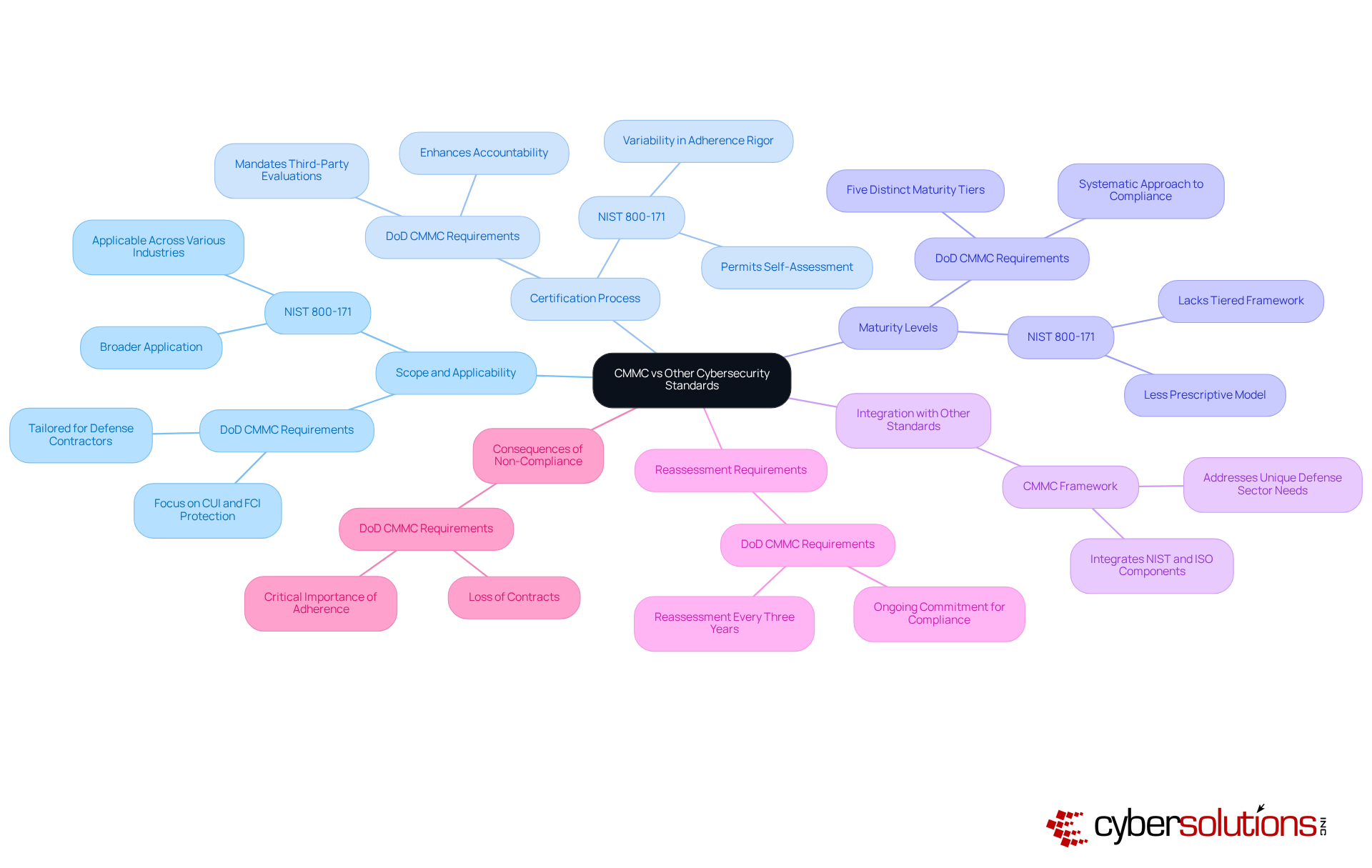
is not just a regulatory hurdle; it represents a critical juncture for organizations navigating the complex landscape of cybersecurity to meet compliance requirements. As threats evolve, the need for robust security measures becomes paramount. However, achieving certification comes with its own set of challenges and strategic benefits that organizations must carefully consider.
Challenges:
Strategic Benefits:
By assessing these effects, organizations can make informed choices regarding their adherence strategies and investments, ultimately transforming compliance into a strategic benefit.
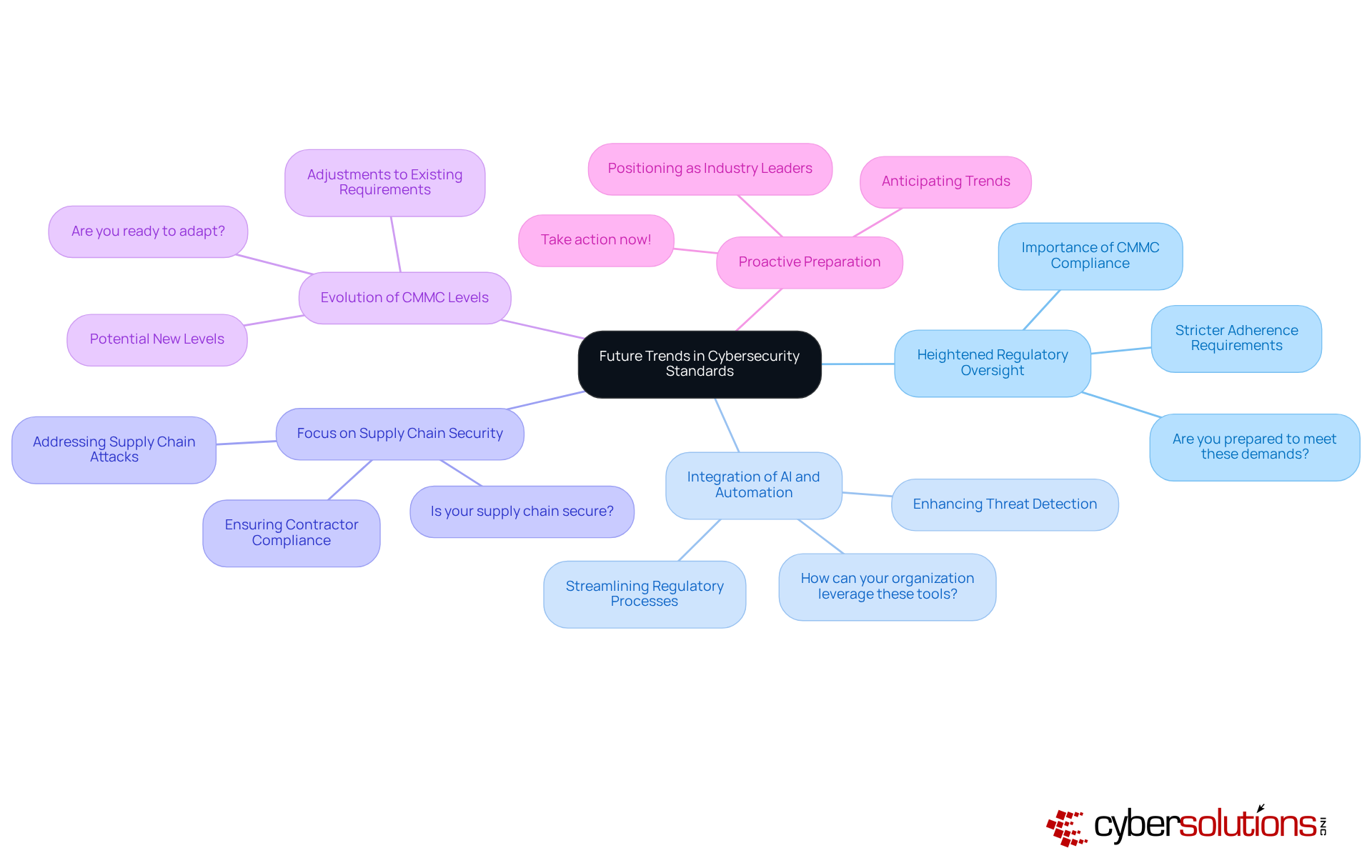
As the cybersecurity landscape evolves, it’s crucial to recognize the trends that will shape the future of CMMC and related standards. The stakes are high, and organizations must adapt to stay ahead in this ever-changing environment.
Organizations: With cyber threats on the rise, regulatory agencies are expected to enforce stricter adherence requirements. This shift highlights the necessity for organizations to comply with regulations, which are becoming increasingly vital for maintaining eligibility in government contracts. Are you prepared to meet these demands? Technologies: Organizations are turning to AI and automation technologies to streamline regulatory processes. These innovations not only enhance threat detection capabilities but also reduce the manual burdens of compliance, allowing teams to concentrate on strategic initiatives. How can your organization leverage these tools to improve efficiency? Focus on Security: The rise of supply chain attacks has led to a stronger emphasis on ensuring that all contractors and subcontractors meet rigorous cybersecurity requirements. Future standards will likely reflect the need for comprehensive security across the entire supply chain, emphasizing the importance of collaboration. Is your supply chain secure?
Changes may occur as the CMMC framework potentially introduces new levels or adjusts existing standards in response to emerging threats and technological advancements. This flexibility will be essential for entities striving to remain at the forefront of the regulatory environment. Are you ready to adapt?
By proactively anticipating these trends, organizations can better prepare for the future of cybersecurity, positioning themselves as leaders in the arena. Don’t wait for change to happen - take action now to secure your organization’s future.
The Cybersecurity Maturity Model Certification (CMMC) stands as a crucial framework aimed at bolstering the cybersecurity posture of organizations within the Defense Industrial Base. In an era where cyber threats are constantly evolving, the CMMC framework mandates specific practices and accountability measures to safeguard sensitive information. For organizations striving for compliance, grasping the core principles and objectives of CMMC is not just beneficial; it’s essential for achieving certification and maintaining eligibility for defense contracts.
Key insights reveal the distinctive features of CMMC compared to other cybersecurity standards:
While compliance presents challenges - such as financial burdens and time constraints - these hurdles are outweighed by the strategic advantages of adherence, including enhanced security and a competitive edge in the marketplace. Moreover, organizations must stay ahead of emerging trends, such as increased regulatory oversight and the integration of advanced technologies to streamline compliance processes.
In light of these discussions, it’s imperative for organizations to proactively prepare for the shifting landscape of cybersecurity standards. By embracing the principles of CMMC and adapting to anticipated changes, businesses can position themselves as leaders in the defense sector while effectively safeguarding sensitive information. Taking decisive action now not only ensures compliance with DoD CMMC requirements but also cultivates a culture of resilience against future cyber threats.
What is the Cybersecurity Maturity Model Certification (CMMC)?
The CMMC is a framework established by the Department of Defense (DoD) to enhance the cybersecurity posture of organizations within the Defense Industrial Base (DIB) and to protect Controlled Unclassified Information (CUI) and Federal Contract Information (FCI) from cyber threats.
What are the core objectives of the CMMC?
The core objectives of the CMMC include enhancing cybersecurity by mitigating vulnerabilities, ensuring compliance with established standards, promoting accountability among contractors, and facilitating trust between the DoD and its contractors.
How many maturity levels does the CMMC framework have?
The CMMC framework encompasses five maturity levels, each outlining specific practices and processes necessary for certification.
Why is the CMMC certification process important for organizations?
The CMMC certification process is important because it holds contractors accountable for their cybersecurity practices, ensures adherence to required standards, and fosters a culture of accountability to safeguard sensitive information.
What is the current state of compliance with DoD CMMC requirements?
Currently, only 431 entities have achieved final Level 2 certification, which is just 0.5% of the estimated 80,000 firms that need to fulfill the DoD CMMC requirements at this level.
When do the recent updates to the CMMC compliance framework take effect?
The recent updates to the compliance framework will take effect on November 10, 2025.
What is the significance of understanding CMMC principles for organizations?
Understanding CMMC principles is essential for organizations as it helps them navigate regulatory complexities and financial implications, ensuring contract eligibility and enhancing their overall security posture.
Managed IT Service Provider | Cyber Security | Incident Response | Compliance As A Service | Hosted Phone Service | Managed Security Service Provider | AI As A Service