


The workplace has experienced a profound transformation, with hybrid work environments emerging as a strategic response to the evolving needs of employees. This innovative model, which seamlessly blends remote and in-office work, presents organizations with a unique opportunity to boost productivity and enhance employee satisfaction. However, as companies navigate this significant shift, they face the critical challenge of identifying the most effective hybrid approach that caters to the diverse expectations of their workforce.
What are the essential features that characterize a successful hybrid work environment? How can organizations leverage these elements to thrive in an increasingly competitive landscape? By addressing these questions, businesses can not only adapt to the changing dynamics but also position themselves for sustained success.
A combined arrangement reflects a modern approach, serving as a strategic response to the changing workforce. By integrating remote and in-office tasks, organizations illustrate flexibility, empowering their staff to seamlessly switch between home and office settings. This approach strikes a balance between collaboration and autonomy, which is crucial in understanding the environment that fosters a productive work culture.
As we look ahead to 2025, it’s noteworthy that around 60% of companies are embracing hybrid work models, which includes mixed work arrangements. This shift reflects a significant transformation in what is a traditional view of workplace dynamics. Consider this: 83% of employees express a preference for hybrid work, and among those currently enjoying flexible arrangements, 72% wish to continue in such arrangements. Why? Adaptability is emerging as a key factor in job satisfaction, and organizations that effectively implement hybrid strategies are witnessing remarkable results.
In fact, 67% of companies that adopt these strategies report increased staff involvement and productivity. Moreover, research indicates that blended arrangements contribute to greater employee satisfaction, with remote and blended workers being 22% more content than their fully office-based counterparts. This model not only meets diverse employee needs but also illustrates the importance of flexibility, positioning companies to thrive in a competitive landscape. By adopting hybrid work practices, organizations can enhance their overall performance.
In conclusion, the adoption of combined arrangements is essential for organizations aiming to enhance employee engagement and productivity, which raises the question of how to best implement these strategies.

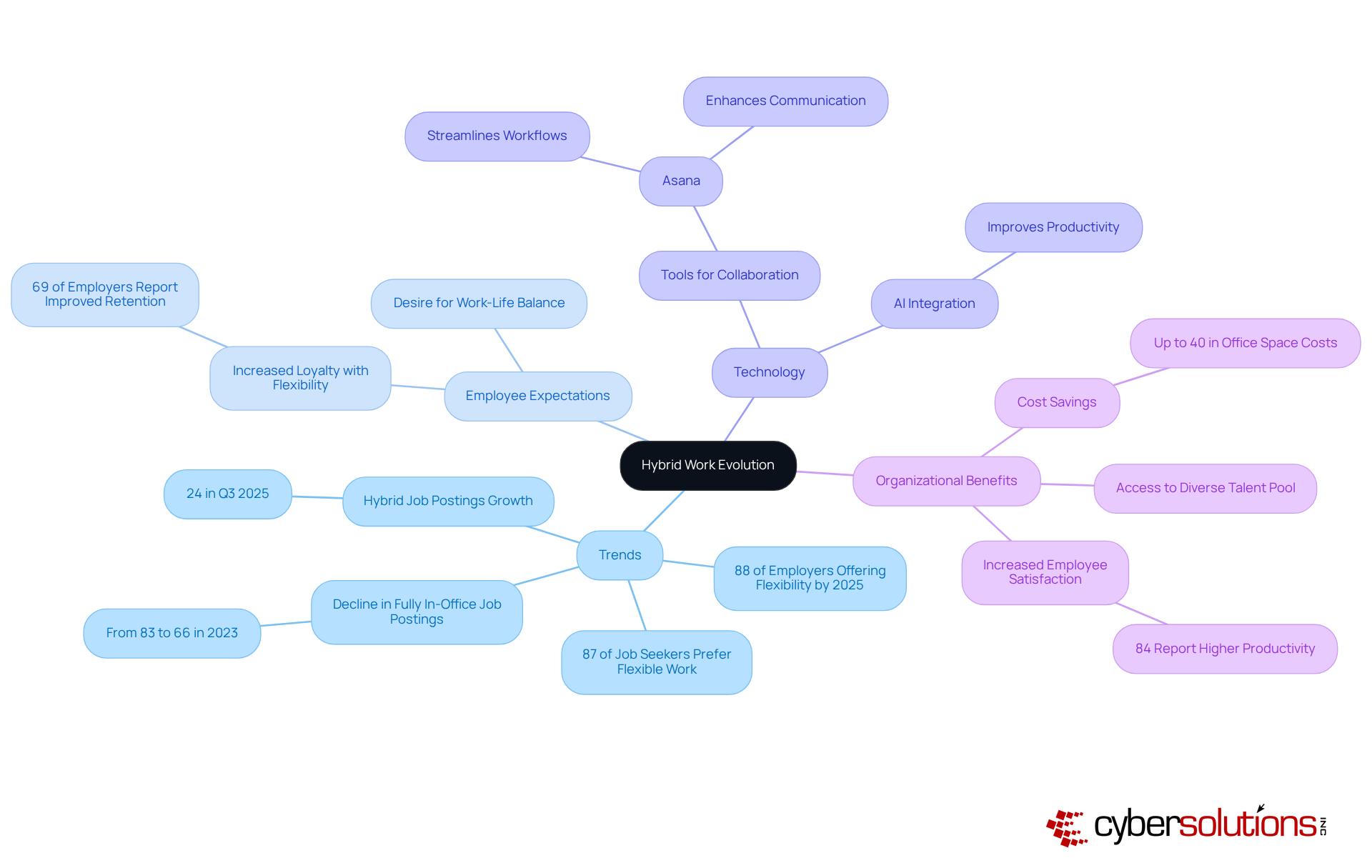
The employment landscape has undergone a remarkable transformation in recent years, particularly accelerated by the COVID-19 pandemic, which necessitated a rapid shift to remote work. What began as a temporary fix has now solidified the understanding of hybrid work as a sustainable strategy across numerous sectors. By 2025, approximately 88% of U.S. employers are expected to offer some form of hybrid work arrangement, with nearly a quarter of new job postings explicitly highlighting 'flexible.' This evolution is primarily fueled by technologies that facilitate seamless communication and collaboration, empowering teams to function effectively from various locations.
Workplace dynamics have shifted significantly, with a substantial majority now advocating for hybrid work because of its flexibility and adaptability. Reports indicate that 87% of job seekers prefer flexible or remote positions, while 70% consider mixed arrangements among their top choices, underscoring a profound change in workplace culture. Furthermore, organizations that understand employee needs are witnessing heightened engagement, with 69% of employers noting improved retention rates when offering flexible options.
Technology is pivotal in this transformation, equipping teams with tools that bolster collaboration and productivity in environments that exemplify hybrid work. For example, project management platforms like Asana have become indispensable, providing features that streamline workflows and enhance communication. Case studies reveal that organizations leveraging advanced digital tools experience greater employee satisfaction and productivity, emphasizing the importance of investing in the right technology to support blended employment settings. As companies continue to adapt, prioritizing the development of inclusive and equitable flexible employment policies will be crucial for attracting and retaining top talent.
Key Characteristics of Hybrid Work Environments
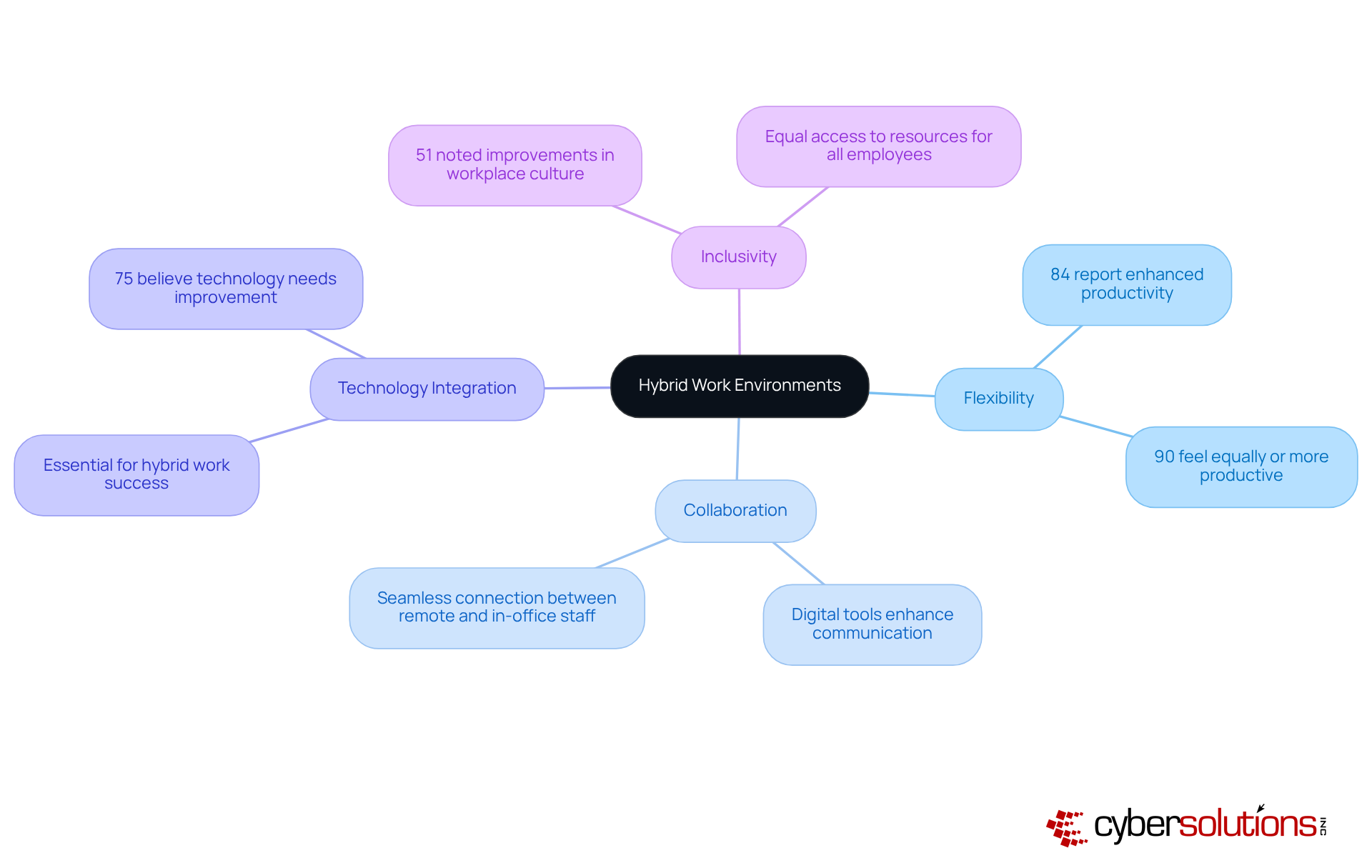
In today’s rapidly evolving work landscape, hybrid work environments are not just a trend; they are a necessity. To understand what is a hybrid work environment, one must recognize that flexibility, collaboration, and technology integration are key characteristics that define it. Flexibility allows individuals to choose when and where they work, fostering autonomy and significantly boosting job satisfaction. Did you know that many employees prefer flexible work arrangements? Furthermore, 90% of flexible workers feel they are equally or more productive in their current working style compared to their time in the office.
Collaboration thrives in blended settings, thanks to digital tools like Zoom and Microsoft Teams. These platforms facilitate seamless communication between remote and in-office staff, ensuring that every team member remains connected and engaged. Inclusivity is another cornerstone of hybrid work environments, providing equal access to resources and opportunities for all employees, regardless of their location. Organizations that embrace these traits often see a remarkable increase in staff involvement; in fact, many report higher engagement levels.
Moreover, 66% of employers recognize that hybrid work models improve employee retention. However, it’s crucial to address challenges such as feelings of isolation among remote workers and the need for team cohesion. By accommodating diverse working styles and preferences, companies can cultivate a more inclusive workplace, ultimately enhancing organizational performance. As highlighted, 'A combined approach can be beneficial for both the employer and the worker.
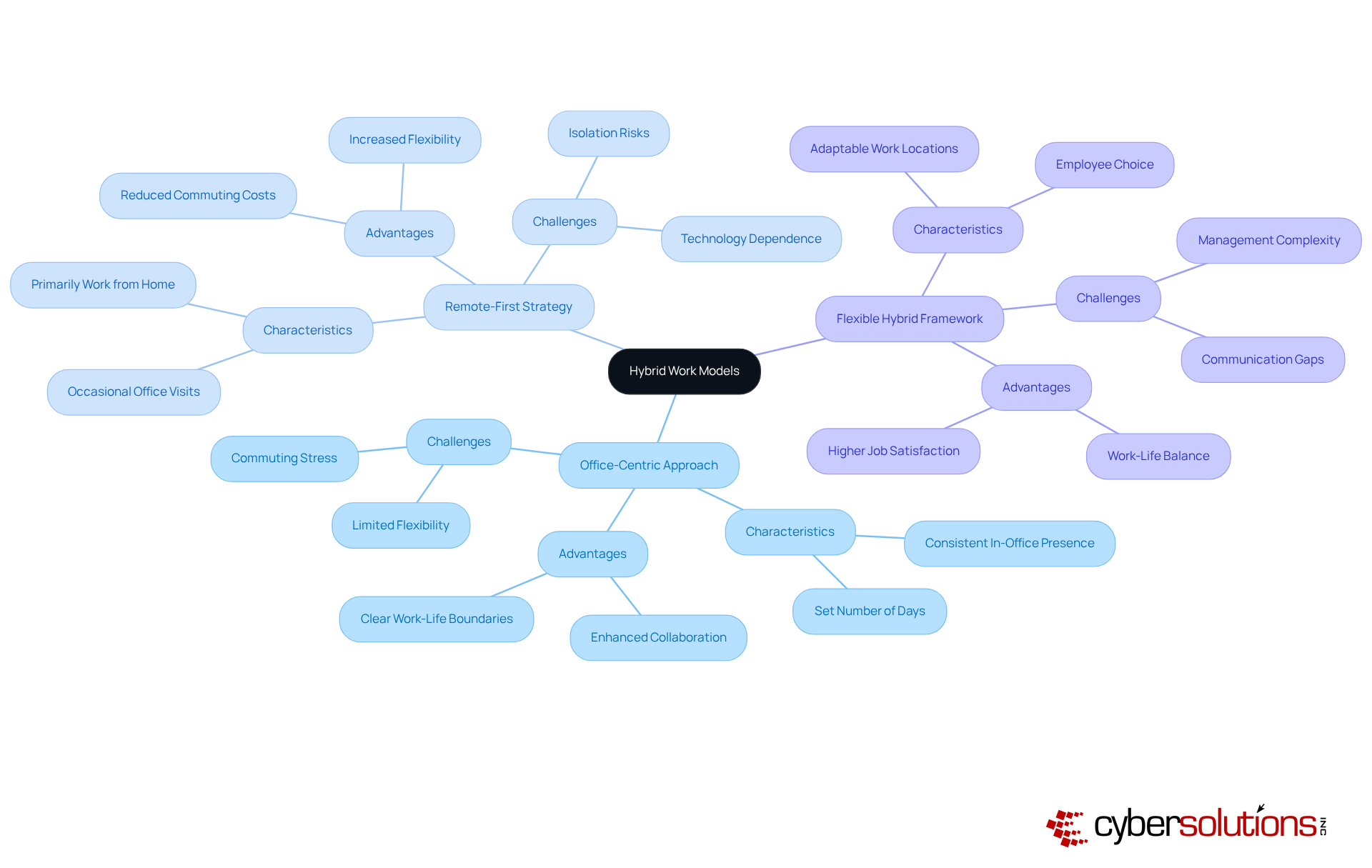
In today's workforce, the question of hybrid work has become increasingly relevant, encompassing various models such as the office-based model, remote-first model, and flexible model. The office-focused approach emphasizes a consistent schedule, where employees are expected to be available for a set number of days each week. Conversely, the remote-first model allows staff to primarily work from home, with occasional visits to the office for meetings or collaborative sessions. Meanwhile, the flexible model involves an adaptable approach that combines elements of both, empowering employees to choose their work location based on personal preferences and project requirements.
Each of these models presents unique challenges. Organizations must carefully evaluate their unique needs and workforce dynamics to identify the most effective approach. By understanding the implications of each hybrid arrangement, companies can foster a productive work environment and employee satisfaction.
The hybrid work environment marks a pivotal transformation in how organizations approach work, seamlessly blending remote and in-office tasks to meet the evolving needs of the workforce. This strategic arrangement not only enhances collaboration and autonomy but also positions companies to boost employee satisfaction and operational efficiency. As this landscape continues to shift, grasping the nuances of a hybrid work environment is essential for organizations striving to excel in a competitive market.
Recent insights indicate that a significant number of employees now favor flexible work arrangements, with compelling evidence showcasing increased productivity and job satisfaction among those in hybrid settings. The role of technology is crucial in enabling seamless communication and collaboration, further underscoring the advantages of this model. Organizations that adopt the characteristics of hybrid work environments - such as flexibility, inclusivity, and effective use of digital tools - are poised to witness improvements in workplace culture and employee retention.
Looking ahead, the significance of embracing a hybrid work model cannot be overstated. Companies should assess their unique needs and workforce dynamics to implement the most effective hybrid arrangements. By prioritizing flexibility and cultivating an inclusive culture, organizations will not only meet employee expectations but also position themselves for sustained success in the years to come. Embracing this evolution in work dynamics is not merely a trend; it is a vital step toward building a resilient and motivated workforce.
What is a hybrid work environment?
A hybrid work environment is a combined arrangement that integrates remote and in-office tasks, allowing employees to switch seamlessly between home and office settings. It balances collaboration and autonomy, fostering a productive work culture.
What percentage of companies are adopting hybrid work environments by 2025?
By 2025, around 60% of companies are expected to embrace hybrid work environments, which include mixed work arrangements.
What do employees think about hybrid work environments?
Approximately 83% of employees express a preference for hybrid work environments, and among those currently enjoying flexible work, 72% wish to continue with such arrangements.
How does adaptability relate to job satisfaction in hybrid work environments?
Adaptability is emerging as a key factor in job satisfaction, with organizations that effectively implement hybrid work environments witnessing remarkable results in employee engagement and productivity.
What impact do hybrid work environments have on employee satisfaction and productivity?
Companies that adopt hybrid work strategies report that 67% experience increased staff involvement and productivity. Additionally, remote and blended workers are 22% more satisfied than their fully office-based counterparts.
How can hybrid work environments affect employee turnover rates?
By promoting a healthier work-life balance, organizations can reduce turnover rates by up to 25% in hybrid work environments.
Why are hybrid work environments considered essential for organizations?
Hybrid work environments are essential for enhancing employee satisfaction and operational efficiency, positioning companies to thrive in a competitive landscape.
Managed IT Service Provider | Cyber Security | Incident Response | Compliance As A Service | Hosted Phone Service | Managed Security Service Provider | AI As A Service