Cybersecurity Education and Training

4 Best Practices for Effective Company Security Training

Introduction

In today’s perilous digital landscape, creating a robust security training program is not just a luxury; it’s a necessity for organizations. As cyber threats become increasingly sophisticated, it’s crucial for employees to be well-versed in security protocols and practices. This article explores four best practices that not only enhance security awareness but also empower employees to act as the first line of defense against potential breaches. How can organizations ensure their training programs are effective and adaptable to the ever-changing threat environment?

The current landscape of cybersecurity threats poses unique challenges for organizations. With the rise in data breaches and cyberattacks, the implications for businesses are profound. Organizations must recognize that their employees are often the first line of defense. By investing in comprehensive training programs, they can equip their workforce with the knowledge and skills needed to mitigate risks effectively.

To address these challenges, Cyber Solutions offers tailored training programs designed to enhance security awareness and foster a culture of vigilance. By implementing these best practices, organizations can not only protect their assets but also build a resilient workforce ready to tackle the evolving threat landscape.

Define Core Components of Security Awareness Training

Creating an effective company security training program is crucial for organizations aiming to safeguard their assets. Cybersecurity threats are evolving, and understanding these risks is essential for every employee.

Phishing Awareness is a top priority. Employees must learn to identify phishing attempts, which rank among the most prevalent cyber threats. Training should incorporate real-world examples and simulations to sharpen recognition skills.

Next, Password Security cannot be overlooked. Educating employees on crafting strong passwords and the significance of password management is vital. This includes implementing multi-factor authentication (MFA) to bolster security.

Furthermore, understanding Data Protection is imperative. Employees should be trained on how to handle sensitive information securely, including practices like data encryption and secure sharing.

Incident Reporting is another critical component. Training should stress the importance of promptly reporting suspicious activities and incidents, fostering a culture of vigilance within the organization.

Lastly, Regulatory Compliance is essential. Employees need to be aware of relevant regulations, such as GDPR and HIPAA, and understand how their actions can impact compliance.

By integrating these elements, companies can develop a robust company security training program that effectively addresses the most pressing security challenges.

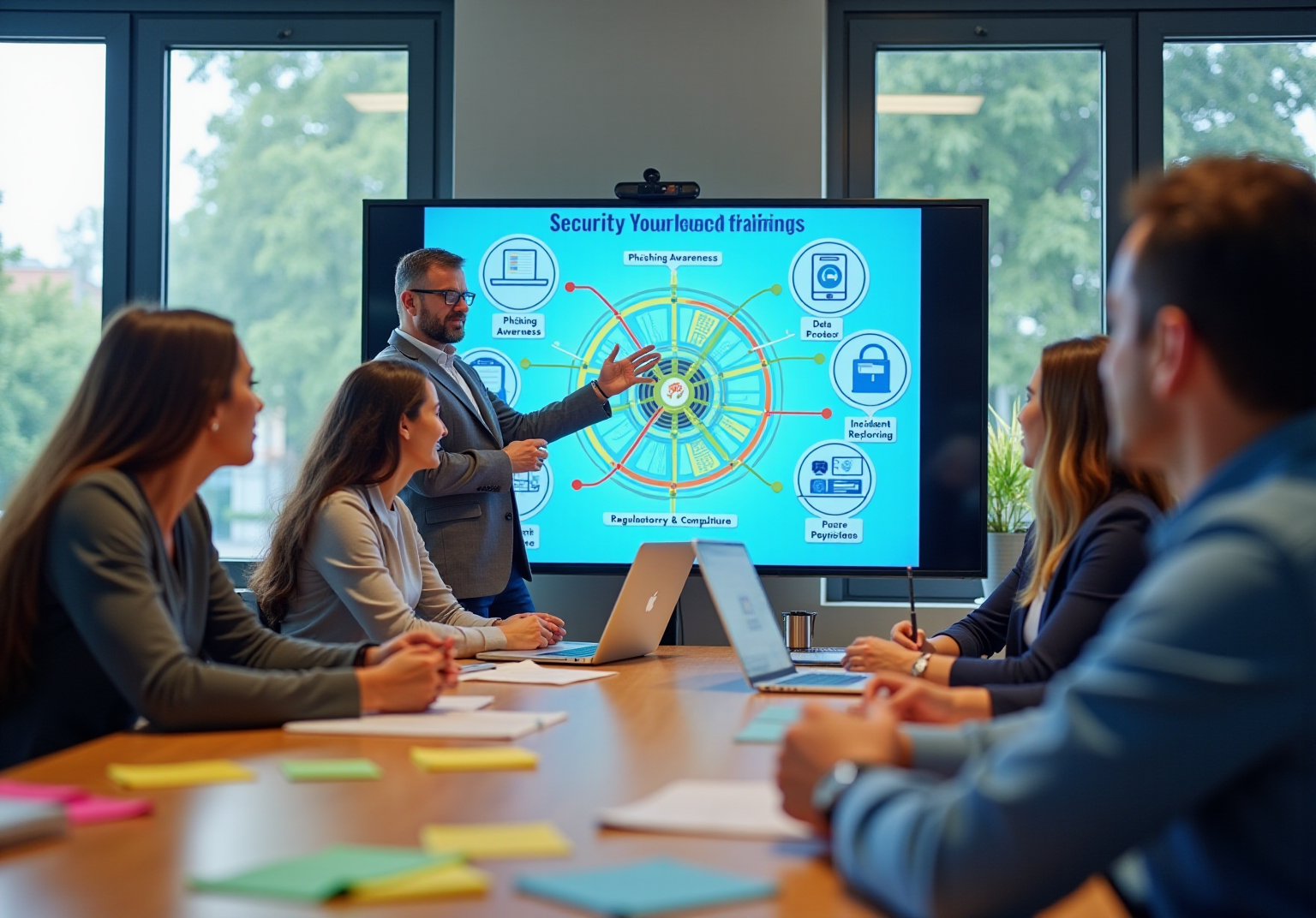
The center represents the overall training program, while each branch highlights a key area of focus. Follow the branches to explore specific topics and understand how they contribute to a comprehensive security training approach.

Customize Training Programs for Organizational Needs

To maximize the effectiveness of company security training, organizations must recognize the critical importance of cybersecurity in today’s landscape.

  1. Assess Specific Threats: Conduct a comprehensive risk evaluation to identify the unique threats faced by your organization. This includes recognizing industry-specific vulnerabilities, such as healthcare data breaches or financial fraud, which can significantly impact operations.

  2. Customize Content: Develop educational materials that reflect your company’s specific environment. Integrate relevant case studies and scenarios that staff are likely to encounter. This customization not only enhances relatability but also ensures compliance with necessary regulations.

  3. Incorporate Role-Based Training: Different roles within the organization face distinct risks. Tailoring training to specific job functions increases relevance and improves effectiveness by addressing the unique challenges each role encounters.

  4. Engage Staff: Utilize interactive elements such as quizzes, discussions, and simulations to maintain staff involvement and reinforce learning. Engaged individuals are more likely to retain information and apply it in real-world situations.

  5. Request Input: Consistently gather feedback from staff regarding the content and format of the training. This ongoing enhancement process ensures that the program evolves to meet the changing safety landscape and workforce needs.

By tailoring company security training programs, companies can effectively equip their staff to manage the specific threats they face, ultimately reducing the likelihood of incidents and enhancing their overall safety posture.

Each box represents a step in the process of customizing training. Follow the arrows to see how each step builds on the previous one, leading to a more effective training program.

Implement Metrics to Evaluate Training Effectiveness

To effectively evaluate the success of security awareness training, organizations must implement the following metrics:

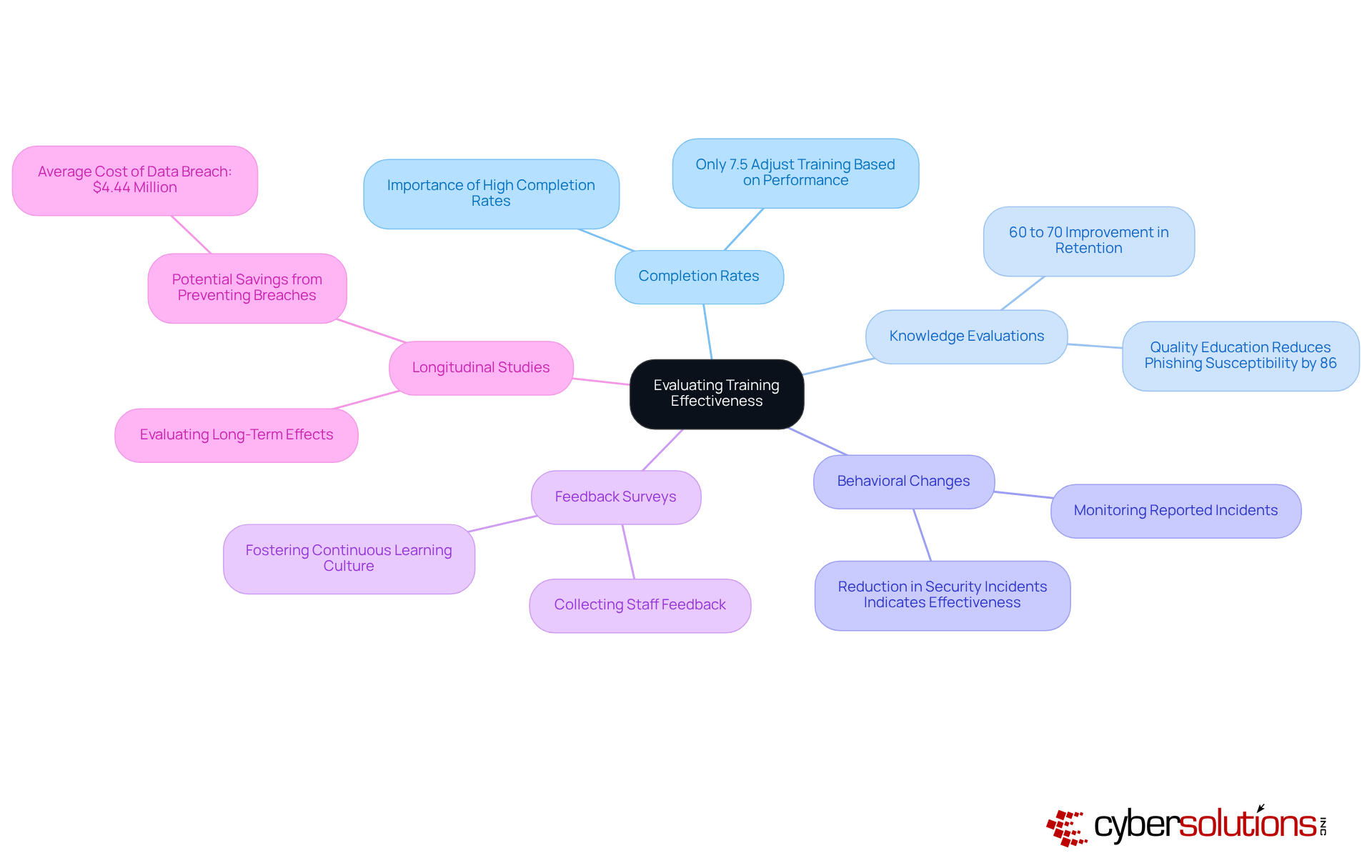
  1. Completion Rates: Monitoring the percentage of employees who finish the development program is crucial. High completion rates not only signify engagement but also demonstrate a dedication to safety culture within the entity. In 2026, entities increasingly acknowledge that completion rates are a vital measure of instructional effectiveness, as they relate to enhanced security practices. However, only 7.5% of organizations adjust their development based on individual employee performance on tests, highlighting the need for a more tailored approach.

  2. Knowledge Evaluations: Utilizing quizzes and assessments before and after sessions helps measure knowledge retention and understanding of key concepts. Research indicates that effective instruction can lead to a 60% to 70% enhancement in knowledge retention, and quality education can decrease phishing susceptibility by up to 86%. This underscores the significance of these evaluations in strengthening learning.

  3. Behavioral Changes: Monitoring changes in staff behavior, such as the frequency of reported phishing attempts or security incidents, is essential. A reduction in incidents may suggest that the guidance is resonating with staff and effectively preparing them to identify and react to threats.

  4. Feedback Surveys: Conducting surveys to collect staff feedback on the content and delivery of the instruction offers valuable insights into areas that may require enhancement. Engaging employees in this way fosters a culture of continuous learning and adaptation.

  5. Longitudinal Studies: Conducting long-term studies to evaluate the effect of instruction on security incidents over time aids in establishing a correlation between education and reduced risk. Organizations that invest in ongoing evaluation can save millions by preventing breaches, as the average cost of a data breach was estimated at $4.44 million globally in 2025.

By employing these metrics, entities can obtain a clearer understanding of their educational program's effectiveness and make data-informed choices for future enhancements. As Zig Ziglar wisely noted, "The only thing worse than educating employees and losing them is not educating them and retaining them," highlighting the essential importance of investing in development programs.

The central node represents the overall goal of evaluating training. Each branch shows a specific metric, and the sub-branches provide additional insights or statistics related to that metric. This layout helps you understand how each metric contributes to assessing the effectiveness of training programs.

Update Training Content Regularly to Address Emerging Threats

To ensure that security awareness training remains effective, organizations must take decisive action:

  1. Monitor the Threat Landscape: Staying informed about the latest cybersecurity threats and trends is crucial. Utilize industry reports, threat intelligence feeds, and security news to keep your organization ahead of potential risks.

  2. Revise Educational Materials: Regular updates to educational content are essential. Reflect new threats, attack vectors, and best practices by adding new modules or revising existing ones to keep the training relevant.

  3. Include Practical Examples: Leverage recent occurrences and case studies to illustrate the importance of the training content. This approach not only engages participants but also reinforces the real-world significance of cybersecurity.

  4. Schedule Regular Refreshers: Implement periodic refresher courses to reinforce key concepts. Regular training helps maintain awareness among employees, ensuring they remain vigilant against evolving threats.

  5. Engage with Experts: Collaborate with cybersecurity specialists to guarantee that your educational content is accurate and comprehensive. This partnership ensures alignment with the latest industry standards and practices.

By committing to these regular updates, organizations can ensure that their company security training remains effective and relevant, effectively addressing the ever-evolving landscape of cyber threats.

Each box represents a crucial step in keeping your security training up-to-date. Follow the arrows to see how each action leads to the next, ensuring your training remains effective against new threats.

Conclusion

Creating a robust security training program is not just essential; it’s a strategic necessity for organizations aiming to protect their assets against evolving cyber threats. By prioritizing key components such as:

  1. Phishing awareness
  2. Password security
  3. Data protection
  4. Incident reporting
  5. Regulatory compliance

companies can cultivate a workforce that is well-equipped to recognize and respond to potential security risks.

Customizing training programs to address specific organizational needs is crucial. By assessing unique threats and tailoring content to reflect real-world scenarios, organizations can engage employees through interactive elements and continuously seek feedback. This approach enhances the relevance and effectiveness of security training initiatives. Moreover, implementing metrics for evaluating training success - like completion rates, knowledge evaluations, and behavioral changes - ensures that programs remain impactful and aligned with the organization's security objectives.

Ultimately, investing in effective security awareness training transcends mere compliance; it’s a strategic imperative. Organizations must commit to regularly updating training content to address emerging threats and keep staff informed of the latest cybersecurity trends. By fostering a culture of vigilance and continuous learning, companies can significantly reduce the likelihood of security incidents, thereby safeguarding their operations and reputation in an increasingly complex digital landscape.

Frequently Asked Questions

What is the purpose of security awareness training in organizations?

The purpose of security awareness training is to safeguard an organization's assets by educating employees about evolving cybersecurity threats and how to recognize and mitigate these risks.

Why is phishing awareness a priority in security training?

Phishing awareness is a priority because phishing attempts are among the most prevalent cyber threats. Training helps employees learn to identify these attempts through real-world examples and simulations.

What should employees learn about password security?

Employees should learn how to create strong passwords, the importance of password management, and the implementation of multi-factor authentication (MFA) to enhance security.

Why is data protection important in security training?

Data protection is important because employees must understand how to handle sensitive information securely, including practices like data encryption and secure sharing.

What role does incident reporting play in security awareness training?

Incident reporting plays a critical role by emphasizing the importance of promptly reporting suspicious activities and incidents, which helps foster a culture of vigilance within the organization.

What regulations should employees be aware of in security training?

Employees should be aware of relevant regulations such as GDPR and HIPAA, understanding how their actions can impact compliance with these regulations.

How can companies develop an effective security training program?

Companies can develop an effective security training program by integrating components such as phishing awareness, password security, data protection, incident reporting, and regulatory compliance to address pressing security challenges.

Recent Posts
Why Your Business Needs an IT Security Provider Now
What to Do with Phishing Emails: 4 Steps to Protect Your Business
Maximize Cloud Hosting Support: Best Practices for C-Suite Leaders
4 Best Practices for Effective Company Security Training
Why Hosting and Cloud Services Are Essential for Business Resilience
Maximize SIEM Events: Best Practices for Cybersecurity Success
4 Best Practices for Managed Email Security Services Success
Understanding EDR in Cyber Security: Meaning and Importance
10 Essential Computer IT Services for C-Suite Leaders
4 Best Practices for Cyber Security Compliance Services Success
5 Best Practices for Achieving CMMC 1.0 Compliance Success
Implementing Multi-Factor Authentication: A Step-by-Step Guide for Leaders
What Is Endpoint Detection and Why It Matters for Your Business
What is an IR Plan? Importance, Components, and Evolution Explained
Master Email Security Training: 4 Steps for C-Suite Leaders
What is EDR? Understanding Its Role in Cybersecurity for Leaders
10 Benefits of Network Managed Service Providers for C-Suite Leaders
5 Steps to Build an Effective Cyber Response Plan for Leaders
7 Steps to Build a Successful Managed Service Provider Business
5 Best Practices to Manage Cloud Document Systems Effectively
Master Backup and Data Recovery: Best Practices for C-Suite Leaders
Understanding Hybrid Work Environment Meaning for C-Suite Leaders
What Is a Hybrid Work Environment? Key Features and Evolution Explained
CMMC Compliance Definition: What It Means for Your Organization
10 Essential Dark Web Scanners for C-Suite Leaders in 2025
Essential Best Practices for Your Software Disaster Recovery Plan
Understanding CMMC Compliance Meaning for Business Leaders
Master Fully Managed Cybersecurity: Key Steps for Executives
4 Best Practices for Effective Cyber Risk Assessments
Master Server Managed Services: Best Practices for C-Suite Leaders
Understanding the Benefits of Privileged Access Management for Leaders
Essential Email Safety Tips for C-Suite Leaders to Implement
Understanding NIST Guidelines for Passwords: Importance and Key Insights
Maximize ROI with Tailored IT Solutions and Managed Services
Achieve NIST 800 Compliance: 4 Essential Steps for Leaders
Compare 4 Dark Web Monitoring Companies: Features, Benefits, Pricing
Master the NIST Incident Response Process for Effective Security
Best Practices for Selecting Multi-Factor Authentication Tools
10 Managed Security Services Companies to Watch in 2025
Navigating DOD CMMC Requirements: Compare Compliance Impacts and Trends
Understanding Desktop-as-a-Service: Key Insights for Executives
Understanding Failover Systems: Importance and Key Configurations
10 Essential Strategies for Small Business Ransomware Protection
Understanding Managed Cybersecurity Solutions: Importance and Benefits
Understanding Secure Infrastructure Solutions: Importance and Key Features
How Vulnerability Scanning Works: A Guide for C-Suite Leaders
10 Essential Managed IT Solutions in Maine for Business Leaders
Master Cybersecurity and Compliance: Best Practices for C-Suite Leaders
Backup vs Disaster Recovery: Key Differences for C-Suite Leaders
Why Managed IT Compliance Services Are Essential for Business Success
Understanding Disaster Recovery Tiers: Importance and Key Features
4 Best Practices for Effective Backup and Continuity Strategies
Achieve CMMC 2.0 Level 2 Compliance: A Step-by-Step Approach
Create an Effective Acceptable Use Policy (AUP) in 7 Steps
10 Essential Strategies for Hybrid Work Security Success
10 Essential Cyber Security KPIs for Business Resilience
Comparing Cyber Security Pricing Models for Strategic Decision-Making
Understanding the Benefits of a Managed Service Provider for Leaders
7 Managed Security Services Cloud Solutions for Business Resilience
9 Key Benefits of Cyber Attack Simulation Exercises for Leaders
What an Acceptable Use Policy (AUP) Means for Your Organization
Why Use a Managed Service Provider for Strategic Business Success
10 Key Benefits of the Managed Service Provider Business Model
Understanding the Difference Between MSP and MSSP for Leaders
10 Managed Network IT Services to Boost Business Efficiency
What is a Managed Services Consultant and Why It Matters for Leaders
Understanding the Cost of Cybersecurity for Small Businesses
7 Top Data Center Managed Services Providers for C-Suite Leaders
10 Essential MSP IT Plans for C-Suite Leaders to Enhance Efficiency
Understanding Managed Services Benefits and Risks for Executives
10 Essential Security Services in Information Security for C-Suite Leaders
Create Your CMMC SSP: A Step-by-Step Guide for Leaders
Understanding CVE Funding Cuts: Impacts and Strategies for Leaders
IT Spending as a Percentage of Revenue by Industry: Key Insights
Understanding MSP Company Meaning: Role and Impact for Leaders
10 Examples of Managed Service Providers for C-Suite Leaders
10 Benefits of Defensive Artificial Intelligence for C-Suite Leaders
10 Key Insights on What Juice Jacking Means for Your Business
10 Insights on IT Spending as Percentage of Revenue for Leaders
10 Key Benefits of SSL DPI for C-Suite Leaders
10 Benefits of Managed Firewall Solutions for Business Security
10 Essential Emergency IT Support Services for C-Suite Leaders
Understanding Hourly IT Support Rates: Key Factors and Calculations
10 Essential SMB IT Services to Enhance Security and Efficiency
10 Digital Certificate Types Every C-Suite Leader Should Know
Understanding Juice Jacking Meaning: Protect Your Business Today
10 Essential Practices for Effective Cybersecurity Documentation
Protect Your Business: Combat USB Drop Attacks Effectively
Essential IT Services SMBs Must Consider for Success
What Is Threat Intelligence in Cybersecurity and Why It Matters
Understanding Endpoint Protection: Definition and Key Insights
10 Key Benefits of Managed Services Security Companies for Leaders
Backup vs Archiving: Key Insights for C-Suite Leaders
Meet the CMMC Compliance Deadline: Steps for C-Suite Leaders
3 Best Practices for Effective Disaster Recovery Storage Solutions
10 Essential Malware Prevention Best Practices for Executives
10 Essential Strategies for Effective Voice Disaster Recovery
Best Practices for Data and System Recovery in Your Organization
Understanding Outsourced IT Support Costs for Strategic Leaders
10 Key Factors Influencing Cyber Security Certification Cost

Join our newsletter

Sign up for the latest industry news.
We care about your data in our privacy policy.
Thank you! Your submission has been received!
Oops! Something went wrong while submitting the form.