Cybersecurity Trends and Insights

Enhance Cybersecurity with Deep Packet Inspection and SSL Best Practices

Introduction

Deep Packet Inspection (DPI) is not just a technical term; it’s a vital component of modern cybersecurity that organizations must embrace to combat increasingly sophisticated threats. As cybercriminals exploit the complexities of encrypted data, the need to implement DPI effectively alongside SSL best practices becomes paramount. Yet, organizations face a daunting challenge: how to balance robust security measures with privacy concerns, performance impacts, and implementation complexities.

How can organizations navigate these challenges? By enhancing their cybersecurity posture and safeguarding sensitive information, they can not only protect their assets but also build trust with their stakeholders. The implications for healthcare organizations are particularly significant, as they must ensure compliance while defending against evolving threats.

In this landscape, Cyber Solutions emerge as a critical ally, offering strategies that address these multifaceted challenges. With the right approach, organizations can leverage DPI to fortify their defenses without compromising on privacy or performance.

Understand Deep Packet Inspection and Its Role in Cybersecurity

Deep Packet Inspection (DPI) is a critical tool in the fight against sophisticated cyber threats. In an era where healthcare organizations face increasing risks, understanding and implementing DPI can be a game changer. Unlike traditional packet filtering that merely skims header information, DPI thoroughly analyzes the entire packet, including its payload. This comprehensive approach allows organizations to uncover and tackle complex threats that might otherwise remain hidden.

In today’s cybersecurity landscape, DPI plays an essential role by enabling real-time monitoring of network traffic. It effectively detects harmful activities and enforces protection policies. For example, DPI can identify malware, unauthorized access attempts, and data exfiltration by scrutinizing packet content. As cyber threats evolve, the ability to conduct in-depth analysis becomes vital for maintaining a strong security posture.

Moreover, DPI helps organizations meet regulatory compliance requirements by ensuring sensitive information is protected during transmission. With approximately 98% of internet traffic in the U.S. utilizing HTTPS, implementing deep packet inspection SSL is crucial for enhancing visibility into encrypted traffic. This step is necessary to fortify defenses against cybercriminals who exploit encryption. By integrating DPI with application allowlisting - an approach that proactively prevents unauthorized software from running and includes features like continuous monitoring and centralized management - businesses can significantly bolster their overall security framework.

Application allowlisting not only minimizes the attack surface but also aids in meeting compliance standards such as HIPAA, PCI-DSS, and GDPR. This makes it an indispensable element of any cybersecurity strategy. Together, these measures ensure that organizations remain eligible for lucrative government contracts while effectively safeguarding Controlled Unclassified Information (CUI) and Federal Contract Information (FCI).

The central node represents DPI, with branches showing its various roles and benefits in cybersecurity. Each branch connects to specific details, helping you see how DPI contributes to a stronger security framework.

Integrate SSL Certificates with Deep Packet Inspection for Enhanced Security

In today's digital landscape, the integration of SSL (Secure Sockets Layer) certificates with deep packet inspection SSL is not just important - it's essential for organizations that handle sensitive information. With over 90% of internet traffic now encrypted, relying solely on conventional protective measures is no longer enough to ensure comprehensive security.

SSL certificates play a vital role in encrypting data during transit, thereby protecting confidentiality. However, this encryption can pose challenges for effective monitoring and protection. This is where DPI comes into play, enabling the examination of encrypted traffic to identify and manage potential risks.

To effectively combine SSL with deep packet inspection SSL, organizations must implement SSL decryption capabilities within their DPI solutions. This allows security teams to scrutinize the contents of encrypted packets without compromising information integrity. For instance, a firewall equipped with DPI can decrypt SSL traffic, assess it for threats, and then re-encrypt it before forwarding it to its intended destination. This not only bolsters security but also ensures compliance with data protection regulations.

The necessity of SSL decryption is highlighted by the alarming statistic that 88% of all cyber incidents stem from human errors, often worsened by the inability to monitor encrypted traffic effectively. By merging deep packet inspection SSL with SSL, organizations can adopt a robust strategy to secure network traffic, enabling them to detect and respond to risks that might otherwise remain concealed. This proactive approach is crucial in an era where cyber threats are increasingly sophisticated and pervasive.
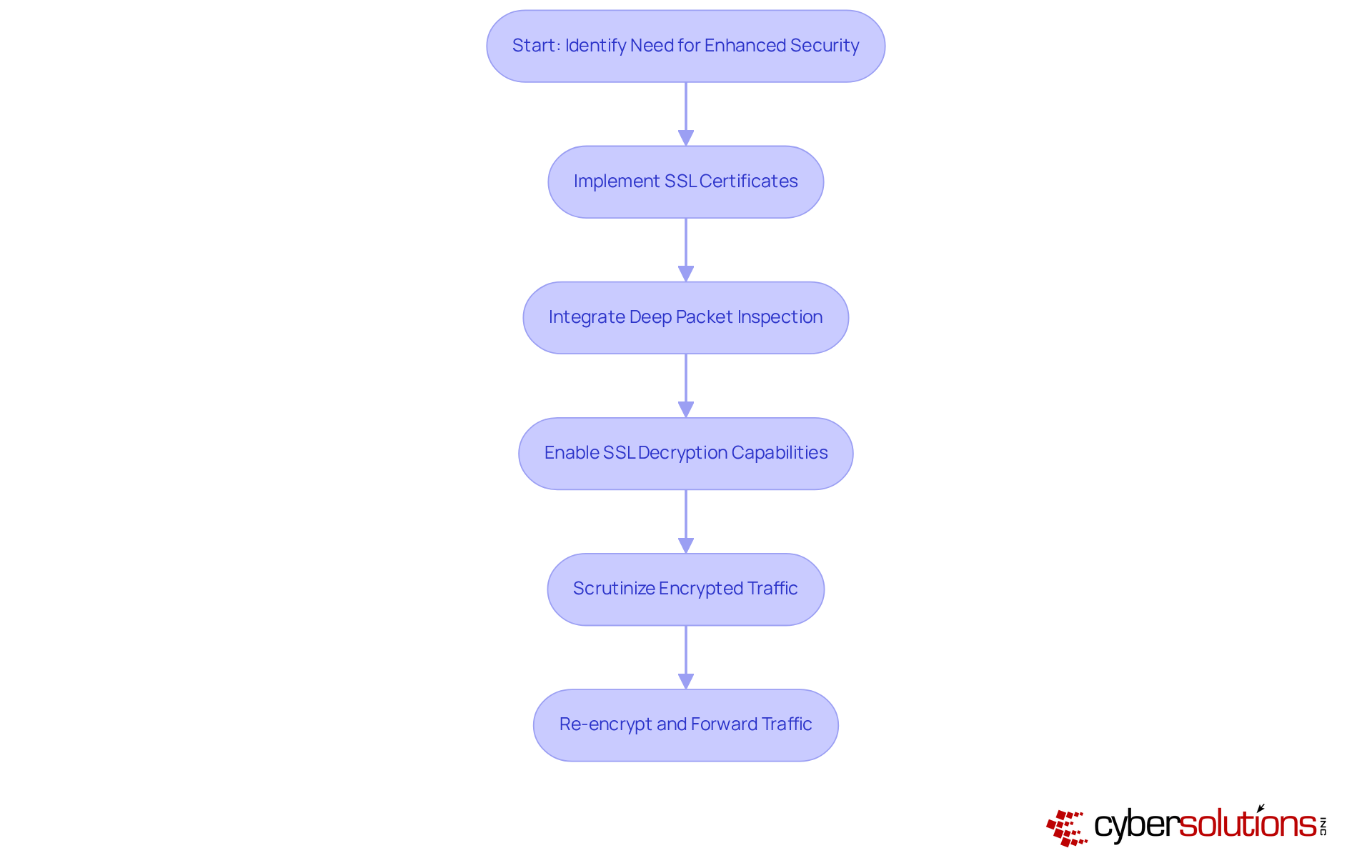
This flowchart outlines the steps organizations should follow to enhance their security by integrating SSL with deep packet inspection. Each box represents a key step in the process, and the arrows show how one step leads to the next.

Implement Best Practices for Effective Deep Packet Inspection in Cybersecurity

To effectively implement deep packet inspection SSL in cybersecurity, organizations must prioritize best practices that enhance their security posture. Cybersecurity is not just a technical requirement; it’s a strategic imperative that can safeguard sensitive data and maintain trust.

  1. Define Clear Objectives: Establish specific security goals for DPI, such as danger detection, compliance, or traffic management. This clarity will guide the implementation process and ensure alignment with organizational priorities.

  2. Choose the Right DPI Solution: Selecting a DPI solution tailored to your organization's unique needs is crucial. Consider scalability, performance, and compatibility with existing infrastructure to ensure seamless integration.

  3. Consistently Refresh DPI Signatures: Keeping DPI signatures and rules up to date is essential for identifying the latest risks. Frequent updates are vital for sustaining an effective defense against evolving cyber threats, as 60% of data breaches stem from unpatched vulnerabilities.

  4. Monitor Performance Impact: DPI can be resource-intensive, potentially affecting network performance. Regular monitoring is necessary to ensure that DPI implementation does not compromise user experience. Fine-tuning settings can help achieve a balance between protection and performance.

  5. Conduct Regular Audits: Periodic reviews of DPI configurations and performance are essential for identifying areas for improvement. Audits confirm that the DPI system operates as intended and adapts to new challenges, highlighting the need for ongoing enhancement in cybersecurity strategies.

  6. Train Safety Personnel: It’s vital that your protection team is well-trained in using DPI tools and interpreting the data they provide. This training is crucial for effective threat detection and response, as the human element often represents the weakest link in security.

  7. Address Common Challenges: Organizations frequently encounter challenges such as resource allocation, integration with existing systems, and the complexity of managing DPI effectively. Recognizing these challenges can facilitate a more strategic implementation.

  8. Avoid Common Pitfalls: Be mindful of potential pitfalls, such as neglecting to update DPI signatures regularly or failing to monitor performance impacts adequately. These missteps can undermine the effectiveness of your DPI strategy.

By adhering to these best practices and addressing the associated challenges and pitfalls, organizations can maximize the effectiveness of their deep packet inspection SSL implementations, which significantly enhances their overall cybersecurity posture. As Adam Fletcher noted, "Cybersecurity isn’t about avoiding risk - it’s about managing it intelligently," underscoring the necessity for a strategic approach to DPI.

Each box represents a key practice for implementing deep packet inspection. Follow the arrows to see the recommended order of actions to enhance your cybersecurity strategy.

Address Challenges and Considerations in Deploying Deep Packet Inspection

Deploying Deep Packet Inspection (DPI) is crucial for enhancing cybersecurity, yet it comes with significant challenges that organizations must navigate:

  1. Privacy Issues: DPI involves scrutinizing the contents of information packets, raising considerable privacy concerns. Organizations must comply with data protection regulations like GDPR and communicate transparently with users about their data handling practices. The ongoing debate surrounding DPI highlights the need for a careful approach to implementation. With the global deep packet inspection market projected to reach US$3.8 Billion, the importance of DPI in cybersecurity cannot be overstated.

  2. Performance Impact: The resource-intensive nature of DPI can negatively affect network performance. Organizations should assess their infrastructure capabilities and optimize DPI configurations to prevent performance degradation. Studies show that improper DPI implementation can lead to bandwidth throttling, disrupting user experience and operational efficiency. It's essential to consider the current performance impacts of DPI on network speed to ensure seamless operations.

  3. Complexity of Implementation: Implementing DPI often requires specialized knowledge, making it a complex endeavor. Organizations should invest in training for their IT staff or collaborate with managed service providers to ensure successful deployment. This strategic partnership can facilitate smoother integration and ongoing management of DPI solutions. As PJ Networks emphasizes, understanding business requirements and customizing protective solutions is vital for effective implementation.

  4. Encryption Challenges: With the rise of encrypted traffic, DPI solutions must adeptly manage SSL/TLS traffic. Organizations should implement SSL decryption capabilities to maintain visibility into encrypted communications without compromising safety. This capability is essential for identifying potential threats hidden within encrypted data streams.

  5. Cost Considerations: While DPI can significantly bolster protection, it may also incur substantial costs. Organizations should evaluate the return on investment (ROI) of DPI solutions and explore cost-effective alternatives that align with their protection needs. Striking a balance between cost and effective security measures is crucial for sustainable cybersecurity practices.

By proactively addressing these challenges, organizations can facilitate a smoother deployment of DPI, ultimately strengthening their cybersecurity defenses and ensuring compliance with evolving regulatory landscapes.

The central node represents the main topic of DPI deployment challenges. Each branch highlights a specific challenge, and sub-branches provide additional details. This layout helps you see how each challenge connects to the overall theme.

Conclusion

Deep Packet Inspection (DPI) is not just a technical term; it’s a cornerstone of modern cybersecurity strategies, especially for organizations that handle sensitive data. In a world where cyber threats are becoming increasingly sophisticated, the ability to analyze network traffic in detail is crucial. DPI empowers organizations to detect and mitigate threats that traditional methods might miss. By integrating SSL with DPI, organizations gain enhanced visibility into encrypted traffic and ensure compliance with essential data protection regulations, significantly strengthening their security frameworks.

The article highlights several key insights into DPI's role, including its effectiveness in identifying malware, preventing unauthorized access, and maintaining regulatory compliance. Implementing DPI effectively requires clear objectives, regular updates, and comprehensive staff training. However, organizations must also navigate challenges such as privacy concerns and the complexities of implementation. This underscores the need for strategic planning and ongoing management to ensure success.

The importance of adopting robust DPI practices cannot be overstated. As cyber threats evolve, organizations must prioritize the integration of DPI and SSL to establish a resilient cybersecurity posture. This proactive approach not only safeguards sensitive information but also fosters trust with stakeholders, creating a secure digital environment for everyone involved. Taking decisive steps in this direction is essential for navigating the ever-changing landscape of cybersecurity and protecting valuable assets against emerging threats.

Frequently Asked Questions

What is Deep Packet Inspection (DPI)?

Deep Packet Inspection (DPI) is a cybersecurity tool that analyzes the entire packet of data, including its payload, to uncover and address complex cyber threats.

How does DPI differ from traditional packet filtering?

Unlike traditional packet filtering, which only examines header information, DPI thoroughly analyzes the entire packet, allowing for a more comprehensive understanding of potential threats.

What role does DPI play in cybersecurity?

DPI enables real-time monitoring of network traffic, detects harmful activities, enforces protection policies, and helps organizations maintain a strong security posture against evolving cyber threats.

What types of threats can DPI identify?

DPI can identify malware, unauthorized access attempts, and data exfiltration by scrutinizing the content of data packets.

How does DPI assist with regulatory compliance?

DPI helps organizations protect sensitive information during transmission, ensuring compliance with regulations such as HIPAA, PCI-DSS, and GDPR.

Why is implementing DPI for HTTPS traffic important?

With approximately 98% of internet traffic in the U.S. utilizing HTTPS, implementing DPI for SSL is crucial for enhancing visibility into encrypted traffic and fortifying defenses against cybercriminals.

What is application allowlisting and how does it relate to DPI?

Application allowlisting is a proactive approach that prevents unauthorized software from running. When integrated with DPI, it enhances overall security by minimizing the attack surface and aiding in compliance.

What are the benefits of combining DPI with application allowlisting?

The combination significantly bolsters an organization's security framework, minimizes the attack surface, and helps meet compliance standards, ensuring eligibility for government contracts while protecting sensitive information.

Recent Posts
Enhance Cybersecurity with Deep Packet Inspection and SSL Best Practices
What Is a Digital Certificate Used For in Cybersecurity?
Master CMMC Compliance Before the Deadline: Key Steps to Follow
What Is Managed Cloud Hosting and Why It Matters for Your Business
Why C-Suite Leaders Choose Managed Services Hosting for Success
Understanding Vulnerability Scanning in Cyber Security for Leaders
Why SSL Deep Packet Inspection is Essential for Cybersecurity Leaders
Protect Your Business: Best Practices Against USB Flash Drive Hacks
Protect Your Business from Thumb Drive Hacks: Essential Security Steps
Maximize Managed Service Provider Security: Best Practices for C-Suite Leaders
Understanding Threat Vector Meaning: Importance for Business Leaders
Understanding LOTL Attacks: Mechanisms, Prevention, and Impact
4 Best Practices for Effective Managed Web Security Strategies
Understanding the Consequences of Not Backing Up Your Information
Why Your Systems Should Be Scanned Monthly for Optimal Security
3 Best Practices for Effective Cyber Assessments in 2026
4 Key Benefits of Desktop Managed Services for C-Suite Leaders
6 Steps for C-Suite Leaders to Implement a Managed Services Helpdesk
Office vs 365: Key Differences, Features, and Costs for Leaders
Maximize Business Resilience with Co-Managed IT Solutions
Create Your CMMC SSP Template: A Step-by-Step Approach
What Is the Benefit of a Defense in Depth Approach for Organizations?
4 Essential Cloud App Security Best Practices for C-Suite Leaders
8 Best IT Support Services for C-Suite Leaders in 2026
4 Key Steps to Evaluate IT Security Outsourcing Companies
Master Change Management in Cyber Security: A Step-by-Step Guide
4 Steps to Comply with Regulations for C-Suite Leaders
Maximize Business Resilience with IT Security as a Service Best Practices
Achieve NIST 800-171 Certification: A Step-by-Step Guide for Leaders
What Are the Benefits of a Defense-in-Depth Approach in Cybersecurity?
10 Benefits of IT Department Outsourcing for C-Suite Leaders
5 Key Steps: When Is CMMC Compliance Required for Your Business?
How Does a Vulnerability Scanner Work? Key Insights for Leaders
Enhance Security with Information Security as a Service Best Practices
Why Choosing a Local IT Service Provider Boosts Business Success
Master CMMC Implementation: Steps for C-Suite Leaders to Succeed
CMMC vs. NIST 800-171: Key Similarities and Compliance Strategies
Master IT Support Price: Key Strategies for C-Suite Leaders
Crafting Effective Password Security Infographics: Best Practices
Understanding Desktop as a Service Cost for C-Suite Leaders
Master CMMC 2.0 Level 1 Requirements for Business Success
Understanding CMMC Level 3 Requirements for Defense Contractors
Why Are Logs Important for Cybersecurity and Compliance Success?
Malware vs Spyware: Key Differences Every C-Suite Leader Should Know
7 Steps for Effective HIPAA Disaster Recovery Planning
Achieve CMMC Compliance: Essential Services for Your Organization
Why Your Business Needs an IT Security Provider Now
What to Do with Phishing Emails: 4 Steps to Protect Your Business
Maximize Cloud Hosting Support: Best Practices for C-Suite Leaders
4 Best Practices for Effective Company Security Training
Why Hosting and Cloud Services Are Essential for Business Resilience
Maximize SIEM Events: Best Practices for Cybersecurity Success
4 Best Practices for Managed Email Security Services Success
Understanding EDR in Cyber Security: Meaning and Importance
10 Essential Computer IT Services for C-Suite Leaders
4 Best Practices for Cyber Security Compliance Services Success
5 Best Practices for Achieving CMMC 1.0 Compliance Success
Implementing Multi-Factor Authentication: A Step-by-Step Guide for Leaders
What Is Endpoint Detection and Why It Matters for Your Business
What is an IR Plan? Importance, Components, and Evolution Explained
Master Email Security Training: 4 Steps for C-Suite Leaders
What is EDR? Understanding Its Role in Cybersecurity for Leaders
10 Benefits of Network Managed Service Providers for C-Suite Leaders
5 Steps to Build an Effective Cyber Response Plan for Leaders
7 Steps to Build a Successful Managed Service Provider Business
5 Best Practices to Manage Cloud Document Systems Effectively
Master Backup and Data Recovery: Best Practices for C-Suite Leaders
Understanding Hybrid Work Environment Meaning for C-Suite Leaders
What Is a Hybrid Work Environment? Key Features and Evolution Explained
CMMC Compliance Definition: What It Means for Your Organization
10 Essential Dark Web Scanners for C-Suite Leaders in 2025
Essential Best Practices for Your Software Disaster Recovery Plan
Understanding CMMC Compliance Meaning for Business Leaders
Master Fully Managed Cybersecurity: Key Steps for Executives
4 Best Practices for Effective Cyber Risk Assessments
Master Server Managed Services: Best Practices for C-Suite Leaders
Understanding the Benefits of Privileged Access Management for Leaders
Essential Email Safety Tips for C-Suite Leaders to Implement
Understanding NIST Guidelines for Passwords: Importance and Key Insights
Maximize ROI with Tailored IT Solutions and Managed Services
Achieve NIST 800 Compliance: 4 Essential Steps for Leaders
Compare 4 Dark Web Monitoring Companies: Features, Benefits, Pricing
Master the NIST Incident Response Process for Effective Security
Best Practices for Selecting Multi-Factor Authentication Tools
10 Managed Security Services Companies to Watch in 2025
Navigating DOD CMMC Requirements: Compare Compliance Impacts and Trends
Understanding Desktop-as-a-Service: Key Insights for Executives
Understanding Failover Systems: Importance and Key Configurations
10 Essential Strategies for Small Business Ransomware Protection
Understanding Managed Cybersecurity Solutions: Importance and Benefits
Understanding Secure Infrastructure Solutions: Importance and Key Features
How Vulnerability Scanning Works: A Guide for C-Suite Leaders
10 Essential Managed IT Solutions in Maine for Business Leaders
Master Cybersecurity and Compliance: Best Practices for C-Suite Leaders
Backup vs Disaster Recovery: Key Differences for C-Suite Leaders
Why Managed IT Compliance Services Are Essential for Business Success
Understanding Disaster Recovery Tiers: Importance and Key Features
4 Best Practices for Effective Backup and Continuity Strategies
Achieve CMMC 2.0 Level 2 Compliance: A Step-by-Step Approach
Create an Effective Acceptable Use Policy (AUP) in 7 Steps

Join our newsletter

Sign up for the latest industry news.
We care about your data in our privacy policy.
Thank you! Your submission has been received!
Oops! Something went wrong while submitting the form.