
Maximize ROI with Best Practices for Managed Cloud Platforms

Maximize ROI with Best Practices for Managed Cloud Platforms

Introduction

Managed cloud platforms are essential for boosting business efficiency, especially in high-demand sectors like healthcare. By utilizing these platforms, organizations can streamline their processes, ensure compliance, and concentrate on their core missions - all while reaping the benefits of scalability and cost savings. Yet, as cloud technology continues to evolve, businesses encounter a significant challenge: how to maximize their return on investment.

How can organizations effectively leverage managed cloud services to not only enhance operational efficiency but also foster continuous improvement and protect their investments? This question is crucial as it sets the stage for exploring the transformative potential of cloud solutions in today’s dynamic landscape.

Understand the Role of Managed Cloud Platforms in Business Efficiency

Managed cloud platforms are indispensable for modern enterprises, particularly in the healthcare sector, where they significantly enhance operations and boost productivity. By outsourcing IT infrastructure management to specialized providers, organizations can focus on their core competencies while harnessing cutting-edge technologies. These systems provide scalability, flexibility, and cost-effectiveness, enabling businesses to adapt to shifting market demands without the burdens of managing physical infrastructure.

Consider healthcare entities that utilize managed online services: they can achieve compliance with HIPAA regulations, ensuring the secure handling of sensitive patient information. This approach not only but also elevates patient care and operational efficiency. The integration of online solutions has been shown to substantially improve operational productivity, with systematic process enhancements leading to efficiency gains of 25-30% in medical organizations.

As the healthcare industry continues to embrace digital transformation, the strategic adoption of managed cloud platforms becomes crucial for maintaining compliance and delivering high-quality care. Are you ready to leverage these advancements to enhance your organization's performance?

The central node represents managed cloud platforms, with branches showing their benefits and impacts. Each branch highlights how these platforms contribute to efficiency and compliance in healthcare, making it easier to understand their importance.

Implement Key Strategies for Optimizing Cloud Resource Utilization

To , businesses must adopt several key strategies.

  • Implementing rightsizing practices is essential; it ensures resources are allocated based on actual usage, effectively preventing overprovisioning and unnecessary costs. In 2026, rightsizing relies on historical utilization analysis rather than static thresholds, enhancing its effectiveness. Organizations that have embraced rightsizing report savings of up to 70% on infrastructure costs.
  • Additionally, utilizing automation tools such as AWS Cost Explorer and Azure Cost Management can streamline resource management, enabling dynamic scaling based on demand. Regular monitoring and analysis of usage patterns are crucial for identifying inefficiencies and areas for improvement.
  • Consider a manufacturing company that automated its resource allocation, resulting in a 20-40% decrease in operational expenses, thereby maximizing its ROI on investments.

By fostering a culture of cost awareness, as emphasized by industry leaders, and employing these strategies, entities can significantly enhance their financial accountability and operational efficiency. Are you ready to take the next step in optimizing your resource utilization?
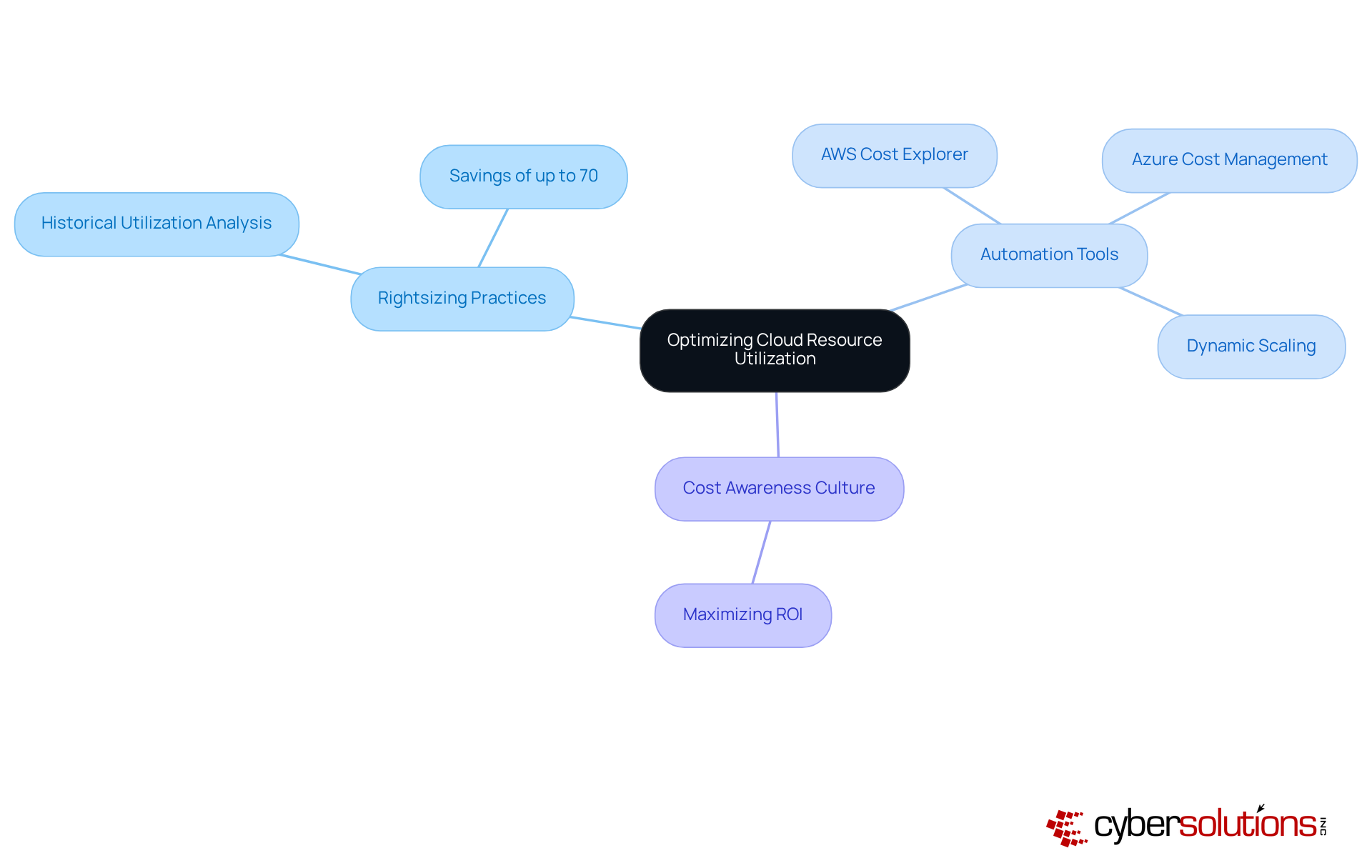
The central node represents the main goal of optimizing resource utilization. Each branch shows a key strategy, and the sub-branches provide details and benefits related to that strategy. Follow the branches to understand how each strategy contributes to better resource management.

Measure and Analyze ROI to Drive Continuous Improvement

To effectively from a managed cloud platform, organizations must establish clear metrics aligned with their objectives. This is crucial in today’s competitive landscape, where understanding the financial impact of technology investments can make or break success.

Key performance indicators (KPIs) such as:

should be tracked consistently. Financial management tools facilitate real-time analysis, empowering organizations to make informed decisions based on current data. For instance, nearly half of FinOps teams are now coordinating expenditures with organizational results. This shift reflects a strategic change in how financial services firms evaluate technology investments.

By establishing a robust ROI measurement framework, organizations can pinpoint where technology investments yield the highest returns. This insight allows for strategic reallocations of resources, ultimately enhancing overall profitability. Furthermore, adopting a flat-rate pricing model for a managed cloud platform that includes IT and cybersecurity services, as offered by Cyber Solutions, simplifies budgeting and eliminates unexpected IT expenses.

This model not only boosts operational efficiency but also supports effective ROI measurement by providing predictable costs that align with business outcomes. It ensures compliance with regulatory standards and drives continuous improvement in financial performance. Are you ready to transform your approach to ROI measurement and enhance your organization’s financial health?

Start at the center with the main topic of ROI measurement, then explore the branches to see the key indicators, tools, and pricing strategies that support effective analysis and improvement.

Ensure Compliance and Security to Protect Investments

In today's digital landscape, the importance of cybersecurity in healthcare cannot be overstated. With a staggering 79% of companies experiencing at least one in the last 18 months, the need for robust security measures is more critical than ever. To protect investments in a managed cloud platform, healthcare organizations must prioritize compliance and safety through a strong security framework. This framework should encompass:

Staying informed about regulatory changes is essential. Service providers must comply with industry standards such as GDPR and HIPAA. For instance, healthcare organizations that proactively implement compliance strategies can significantly lower their risk of data breaches. This not only protects their reputation but also safeguards their financial assets. Regular training on security best practices for employees is vital, enhancing the overall security posture and fostering a culture of vigilance against potential threats.

The unique challenges faced by CFOs in healthcare demand immediate attention. As the landscape of cybersecurity threats evolves, organizations must adapt swiftly. Cyber Solutions can address these challenges effectively, ensuring that healthcare providers remain resilient against emerging threats. By investing in comprehensive security measures, organizations can protect their data and maintain trust with their patients.

Start at the center with the main topic of cybersecurity, then explore the branches to see the various strategies and challenges that healthcare organizations face in protecting their investments.

Conclusion

Maximizing the return on investment (ROI) from managed cloud platforms is not just essential; it’s a strategic imperative for organizations aiming to enhance operational efficiency and secure a competitive edge. In today’s fast-paced environment, leveraging these platforms allows businesses to streamline IT management, concentrate on core competencies, and swiftly adapt to market changes. Moreover, integrating managed cloud services not only ensures compliance with industry regulations but also significantly boosts productivity, especially in the healthcare sector.

Key strategies such as:

  1. Rightsizing
  2. Automation
  3. Robust ROI measurement frameworks

are pivotal in optimizing resource utilization. Organizations that have embraced these practices report substantial cost savings and marked improvements in operational efficiency. Furthermore, prioritizing compliance and cybersecurity measures is crucial for protecting investments and safeguarding sensitive data against potential breaches.

In a rapidly evolving digital landscape, adopting these best practices for managed cloud platforms is no longer optional; it’s a necessity. Organizations must take decisive steps to optimize their cloud resources, measure ROI effectively, and ensure compliance with security standards. By doing so, they can fully realize the potential of their cloud investments, drive continuous improvement, and ultimately enhance overall business performance.

Frequently Asked Questions

What are managed cloud platforms and why are they important for businesses?

Managed cloud platforms are services that outsource IT infrastructure management to specialized providers, allowing businesses to focus on their core competencies while utilizing advanced technologies. They are crucial for enhancing operations and boosting productivity, especially in sectors like healthcare.

How do managed cloud platforms benefit the healthcare sector?

In the healthcare sector, managed cloud platforms help organizations achieve compliance with HIPAA regulations for secure handling of sensitive patient information. They also improve operational efficiency and elevate patient care by optimizing IT resources.

What advantages do managed cloud platforms offer in terms of scalability and flexibility?

Managed cloud platforms provide scalability and flexibility, enabling businesses to adapt to changing market demands without the burden of managing physical infrastructure. This adaptability is essential for maintaining competitiveness.

How do managed cloud platforms impact operational productivity in healthcare organizations?

The integration of managed cloud platforms in healthcare has been shown to improve operational productivity significantly, with efficiency gains of 25-30% due to systematic process enhancements.

Why is the strategic adoption of managed cloud platforms important for healthcare organizations?

The strategic adoption of managed cloud platforms is crucial for healthcare organizations to maintain compliance with regulations and deliver high-quality care as the industry continues to embrace digital transformation.

List of Sources

  1. Understand the Role of Managed Cloud Platforms in Business Efficiency
  • 5 ways cloud computing is transforming healthcare (https://cloudcomputing-news.net/news/5-ways-cloud-computing-is-transforming-healthcare)
  • Healthcare Organizations Enhance Efficiency with Oracle Fusion Cloud Applications (https://oracle.com/news/announcement/healthcare-organizations-enhance-efficiency-with-oracle-fusion-cloud-applications-2025-12-15)
  • Cloud migration: Boosting efficiency and patient care in health care (https://rsmus.com/insights/industries/health-care/cloud-migration-boosting-efficiency-and-patient-care-in-health-care.html)
  • 7 Managed Services for Healthcare to Enhance Operational Efficiency – Careset.com (https://careset.com/7-managed-services-for-healthcare-to-enhance-operational-efficiency)
  • AI gains traction as hospitals focus on operational efficiency (https://healthcarefinancenews.com/news/ai-gains-traction-hospitals-focus-operational-efficiency)
  1. Implement Key Strategies for Optimizing Cloud Resource Utilization
  • Cloud cost optimisation: how to reduce your cloud costs in 2026? (https://future-processing.com/blog/cloud-cost-optimisation-how-to-reduce-your-cloud-spendings)
  • Holori - The Complete Cloud Cost Optimization Guide in 2026 (https://holori.com/complete-guide-to-cloud-cost-optimization-in-2026)
  • 11 cloud cost optimization strategies and best practices for 2026 | Blog — Northflank (https://northflank.com/blog/cloud-cost-optimization)
  • How To Optimize Cloud Costs In 2026 (https://forbes.com/councils/forbestechcouncil/2026/02/02/how-to-optimize-cloud-costs-in-2026)
  • Cloud Cost Optimization Best Practices for 2026 (https://linkedin.com/pulse/cloud-cost-optimization-best-practices-2026-zkpvf)
  1. Measure and Analyze ROI to Drive Continuous Improvement
  • FinOps expands focus to ROI, AI efficiency in cloud era (https://ciodive.com/news/finops-expands-focus-roi-ai-efficiency/815478)
  • Only One-Third of AI Projects Deliver Positive ROI, Yet Companies Continue to Invest in AI Infrastructure According to the 2026 Wasabi Global Cloud Storage Index (https://businesswire.com/news/home/20260303651823/en/Only-One-Third-of-AI-Projects-Deliver-Positive-ROI-Yet-Companies-Continue-to-Invest-in-AI-Infrastructure-According-to-the-2026-Wasabi-Global-Cloud-Storage-Index)
  • AI ROI Measurement: New Metrics For 2026 Financial Returns (https://forbes.com/sites/guneyyildiz/2026/01/28/56-of-ceos-see-zero-roi-from-ai-heres-what-the-12-who-profit-do-differently)
  • How to Plan AI Investments That Deliver ROI in 2026 (https://cloudgeometry.com/blog/planning-ai-investments-that-actually-pay-off-in-2026)
  • AI ROI in 2026: What Leaders Are Measuring Beyond Cost Savings (https://skill-mine.com/ai-roi-in-2026-what-leaders-are-measuring-beyond-cost-savings)
  1. Ensure Compliance and Security to Protect Investments
  • 68 Cloud Security Statistics to Be Aware of in 2026 (https://getastra.com/blog/cloud/cloud-security-statistics)
  • Cloud Security and Compliance Updates Expected in 2026 (https://databank.com/resources/blogs/cloud-security-and-compliance-updates-expected-in-2026)
  • Cloud Security in 2026: Frameworks, Threats & Best Practices (https://akitra.com/blog/cloud-security-compliance-guide)
  • Why 2026 Is The Year Cloud Migration Accelerates With Confidence (https://forbes.com/councils/forbestechcouncil/2026/02/23/why-2026-is-the-year-cloud-migration-accelerates-with-confidence)
  • How Secure Is the Cloud in 2026? Risks, Security Controls, and Best Practices | Cybernews (https://cybernews.com/partner-content/how-secure-is-the-cloud-in-2026-risks-security-controls-and-best-practices)
Recent Posts
Enhance Network Printer Security with Proven Best Practices
4 Best Practices for Effective Local IT Solutions Implementation
10 Best Practices for Effective Configuration Management
Understanding Configuration Management Best Practices for Leaders
Understanding Flash Drives and Viruses: Risks and Security Measures
Maximize ROI with Best Practices for Managed Cloud Platforms
10 CMMC Consultants to Ensure Your Compliance Success
4 Best Practices for Developing an Effective Computer Policy
How Digital Certificates Work: Insights for C-Suite Leaders
5 Steps to Tell If Your Network Is Secure Today
Maximize ROI with Effective IT Consulting Managed Services Strategies
4 Key Differences Between Vulnerability Management and Penetration Testing
What Is CMMC Level 2? Understanding Its Importance for Compliance
4 USB Attacks Every C-Suite Leader Must Know
Master Managed Firewall Security: A CFO's Essential Tutorial
Why a Managed Services Company is Essential for Healthcare CFOs
Essential IT Services SMBs Must Consider for Success
Master the CMMC Implementation Timeline: Steps for Compliance Success
Pen Test vs Vulnerability Assessment: Key Differences for C-Suite Leaders
7 Business IT Strategies for Healthcare CFOs to Enhance Compliance
10 Essential Cyber Security Measures for Healthcare CFOs
10 Managed IT Solutions Provider Services for Healthcare CFOs
Master IT Requests: A Step-by-Step Guide for CFOs in Healthcare
Why a Timely Response to a Breach is Time Sensitive for Leaders
Align IT Strategy with Business Strategy: 5 Essential Steps for Leaders
Understanding the Definition of Compliance for CFOs in Healthcare
10 Benefits of 24/7 Managed IT Services for C-Suite Leaders
Essential SMB Cybersecurity Strategies for Healthcare CFOs
Master CMMC 2.0 Level 1 Requirements for Business Success
Top Managed IT Solutions in Raleigh for C-Suite Leaders
10 Essential Cyber Security KPIs for Business Resilience
10 Managed IT Services and Support for Healthcare CFOs
Master Cyber Security KPIs to Align with Business Goals
10 Strategic Benefits of Outsourced Support Services for Leaders
Achieve CMMC 2.0 Level 2 Compliance: A Step-by-Step Approach
Master Recovery and Backup Strategies for Healthcare CFOs
CVE Funding: Enhance Cybersecurity Strategies for Healthcare CFOs
10 Key Steps to Meet CMMC 2.0 Level 2 Requirements
5 Steps for Aligning IT Strategy with Business Strategy Effectively
Master MSP Backup Pricing: Strategies for C-Suite Leaders
4 Essential Security KPIs for C-Suite Leaders to Enhance Resilience
Is Email Bombing Illegal? Understand Risks and Protections for Businesses
Best Ways to Protect Against Loss of Important Files for Leaders
5 Essential Steps for NIST 800-171 CMMC Compliance
Vulnerability vs Penetration Testing: Key Differences Explained
Enhance Customer Service in IT: 4 Best Practices for Leaders
4 Best Practices for Aligning IT with Business Strategy
5 Steps to Implement a Managed Services IT Support Model
What Are Technical Safeguards in HIPAA and Why They Matter
Understanding Managed Services Levels: Key Insights for C-Suite Leaders
4 Best Practices to Manage Unpatched Software Risks for Leaders
Average MSP Pricing: Compare Per-User vs. Per-Device Models
10 Essential HIPAA Questions and Answers for C-Suite Leaders
Why Engaging a NIST Consultant is Crucial for Compliance Success
4 Best Practices for Outsourcing Your IT Effectively
Understanding CMMC Registered Provider Organizations and Their Impact
Maximize Efficiency with Virtual Desktop as a Service Best Practices
Create a Cyber Security Assessment Report in 5 Simple Steps
7 Steps to Create Your IT Disaster Plan Effectively
4 Best Practices for Cyber Security Awareness Training for Staff
3 Best Practices for Effective Workplace Security Awareness Training
Master Backup and DR Solutions for Business Resilience
Understanding EDR: The Full Form and Its Importance in Cybersecurity
Understanding Endpoint Detection and Response (EDR) in Cybersecurity
Understanding EDR Meaning in Cyber Security for Business Leaders
4 Best Practices for Implementing EDR Technologies in Cybersecurity
Understanding the Incident Response Plan: Importance and Key Components
Optimize Cybersecurity Costs: 4 Essential Strategies for Leaders
NIST 800-171 Summary: Essential Insights for C-Suite Leaders
6 Steps to Create an Effective IT Recovery Plan for Leaders
Master Cyber Security Risk Assessments: Key Practices for Leaders
4 Best Practices for Managed IT Solutions for Business Success
Define Managed IT Services: A Step-by-Step Guide for Executives
Maximize Efficiency with Proven Managed IT Support Solutions
What Are Managed IT Services? Key Benefits and Insights for Leaders
Achieve Cybersecurity Maturity Model Compliance: A Step-by-Step Guide
4 Steps to Calculate the Cost of Cyber Security for Your Business
5 Essential Backup and Disaster Recovery Procedures for Leaders
Master CMMC Security Services: Key Practices for Compliance Success
Understanding the Managed IT Department: Importance and Key Features
10 Essential Technical Safeguards for HIPAA Compliance
Compare Multi-Factor Authentication Companies: Features and Benefits
How Much Does Cyber Security Cost? A Step-by-Step Budget Guide
Master Google Search Operators for Effective Local IT Consulting
Understanding Managed Security Companies: Importance and Key Features
Select the Right Multi-Factor Authentication Vendors for Success
10 Essential CMMC Practices for C-Suite Leaders to Implement
What Are the Key Advantages of Penetration Testing Over Vulnerability Scanning?
Master Managed Cyber Security for Business: Key Steps and Insights
What Is an AUP Policy? Essential Steps for C-Suite Leaders
Penetration Test vs Vulnerability Assessment: Key Differences Explained
Understanding Cyber Assessment Services: Importance and Key Features
Which Backup Method Best Protects Your Critical Data?
Essential Proactive Security Measures for C-Suite Leaders
Effective HIPAA HITECH Compliance Solutions for C-Suite Leaders
Best Practices for Choosing IT Services in Concord
Create an Effective Acceptable Use Policy for Employees
4 Essential IT Budget Examples for C-Suite Leaders
5 Steps to Stay Compliant with Ontario's Employment Standards Act
Understanding the Benefits of Vulnerability Scanning for Leaders

Join our newsletter

Sign up for the latest industry news.
We care about your data in our privacy policy.
Thank you! Your submission has been received!
Oops! Something went wrong while submitting the form.