

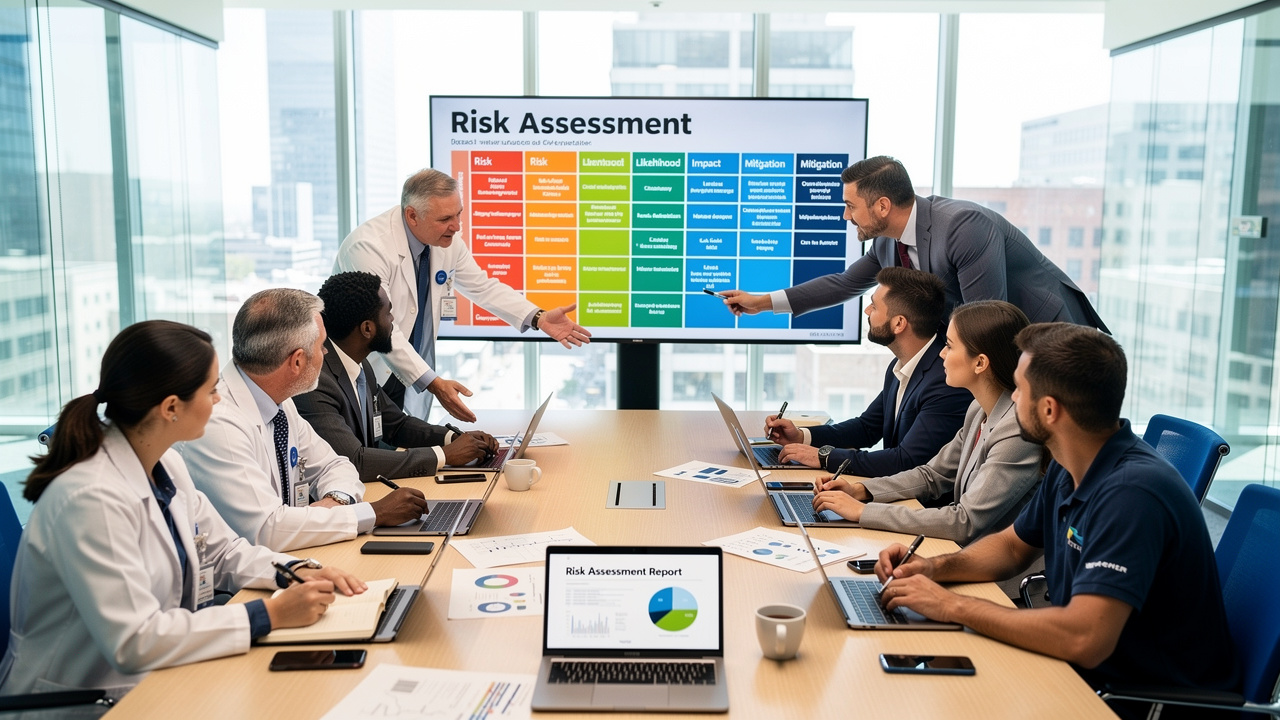
In healthcare, where patient data is paramount, the stakes of cybersecurity have never been higher. Risk assessments serve as a critical line of defense, enabling organizations to identify vulnerabilities and implement strategies that protect sensitive data while ensuring compliance with essential regulations like HIPAA and PCI-DSS.
To be effective, these assessments must focus on critical questions:
Organizations often struggle to pinpoint the exact vulnerabilities that could jeopardize their operations. Navigating these complexities is essential for safeguarding operations and enhancing resilience against evolving challenges. Without a proactive approach to risk assessments, organizations risk not only their data but their very existence in an increasingly hostile digital landscape.
In an era where cyber threats loom large, evaluating potential dangers is not just a procedure; it's a necessity for safeguarding an organization's future. This essential process identifies and ranks threats that could harm an organization's operations, assets, or people. By assessing the likelihood of threats and their potential impacts, organizations can take proactive steps to mitigate these risks. Did you know that nearly 75% of businesses faced a major threat incident last year, primarily from cyberattacks and IT failures? Conducting thorough evaluations not only protects sensitive data but also ensures compliance with regulatory requirements, ultimately safeguarding reputation and operational integrity.
Consider how effective strategies for managing threats emerge from organizations that prioritize thorough evaluations. For instance, 88% of small enterprises conduct assessments every quarter to evaluate the cybersecurity challenges posed by their suppliers and partners. This proactive approach not only strengthens their security posture but also aligns with regulatory adherence, as 53% of entities cite compliance as the primary motivator for developing insider threat programs. Furthermore, organizations investing in identity controls and network segmentation are better positioned to mitigate the impact of ransomware, which 57% of organizations identify as their primary operational concern.
Evaluating uncertainties significantly boosts organizational resilience. Statistics reveal that 61% of senior finance leaders believe the volume and complexity of corporate challenges have changed significantly over the past five years, underscoring the need for robust management frameworks. By prioritizing evaluations of vulnerabilities, organizations can tackle weaknesses and enhance their overall resilience against evolving threats, ensuring they remain compliant and secure in an unpredictable landscape. Organizations that prioritize threat evaluations not only enhance their security posture but also fortify their reputation and operational integrity in an unpredictable landscape.

In an era where cyber threats loom large, the healthcare sector faces unprecedented challenges in safeguarding sensitive patient information. In various sectors, risk evaluations are vital, prompting the inquiry of what type of questions are required in a risk assessment to address unique challenges and regulatory requirements. In healthcare, evaluations of potential issues are crucial for adhering to HIPAA, particularly in determining what type of questions are required in a risk assessment to safeguard patient information. Recent case studies show that effective incident response strategies are crucial. Immediate action and specialized expertise are key when dealing with ransomware. When incident response teams are deployed quickly, they can really help minimize damage and speed up recovery, as seen in healthcare providers who not only recovered ahead of schedule but also fortified their security measures to protect patient data against future threats.
Financial institutions, facing a significant rise in fraud and data breaches, conduct thorough risk assessments to pinpoint vulnerabilities. Significantly, 88% of breaches in small and midsize firms involved ransomware, according to Verizon's 2025 Data Breach Investigations Report, highlighting the urgency for robust security measures. The proactive approach of application allowlisting is particularly relevant here, as it prevents unauthorized software from executing, thereby reducing the attack surface and assisting entities in meeting compliance requirements like PCI-DSS and GDPR. Yet, many organizations find it tough to respond effectively to these threats, often because they aren't fully prepared.
The manufacturing industry emphasizes evaluations concerning workplace safety and equipment malfunctions, while government bodies analyze what type of questions are required in a risk assessment for national security and public safety. By placing evaluations of threats within their particular contexts, Cyber Solutions can customize their approaches to effectively reduce dangers, thereby improving their overall security stance. If they don't adopt these tailored solutions, organizations could face serious financial and reputational harm. In 2026, as regulatory scrutiny increases, financial institutions must implement dynamic compliance programs that combine threat management with operational practices, ensuring they are well-prepared to tackle evolving challenges.

In an era where cybersecurity threats loom large, healthcare organizations must confront critical questions to safeguard their operations effectively:
Tackling what type of questions are required in a risk assessment head-on helps organizations better understand their vulnerabilities, allowing them to craft targeted strategies that truly mitigate potential threats. Statistics show that only 46% of leaders in security report having advanced data protection practices, emphasizing the necessity for comprehensive evaluations and proactive measures. Moreover, 43% of executives consider cybersecurity a leading strategic investment priority, highlighting the significance of incorporating vulnerability evaluation into wider organizational strategies.

In an era where cyber threats loom large, understanding risk evaluations is not just beneficial - it's essential for survival in the healthcare sector. Risk evaluations are crucial for organizations to determine what type of questions are required in a risk assessment to identify and mitigate potential threats effectively. They typically encompass several key elements: threat identification, threat analysis, threat evaluation, and threat treatment. The methods chosen can significantly impact evaluation outcomes, so organizations need to pick strategies that fit their unique needs and threat landscapes.
Common methodologies include qualitative evaluations, which rely on subjective judgments of likelihood and impact, and quantitative analyses, which use numerical data to calculate probabilities and potential losses. Qualitative evaluations often categorize threats on ordinal scales, such as low, medium, or high, but can be subjective and biased. In contrast, quantitative evaluations offer analytical clarity and are ideal for calculating financial loss and conducting cost-benefit analyses, although they may be less effective for non-quantifiable uncertainties.
The NIST Risk Management Framework (RMF) provides a structured method for evaluating vulnerabilities, consisting of seven crucial steps: Prepare, Categorize, Select, Implement, Assess, Authorize, and Monitor. Recent updates to the RMF highlight the significance of aligning evaluations with compliance objectives and organizational goals, ensuring that methodologies remain flexible and responsive to changing challenges.
Examples of methodologies used in risk assessments include:
As organizations face complex regulations and strive for resilience, failing to apply the right risk evaluation methodologies could jeopardize their operational integrity. A well-executed risk assessment, which addresses what type of questions are required in a risk assessment, forms the foundation for proactive planning, enabling businesses to respond with agility rather than react in crisis.

In an era where cyber threats are increasingly sophisticated, effective risk assessments are not just beneficial - they're essential for safeguarding organizational integrity. By identifying and evaluating potential risks, organizations can protect sensitive data and ensure compliance with regulations like HIPAA, PCI-DSS, GDPR, and CMMC. This proactive approach boosts security and strengthens both operational integrity and reputation.
This article highlighted the importance of tailored risk assessments across various industries. From healthcare to finance, asking the right questions - such as identifying specific threats, evaluating their likelihood and impact, and ensuring compliance - is crucial. Additionally, the discussion on methodologies underscored the significance of selecting appropriate strategies to effectively address unique vulnerabilities, ensuring that organizations remain resilient in the face of potential threats.
In conclusion, failing to conduct thorough risk assessments can leave organizations vulnerable to cyber threats. Organizations must prioritize these evaluations to meet compliance requirements and build a robust defense against cyber threats. By embracing a culture of continuous monitoring and proactive threat management, businesses can navigate the complexities of today's digital landscape with confidence, ultimately securing their future and that of their stakeholders.
What is risk assessment in the context of cybersecurity?
Risk assessment is the process of evaluating potential dangers that could harm an organization's operations, assets, or people. It involves identifying and ranking threats, assessing their likelihood, and determining their potential impacts.
Why is risk assessment important for organizations?
Risk assessment is crucial for safeguarding an organization's future by protecting sensitive data, ensuring compliance with regulatory requirements, and maintaining reputation and operational integrity. It helps organizations take proactive steps to mitigate risks.
What percentage of businesses faced major threat incidents last year?
Nearly 75% of businesses faced a major threat incident last year, primarily due to cyberattacks and IT failures.
How often do small enterprises conduct risk assessments?
88% of small enterprises conduct risk assessments every quarter to evaluate cybersecurity challenges posed by their suppliers and partners.
What motivates organizations to develop insider threat programs?
53% of entities cite compliance as the primary motivator for developing insider threat programs, highlighting the importance of regulatory adherence.
What are some strategies organizations can implement to mitigate ransomware risks?
Organizations can invest in identity controls and network segmentation to better position themselves against the impact of ransomware, which is identified as a primary operational concern by 57% of organizations.
How does evaluating uncertainties contribute to organizational resilience?
Evaluating uncertainties boosts organizational resilience by allowing organizations to tackle weaknesses and enhance their overall security posture, ensuring they remain compliant and secure in an unpredictable landscape.
What do organizations gain by prioritizing threat evaluations?
By prioritizing threat evaluations, organizations enhance their security posture, fortify their reputation, and maintain operational integrity in an unpredictable environment.
Managed IT Service Provider | Cyber Security | Incident Response | Compliance As A Service | Hosted Phone Service | Managed Security Service Provider | AI As A Service