Managed IT Services Insights

What is IT Support for Manufacturing Firms and Why It Matters

What is IT Support for Manufacturing Firms and Why It Matters

Introduction

In an era where cyber threats loom large, the manufacturing sector must prioritize cybersecurity to protect its operational integrity and compliance. This comprehensive IT support not only enhances productivity but also fortifies data security against an ever-increasing array of cyber threats. Manufacturers are increasingly vulnerable to cyber threats, risking both their operational efficiency and compliance with regulations.

How can effective IT support not only enhance productivity but also ensure compliance with stringent regulations like HIPAA and PCI-DSS? Understanding this dynamic is crucial for firms aiming to thrive in a competitive landscape while safeguarding their critical assets. Failing to invest in effective IT support could jeopardize not only productivity but also the very foundation of compliance and security in manufacturing.

Define IT Support for Manufacturing Firms

In an era where cyber threats loom larger than ever, the need for IT support for manufacturing firms has never been more critical. IT assistance encompasses a comprehensive range of technological services designed to ensure smooth production processes and strong data protection. This includes:

  1. Managing hardware and software systems
  2. Providing technical support
  3. Implementing tailored cybersecurity measures

To thrive in today's competitive landscape, production firms must prioritize effective IT assistance to boost operational efficiency and safeguard sensitive data from cyber threats. As production increasingly incorporates interconnected systems and automation, robust IT assistance is essential for gaining a competitive edge and meeting industry regulations.

Looking ahead to 2026, the landscape of IT assistance for production is evolving, with a significant emphasis on proactive measures. A recent survey indicated that 80% of manufacturing executives are allocating at least 20% of their improvement budgets to smart manufacturing initiatives, which include advanced IT solutions. Additionally, the implementation of the EU Cyber Resilience Act, effective September 11, 2026, will impose new reporting obligations on manufacturers, highlighting the need for enhanced cybersecurity protocols.

Case studies demonstrate the tangible advantages of effective IT assistance. For example:

  • Orb Interiors Ltd successfully doubled their output without increasing staff, thanks to the efficiency gained from their IT systems.
  • Nautilus Designs saw a 30% rise in order volume after implementing new IT solutions, illustrating the direct effect of strong IT assistance on performance.

Moreover, IT support for manufacturing firms emphasizes that the importance of cybersecurity cannot be overstated. Manufacturing has become the most targeted sector for cyberattacks, with a significant portion of technology vulnerable to breaches. Implementing proactive IT assistance not only safeguards intellectual property but also ensures compliance with evolving regulatory frameworks, such as NIST CSF 2.0 and IEC 62443, which emphasize Zero Trust principles.

In summary, failing to prioritize IT assistance could mean not just lost opportunities, but also jeopardizing the very foundation of your production capabilities. The integration of effective IT assistance services is essential for production firms to navigate the complexities of modern production environments, enhance operational resilience, and maintain compliance in an increasingly regulated landscape.

The central node represents the main topic of IT support. Each branch shows a different aspect of IT support, with sub-branches providing more detail. This layout helps you see how everything connects and why IT support is crucial for manufacturing.

Explore the Evolution of IT Support in Manufacturing

In an era where cybersecurity threats loom large, IT support for manufacturing firms has become a critical focus in the evolution of IT assistance in production. The late 20th century marked a significant transformation with the advent of computers, initially limiting IT assistance to basic troubleshooting and maintenance of isolated systems. As production processes grew more complex, the demand for IT support for manufacturing firms surged. The rise of automation, the Internet of Things (IoT), and Industry 4.0 principles have further reshaped IT assistance, necessitating capabilities like real-time monitoring, data analytics, and robust cybersecurity measures.

By 2026, how will manufacturers redefine IT assistance to be more proactive than ever before? The landscape is characterized by a shift that goes beyond mere problem-solving. Manufacturers are leveraging advanced technologies to enhance efficiency and mitigate risks. For instance, predictive maintenance, powered by IoT sensors and AI algorithms, enables early detection of equipment malfunctions, significantly reducing downtime and maintenance costs. This evolution is not just beneficial; it is essential for survival in a competitive landscape.

Historical data indicates that integrating IT with operational technology (OT) has led to improved productivity and reduced operational costs across various sectors, including production. As organizations adopt Industry 4.0 technologies, they optimize processes while enhancing their cybersecurity posture through advanced encryption and AI-driven threat detection. This evolution underscores the vital role of IT support for manufacturing firms in fostering innovation, ensuring compliance with standards like HIPAA and PCI-DSS, and driving value creation in the production sector. As Don Rogers, Global Industry Lead at Slalom, states, "In 2026, this strategic focus on speed, quality, and service will require integrated data platforms and predictive analytics to break down silos between suppliers, logistics, production, and distribution." Without embracing these advancements, manufacturers risk falling behind in a landscape defined by rapid technological change.
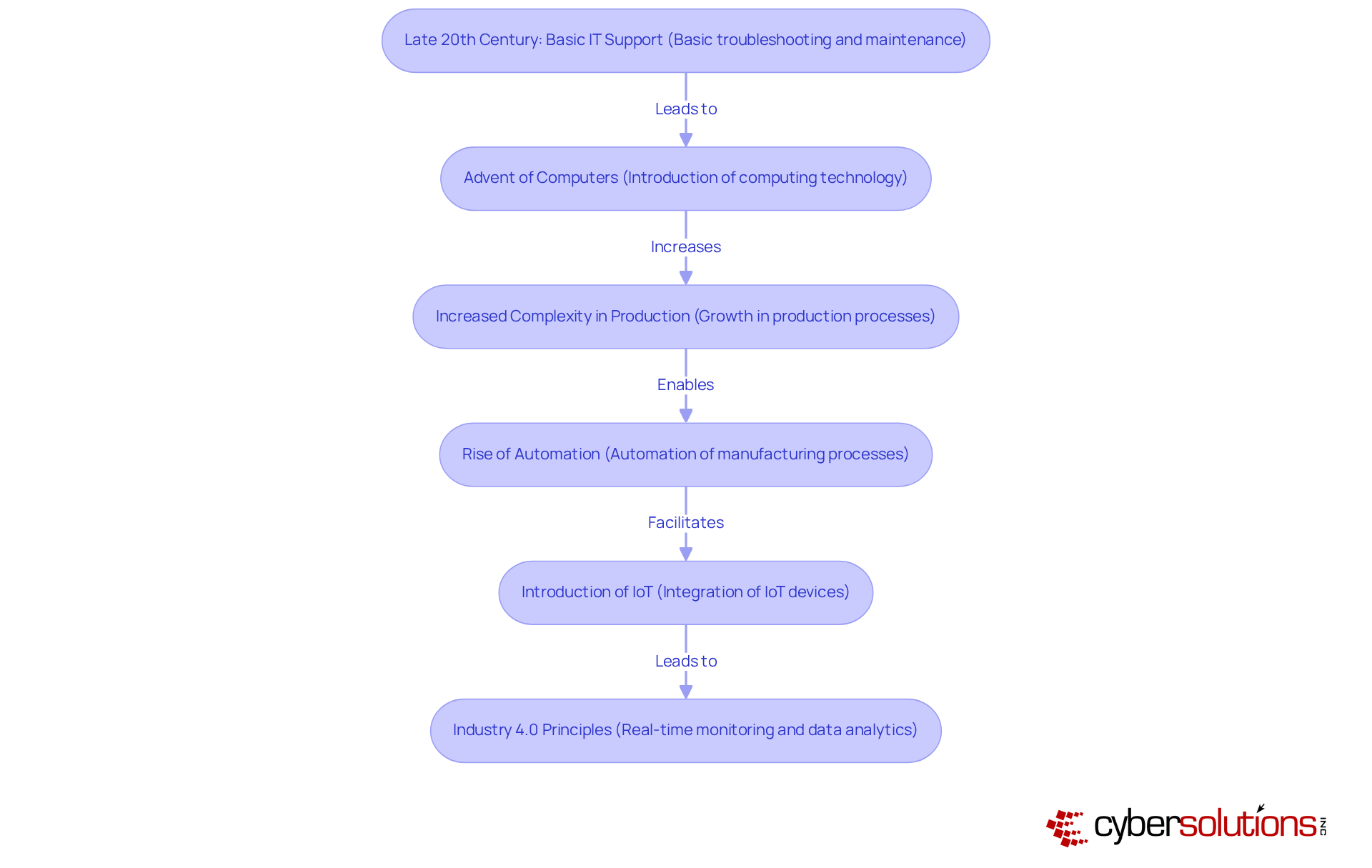
This flowchart illustrates how IT support in manufacturing has evolved over time. Each box represents a significant milestone in this evolution, showing how IT has transformed from basic support to advanced, proactive measures necessary for modern manufacturing.

Identify Key Components of Effective IT Support

In an era where cybersecurity threats loom large, the stakes for manufacturing firms have never been higher. Effective IT support encompasses several essential components that collectively enhance operational resilience and productivity:

  1. Proactive Monitoring: Continuous oversight of systems is vital for detecting and addressing issues before they escalate. Monitoring network performance and equipment health can significantly reduce downtime and operational costs. In fact, proactive monitoring can save organizations four to five dollars for every dollar spent, underscoring its financial impact.
  2. Cybersecurity Measures: Robust security protocols are essential for safeguarding sensitive information and preventing cyberattacks. This includes implementing firewalls, endpoint protection, and conducting regular security audits. With ransomware operators increasingly targeting manufacturers, effective cybersecurity is not just a precaution but a necessity.
  3. Information Management: Efficient handling of storage, backup, and recovery processes ensures that critical details remain secure and accessible. This is especially crucial in production, where data integrity directly affects efficiency and adherence to regulations.
  4. Technical Support: Timely assistance to resolve technical issues is essential for minimizing disruptions. Managed IT services can acknowledge alerts within seconds, allowing internal teams to focus on strategic initiatives rather than troubleshooting.
  5. Compliance Management: Aligning IT practices with industry regulations such as GDPR, HIPAA, and PCI-DSS is crucial for maintaining operational integrity and avoiding legal penalties. Compliance frameworks are increasingly converging on Zero Trust principles, making their implementation essential for manufacturers.
  6. Integration of Systems: Seamless integration of various software and hardware systems enhances communication and efficiency across production processes. This integration boosts maintenance strategies and Overall Equipment Effectiveness (OEE), allowing manufacturers to react quickly to market demands.

Neglecting these IT components could lead to costly disruptions and a compromised competitive edge in the market, which underscores the importance of IT support for manufacturing firms.

This mindmap illustrates the essential components of effective IT support for manufacturing firms. Each branch represents a key area, and the sub-branches provide more details about what each component entails. Follow the branches to see how these elements work together to enhance operational resilience and productivity.

Conclusion

In an era where manufacturing firms face relentless technological advancements and cyber threats, effective IT support is not just beneficial - it's essential. Effective IT support is a cornerstone for manufacturing firms striving to enhance operational efficiency and safeguard sensitive data in an increasingly complex technological landscape. As production processes evolve, robust IT assistance is essential for staying competitive and meeting critical regulations like HIPAA, PCI-DSS, and GDPR. Yet, many firms struggle to keep pace with these demands, risking both their market position and regulatory standing. The proactive measures that IT support encompasses - ranging from cybersecurity protocols to system integration - are vital for navigating the challenges posed by modern manufacturing environments.

The article highlights several key components of effective IT support, including:

  • Proactive monitoring
  • Robust cybersecurity measures
  • Compliance management

These elements work synergistically to minimize downtime, protect against cyber threats, and ensure that manufacturing firms can meet regulatory requirements. Case studies illustrate the tangible benefits of investing in IT support, showcasing how companies have achieved significant operational improvements and increased productivity through strategic IT initiatives. Without it, manufacturers may find themselves vulnerable to cyber threats and regulatory penalties.

By prioritizing IT support, manufacturers can not only safeguard their operations but also position themselves as leaders in a competitive landscape. As the industry continues to embrace advanced technologies and face evolving cyber threats, prioritizing comprehensive IT assistance is crucial for long-term success. Manufacturers must take proactive steps to integrate effective IT solutions, ensuring not only operational resilience but also a competitive edge in a rapidly changing market. Embracing these best practices will empower firms to thrive in the face of challenges and seize opportunities for growth in the manufacturing sector.

Frequently Asked Questions

What is IT support for manufacturing firms?

IT support for manufacturing firms encompasses a range of technological services designed to ensure smooth production processes and strong data protection. This includes managing hardware and software systems, providing technical support, and implementing tailored cybersecurity measures.

Why is IT support critical for manufacturing firms today?

IT support is critical for manufacturing firms to boost operational efficiency and safeguard sensitive data from cyber threats. As production increasingly incorporates interconnected systems and automation, robust IT assistance is essential for gaining a competitive edge and meeting industry regulations.

What trends are shaping the future of IT assistance in manufacturing?

Looking ahead to 2026, there is a significant emphasis on proactive measures in IT assistance for manufacturing. A survey indicated that 80% of manufacturing executives are allocating at least 20% of their improvement budgets to smart manufacturing initiatives, which include advanced IT solutions.

What new regulations will impact IT support for manufacturing firms?

The implementation of the EU Cyber Resilience Act, effective September 11, 2026, will impose new reporting obligations on manufacturers, highlighting the need for enhanced cybersecurity protocols.

Can you provide examples of the benefits of effective IT assistance in manufacturing?

Yes, case studies show tangible advantages of effective IT assistance. For instance, Orb Interiors Ltd doubled their output without increasing staff due to efficiency gained from their IT systems, while Nautilus Designs experienced a 30% rise in order volume after implementing new IT solutions.

How does cybersecurity relate to IT support in manufacturing?

Cybersecurity is a critical aspect of IT support for manufacturing firms, as the sector is the most targeted for cyberattacks. Implementing proactive IT assistance safeguards intellectual property and ensures compliance with evolving regulatory frameworks, such as NIST CSF 2.0 and IEC 62443, which emphasize Zero Trust principles.

What are the risks of neglecting IT assistance in manufacturing?

Failing to prioritize IT assistance can lead to lost opportunities and jeopardize the foundation of production capabilities. Effective IT assistance is essential for navigating the complexities of modern production environments, enhancing operational resilience, and maintaining compliance in an increasingly regulated landscape.

List of Sources

  1. Define IT Support for Manufacturing Firms
    • ‪Business Management Software At Scale | Priority (https://priority-software.com/resources/manufacturing-trends)
    • IT Solutions for Manufacturing Companies: The 2026 Strategic Guide (https://hjstechnology.co.uk/it-solutions-for-manufacturing-companies-the-2026-strategic-guide)
    • Why Manufacturing Is the #1 Cyberattack Target in 2026 — And What to Do About It (https://blog.cybelesoft.com/manufacturing-cybersecurity-zero-trust-2026)
    • Manufacturing Modernization: Four Trends to Watch in 2026 | Forvis Mazars US (https://forvismazars.us/forsights/2026/02/manufacturing-modernization-four-trends-to-watch-in-2026)
    • 2026 Manufacturing Industry Outlook (https://deloitte.com/us/en/insights/industry/manufacturing-industrial-products/manufacturing-industry-outlook.html)
  2. Explore the Evolution of IT Support in Manufacturing
    • ‪Business Management Software At Scale | Priority (https://priority-software.com/resources/manufacturing-trends)
    • What Is Industry 4.0? | PTC (https://ptc.com/en/solutions/digital-manufacturing/industry-4-0?srsltid=AfmBOopXQCZMZBJoRYE_O4SiiF1up699Zkh9kfBHspAASbcU3ScFSLQB)
    • Industry 4.0: The Future of Manufacturing | SAP (https://sap.com/resources/what-is-industry-4-0)
    • Manufacturing Industry Trends 2026 (https://slalom.com/us/en/insights/manufacturing-outlook-2026)
    • Assessing the Impact of Industry 4.0 on Manufacturing | ATS (https://advancedtech.com/blog/impact-of-industry-4-0-on-manufacturing)
  3. Identify Key Components of Effective IT Support
    • How Proactive IT Monitoring Saves Your Business Time and Money (https://empist.com/how-proactive-it-monitoring-saves-your-business-time-and-money)
    • Why Manufacturing Is the #1 Cyberattack Target in 2026 — And What to Do About It (https://blog.cybelesoft.com/manufacturing-cybersecurity-zero-trust-2026)
    • Manufacturing modernization: Avoid stagnation in 2026 (https://cgi.com/us/en-us/article/it-modernization/manufacturing-modernization)
    • Proactive IT Monitoring for Manufacturing Downtime Prevention (https://keystonecorp.com/manufacturing/manufacturing-downtime-prevention-how-proactive-it-monitoring-keeps-production-running)
    • How Manufacturers Are Improving Efficiency in 2026 (https://aktion.com/how-manufacturers-are-improving-efficiency-in-2026)
Recent Posts
4 Best Practices for Backing Up Your Data Effectively
What is IT Support for Manufacturing Firms and Why It Matters
Master Cloud Management Gateway Costs: Best Practices for C-Suite Leaders
Understanding How Desktop Virtualization Works for Business Success
Back Up vs Backup: Key Differences for C-Suite Leaders
Best Practices for a Successful Managed Service Business
Best Practices for Your CMMC System Security Plan Development
Understanding the MSP Pricing Guide: Importance and Key Components
Master NIST 800-171 Compliance Consulting for Business Success
CMMC 2.0 Assessment Guide: A Case Study on Compliance Success
MSP vs ISP: Key Differences for C-Suite Leaders to Consider
What Questions Are Essential for Effective Risk Assessments?
Understanding MSP Provider Meaning: Services, Benefits, and Challenges
5 Steps for Executives to Manage an IT Emergency Effectively
MSP vs CSP: Key Differences Every C-Suite Leader Should Know
4 Best Practices to Reduce IT Management Costs for C-Suite Leaders
Master Healthcare Phishing: Strategies to Protect Your Organization
Best Practices to Combat Firewall Threats for C-Suite Leaders
10 Benefits of Out of Hours IT Support for Business Resilience
Understanding Compliance: Steps to Be in Compliance Meaningfully
10 Reasons C-Suite Leaders Choose Flat Rate IT Support
Why Is Logging Important for Cybersecurity and Business Resilience?
Master TOAD Cybersecurity: Understand, Analyze, and Defend Against Threats
What is a Traditional Firewall? Definition, Evolution, and Uses
Master Multiple Vendor Management: 4 Best Practices for C-Suite Leaders
Password Spraying vs Stuffing: Key Differences for C-Suite Leaders
4 Best Practices for Engaging an IT Service LLC Effectively
What Are Digital Certificates in Web Browsers and Why They Matter
10 Essential Items for Your CMMC Level 2 Controls Spreadsheet
Credential Stuffing vs Spraying: Key Differences Every C-Suite Must Know
4 Best Practices for Disaster Recovery Technology Solutions
CMMC vs NIST: Key Differences and Business Impacts Explained
Master Cyber Security Price: Budgeting for Effective Protection
Why C-Suite Leaders Choose Outsourced IT Solutions for Growth
Best Practices for a Strong Password Protection Policy
What is a Simple Disaster Recovery Plan and Why It Matters
Align MSP Services with Business Goals: 4 Best Practices for Leaders
10 Strategic Benefits of Managed IT Software for Business Leaders
10 Benefits of Managed IT Services in MN for Business Growth
5 Steps for C-Suite Leaders on How to Backup Business Data
Understanding the Definition of Acceptable Use Policy for Leaders
10 Essential Elements of an Acceptable Use Agreement
4 Best Practices for Effective IT Services in Commercial Settings
How to Explain Digital Certificates for Enhanced Cybersecurity
What 'Lot Best' Stands for in Cyber Security: Key Insights for Leaders
4 Best Practices for Strengthening Organizational Information Security
4 Best Practices for Effective Security Compliance Assessment
10 Business Security Managed Services to Enhance Your Operations
Protect Your Business: Combat Malware on USB Drives Effectively
Understanding Managed IT Services: Latest Trends and Insights
Understand the Difference Between Spyware and Adware for Your Business
4 Best Practices for Effective Data Privacy Awareness Training
What MSSP Stands For: Key Insights for Business Security Leaders
4 Key Insights on Cyber Security Services Pricing for Leaders
What Is the Purpose of an Acceptable Use Policy in Business?
Why Is NIST Compliance Mandatory for Your Organization's Success?
Understanding Acceptable Use Policy in Cybersecurity for Leaders
Estimate How Long It Takes to Backup Your Computer Effectively
4 Key Managed Service Provider Reviews for C-Suite Leaders
4 Best Practices for Effective Privileged User Monitoring
Master Threat Scenarios: Best Practices for C-Suite Leaders
4 Best Practices to Combat Phishing in Healthcare
What Is Cloud App Security? Importance, Features, and Risks Explained
What Is the Main Difference Between Vulnerability Scanning and Penetration Testing?
Master Security Drills: Best Practices for C-Suite Leaders
Why Information Security Is the Responsibility of Every Leader
Why Security Is Everyone's Responsibility in Your Organization
What Is a Good Way to Protect Your Data from Computer Malfunctions?
10 Cloud Services in Lafayette for Business Growth and Security
Master CMMC-RP Compliance: Strategies for C-Suite Leaders
Build Your Cybersecurity Tech Stack: 4 Essential Best Practices
Understanding the MSP Environment Meaning for Business Leaders
Understanding the Cost of Cyberattacks: Key Insights for Executives
4 Best Practices for Data in Use Encryption Success in Business
Maximize Cybersecurity with Effective Endpoint Detection and Response Services
Master HIPAA Compliance Technical Requirements for C-Suite Leaders
10 Essential Strategies for Information Technology Disaster Recovery
Master FTC Safeguards Rule Requirements for Effective Compliance
4 Best Practices for FTC Safeguards Rule Compliance Success
Master FTC Safeguard Rules: A Step-by-Step Compliance Guide
5 Steps to Reduce Cyber Security Risks for Executives
What Is a Data Backup? Importance, History, and Key Features
4 Best Practices to Combat Malware and Spyware for Leaders
Master Endpoint Detection and Remediation: Best Practices for Leaders
4 Best Practices to Combat Spyware and Malware Threats
How to Mitigate Cyber Security Risk: 4 Essential Steps for Executives
4 Best Practices for Effective Backup and Recovery Management
Why It’s Crucial to Backup Data for Business Resilience
Achieve CMMC 3.0 Compliance: A Step-by-Step Guide for Leaders
Achieve Regulatory Compliance: Strategies for C-Suite Leaders
10 Key Components of an Effective IT Backup and Disaster Recovery Plan
Crafting an Effective Multi-Factor Authentication Policy for Leaders
10 Essential IT KPI Examples for C-Suite Leaders to Track
4 Essential Practices for Effective Disaster Recovery Plans for Businesses
4 Best Practices for Effective RPO Backup Implementation
4 Proven Strategies for Effective Breach Prevention in Business
5 Essential CMMC Documentation Steps for Compliance Success
Master DR and RPO: Best Practices for C-Suite Leaders
Explain the Importance of Data Backup for Business Resilience
4 Best Practices for Choosing Information Security Services Companies