Introduction
In an era where cyber threats are evolving at an alarming rate, healthcare organizations must prioritize a robust incident response plan to safeguard their operations and patient trust. This guide delves into the essential components of developing an effective incident response strategy, highlighting best practices that not only protect sensitive data but also ensure compliance with critical standards such as HIPAA and PCI-DSS.
As organizations strive to fortify their defenses, they face significant challenges:
- How can they effectively prepare for the unexpected while maintaining operational integrity and stakeholder trust?
- Without a proactive approach to incident response, organizations risk not only their sensitive data but also their reputation and operational continuity.
Define the Purpose and Scope of Your Incident Response Plan
In an era where cyber threats are ever-evolving, establishing a robust incidence response plan is not just advisable; it's essential for healthcare organizations. To develop an effective response strategy, it is crucial to clearly outline its purpose and scope. This entails recognizing the types of occurrences the plan will tackle, such as data breaches, malware attacks, or insider threats. Consider the following steps:
- Identify Objectives: Establish what you aim to achieve with the IRP. Common objectives include minimizing damage, ensuring business continuity, and protecting sensitive data.
- Assess Risks: Conduct a thorough threat and risk evaluation to understand potential vulnerabilities and the impact of various occurrences on your Cyber Solutions. Recent trends suggest that organizations encounter growing vulnerabilities due to changing attack surfaces, with over 300 new services introduced monthly, increasing the likelihood of security events. As cyber threats evolve, organizations face increasing challenges in safeguarding their data.
- Define Scope: Specify the boundaries of the strategy, including which departments, systems, and types of incidents are covered. This focused strategy helps you allocate resources more effectively and develop a solid plan.
- Document Purpose: Write a clear statement that encapsulates the plan's purpose, ensuring alignment with your organization's overall security strategy and compliance requirements. An effective incidence response plan not only minimizes the impact of security breaches but also reinforces trust among business partners and stakeholders.
- Establish a Core Response Team: Designate a response lead (IRL) and assemble a core response team from various departments to ensure a coordinated approach during emergencies.
- Align with NIST Guidelines: Ensure that the IRP aligns with the NIST Incident Response Lifecycle, which provides a structured framework for managing crises effectively.
- Incorporate a Communications Plan: Develop a communications strategy that outlines how information will be shared during events, ensuring timely notifications to key stakeholders.
- Regular Assessments and Simulations: Implement a schedule for regular assessments and simulations to reflect the current threat landscape and ensure the IRP remains effective.
Adding application allowlisting to your cybersecurity strategy can greatly improve your incidence response plan. This proactive measure prevents unauthorized applications from executing, thereby reducing the attack surface and ensuring compliance with standards such as HIPAA, PCI-DSS, and GDPR. Features like centralized management and continuous monitoring allow for streamlined control and immediate threat detection. Additionally, leveraging Compliance as a Service (CaaS) offerings can further support your incidence response plan by providing ongoing compliance monitoring and risk assessments tailored to your organization’s needs. By prioritizing a well-defined IRP, organizations not only protect their assets but also fortify their reputation in an increasingly scrutinized industry.

Establish Roles and Responsibilities for the Incident Response Team
In an era where cyber threats loom large, the healthcare sector must prioritize cybersecurity to protect sensitive patient data and maintain trust. Once the purpose and scope are defined, the next step is to establish clear roles and responsibilities for your incidence response plan team.
- Form the Team: Assemble a cross-functional team that includes members from IT, legal, compliance, and communications. This diversity ensures a comprehensive approach to event management, particularly crucial in sectors like healthcare and finance where regulatory compliance is paramount.
- Define Roles: Assign specific roles such as Incident Manager, Technical Lead, Communications Officer, and Legal Advisor. Each role should have clearly defined responsibilities to prevent confusion during an event. For example, the Incident Commander directs the operation, while the Communications Officer oversees stakeholder updates, ensuring clarity and consistency.
- Create a RACI Matrix: Develop a RACI (Responsible, Accountable, Consulted, Informed) matrix to clarify who is responsible for each task, who is accountable for decisions, who needs to be consulted, and who should be kept informed. This structured approach enhances accountability and streamlines communication during high-pressure situations.
- Training and Drills: Regularly educate team members on their roles and conduct exercises to ensure everyone is familiar with the emergency management process and can act swiftly when needed. Continuous training, including tabletop exercises, prepares teams for real-world pressures and enhances their effectiveness.
Defining clear roles and responsibilities in an incidence response plan empowers organizations to respond effectively, minimizing harm and ensuring a cohesive effort during crises. In fact, studies reveal that a well-structured crisis management team can significantly improve reaction times, especially in high-stakes environments like healthcare and finance. This proactive approach not only safeguards sensitive data but also reinforces organizational resilience against evolving cyber threats.

Outline the Incident Response Process: Key Phases and Actions
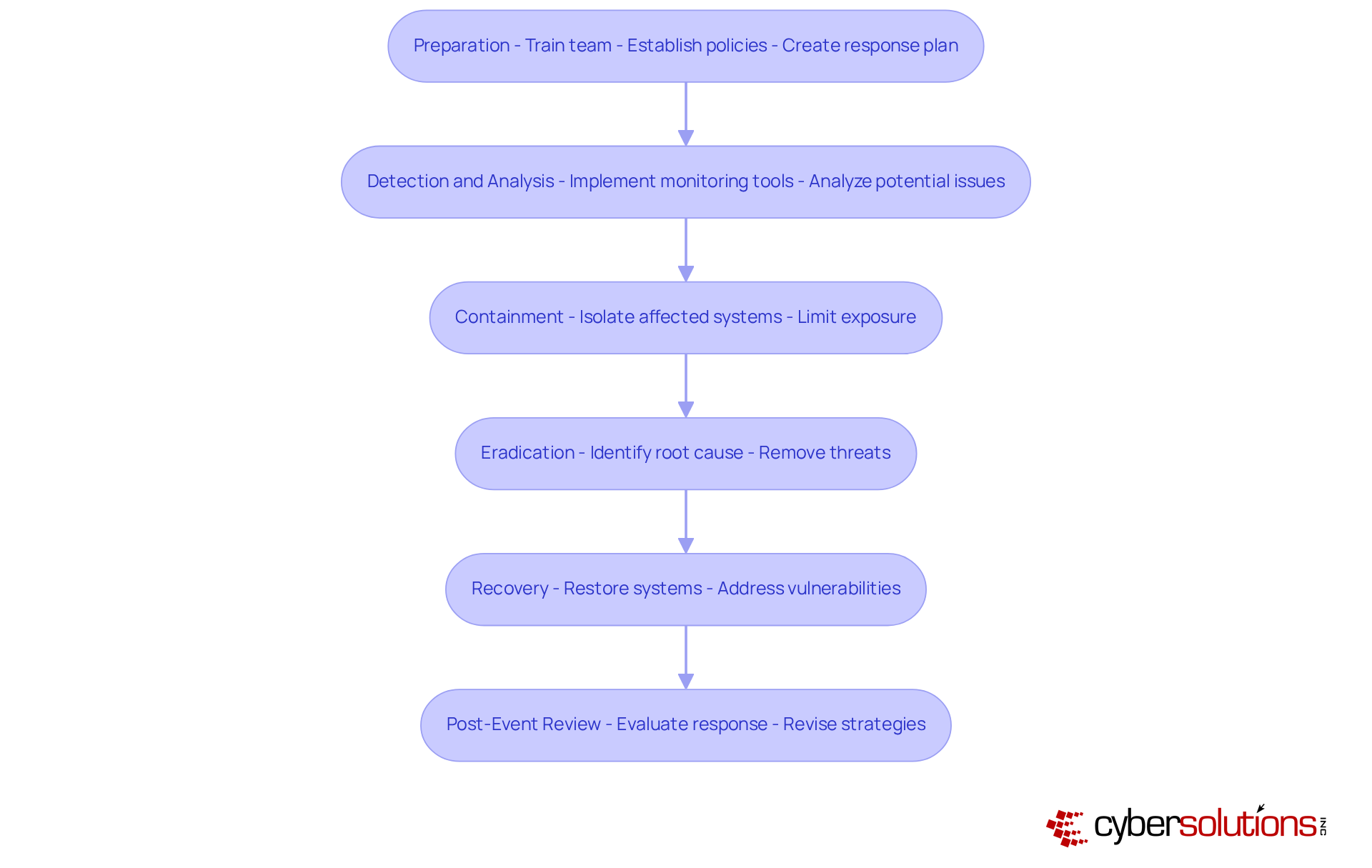
In an era where healthcare organizations face unprecedented cybersecurity threats, the stakes have never been higher for CFOs to safeguard their operations and patient data. The event management procedure is organized into several essential stages that guide your organization from preparation to recovery. Here’s a detailed outline of these phases:
- Preparation: This foundational phase ensures your team is well-trained, necessary tools are in place, and policies are established. Creating a thorough response plan and holding regular training sessions are essential elements.
- Detection and Analysis: Implement robust monitoring tools to identify potential issues. Once a situation is suspected, analyze the circumstances to confirm its nature and scope, which may involve gathering logs and relevant data from various sources.
- Containment: Swiftly manage the situation to prevent further damage. This may involve isolating affected systems or temporarily shutting down certain operations to limit exposure.
- Eradication: Identify the root cause of the issue and remove it from your systems. This process may include removing malware, closing vulnerabilities, or addressing insider threats to ensure a secure environment.
- Recovery: Restore affected systems to normal operations while addressing any vulnerabilities to prevent recurrence. Close monitoring during this phase is essential to ensure stability and security.
- Post-Event Review: Conduct a thorough evaluation of the occurrence to identify lessons learned and areas for enhancement. Revise your emergency management strategy based on these insights to improve future readiness.
Implementing a structured response strategy not only mitigates risks but also fortifies your organization against future threats, ensuring operational integrity and patient trust. Statistics show that organizations with a clearly defined response strategy can greatly decrease recovery time and expenses related to breaches, making this structured approach vital for preserving operational integrity.
Develop a Communication Plan for Incident Management
In the high-stakes world of healthcare, a robust communication strategy is essential for compliance with HIPAA standards and the implementation of an incidence response plan. Here’s how to develop one:
- Identify Stakeholders: Determine who needs to be informed during an event, including internal teams, executives, customers, and regulatory bodies. Engaging all relevant parties ensures that communication is comprehensive and effective, especially when adhering to HIPAA’s strict timelines for breach reporting.
- Establish Communication Channels: Define the channels through which information will be communicated, such as email, internal messaging systems, or press releases. Ensure these channels are secure and reliable to maintain the integrity of the information shared. A dedicated status page is advised as the primary communication solution for crises, offering a clear source of truth during emergencies.
- Create Holding Statements: Prepare holding statements that can be quickly shared with stakeholders in the event of a situation. These statements should provide basic information without compromising security or ongoing investigations, as seen in Facebook's 2010 outage response, where clear communication helped build trust with users.
- Designate Spokespersons: Identify individuals who will serve as the primary points of contact for communication. This helps ensure consistent messaging and reduces the risk of conflicting information, which is crucial during high-pressure situations.
- Regular Updates: Establish a schedule for providing updates to stakeholders as the situation evolves. Keeping everyone informed fosters trust and alleviates anxiety, as shown by organizations that prioritize timely communication during events. Statistics indicate that effective communication strategies can greatly reduce negative effects during cybersecurity events, especially in the healthcare sector, where adherence to HIPAA is crucial.
- Post-Event Communication: After the occurrence, communicate lessons learned and any changes made to policies or procedures. Being open about what you've learned can help rebuild trust and show your commitment to improvement. Furthermore, comprehensive documentation, including risk assessments, remediation strategies, and compliance reports, is crucial for audit preparedness and continuous adherence to HIPAA standards.
By developing a comprehensive incidence response plan, your organization can effectively manage information flow during incidents, ensuring that all stakeholders are informed and coordinated. By prioritizing communication, organizations not only safeguard their compliance but also fortify their resilience against future cybersecurity threats.

Conclusion
In an era where cyber threats loom large, establishing an effective incident response plan (IRP) is not just advisable; it’s essential for organizations in regulated sectors like healthcare and finance. A well-crafted IRP minimizes the impact of cyber threats. It also enhances compliance with standards like HIPAA, PCI-DSS, and GDPR. By clearly defining the purpose and scope, establishing roles and responsibilities, and outlining a structured response process, organizations can significantly improve their readiness to tackle cybersecurity incidents.
Key insights from this guide include:
- The importance of preparation
- Effective communication
- Continuous improvement
From identifying objectives and assessing risks to developing a communication plan that keeps all stakeholders informed, each step plays a vital role in ensuring a coordinated and effective response. Regular training and simulations further enhance the team's ability to act swiftly and decisively during crises, reinforcing the organization's resilience against evolving threats.
Ultimately, focusing on a comprehensive incident response plan goes beyond compliance; it’s about protecting sensitive data, building trust, and ensuring business continuity. Organizations are encouraged to take proactive measures, such as leveraging tools like Compliance as a Service and application allowlisting, to bolster their defenses. By investing in a robust IRP, organizations not only protect their data but also fortify their reputation and operational integrity in an increasingly perilous digital landscape.
Frequently Asked Questions
What is the purpose of an Incident Response Plan (IRP)?
The purpose of an Incident Response Plan is to establish a robust strategy for healthcare organizations to effectively respond to cyber threats, such as data breaches, malware attacks, and insider threats. It aims to minimize damage, ensure business continuity, and protect sensitive data.
How should organizations assess risks when developing an IRP?
Organizations should conduct a thorough threat and risk evaluation to understand potential vulnerabilities and the impact of various occurrences on their operations. This assessment is crucial due to the increasing number of vulnerabilities and evolving cyber threats.
What should be included in the scope of an IRP?
The scope of an IRP should specify the boundaries of the strategy, including which departments, systems, and types of incidents are covered. This focused approach helps allocate resources effectively and develop a solid plan.
How can organizations document the purpose of their IRP?
Organizations should write a clear statement that encapsulates the plan's purpose, ensuring it aligns with the overall security strategy and compliance requirements. This documentation reinforces trust among business partners and stakeholders.
What is the role of a Core Response Team in an IRP?
A Core Response Team is designated to ensure a coordinated approach during emergencies. This team includes a response lead and members from various departments to effectively manage incidents.
How can organizations align their IRP with established guidelines?
Organizations should ensure that their IRP aligns with the NIST Incident Response Lifecycle, which provides a structured framework for managing crises effectively.
Why is a communications plan important in an IRP?
A communications plan is essential as it outlines how information will be shared during incidents, ensuring timely notifications to key stakeholders and maintaining transparency.
What is the importance of regular assessments and simulations for an IRP?
Regular assessments and simulations are important to reflect the current threat landscape and ensure that the IRP remains effective in addressing evolving cyber threats.
How can application allowlisting enhance an IRP?
Application allowlisting can improve an IRP by preventing unauthorized applications from executing, thereby reducing the attack surface and ensuring compliance with standards such as HIPAA, PCI-DSS, and GDPR.
What additional support can Compliance as a Service (CaaS) provide for an IRP?
Compliance as a Service (CaaS) can provide ongoing compliance monitoring and risk assessments tailored to an organization’s needs, further supporting the effectiveness of the incident response plan.
List of Sources
- Define the Purpose and Scope of Your Incident Response Plan
- What Is an Incident Response Plan (IRP)? (https://paloaltonetworks.com/cyberpedia/incident-response-plan)
- Developing your incident response plan (ITSAP.40.003) - Canadian Centre for Cyber Security (https://cyber.gc.ca/en/guidance/developing-your-incident-response-plan-itsap40003)
- Know the Benefits of an Incident Response Plan | NetDiligence (https://netdiligence.com/blog/2024/10/incident-response-plan-for-cyber-attack)
- Incident Response Plan | IT Security | Information Technology Services | University of Connecticut (https://security.uconn.edu/incident-response-plan)
- Incident Response in 2026: A Complete Enterprise Guide (https://uscsinstitute.org/cybersecurity-insights/resources/incident-response-in-2026-a-complete-enterprise-guide)
- Establish Roles and Responsibilities for the Incident Response Team
- How to Structure an Incident Response Team: Roles, Responsibilities, and Workflows | Rootly (https://rootly.com/incident-response/team-roles)
- Incident Response Team Depth Chart: Roles & Responsibilities | Wiz (https://wiz.io/academy/detection-and-response/incident-response-team)
- Incident Response Teams: Roles and Responsibilities & Structure (https://sygnia.co/blog/incident-response-team)
- IT Incidents and the Role of Incident Response Teams (IRTs) | Xurrent (https://xurrent.com/blog/incident-response-teams)
- Incident Response Team | Roles & Responsibilities Defined (https://firehydrant.com/blog/incident-response-team-roles-responsibilities-defined)
- Outline the Incident Response Process: Key Phases and Actions
- NIST Incident Response: 4-Step Life Cycle, Templates and Tips (https://cynet.com/security-foundations/incident-response/nist-incident-response)
- What Is Incident Response? Definition, Process and Plan | Fortinet (https://fortinet.com/resources/cyberglossary/incident-response)
- 6 Phases in the Incident Response Plan (https://securitymetrics.com/blog/6-phases-incident-response-plan)
- What Is an Incident Response Plan (IRP)? (https://paloaltonetworks.com/cyberpedia/incident-response-plan)
- Develop a Communication Plan for Incident Management
- Incident communication best practices | Atlassian (https://atlassian.com/incident-management/incident-communication)
- How to Create an Effective Incident Response Communication Plan (https://us.anteagroup.com/news-events/blog/take-control-your-incident-response)
- Guidance on effective communications in a cyber incident (https://ncsc.gov.uk/guidance/effective-communications-in-a-cyber-incident)
- Top 10 Considerations for Effective Incident Management Communications | CMU Software Engineering Institute (https://sei.cmu.edu/blog/top-10-considerations-for-effective-incident-management-communications)
- Incident Response Communication Plans: Internal, External & Status Updates | Rootly (https://rootly.com/incident-response/communication)


