Introduction
In an era where cyber threats are evolving at an alarming rate, C-suite leaders must confront the critical challenge of protecting their organizations from email vulnerabilities. With phishing attacks and business email compromises on the rise, the stakes have never been higher.
How can leaders effectively navigate this complex terrain to protect sensitive information and ensure compliance with regulations like HIPAA and GDPR? By adopting these best practices, organizations not only shield themselves from threats but also cultivate a proactive security culture that is essential in today’s digital landscape.
Identify Common Email Threats
In an era where digital threats loom large, C-suite leaders must remain vigilant to protect their organizations from potential harm. Key threats include:
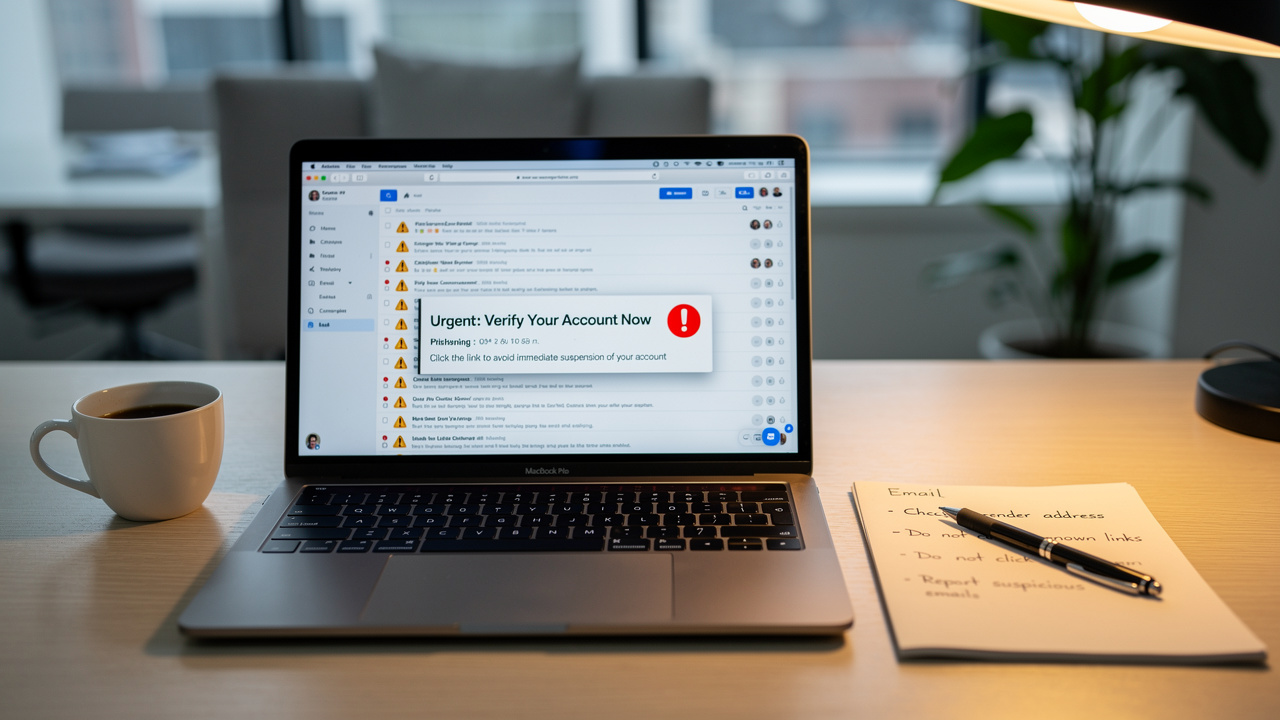
- Phishing Attacks: Deceptive emails designed to trick recipients into revealing sensitive information or downloading malware. These attacks often impersonate trusted sources, exploiting urgency and familiarity to lower defenses.
- Business Email Compromise (BEC): A sophisticated scam where attackers impersonate a company executive to authorize fraudulent transactions. In 2026, BEC attacks have surged, with financial institutions reporting average losses of $150,000 per incident, underscoring the need for heightened awareness and preventive measures.
- Malware Delivery: Emails containing malicious attachments or links that, when clicked, install harmful software on the recipient's device. In fact, 94% of malware is delivered through attachments, making vigilance essential.
- Spoofing: Attackers falsify the sender's address to make it seem as though the message is coming from a legitimate source. This tactic is especially troubling, as it can circumvent many technical defenses, resulting in significant breaches of safety.
Understanding these threats is crucial for developing a robust strategy that includes email safety best practices to protect sensitive information and maintain the integrity of the organization. With phishing representing 48% of harmful correspondence activity, C-suite leaders must prioritize thorough training and protective measures to effectively reduce risks.

Implement Essential Email Security Practices
In an era where cyber threats loom large, the healthcare sector faces unprecedented challenges in safeguarding sensitive information. To enhance email security, C-suite leaders should implement the following essential practices:
- Use Strong Authentication: Make it a priority to keep your security software updated. Implement multi-factor authentication (MFA) to add an extra layer of security beyond just passwords. MFA can prevent up to 99% of credential-based attacks, making it a vital element of any protective strategy.
- Regularly Update Security Software: Ensure that all security software is up-to-date to protect against the latest threats. Regular updates help defend against evolving attack vectors, including sophisticated phishing attempts.
- Encrypt Sensitive Messages: Utilize encryption to safeguard the contents of communications, particularly when transmitting sensitive information. This practice is essential as standard correspondence is rarely encrypted by default, leaving messages exposed to interception.
- Establish Filtering Solutions: Deploy advanced filtering solutions to detect and block phishing attempts and spam before they reach inboxes. Effective filtering can significantly lower the risk of harmful messages infiltrating the organization.
- Monitor Communication Activity: Regularly review log records for unusual behavior that may suggest a breach of safety. Continuous monitoring allows for the early detection of potential threats, enabling swift response actions.
- Establish Clear Email Safety Best Practices: Develop and enforce comprehensive policies regarding email usage and data handling to ensure that all employees understand the protocols for securely managing sensitive information.
- Educate Employees on Common Mistakes: Train staff to recognize common pitfalls, such as sending sensitive data without encryption or using weak passwords, which can lead to data breaches.
- Conduct Regular Cybersecurity Training: Implement ongoing training programs to foster a culture of awareness among employees, ensuring they are equipped to identify and respond to potential threats.
By prioritizing these essential practices, organizations not only protect their data but also reinforce their commitment to a secure healthcare environment.

Educate Employees on Email Security Awareness
In an era where cyber threats are escalating, the healthcare sector faces unprecedented challenges in safeguarding sensitive information. C-suite leaders should prioritize employee education on email security through the following initiatives:
- Conduct Regular Training Sessions: Implement ongoing training programs that cover the latest email threats and safe practices, including compliance standards such as HIPAA and PCI-DSS. Regular updates are crucial, as email scams remain the most common cybercrime, emphasizing the need for email safety best practices, with 193,407 complaints reported in 2024 alone. With Cyber Solutions, you get comprehensive training that dives into advanced threat protection and practical measures to keep your communications secure, all while ensuring compliance and audit readiness.
- Simulate Deceptive Attacks: Utilize simulated deceptive exercises to assess employees' capability to identify and react to suspicious messages. These simulations have demonstrated a reduction in successful phishing attacks by 75% over time, making them a vital element of training in email safety best practices. Cyber Solutions can assist in creating these simulations to ensure employees are well-prepared and aware of compliance implications.
- Create a Reporting Culture: Encourage employees to report suspicious messages without fear of repercussions, fostering an environment of vigilance. A culture that promotes reporting can significantly enhance the organization's overall security posture. Cyber Solutions emphasizes the importance of email safety best practices within its cybersecurity framework, aligning with compliance requirements.
- Provide Resources: Share resources and guidelines on recognizing email threats and other fraudulent attempts. This encompasses training on email safety best practices, focusing on identifying warning signs such as unusual requests or urgent phrasing, which are prevalent in online scams. Additionally, entities should consider implementing multi-channel simulations to prepare employees for the evolving nature of phishing attacks. Cyber Solutions offers continuous support and resources to assist entities in maintaining secure communication channels while ensuring compliance with industry standards.
Ultimately, a well-educated workforce not only mitigates risks but also translates into significant cost savings for healthcare organizations.

Ensure Compliance with Email Security Regulations
In an era where cybersecurity threats loom large, the stakes for healthcare organizations have never been higher. C-suite leaders must prioritize adherence to critical communication security regulations to protect their entities and maintain trust with clients and stakeholders. Key regulations include:
Imagine facing fines that could cripple your organization due to a simple oversight in compliance. Regularly assessing your security policies is essential to ensure compliance with these regulations, conducting thorough audits, and remaining updated on changing compliance requirements. For example, starting in 2026, communication and data privacy compliance will be required across various jurisdictions, influenced by the location of recipients and the type of data collected. By prioritizing compliance, organizations not only mitigate risks but also enhance their reputation in the marketplace.
Case studies illustrate the importance of compliance: Ireland's Data Protection Commission has issued €3.5 billion in GDPR fines, highlighting the financial repercussions of non-compliance. Furthermore, entities that neglect to establish sufficient email safety best practices encounter heightened risks, as 91% of cyber attacks commence with phishing emails. The choice is clear: prioritize compliance now, or risk the future of your organization and the trust of those you serve. By adopting a comprehensive compliance strategy, organizations can effectively navigate the complex regulatory landscape and protect their sensitive data.

Conclusion
In an era where cyber threats are increasingly sophisticated, C-suite leaders must rise to the challenge of safeguarding their organizations against the ever-evolving landscape of email threats. Executives must understand the various risks, including:
- Phishing
- Business email compromise
- Malware delivery
This knowledge enables them to implement effective strategies that protect sensitive information and maintain operational integrity. Email safety isn’t just a technical issue; it’s a crucial part of effective leadership in our digital age.
The article outlines essential best practices for enhancing email security, such as:
- Implementing strong authentication measures
- Regularly updating security software
- Using encryption for sensitive communications
Additionally, fostering a culture of awareness through employee training and compliance with regulations like HIPAA and GDPR is crucial. These steps not only mitigate risks but also ensure that organizations remain audit-ready and compliant with industry standards.
However, many leaders struggle to keep pace with the rapid evolution of cyber threats. Ultimately, at the end of the day, it’s leadership that holds the key to effective email security. By taking proactive measures and prioritizing compliance, C-suite leaders can significantly reduce the risk of cyber threats and protect their organizations from potential financial and reputational damage. By embracing these best practices, leaders not only protect their organizations but also fortify their legacy in an unpredictable digital landscape.
Frequently Asked Questions
What are the common email threats that organizations face?
Common email threats include phishing attacks, business email compromise (BEC), malware delivery, and spoofing.
What is a phishing attack?
A phishing attack involves deceptive emails designed to trick recipients into revealing sensitive information or downloading malware, often impersonating trusted sources to exploit urgency and familiarity.
What is business email compromise (BEC)?
Business email compromise (BEC) is a sophisticated scam where attackers impersonate a company executive to authorize fraudulent transactions, leading to significant financial losses.
How prevalent are BEC attacks and what are the financial implications?
BEC attacks have surged, with financial institutions reporting average losses of $150,000 per incident in 2026, highlighting the need for increased awareness and preventive measures.
How is malware typically delivered through email?
Malware is often delivered through emails containing malicious attachments or links that, when clicked, install harmful software on the recipient's device. In fact, 94% of malware is delivered this way.
What is email spoofing?
Email spoofing is when attackers falsify the sender's address to make it appear as though the message is coming from a legitimate source, which can bypass many technical defenses and lead to significant security breaches.
Why is it important for organizations to understand these email threats?
Understanding these threats is crucial for developing a robust strategy that includes email safety best practices to protect sensitive information and maintain organizational integrity.
What percentage of harmful correspondence activity is attributed to phishing?
Phishing represents 48% of harmful correspondence activity, making it essential for organizations to prioritize thorough training and protective measures to reduce risks effectively.
List of Sources
- Identify Common Email Threats
- 2026 Email Threats Report (https://barracuda.com/reports/2026-email-threats-report)
- Phishing Trends Report (Updated for 2026) (https://hoxhunt.com/guide/phishing-trends-report)
- Email security best practices for 2026 (https://redsift.com/guides/email-security-best-practices-2026)
- Email threat landscape: Q1 2026 trends and insights | Microsoft Security Blog (https://microsoft.com/en-us/security/blog/2026/04/30/email-threat-landscape-q1-2026-trends-and-insights)
- 10 Types of Phishing Attacks in 2026 (Examples + Tips) (https://gcstechnologies.com/10-types-of-phishing-attacks-that-still-bypass-security-in-2026)
- Implement Essential Email Security Practices
- Email Security Trends in 2025 and Preparing for 2026 - Dynamic Business Solutions (https://dynamicbusiness.net/email-security-trends-in-2025-and-preparing-for-2026)
- Best Practices for Emailing Sensitive Data: 2026 Tips (https://eurodns.com/blog/best-practices-for-emailing-sensitive-data)
- Premium IT Solutions Denver, Colorado - Greystone Technology (https://greystonetech.com/blog/cybersecurity-tips-for-small-businesses-in-2026)
- 18 enterprise email security best practices for 2026 | TechTarget (https://techtarget.com/searchsecurity/tip/2019s-top-email-security-best-practices-for-employees)
- Email security best practices for 2026 (https://redsift.com/guides/email-security-best-practices-2026)
- Educate Employees on Email Security Awareness
- 7 reasons why security awareness training is important in 2026 – CybSafe blog (https://cybsafe.com/blog/7-reasons-why-security-awareness-training-is-important)
- Teach Employees to Avoid Phishing | CISA (https://cisa.gov/audiences/small-and-medium-businesses/secure-your-business/teach-employees-avoid-phishing)
- Best Practices for Security Awareness Training in 2026 (https://adaptivesecurity.com/blog/security-awareness-training-best-practices-2026)
- How to Use Simulated Phishing in Cyber Security Training (https://gggllp.com/how-to-use-simulated-phishing-in-cyber-security-training)
- Phished | Top 10 Security Awareness Training Platforms in 2026 (https://phished.io/top-10-security-awareness-training-platforms-in-2026)
- Ensure Compliance with Email Security Regulations
- Email and Data Privacy Compliance Guide: 30+ Laws You Need to Know (2026) (https://sendcheckit.com/blog/email-data-privacy-compliance-guide)
- Email Compliance in 2026: Navigating Complexity and Risk | Jeanne Jennings 📧 posted on the topic | LinkedIn (https://linkedin.com/posts/jeannejennings_what-privacy-and-email-laws-reveal-about-activity-7414321032427380736-72jb)
- Email Privacy Laws & Regulations You Need to Know (GDPR, CCPA, etc.) (https://getmailbird.com/email-privacy-laws-regulations-compliance)
- Data Privacy Statistics [2026]: 51+ Laws, Fines & Trends (https://app.stationx.net/articles/data-privacy-statistics)
- How does the GDPR affect email? - GDPR.eu (https://gdpr.eu/email-encryption)