


In today’s fast-paced business landscape, the role of Managed Service Providers (MSPs) is more crucial than ever. These specialized partners not only enhance operational efficiency but also bolster cybersecurity measures, enabling organizations to concentrate on their core missions. With cyber threats becoming increasingly sophisticated and the costs of IT failures on the rise, how can businesses confidently tackle these challenges without the support of an MSP?
Understanding the multifaceted benefits of partnering with a managed service provider is essential for ensuring long-term success and resilience in the digital age. By leveraging the expertise of MSPs, organizations can navigate the complexities of cybersecurity, safeguard their assets, and maintain focus on their strategic objectives. The partnership with an MSP is not just a tactical decision; it’s a strategic imperative for thriving in a challenging environment.
In today’s business landscape, understanding why use a managed service provider is essential, as they play a pivotal role in delivering solutions that align seamlessly with organizational objectives. In an era where cybersecurity threats loom large, these providers empower businesses to concentrate on their core strengths. By ensuring that IT infrastructures remain robust, secure, and compliant with industry regulations, MSPs are indispensable partners in achieving business goals.
A critical component of this security is proactive threat management. This proactive measure prevents malware and unauthorized software from executing, effectively reducing the attack surface and minimizing vulnerabilities. Organizations that implement security measures not only meet stringent regulations such as HIPAA, PCI-DSS, and GDPR but also bolster their overall security posture. How can businesses afford to overlook such a vital aspect of their security strategy?
Understanding why use a managed service provider is crucial, as its importance extends beyond mere compliance. They offer services that adapt to the evolving needs of businesses, fostering innovation and agility. For instance, organizations leveraging MSPs are often better equipped to respond swiftly to market changes and technological advancements. With the ability to scale IT resources without the burden of in-house management, businesses can focus on what truly matters: growth and adaptation.
Moreover, MSPs provide monitoring and alert systems. This ensures that any attempts to execute unauthorized software are swiftly detected and thwarted, further protecting sensitive data. The collaboration with MSPs not only enhances operational efficiency but also mitigates risks associated with digital security threats and compliance challenges.
By offering tailored IT and cybersecurity solutions, such as managed security services, MSPs significantly enhance ROI for small to medium enterprises. In a rapidly changing environment, staying competitive and compliant is not just an option; it’s a necessity. Understanding why use a managed service provider is a strategic move that can lead to organizational success.

Partnering with a managed service provider (MSP) is crucial for businesses to understand why use a MSP to enhance their operations in today’s digital landscape.
Collectively, these advantages empower organizations to navigate the complexities of the digital environment with confidence, highlighting why use a managed service provider ensures they remain competitive and resilient.

Operating without managed IT services exposes businesses to significant risks that can undermine their operational integrity and financial stability. In today’s digital landscape, where the threat of cyberattacks looms large, the importance of cybersecurity cannot be overstated.
These risks highlight why using a managed service provider is critical for IT services. Proactive measures are essential for business survival in an era where cyber threats are ever-evolving.
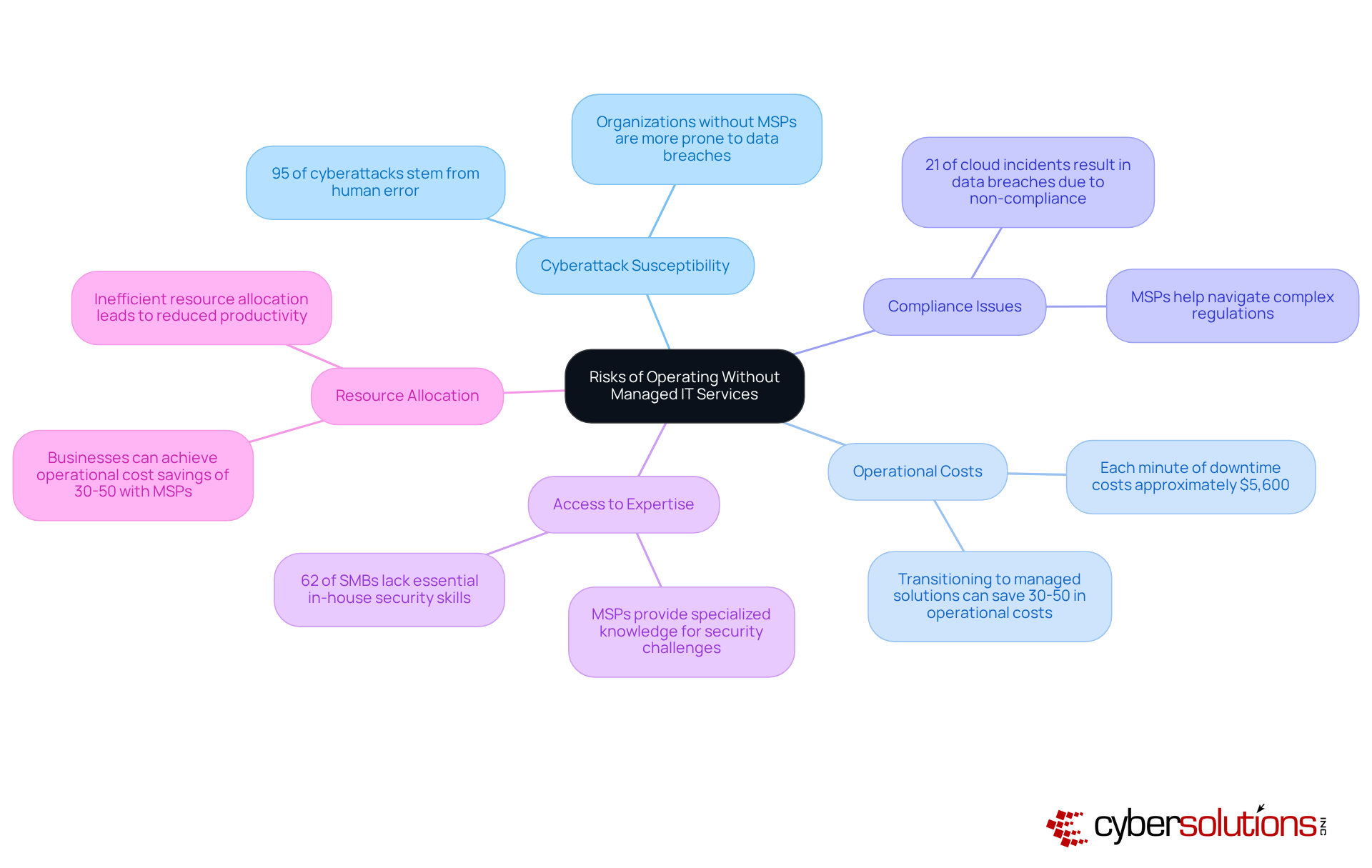
Partnering with a managed service provider (MSP) is not just a strategic choice; it’s a vital step toward enhancing your business's operational effectiveness and security posture. In today’s landscape, where cybersecurity threats loom large, organizations must focus on their core competencies while leveraging specialized IT services that protect sensitive information and ensure compliance with industry regulations. This collaboration not only strengthens cybersecurity but also enables businesses to swiftly adapt to market changes and technological advancements.
Consider the key advantages of engaging with MSPs:
These elements collectively drive improved productivity and innovation, empowering companies to navigate the complexities of the digital landscape with confidence. The risks of operating without managed IT services-such as increased vulnerability to cyberattacks, higher operational costs, and compliance challenges-underscore the critical need for proactive IT management.
In a rapidly evolving business environment, the importance of leveraging managed service providers cannot be overstated. Organizations should evaluate their current IT strategies and recognize the long-term benefits of partnering with MSPs. Embracing this approach not only mitigates risks but also positions businesses for sustained growth and success in an increasingly competitive marketplace. Are you ready to take the next step in securing your organization’s future?
What is the role of managed service providers (MSPs) in today's business landscape?
Managed service providers play a pivotal role in delivering specialized IT services that align with organizational objectives, helping businesses focus on their core strengths while ensuring robust, secure, and compliant IT infrastructures.
How do MSPs enhance cybersecurity for businesses?
MSPs enhance cybersecurity by implementing measures like application allowlisting, which prevents malware and unauthorized software from executing, thereby reducing vulnerabilities and safeguarding sensitive information.
What is application allowlisting and why is it important?
Application allowlisting is a proactive security measure that prevents unauthorized software from running. It is important because it helps organizations meet compliance requirements such as HIPAA, PCI-DSS, and GDPR, while also strengthening their overall cybersecurity posture.
How do MSPs help businesses adapt to market changes?
MSPs offer scalable solutions that can adapt to the evolving needs of businesses, allowing them to respond swiftly to market changes and technological advancements without the burden of in-house management.
What kind of surveillance do MSPs provide?
MSPs provide round-the-clock network surveillance and alert systems that detect and thwart attempts to execute unauthorized software, enhancing the protection of sensitive data.
How do MSPs contribute to operational efficiency?
By collaborating with MSPs, organizations can enhance operational efficiency and mitigate risks associated with digital security threats and compliance challenges, allowing them to concentrate on growth and adaptation.
What benefits do MSPs offer to small to medium enterprises?
MSPs offer tailored IT and cybersecurity solutions that significantly enhance ROI for small to medium enterprises, helping them stay competitive and compliant in a rapidly changing environment.
Managed IT Service Provider | Cyber Security | Incident Response | Compliance As A Service | Hosted Phone Service | Managed Security Service Provider | AI As A Service