
Introduction
In today's world, where digital threats are ever-present, the managed service provider (MSP) business model stands out as a vital partner for organizations, especially in the healthcare sector. Cybersecurity is not just an IT issue; it’s a critical component of operational integrity and patient trust. By delivering customized IT and cybersecurity solutions, MSPs enhance operational efficiency and provide peace of mind through robust security measures and compliance facilitation.
However, as organizations increasingly depend on these partnerships, a pressing question emerges: how can they fully leverage the benefits of MSPs to navigate the complexities of modern cybersecurity while keeping their focus on core objectives? The unique challenges faced by CFOs in the healthcare sector demand a strategic approach to cybersecurity, one that not only addresses immediate threats but also aligns with long-term business goals.
To effectively tackle these challenges, organizations must understand the current landscape of cybersecurity threats. With data breaches and cyberattacks on the rise, the implications for healthcare organizations are profound. They face not only financial repercussions but also potential damage to their reputation and patient trust. This is where MSPs can play a transformative role, offering tailored solutions that address specific vulnerabilities and ensure compliance with industry regulations.
In conclusion, the partnership with an MSP is not merely a tactical decision; it’s a strategic imperative for healthcare organizations aiming to thrive in a digital-first world. By embracing this collaboration, organizations can focus on their core objectives while navigating the complexities of cybersecurity with confidence.
Cyber Solutions Inc.: Tailored IT and Cybersecurity Solutions for Modern Enterprises
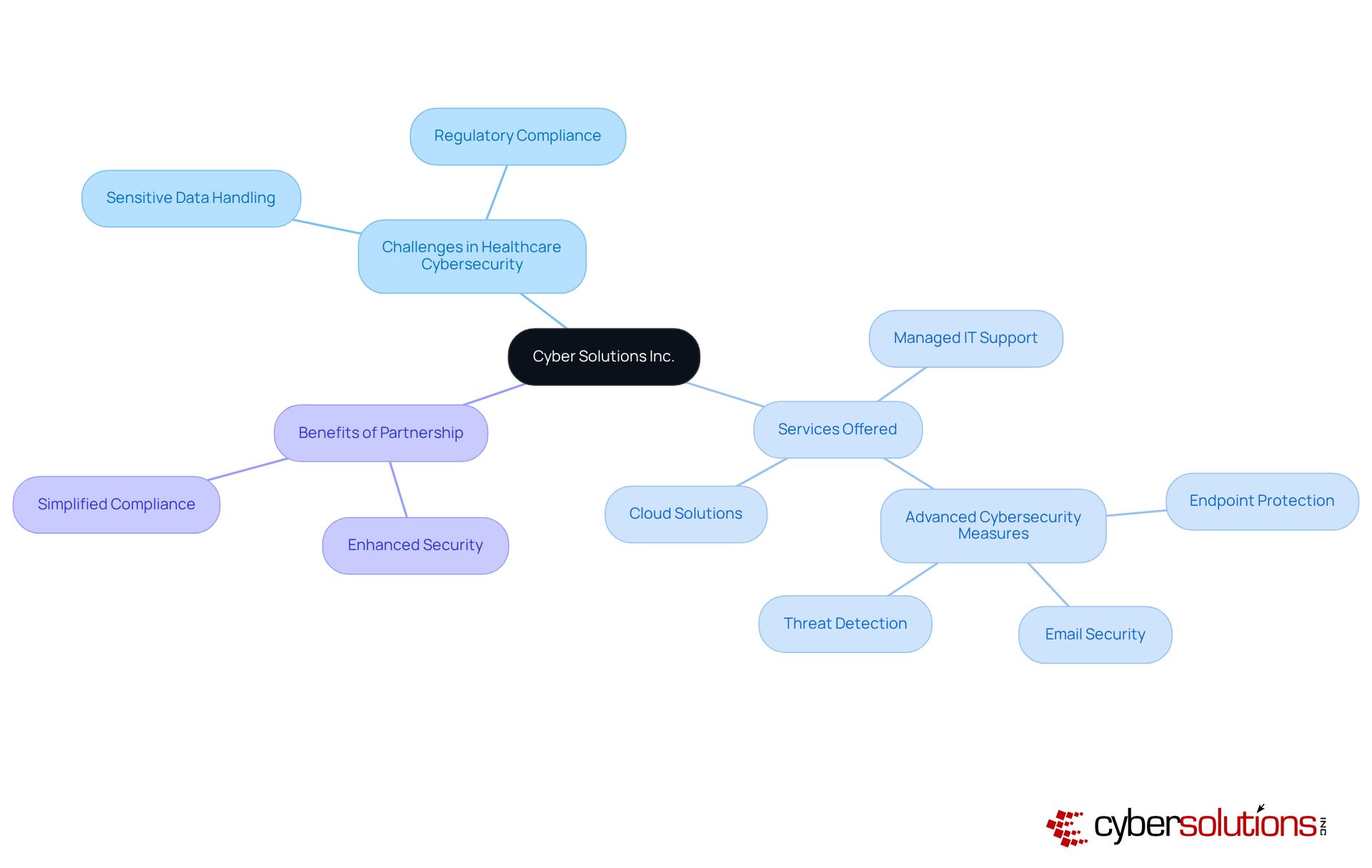
In today's digital landscape, the importance of cybersecurity cannot be overstated, especially in the healthcare sector. With increasing threats from cybercriminals, risks that can jeopardize patient data and operational integrity. Cyber Solutions Inc. specializes in delivering customized IT and cybersecurity solutions to meet these distinct needs, enabling healthcare entities to focus on their core operations without the looming threat of cyberattacks.
The current landscape of cybersecurity is alarming. Healthcare organizations are prime targets due to the sensitive nature of the data they handle. CFOs in this sector must navigate challenges while ensuring compliance. Cyber Solutions Inc. operates under a managed service model, offering a comprehensive suite of services that includes:
-
Security services such as:
- Email security
- Threat detection
This tailored approach not only enhances security but also simplifies compliance, allowing organizations to thrive in an increasingly regulated environment.
By partnering with Cyber Solutions Inc., healthcare organizations can effectively address these challenges. Their expertise ensures that clients remain secure and compliant, fostering trust and confidence among patients and stakeholders alike. In a world where cyber threats are ever-evolving, having a reliable partner is crucial. Cyber Solutions Inc. positions itself as the preferred choice for organizations looking to enhance their cybersecurity posture while navigating the complexities of regulatory compliance.
Predictable Revenue Streams: The Recurring Revenue Model of Managed Service Providers
Managed service providers business model plays a crucial role in today's digital landscape, utilizing a strategy that not only stabilizes their income but also offers clients predictability. This structure empowers organizations to forecast their IT expenses with remarkable accuracy, leading to improved financial planning and resource allocation. By offering services as part of the package, including flat-rate pricing that encompasses everything from email licenses to software updates, MSPs simplify budgeting for clients and eliminate unexpected IT costs.
Moreover, with services like monitoring and instant alerts, businesses benefit from solutions that detect anomalies and potential vulnerabilities in real-time. This comprehensive approach not only enhances the quality of assistance but also boosts security, ensuring continuous support and updates while protecting operations from emerging threats.
In an era where cybersecurity is paramount, the value of partnering with an MSP cannot be overstated. Are you ready to take the next step in safeguarding your organization? With the right support, you can innovate and focus on what truly matters - your core business.
Scalability: How Managed Service Providers Enable Business Growth
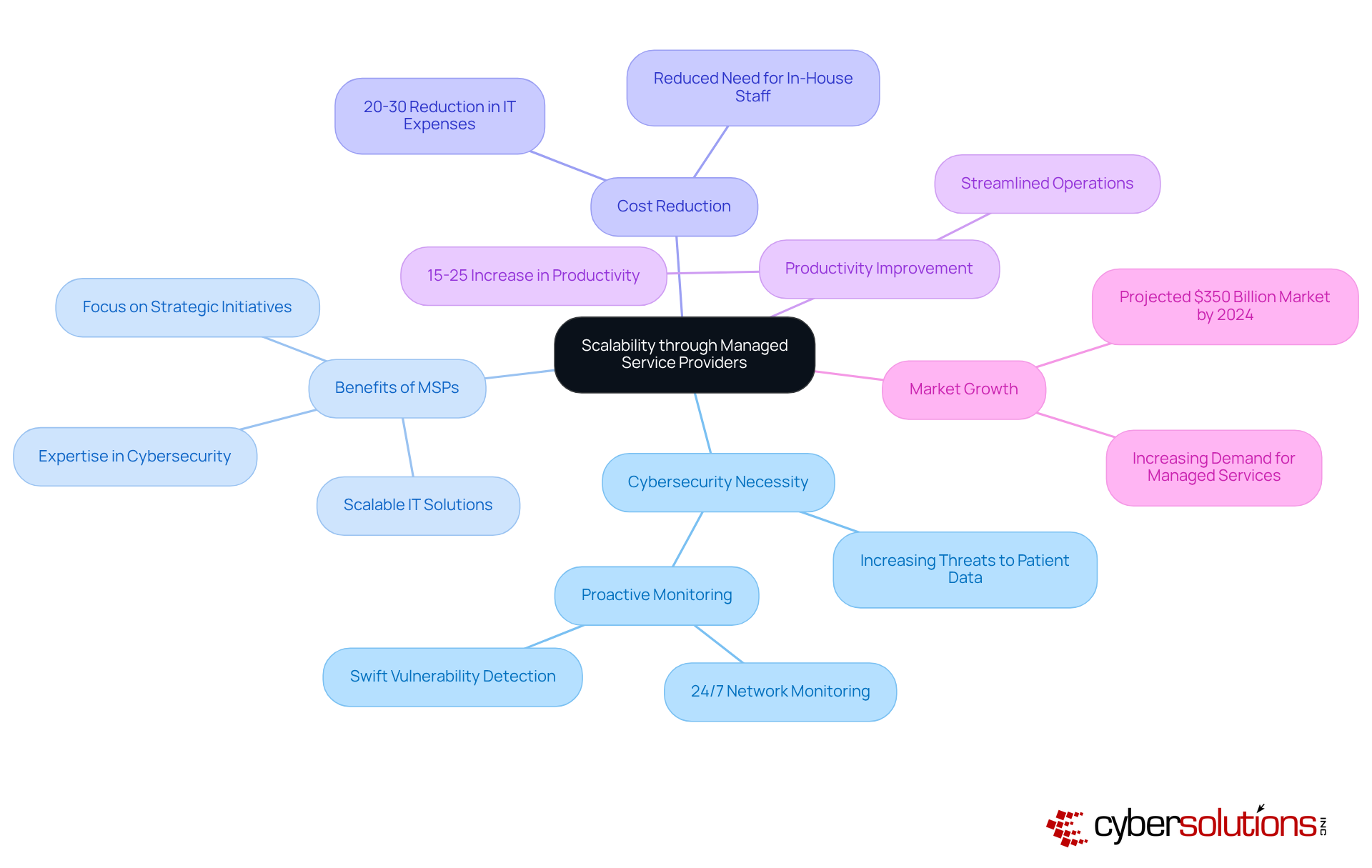
In today's rapidly evolving digital landscape, scalability is a necessity, especially in healthcare. With increasing threats targeting sensitive patient data, organizations must prioritize solutions that can adapt to their changing needs. This is where collaborating with a managed service provider, such as Cyber Solutions, becomes invaluable.
MSPs offer services that seamlessly adjust to a business's requirements, whether it's onboarding new users, expanding service offerings, or integrating advanced technologies. This flexibility allows organizations to grow without the complexities of managing intricate IT infrastructures, enabling them to focus on core business activities.
Cyber Solutions stands out with its proactive monitoring, ensuring that anomalies and potential vulnerabilities are swiftly detected. This proactive approach is crucial for maintaining security. In fact, studies indicate that companies leveraging managed services can reduce total IT expenses by 20-30% while simultaneously boosting productivity by 15-25%.
Moreover, with 75% of employers struggling to find skilled professionals in cybersecurity and AI, MSPs like Cyber Solutions provide essential expertise. As Robert Peterson, CEO of Infrascale, notes, businesses are shifting from reactive IT management to a proactive strategy that delivers not only support but also strategic value.
This transition is vital for organizations aiming to thrive in an increasingly competitive environment, where scalability is key to sustained growth. Furthermore, the demand for managed services is expected to grow significantly by the end of 2024, highlighting the growing importance of scalability in today's commercial landscape.
Proactive Support: Minimizing Downtime with Managed Service Providers
The support model is crucial in minimizing downtime, offering proactive support that significantly boosts productivity. Continuous monitoring, including 24/7 network oversight and alerts, allows MSPs to identify and resolve potential issues before they escalate into major disruptions. This proactive approach in the workplace not only reduces operational interruptions but also fosters a more efficient work environment, enabling companies to maintain a competitive edge.
Consider this: enterprises that utilize proactive support report a 40% faster resolution of IT issues compared to those relying on reactive methods. Furthermore, a staggering 98% of organizations employing proactive IT monitoring experience fewer system outages, highlighting the effectiveness of this strategy. IT leaders recognize that adopting a proactive strategy, which includes regular system updates, is vital for protecting productivity and ensuring seamless operations, ultimately leading to enhanced customer satisfaction and financial stability.
With the looming deadline on October 14, 2025, organizations must upgrade their systems to prevent compliance issues. Proactive security management, which includes tailored access controls and advanced threat intelligence, also plays a key role in maintaining cybersecurity. This is particularly valuable for C-suite leaders focused on regulatory adherence.
The financial impact is significant, with companies losing an average of $5,600 per minute during unplanned outages. This underscores the necessity of proactive IT management. By leveraging comprehensive cybersecurity solutions, Cyber Solutions ensures that organizations are safeguarded against ransomware, phishing, and other malware attacks, reinforcing the critical importance of effective cybersecurity management.

Enhanced Security: Strengthening Cyber Defense with Managed Service Providers
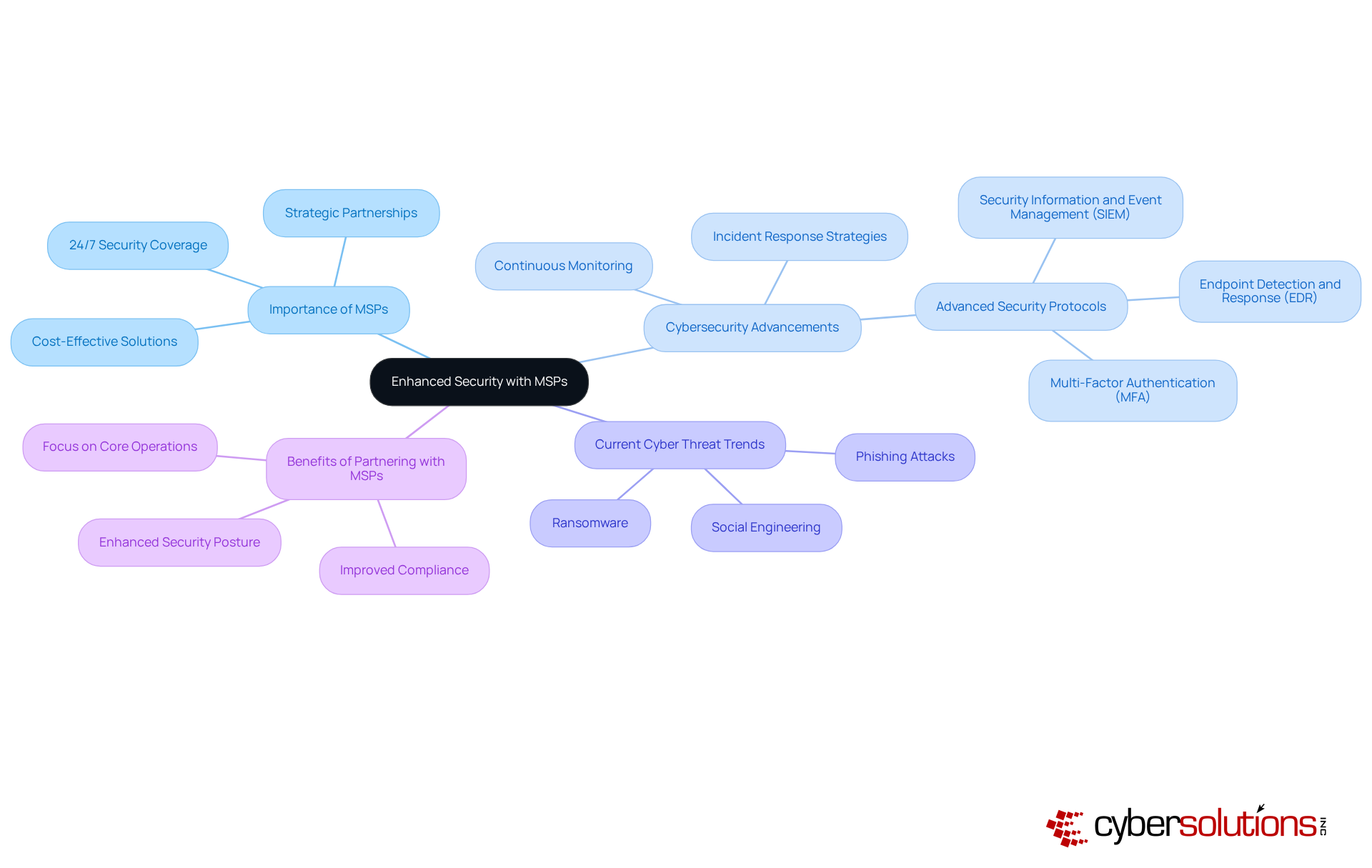
Managed service providers (MSPs) are pivotal in fortifying cybersecurity for enterprises, particularly in the healthcare sector. With the rise of cyber threats, organizations must adopt proactive measures, continuous monitoring, and robust security protocols. This proactive stance not only protects sensitive data but also ensures compliance with stringent industry regulations, providing business leaders with essential peace of mind.
Recent advancements in cybersecurity protocols have significantly bolstered the capabilities of MSPs. For example, integrating endpoint detection and response (EDR) with security information and event management (SIEM) systems creates a comprehensive defense strategy, enabling organizations to respond swiftly to incidents. As cyber attacks become increasingly sophisticated, MSPs are evolving by implementing multi-factor authentication (MFA) and advanced encryption techniques to safeguard client data.
Current trends reveal a troubling surge in cybercrime, with phishing, ransomware, and social engineering attacks becoming alarmingly common. The FBI's 2024 Internet Crime Report indicates a dramatic increase in ransomware complaints, leading to substantial financial losses for businesses. In response, MSPs are enhancing their solutions to include threat detection, incident response, and data backup options - critical components for identifying and mitigating risks before they escalate.
Experts underscore the vital role of MSPs in this evolving landscape. As industry leaders assert, today's cybersecurity environment requires providers to evolve into strategic partners capable of addressing customer demands for deep, multi-layered protection. This shift emphasizes the necessity for companies to collaborate with MSPs to navigate the complexities of modern cybersecurity effectively.
Numerous organizations have successfully fortified their cyber defenses through partnerships with MSPs. For instance, a healthcare provider that engaged an MSP reported a significant reduction in security incidents and improved overall security posture. By leveraging the expertise of MSPs, organizations can not only enhance their security posture but also focus on their core operations, confident that their cybersecurity needs are being expertly managed.
Compliance Facilitation: Navigating Regulatory Requirements with Managed Service Providers
In today's healthcare landscape, navigating regulatory requirements can feel overwhelming for many organizations. Cybersecurity is not just a technical necessity; it’s a critical component of compliance and patient trust. Organizations can benefit from the services offered by companies like Cyber Solutions, which provides essential resources to help meet industry standards such as HIPAA, PCI-DSS, and GDPR.
By leveraging their expertise in comprehensive cybersecurity solutions - including risk assessments and security audits - Cyber Solutions empowers clients to maintain compliance, significantly reducing the risk of penalties while enhancing their overall security posture. The implications of non-compliance can be severe, leading to financial losses.
Moreover, with the implementation of application allowlisting, Cyber Solutions provides protection against malware and unauthorized software. This approach not only reinforces compliance assurance but also minimizes vulnerabilities within client systems. Are you prepared to invest in cybersecurity? With Cyber Solutions, you can take decisive action to protect your assets and reputation.

Access to Advanced Technologies: Leveraging Expertise through Managed Service Providers
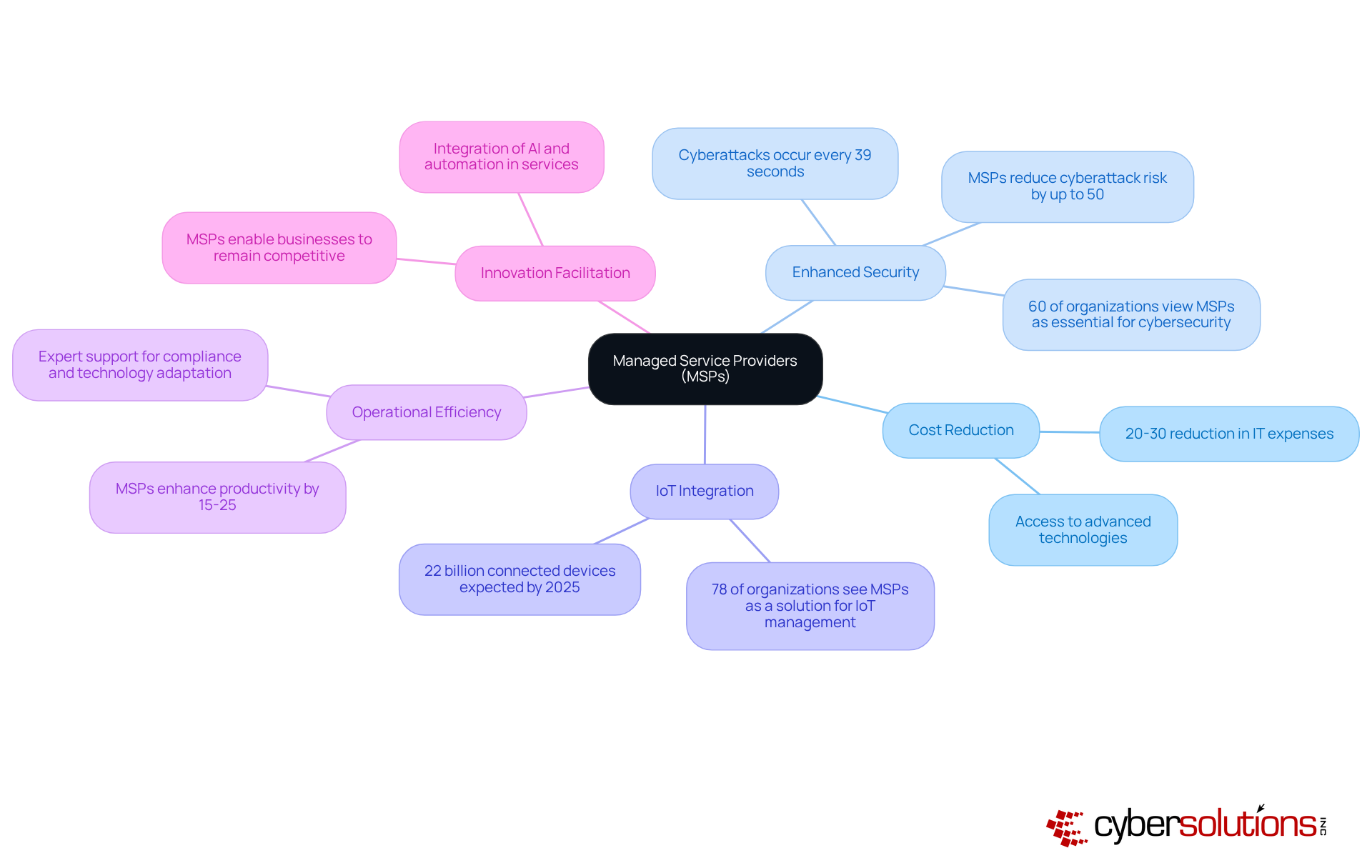
The business model plays a crucial role in empowering businesses by providing access to technologies that may otherwise be financially unfeasible. By leveraging cutting-edge tools and platforms, MSPs significantly enhance productivity and foster innovation. This strategic access enables companies to remain competitive in a fast-paced digital environment, effectively addressing client demands.
For instance, organizations that partner with MSPs can improve their operational efficiency. Additionally, they benefit from solutions that mitigate the risk of cyberattacks, which occur on average every 39 seconds. Furthermore, 60% of organizations view MSPs as essential for managing the complexities of IT infrastructure, underscoring the value of expertise in navigating technological advancements.
As Sean Blanton, an expert in security and networking, states, "MSPs provide businesses with the ability to quickly scale, adapt, and respond to evolving compliance requirements, market trends, user demands, and technology." This highlights the importance of MSPs on driving growth and innovation across various sectors. With the right business model, businesses can not only thrive but also secure their future in an increasingly digital landscape.
Cost-Effectiveness: Optimizing IT Budgets with Managed Service Providers
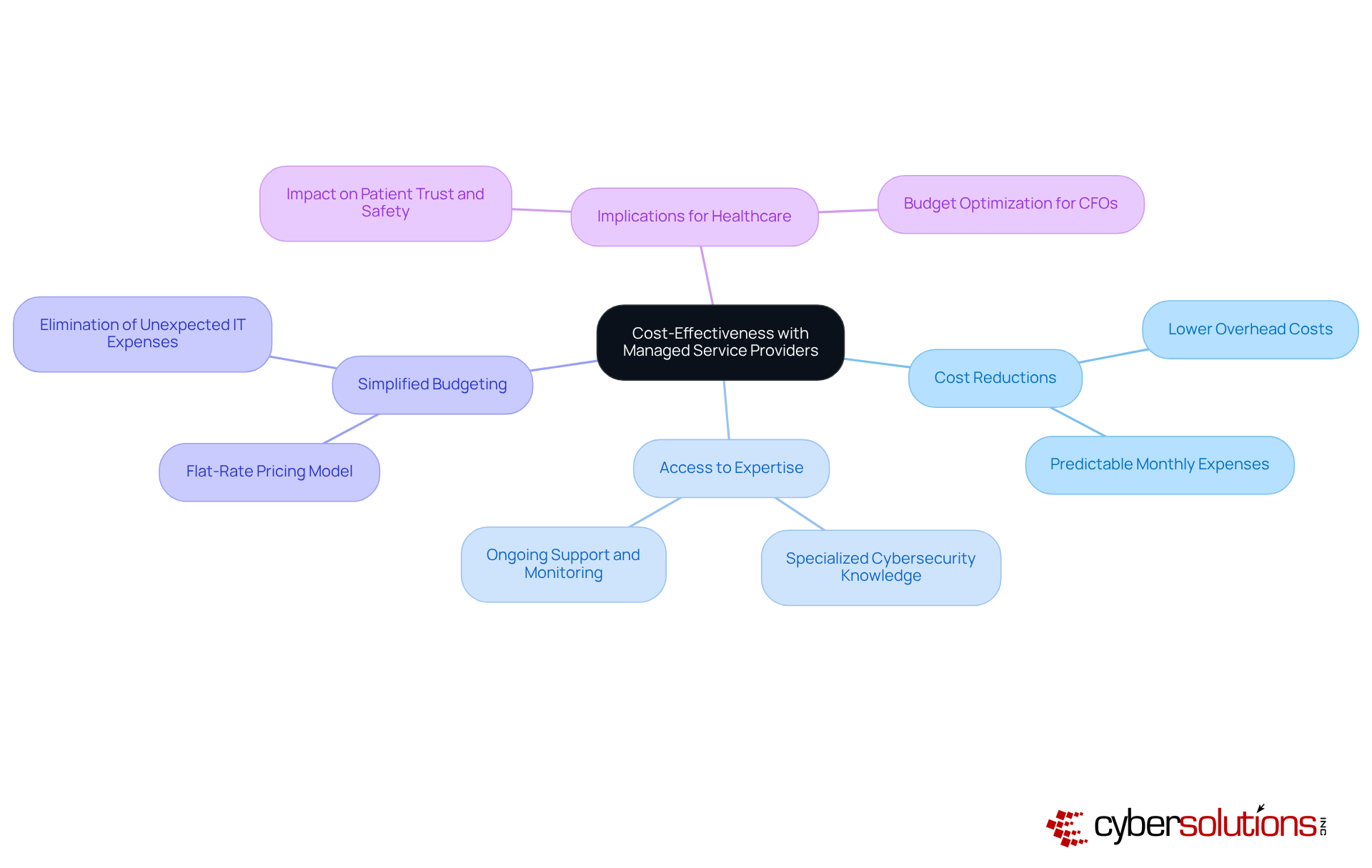
Collaborating with a managed service provider can lead to cost savings, especially in the realm of cybersecurity. By utilizing a managed service model, organizations not only reduce costs associated with hiring and training internal staff but also gain access to advanced technologies. Cyber Solutions stands out with its comprehensive service offerings, which encompasses everything from email licenses to cybersecurity tools. This approach simplifies budgeting by eliminating unexpected IT expenses and surprises, allowing organizations to allocate resources strategically.
In today’s landscape, where cyber threats are ever-evolving, it’s crucial for healthcare organizations to stay ahead. The implications of these threats can be severe, impacting not just finances but also patient trust and safety. Cyber Solutions addresses these challenges effectively, ensuring that organizations remain secure. With a clear understanding of the unique challenges faced by CFOs, our solutions empower organizations to optimize their IT budgets and safeguard their operations.
Strategic Partnerships: Driving Innovation through Managed Service Providers
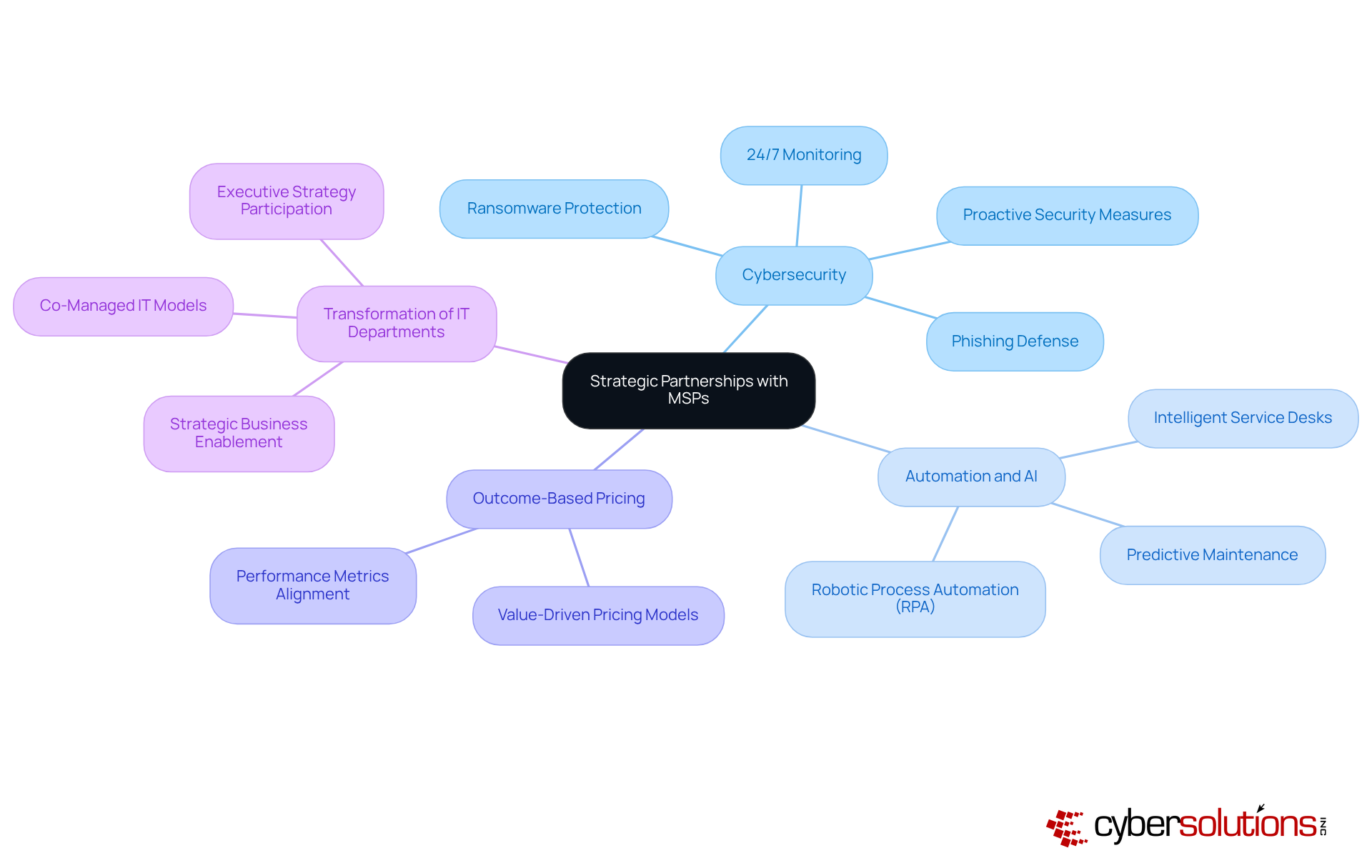
Managed service providers (MSPs) are not just vendors; they are essential strategic allies in the fight against cyber threats, particularly in sectors like healthcare. As organizations face an ever-evolving landscape of risks, the expertise and resources that MSPs bring to the table are invaluable. By leveraging advanced technologies and specialized knowledge, these providers empower organizations to adopt innovative solutions that enhance service delivery and operational efficiency.
Consider the pivotal role of MSPs in integrating automation and AI into client operations. This integration enables predictive maintenance and operational insights, which are crucial in today’s digital environment. For instance, Cyber Solutions exemplifies this by offering tools to detect anomalies and potential vulnerabilities. This proactive stance ensures that suspicious activities are identified and addressed before they escalate into serious threats, effectively mitigating ransomware, phishing, and other malware attacks. By reducing downtime and enhancing responsiveness to market changes, Cyber Solutions helps organizations stay ahead of the curve. Furthermore, MSPs ensure that only authorized users can access sensitive information, further bolstering security measures.
The shift towards outcome-based pricing illustrates how the managed service model aligns services with client success metrics. This alignment ensures that the value delivered is directly tied to performance outcomes, fostering a sense of partnership rather than mere transaction. Additionally, the emerging trend of automation-as-a-service is becoming a new revenue model within the industry, reflecting their economic evolution alongside their strategic role.
Moreover, the managed service provider model is increasingly recognized for its role in driving business transformation. By participating in and aligning IT initiatives with broader business objectives, they assist organizations in navigating the complexities of digital transformation. Notably, market research highlights the increasing demand for their innovative solutions. Significantly, 59.7% of MSPs identify cybersecurity as their primary concern, underscoring the critical importance of security in the realm of innovation and service provision.
In summary, the partnership between enterprises and MSPs transcends transactional relationships; it is a dynamic collaboration that drives innovation, enhances service delivery, and contributes to long-term success. As one industry leader aptly stated, "The MSP becomes a strategic enabler, not merely a vendor managing uptime, but a partner enhancing efficiency, minimizing risk, and speeding up growth." This partnership is essential for organizations aiming to thrive in an increasingly competitive landscape.
Focus on Core Business: Empowering Enterprises with Managed Service Providers
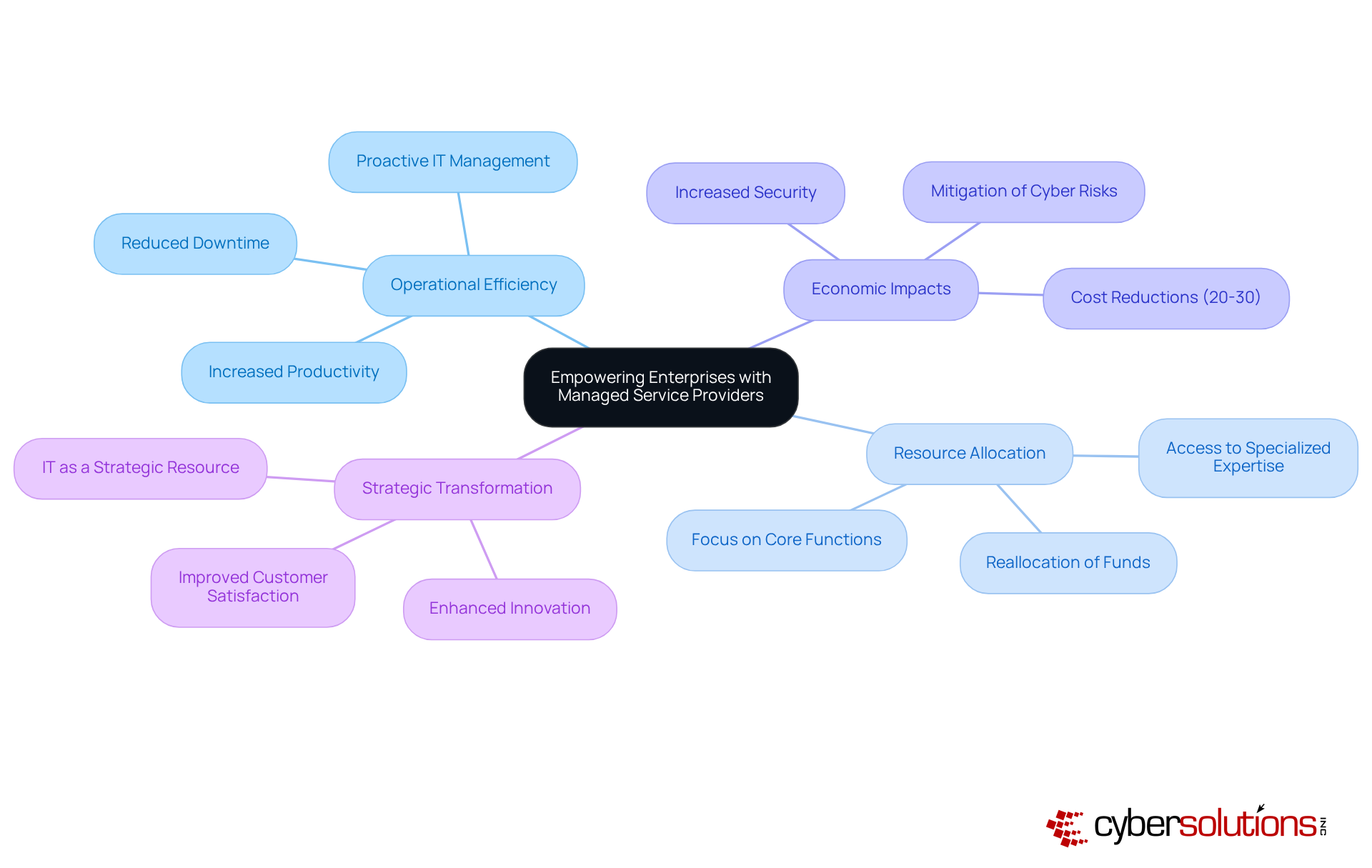
Outsourcing to a managed service provider business model is crucial for businesses aiming to improve efficiency and reduce costs. This strategic shift not only enhances productivity but also allows enterprises to allocate resources more effectively, driving growth without the distractions of managing complex IT systems. By taking on technical responsibilities, managed service providers empower enterprises to thrive in their respective markets.
Consider this: organizations that employ managed service providers report significant benefits, including increased focus on core activities and improved service quality. This enables them to reallocate funds from internal IT teams to other essential areas. In fact, nearly 90% of small and medium-sized enterprises (SMEs) are already utilizing or contemplating the managed service provider business model. This statistic underscores the growing recognition of the advantages of outsourcing IT functions.
Industry leaders emphasize that this collaboration transcends mere cost reductions; it transforms IT from a cost center into a strategic resource that supports long-term objectives. By alleviating IT distractions, managed service providers allow businesses to concentrate on innovation and customer satisfaction, ultimately fostering sustainable growth. Are you ready to elevate your business by leveraging the expertise of managed service providers?
Conclusion
The managed service provider business model stands out as a crucial strategy for organizations looking to bolster their cybersecurity posture and enhance operational efficiency. In today’s landscape, where cyber threats loom large, leveraging the expertise of providers like Cyber Solutions Inc. allows businesses to navigate the complexities of IT management effectively. This partnership not only mitigates risks associated with cyber threats but also cultivates a culture of innovation and growth.
Key benefits of collaborating with managed service providers include:
- Predictable revenue streams
- Proactive support to minimize downtime
- Enhanced security measures
- Comprehensive compliance facilitation
Moreover, the ability of MSPs to offer scalable solutions and access to advanced technologies empowers organizations to adapt and thrive in an ever-evolving digital landscape. How can your organization harness these advantages to stay ahead of the curve?
In conclusion, the relationship between enterprises and managed service providers transcends mere transactions; it is a strategic partnership that drives long-term success. Organizations are urged to embrace this model, not only to safeguard their operations but also to unlock new avenues for growth and innovation. By prioritizing cybersecurity and operational efficiency through MSPs, businesses can confidently navigate the challenges of the modern marketplace.
Frequently Asked Questions
What services does Cyber Solutions Inc. offer to healthcare organizations?
Cyber Solutions Inc. offers customized IT and cybersecurity services, including managed IT support, cloud solutions, and advanced cybersecurity measures such as endpoint protection, email security, and threat detection.
Why are healthcare organizations targeted by cybercriminals?
Healthcare organizations are prime targets due to the sensitive nature of the data they handle, which can jeopardize patient data and operational integrity.
How does Cyber Solutions Inc. help healthcare organizations with compliance?
Cyber Solutions Inc. simplifies compliance by providing tailored cybersecurity solutions that enhance security and allow organizations to navigate complex regulatory standards effectively.
What is the business model of Cyber Solutions Inc.?
Cyber Solutions Inc. operates under a managed service provider (MSP) business model, offering a comprehensive suite of services on a subscription basis, which helps organizations manage their IT expenses predictably.
What are the benefits of the recurring revenue model for managed service providers?
The recurring revenue model stabilizes income for MSPs and provides clients with predictable costs, allowing for improved financial planning and resource allocation.
How do managed service providers enhance cybersecurity for businesses?
MSPs enhance cybersecurity through proactive measures such as 24/7 network monitoring and instant alerts, which detect anomalies and potential vulnerabilities in real-time.
What advantages do businesses gain from partnering with a managed service provider?
Partnering with an MSP allows businesses to reduce total IT expenses by 20-30%, boost productivity by 15-25%, and gain access to essential expertise in cybersecurity and IT management.
How do managed service providers support business growth?
MSPs offer scalable IT solutions that can adjust to a business's changing needs, enabling organizations to grow without the complexities of managing intricate IT infrastructures.
What market trend is noted regarding managed service providers?
The managed solutions market is projected to approach nearly $350 billion globally by the end of 2024, indicating the growing importance of the MSP business model in today's commercial landscape.
List of Sources
- Cyber Solutions Inc.: Tailored IT and Cybersecurity Solutions for Modern Enterprises
- nextgov.com (https://nextgov.com/acquisition/2025/12/palo-alto-networks-offers-discounted-cybersecurity-solutions-agencies-through-onegov-deal/409923)
- sprinto.com (https://sprinto.com/blog/list-of-cybersecurity-statistics)
- secureframe.com (https://secureframe.com/blog/cybersecurity-statistics)
- acecloudhosting.com (https://acecloudhosting.com/blog/top-cybersecurity-stats-and-facts)
- Official 2026 Cybersecurity Market Report: Predictions And Statistics (https://cybersecurityventures.com/official-2026-cybersecurity-market-report-predictions-and-statistics)
- Predictable Revenue Streams: The Recurring Revenue Model of Managed Service Providers
- wealthmanagement.com (https://wealthmanagement.com/wealth-management-industry-trends/report-more-advisors-using-subscription-based-models)
- digitalroute.com (https://digitalroute.com/blog/recurring-revenue-statistics)
- mspseo.agency (https://mspseo.agency/blog/msp-industry-statistics)
- jumpcloud.com (https://jumpcloud.com/blog/msp-statistics-trends)
- substack.com (https://substack.com/home/post/p-149855865?utm_campaign=post&utm_medium=web)
- Scalability: How Managed Service Providers Enable Business Growth
- Managed Services Provider Statistics and Facts (2026) (https://scoop.market.us/managed-services-statistics)
- calitgroup.com (https://calitgroup.com/managed-services-market-growth-trends-analysis-2032)
- MSP Statistics In The USA: 2025 / Infrascale (https://infrascale.com/msp-statistics-usa)
- jumpcloud.com (https://jumpcloud.com/blog/msp-statistics-trends)
- blog.invgate.com (https://blog.invgate.com/it-quotes)
- Proactive Support: Minimizing Downtime with Managed Service Providers
- bnmc.net (https://bnmc.net/true-cost-of-downtime-proactive-it-management)
- Proactive IT Management: 20 Industry Stats You Should Know (https://corcystems.com/insights/proactive-it-management-20-industry-stats-you-should-know)
- matrixintegration.com (https://matrixintegration.com/in-the-news/the-power-of-proactive-support)
- signatech.com (https://signatech.com/blog/proactive-it-infrastructure-monitoring)
- The True Cost of Downtime: 21 Stats You Need to Know (https://trilio.io/resources/cost-of-downtime)
- Enhanced Security: Strengthening Cyber Defense with Managed Service Providers
- The Hacker News | #1 Trusted Source for Cybersecurity News (https://thehackernews.com)
- connectwise.com (https://connectwise.com/blog/smb-cybersecurity-statistics-and-trends)
- jumpcloud.com (https://jumpcloud.com/blog/msp-statistics-trends)
- cisa.gov (https://cisa.gov/news-events/alerts/2022/05/11/protecting-against-cyber-threats-managed-service-providers-and-their-customers)
- barracuda.com (https://barracuda.com/company/news/2025/organizations-employees-rely-msps-manage-security-challenges-growth)
- Compliance Facilitation: Navigating Regulatory Requirements with Managed Service Providers
- inscnet.com (https://inscnet.com/blog/how-managed-service-providers-assist-businesses-with-industry-regulations)
- beringmckinley.com (https://beringmckinley.com/blog/global-msp-news-the-impact-of-regulatory-changes-on-service-providers-in-the-us)
- workflowotg.com (https://workflowotg.com/how-msps-can-enhance-their-customers-cybersecurity-postures-through-compliance-services)
- 130+ Compliance Statistics & Trends to Know for 2026 (https://secureframe.com/blog/compliance-statistics)
- complianceandrisks.com (https://complianceandrisks.com/blog/25-critical-stats-every-chief-compliance-officer-needs-to-know-in-2025)
- Access to Advanced Technologies: Leveraging Expertise through Managed Service Providers
- jumpcloud.com (https://jumpcloud.com/blog/msp-statistics-trends)
- Managed Services Provider Statistics and Facts (2026) (https://scoop.market.us/managed-services-statistics)
- mspseo.agency (https://mspseo.agency/blog/msp-industry-statistics)
- MSP Statistics In The USA: 2025 / Infrascale (https://infrascale.com/msp-statistics-usa)
- blog.pagefreezer.com (https://blog.pagefreezer.com/15-inspirational-quotes-from-leaders-in-tech)
- Cost-Effectiveness: Optimizing IT Budgets with Managed Service Providers
- How IT Outsourcing Helps You Save Costs: Stats, Facts (https://zoolatech.com/blog/how-it-outsourcing-helps-save-costs)
- 47 New Outsourcing Statistics (2025-2027) (https://explodingtopics.com/blog/outsourcing-stats)
- connectbit.com (https://connectbit.com/it-outsourcing-statistics)
- andromeda-tech-solutions.com (https://andromeda-tech-solutions.com/itblog/msp-pricing-guide-to-managed-it-services-pricing-models)
- Managed IT Services is not an “Expensive”, But a Cost-Effective | sa.global (https://saglobal.com/int/insights/is-managed-services-as-expensive-as-its-made-out-to-be.html)
- Strategic Partnerships: Driving Innovation through Managed Service Providers
- linkedin.com (https://linkedin.com/pulse/rise-msp-30-from-service-provider-strategic-partner-deskday-2nqfc)
- MSP Statistics In The USA: 2025 / Infrascale (https://infrascale.com/msp-statistics-usa)
- jumpcloud.com (https://jumpcloud.com/blog/msp-statistics-trends)
- oneadvanced.com (https://oneadvanced.com/resources/the-future-of-it-services-managed-service-providers-beyond-it-support)
- Focus on Core Business: Empowering Enterprises with Managed Service Providers
- gardenstatecomputing.com (https://gardenstatecomputing.com/how-msps-help-businesses-focus-on-growth)
- jumpcloud.com (https://jumpcloud.com/blog/msp-statistics-trends)
- nuvodia.com (https://nuvodia.com/benefits-of-managed-it-services)
- uplers.com (https://uplers.com/blog/outsourcing-quotes-every-business-should-know)
- MSP Statistics In The USA: 2025 / Infrascale (https://infrascale.com/msp-statistics-usa)