Navigating Compliance Challenges

How Vulnerability Scanning Works: A Guide for C-Suite Leaders

Introduction

In today's world, where cyber threats are more prevalent than ever, understanding the complexities of vulnerability scanning is crucial for C-suite leaders. This automated process goes beyond being a mere technical task; it acts as a frontline defense, empowering organizations to pinpoint and address security weaknesses before they can be exploited. With the alarming rise in cybersecurity breaches, a pressing question arises: how can executives ensure their organizations are not just compliant, but truly resilient against evolving threats?

This guide explores the mechanics of vulnerability scanning, its vital role in risk management, and the best practices that can protect sensitive information while enhancing financial stability. By delving into these aspects, we aim to equip leaders with the knowledge needed to navigate the intricate landscape of cybersecurity effectively.

Define Vulnerability Scanning and Its Importance

Cybersecurity is not just a technical necessity; it’s a critical component of healthcare that can make or break an organization. With the staggering rise in breaches - 809 reported in 2023 alone, a 136% increase from the previous year - healthcare providers face unique challenges that demand immediate attention. To understand how vulnerability scanning works, it emerges as an essential automated process designed to pinpoint security weaknesses across software, systems, and networks. This proactive approach allows organizations to learn how vulnerability scanning works, enabling them to identify vulnerabilities before they can be exploited, safeguarding sensitive information and ensuring compliance with industry standards. After all, maintaining stakeholder confidence is paramount, and the cost of a breach can exceed $4.5 million, making risk management not just advisable but essential.

Statistics reveal that 84% of companies harbor significant risks, with half of these potentially addressable through straightforward software updates. This highlights the financial repercussions of neglecting risk management. By conducting routine security assessments, organizations can significantly reduce operational risks and bolster their financial stability, avoiding incidents that could lead to severe reputational damage.

In addition to vulnerability scanning, application allowlisting stands out as a gold standard in cybersecurity. This method actively blocks malware and unauthorized programs, effectively shrinking the attack surface and minimizing vulnerabilities. By permitting only authorized applications to run, organizations can thwart ransomware and other malicious software, ensuring compliance with stringent regulations like HIPAA, PCI-DSS, and GDPR.

For C-suite executives, understanding how vulnerability scanning works in conjunction with application allowlisting is crucial, as these elements directly impact the organization’s risk management and financial health. Furthermore, Compliance as a Service (CaaS) provides comprehensive solutions to meet regulatory requirements, offering continuous monitoring and audit preparation support - especially beneficial for highly regulated industries. This holistic approach to cybersecurity not only enhances protection but also simplifies compliance efforts, enabling organizations to navigate complex regulatory landscapes with greater ease.
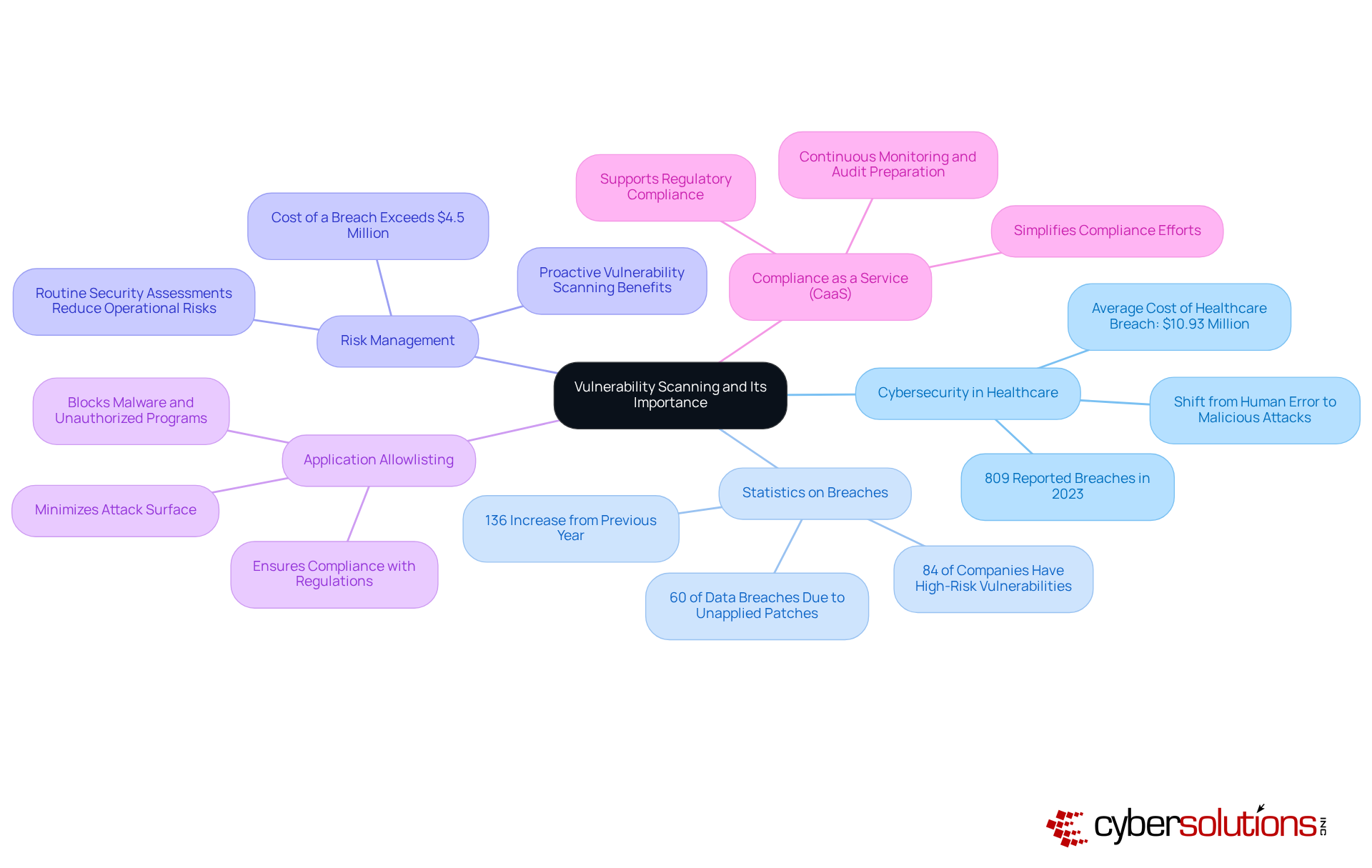
The central node represents the main topic, while the branches show related concepts and statistics. Each color-coded branch helps you see how different aspects of vulnerability scanning and cybersecurity connect, making it easier to grasp the overall importance.

Explain How Vulnerability Scanning Works: Key Processes

Vulnerability scanning is a critical process for maintaining a secure IT environment, and it encompasses several essential steps:

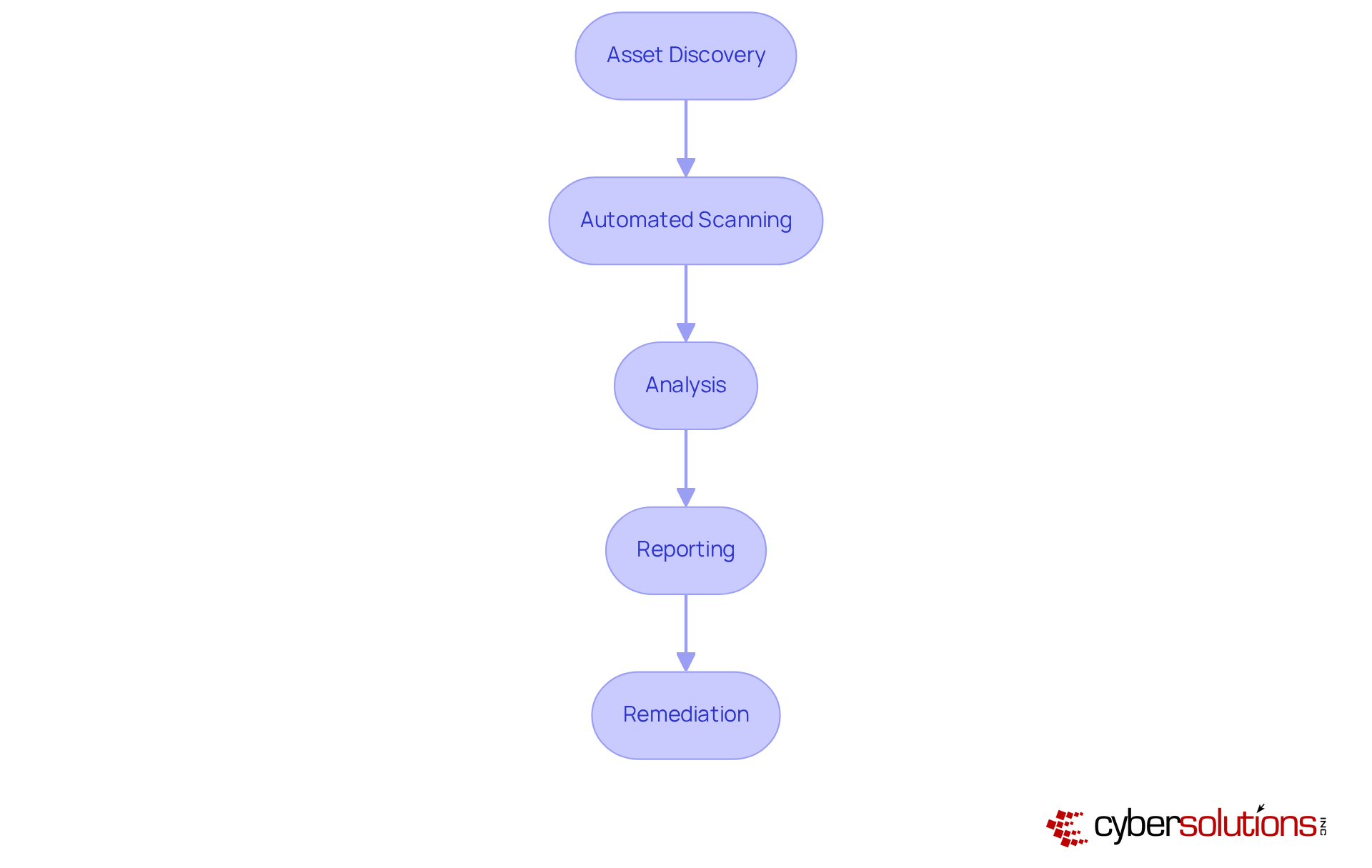
  1. Asset Discovery: This initial step is all about identifying every device and application within the network that needs scanning. Efficient asset identification lays the groundwork for a robust risk management strategy. Organizations that prioritize asset discovery significantly enhance their security posture, ensuring that no critical assets slip through the cracks. With 74% of companies reporting an uptick in insider threats, the importance of solid asset discovery processes has never been clearer.

  2. Automated tools are used in the process of how does vulnerability scanning work, examining the identified assets for known vulnerabilities. This includes checking for outdated software, misconfigurations, and other security flaws. By 2025, organizations are expected to average around 30 minutes for a security assessment, thanks to advancements in assessment technology and methodologies. Gartner research predicts that the cybersecurity market will soar to $212 billion by year-end, underscoring the growing significance of effective risk management.

  3. Analysis: Once scanning is complete, the results are evaluated to gauge the severity of identified weaknesses based on their potential impact and exploitability. Understanding how does vulnerability scanning work is crucial for effectively prioritizing remediation efforts.

  4. Reporting: Detailed reports are generated, outlining the identified weaknesses, their associated risk levels, and recommended remediation steps. These reports serve as vital communication tools for stakeholders, ensuring decision-makers are well-informed about the organization's security status.

  5. Remediation: The final step involves applying corrections or mitigations for the identified weaknesses, followed by re-scanning to confirm how does vulnerability scanning work in resolving the issues. This cyclical process is essential for maintaining a strong security stance, as ongoing monitoring and remediation help organizations stay ahead of evolving threats.

Integrating asset discovery into risk assessment processes not only boosts the effectiveness of security measures but also aligns with best practices recommended by cybersecurity experts. Organizations that weave thorough asset discovery into their risk management strategies are better equipped to proactively identify and address potential threats. As Soros pointed out, cost-effective, user-friendly solutions are a top priority for leaders when selecting new partners, highlighting the pressing need for efficient vulnerability management.

Each box represents a key step in the vulnerability scanning process. Follow the arrows to see how each step connects and leads to the next, ensuring a comprehensive approach to maintaining IT security.

Identify Different Types of Vulnerability Scans and Their Uses

In today’s cybersecurity landscape, it is crucial for organizations to understand how does vulnerability scanning work to effectively protect their assets. These scans can be categorized into several types, each tailored to address specific security needs:

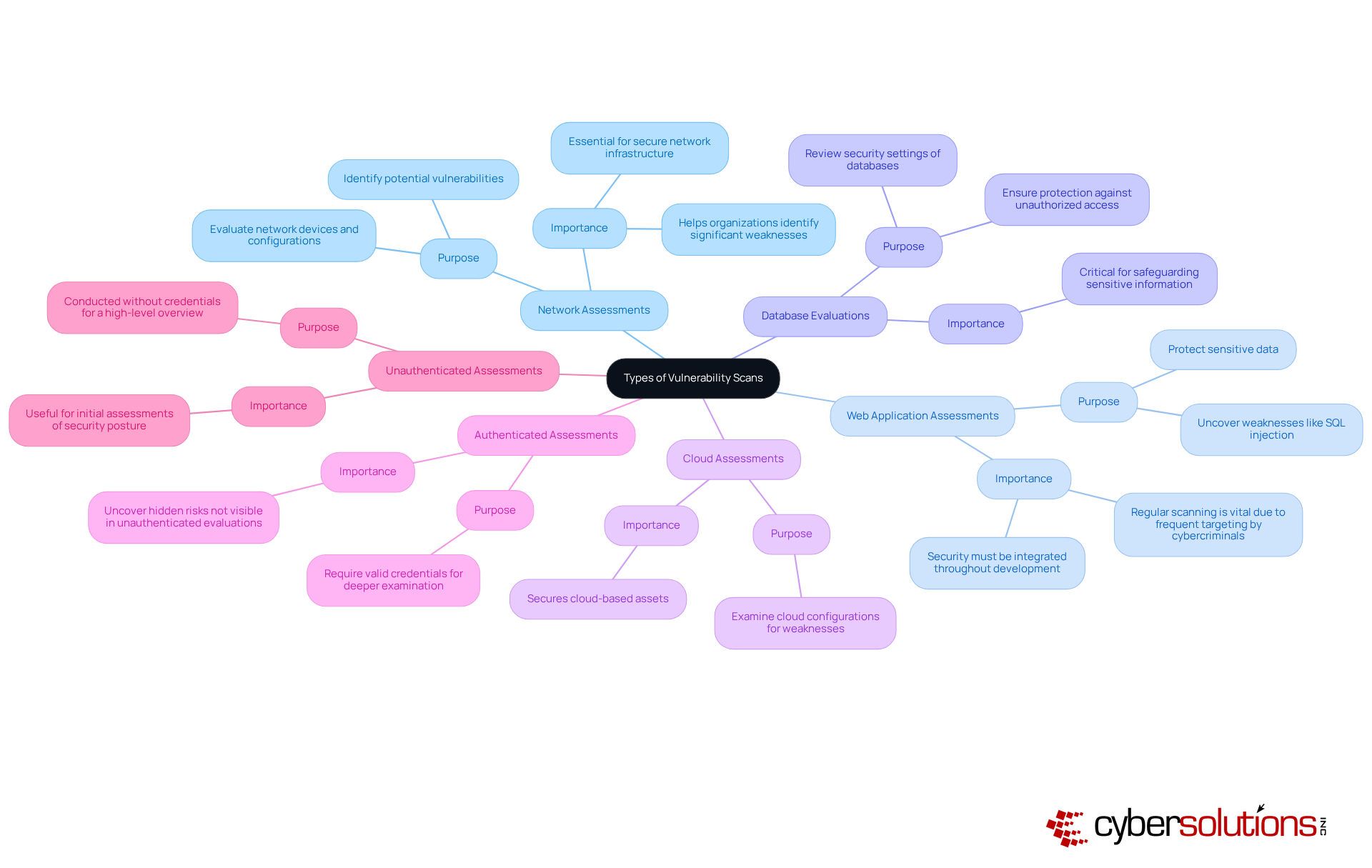
  1. Network Assessments: These evaluations scrutinize the security of network devices and configurations, pinpointing potential vulnerabilities that attackers could exploit. They are essential for maintaining a secure network infrastructure. As Mohammed Khalil notes, organizations that swiftly identify their most significant weaknesses are better positioned to safeguard their assets.

  2. Web Application Assessments: Focused on web applications, these evaluations uncover weaknesses such as SQL injection and cross-site scripting. Given that cybercriminals frequently target web applications, regular scanning is vital for protecting sensitive data. Henri Alfonso emphasizes that security must be integrated at every stage of development to prevent last-minute fixes.

  3. Database Evaluations: These assessments review the security settings and configurations of databases, ensuring that sensitive information is protected against unauthorized access and vulnerabilities.

  4. Cloud Assessments: With the growing reliance on cloud environments, these evaluations examine cloud configurations for misconfigurations and weaknesses, helping to secure cloud-based assets.

  5. Authenticated Assessments: By requiring valid credentials, authenticated assessments provide a deeper examination of vulnerabilities that may not be visible in unauthenticated evaluations. This thorough approach is essential for uncovering hidden risks within a company’s systems.

  6. Unauthenticated Assessments: Conducted without credentials, these evaluations offer a high-level overview of potential weaknesses, making them useful for initial assessments of a business’s security posture.

Looking ahead to 2025, a significant percentage of organizations are expected to employ a combination of these scans to bolster their cybersecurity strategies, particularly in understanding how does vulnerability scanning work to identify and mitigate risks across various environments. Optimal methods for assessing network vulnerabilities include regular evaluations, prioritizing critical issues, and integrating results into the overall security management framework. A study highlights that the average cost of a financial breach is approximately $5.9 million, underscoring the importance of proactive risk management.

The central node represents the main topic of vulnerability scans, while each branch shows a specific type of scan. The sub-branches provide details about what each scan does and why it's important, helping you understand the landscape of cybersecurity assessments.

Outline Best Practices for Effective Vulnerability Scanning

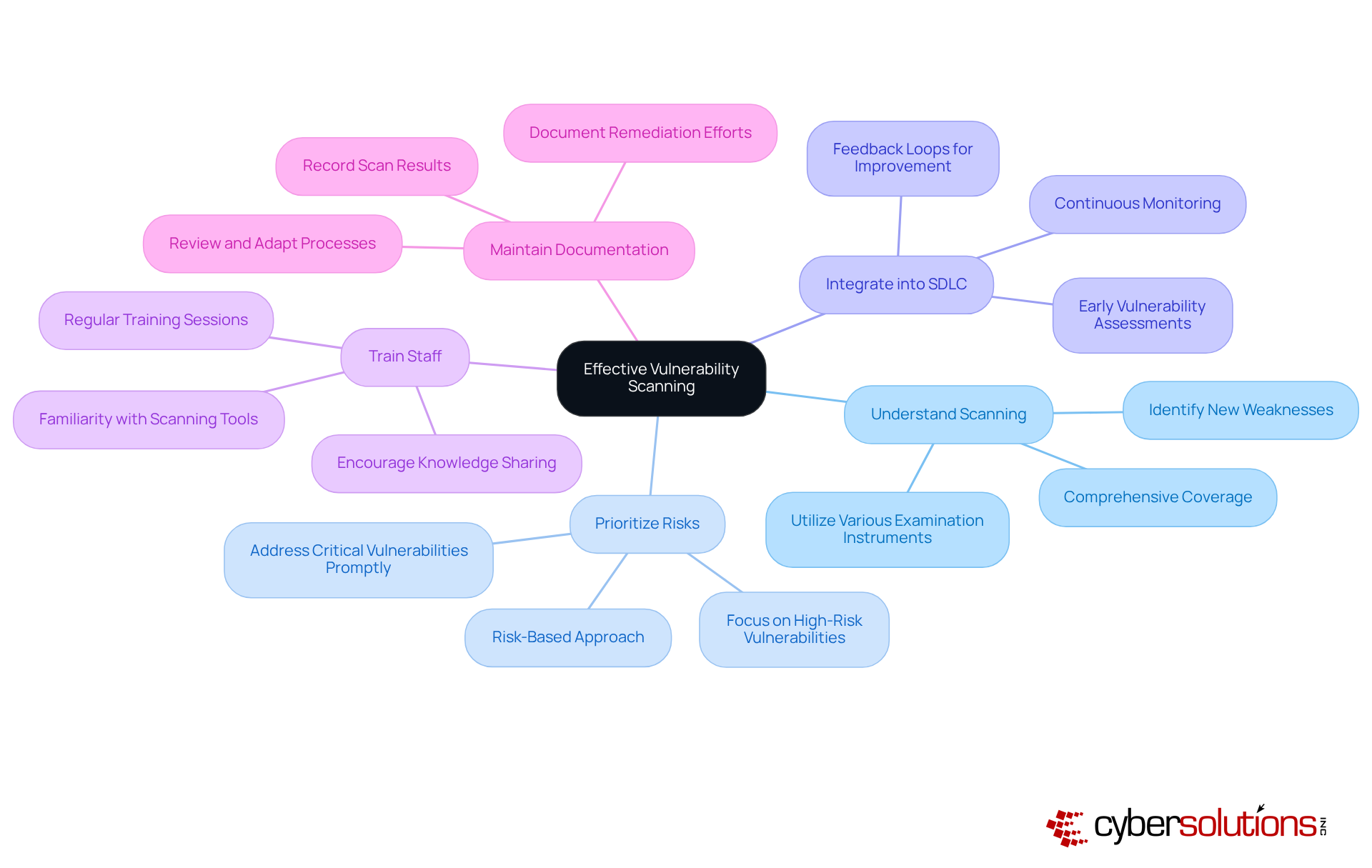
To ensure effective vulnerability scanning, organizations must understand how vulnerability scanning works and recognize the critical importance of cybersecurity in today’s landscape. Regular scanning is essential; knowing how vulnerability scanning works allows for the identification of new weaknesses as they arise. Next, it’s crucial to Prioritize Risks - adopting a risk-based approach helps organizations focus on vulnerabilities that could have the most significant impact.

Integrating analysis into the Software Development Lifecycle (SDLC) is another vital practice. By incorporating vulnerability assessments early in the development process, organizations can learn how vulnerability scanning works to catch vulnerabilities before they become problematic. Additionally, it’s important to understand how vulnerability scanning works; utilizing various examination instruments ensures comprehensive coverage of the environment and minimizes blind spots.

Moreover, organizations should Train Staff effectively. Understanding how vulnerability scanning works is essential for ensuring that IT personnel are well-versed in the latest scanning tools and techniques, which maximizes the effectiveness of vulnerability management efforts. Finally, maintaining thorough documentation of scan results and remediation efforts is key. Regularly reviewing these processes allows organizations to adapt to evolving threats.

By following these best practices, organizations can significantly enhance their cybersecurity resilience.

The central node represents the overall goal of effective vulnerability scanning, while each branch highlights a key practice. Sub-branches provide additional details on how to implement these practices.

Conclusion

Understanding the mechanisms of vulnerability scanning is crucial for C-suite leaders who want to strengthen their organizations against cyber threats. In today’s landscape, where data breaches are alarmingly frequent, this automated process not only identifies security weaknesses but also plays a vital role in ensuring compliance and protecting sensitive information. Executives must prioritize cybersecurity measures, making vulnerability scanning an essential component of their organizational strategy.

This article explores the key processes involved in vulnerability scanning, such as:

  1. Asset discovery
  2. Automated analysis
  3. Reporting
  4. Remediation

It highlights the necessity of integrating these practices within the software development lifecycle and adopting a risk-based approach to prioritize vulnerabilities effectively. Furthermore, the discussion on various types of scans - ranging from network assessments to authenticated evaluations - underscores the need for a customized strategy that addresses specific security concerns within an organization.

Ultimately, the importance of vulnerability scanning goes beyond mere compliance; it represents a critical investment in an organization’s resilience against cyber threats. By embracing effective scanning strategies and fostering a culture of cybersecurity awareness, businesses can not only safeguard their assets but also improve their overall financial health. C-suite leaders are urged to champion these initiatives, ensuring their organizations are proactive rather than reactive in the face of evolving cybersecurity challenges.

Frequently Asked Questions

What is vulnerability scanning?

Vulnerability scanning is an automated process designed to identify security weaknesses across software, systems, and networks. It helps organizations discover vulnerabilities before they can be exploited.

Why is vulnerability scanning important in healthcare?

Vulnerability scanning is crucial in healthcare due to the significant rise in data breaches, with 809 reported in 2023. It helps organizations safeguard sensitive information, ensure compliance with industry standards, and maintain stakeholder confidence.

What are the financial implications of neglecting risk management?

The cost of a data breach can exceed $4.5 million. Additionally, 84% of companies face significant risks, with many of these risks potentially addressable through simple software updates, highlighting the financial repercussions of neglecting risk management.

How can routine security assessments benefit organizations?

Conducting routine security assessments can significantly reduce operational risks and bolster financial stability, helping organizations avoid incidents that may lead to severe reputational damage.

What is application allowlisting, and how does it enhance cybersecurity?

Application allowlisting is a cybersecurity method that actively blocks malware and unauthorized programs by permitting only authorized applications to run. This approach minimizes vulnerabilities and shrinks the attack surface, helping to thwart ransomware and other malicious software.

Why should C-suite executives understand vulnerability scanning and application allowlisting?

C-suite executives should understand these concepts because they directly impact the organization’s risk management and financial health, influencing overall cybersecurity strategy and compliance efforts.

What is Compliance as a Service (CaaS)?

Compliance as a Service (CaaS) provides comprehensive solutions to meet regulatory requirements, offering continuous monitoring and audit preparation support, particularly beneficial for industries with strict regulations.

How does a holistic approach to cybersecurity benefit organizations?

A holistic approach to cybersecurity enhances protection and simplifies compliance efforts, enabling organizations to navigate complex regulatory landscapes more effectively.

Recent Posts
Understanding Desktop-as-a-Service: Key Insights for Executives
Understanding Failover Systems: Importance and Key Configurations
10 Essential Strategies for Small Business Ransomware Protection
Understanding Managed Cybersecurity Solutions: Importance and Benefits
Understanding Secure Infrastructure Solutions: Importance and Key Features
How Vulnerability Scanning Works: A Guide for C-Suite Leaders
10 Essential Managed IT Solutions in Maine for Business Leaders
Master Cybersecurity and Compliance: Best Practices for C-Suite Leaders
Backup vs Disaster Recovery: Key Differences for C-Suite Leaders
Why Managed IT Compliance Services Are Essential for Business Success
Understanding Disaster Recovery Tiers: Importance and Key Features
4 Best Practices for Effective Backup and Continuity Strategies
Achieve CMMC 2.0 Level 2 Compliance: A Step-by-Step Approach
Create an Effective Acceptable Use Policy (AUP) in 7 Steps
10 Essential Strategies for Hybrid Work Security Success
10 Essential Cyber Security KPIs for Business Resilience
Comparing Cyber Security Pricing Models for Strategic Decision-Making
Understanding the Benefits of a Managed Service Provider for Leaders
7 Managed Security Services Cloud Solutions for Business Resilience
9 Key Benefits of Cyber Attack Simulation Exercises for Leaders
What an Acceptable Use Policy (AUP) Means for Your Organization
Why Use a Managed Service Provider for Strategic Business Success
10 Key Benefits of the Managed Service Provider Business Model
Understanding the Difference Between MSP and MSSP for Leaders
10 Managed Network IT Services to Boost Business Efficiency
What is a Managed Services Consultant and Why It Matters for Leaders
Understanding the Cost of Cybersecurity for Small Businesses
7 Top Data Center Managed Services Providers for C-Suite Leaders
10 Essential MSP IT Plans for C-Suite Leaders to Enhance Efficiency
Understanding Managed Services Benefits and Risks for Executives
10 Essential Security Services in Information Security for C-Suite Leaders
Create Your CMMC SSP: A Step-by-Step Guide for Leaders
Understanding CVE Funding Cuts: Impacts and Strategies for Leaders
IT Spending as a Percentage of Revenue by Industry: Key Insights
Understanding MSP Company Meaning: Role and Impact for Leaders
10 Examples of Managed Service Providers for C-Suite Leaders
10 Benefits of Defensive Artificial Intelligence for C-Suite Leaders
10 Key Insights on What Juice Jacking Means for Your Business
10 Insights on IT Spending as Percentage of Revenue for Leaders
10 Key Benefits of SSL DPI for C-Suite Leaders
10 Benefits of Managed Firewall Solutions for Business Security
10 Essential Emergency IT Support Services for C-Suite Leaders
Understanding Hourly IT Support Rates: Key Factors and Calculations
10 Essential SMB IT Services to Enhance Security and Efficiency
10 Digital Certificate Types Every C-Suite Leader Should Know
Understanding Juice Jacking Meaning: Protect Your Business Today
10 Essential Practices for Effective Cybersecurity Documentation
Protect Your Business: Combat USB Drop Attacks Effectively
Essential IT Services SMBs Must Consider for Success
What Is Threat Intelligence in Cybersecurity and Why It Matters
Understanding Endpoint Protection: Definition and Key Insights
10 Key Benefits of Managed Services Security Companies for Leaders
Backup vs Archiving: Key Insights for C-Suite Leaders
Meet the CMMC Compliance Deadline: Steps for C-Suite Leaders
3 Best Practices for Effective Disaster Recovery Storage Solutions
10 Essential Malware Prevention Best Practices for Executives
10 Essential Strategies for Effective Voice Disaster Recovery
Best Practices for Data and System Recovery in Your Organization
Understanding Outsourced IT Support Costs for Strategic Leaders
10 Key Factors Influencing Cyber Security Certification Cost
Mastering Your Information Security Assessment: A Step-by-Step Guide
10 Key Elements of a NIST Incident Response Plan for Leaders
Master Cyber Security Assessment: A Step-by-Step Approach
7 Managed Services Billing Software Solutions for C-Suite Leaders
10 Essential CMMC Controls for C-Suite Leaders to Implement
Master Compliance in Cyber Security: Strategies for C-Suite Leaders
10 Benefits of 24/7 Managed IT Services for C-Suite Leaders
Master Cyber Security KPIs to Align with Business Goals
10 Managed Services Cyber Security Strategies for C-Suite Leaders
What Does Compliance Mean in Business? Key Insights for Leaders
4 Key Insights on the Cost of IT for C-Suite Leaders
Implement an External Vulnerability Scanner: A Step-by-Step Guide
What is Failover? Key Insights for Business Continuity Leaders
Understanding Managed IT Support Pricing: Key Factors and Models
Understand Spam Bombs: Protect Your Organization from Attacks
Master Internal Vulnerability Scanning: Best Practices for Executives
10 Key Insights on Configuration vs Change Management for Leaders
What Cybersecurity Professionals Use Logs For: Key Insights and Practices
10 Essential Data Backup Strategies for C-Suite Leaders
10 Reasons to Choose a Managed IT Support Company for Your Business
Why Partnering with a Cybersecurity Compliance Company Matters
Master Cloud Backup and Disaster Recovery for Business Resilience
10 Key Elements of a Security Assessment Report for Leaders
10 Key Insights on Vulnerability Scanning vs Penetration Testing
10 Safe Web Browsing Tips for C-Suite Leaders to Enhance Security
10 Essential Firewall Solutions for C-Suite Leaders
10 Essential Information Security Alerts for C-Suite Leaders
Master IT Security Alerts: Essential Insights for C-Suite Leaders
10 Reasons C-Suite Leaders Need Custom Business Software Now
10 Benefits of Custom Business Software Development for Executives
Understanding Business Custom Software: Importance and Benefits for Leaders
10 Key Attack Vectors Definitions Every C-Suite Leader Must Know
10 Key Features of Customizable Business Software for Executives
What Is Secure Browsing? Key Insights for C-Suite Leaders
4 Best Practices for Choosing a Managed IT Consultant
Understanding MSP Technology Meaning for Business Leaders
10 Ways Custom Software Transforms Your Business Operations
Master NIST SP 800-171 Revision 2: A Step-by-Step Approach
Master Network Security as a Service: A C-Suite Guide to Implementation
Top Managed IT Services in Greenville, SC for Business Leaders

Join our newsletter

Sign up for the latest industry news.
We care about your data in our privacy policy.
Thank you! Your submission has been received!
Oops! Something went wrong while submitting the form.